Skip to content

Taxonomy term

Content type

Making movement matter

We all know that regular movement is one of the most powerful ways to reduce the risk of major illness, improve mental health and help people live longer, healthier lives. 

But access to movement is not equal and those who could benefit most often face the greatest barriers, whether through low confidence, complex health needs or difficulty navigating what’s available locally. 

We also know that simply encouraging people to be more active or signposting them to activities rarely leads to lasting change. 

What’s needed instead is a support system that reflects the realities of people’s lives and this is where social prescribing comes in.  

From access to engagement

Social prescribing is a personalised, community-based approach to health that focuses on ‘what matters to you’ rather than ‘what’s the matter with you’, recognising that wellbeing is shaped by a range of social, economic and environmental factors, many of which are linked to wider social inequalities.

It often begins with a referral (whether from a GP, a community worker or even a self-referral), which connects the individual to a link worker or similar role.

Social prescribers spend time understanding a person’s circumstances, interests and motivations before supporting them to access community-based activities, resources and services that meet their needs.

So, unlike traditional signposting, social prescribing provides sustained, relational support that enables individuals to take greater control of their health over time.  

In England, there are now over 3,300 link workers and a strong body of evidence that demonstrates the positive impact of social prescribing on both health outcomes and, in turn, healthcare services.

Social prescribing is a personalised, community-based approach to health that focuses on ‘what matters to you’ rather than ‘what’s the matter with you’.

Social prescribing is increasingly delivered across a range of settings, including primary care, secondary care and also within the community, supporting people at every stage of life.  

For the physical activity sector, social prescribing provides a vital mechanism to make movement a realistic, accessible and integrated part of people’s lives.  

Partnership, place and prevention

Sport England’s ongoing partnership with the National Academy for Social Prescribing (NASP) helps  
to enable this more connected, whole-system approach that strengthens the infrastructure, the relationships and the local capacity needed to connect people to movement through social prescribing. 

With Sport England’s support, NASP has built a strong evidence base for prescribing physical activity and has also developed guidance, campaigns and training for link workers to support movement-based referrals. 

We’ve also strengthened place-based community partnerships that are unlocking inclusive and innovative approaches to physical activity.

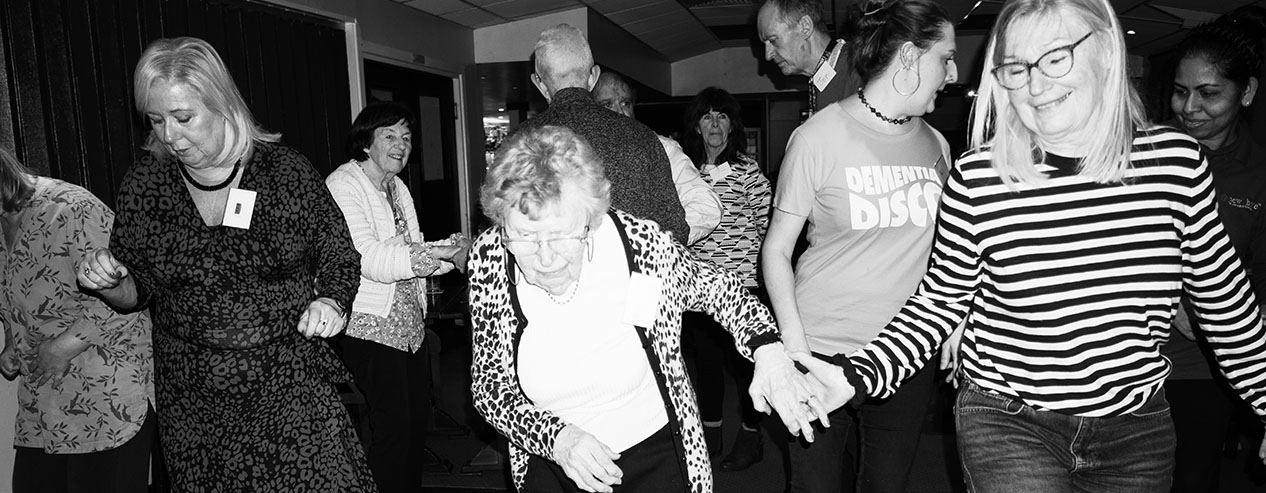
An example of this is Sunderland, where one social prescribing service has programmed silent discos for children with disabilities, dance for those at risk of falls and aerial workshops for older adults. These gave the opportunity to Marion, 95, of swinging from a silk hammock, laughing freely while suspended in the air for the very first time.  

Our most recent programme with Sport England, Movement Matters, aligns with their place-based investment approach.

The programme is designed to strengthen how physical activity is embedded within local social prescribing systems, supporting Active Partnerships to work more closely with primary care at a neighbourhood level in order to reach the communities most impacted by inactivity and health inequalities.  

The initial pilot in 2025 provided important foundations to strengthen relationships between sectors, support more strategic use of data and insights, and to build confidence among practitioners to position movement centrally within healthcare pathways.  

Building on this, we're preparing to launch a new phase of Movement Matters in April 2026 that will support Active Partnerships to translate insights into action, working with primary care to take a proactive social prescribing approach to health creation.

The new phase will also support wider primary care and community roles directly, providing resources, practical guidance and opportunities to share learning with the physical activity sector.   

This approach is a vital component of the vision for neighbourhood health, where prevention, community assets and personalised care play a central role in improving population health. 

This is reflected in Sport England’s recent blog for the Neighbourhood Health Implementation Programme.

This Social Prescribing Day, we recognise that creating active communities requires more than just provision.

It requires a way to connect people to movement that is shaped around their reality. 

When this happens, movement can become a routine part of health management, supporting people not only to stay well, but to live fully – with greater confidence, resilience and agency to take part in what matters the most. 

Want learn more about Social Prescribing? You can take NASPs free e-learning modules, including Social Prescribing Essentials, and Social Prescribing with Children and Young People.

From the riverbank to Prime Time

Long before I worked in sport, or even imagined running a sports charity, I was a state-school kid in Windsor learning how to row and trying to help keep our school boat club afloat.

My first experience of The Boat Race wasn’t from a fan park or a television screen but from the riverbank, where I was selling programmes to passers-by to help raise funds for the club.

That day, and what I felt during that time, stuck with me.

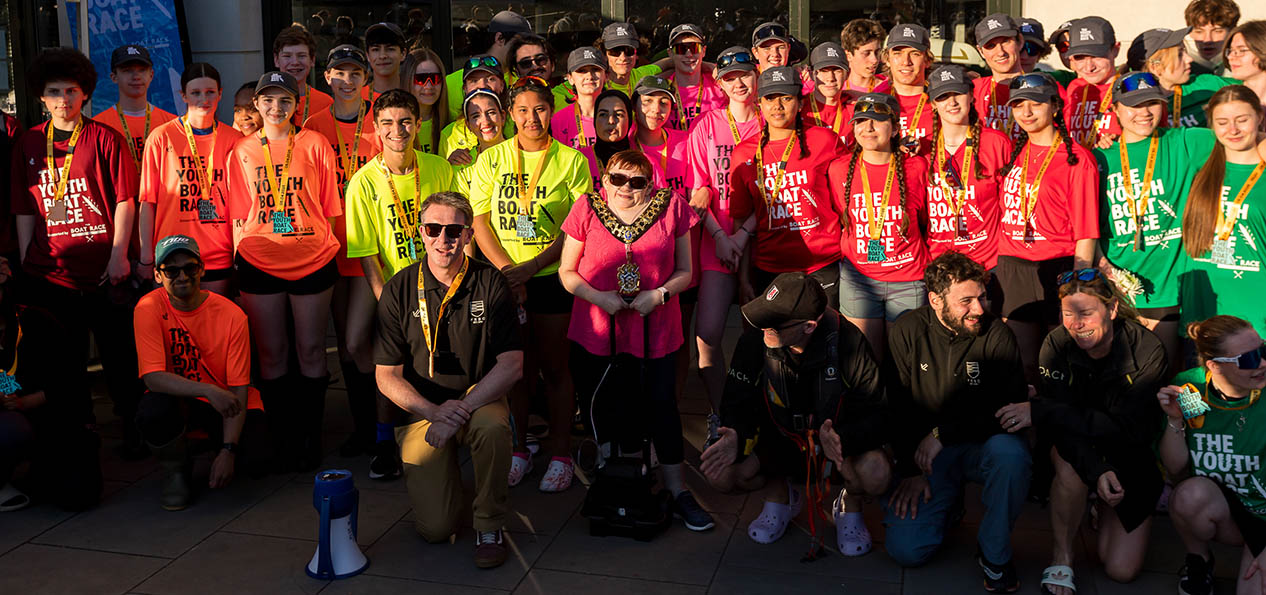
A group of young people with different colour t-shirts with "The Youth Boat Race" written on them pose with their medals on a sunny day.

The excitement of the day and its sense of history is huge, plus the Youth Boat Race aimed to bridge the gap between the on-water action and the young people watching from the bankside.

That memory was very much in my mind when in 2024 we began pitching the idea of a Youth Boat Race to the event organisers.

What the Youth Boat Race set out to achieve

After nearly 200 years of The Boat Race – one of the longest-running sporting events in the world, which this year will take place on Saturday 4 April – it felt there was an untapped opportunity for local young people, particularly those from state schools, to be part of it.

The ambition behind the Youth Boat Race was to change that, because this event was never just about racing. It was about access.

Access to rowing for young people who might not otherwise find it; access to the River Thames and its history and access to the feeling of belonging to an iconic and nationally televised major sporting event.

Inspired by The Boat Race and funded by The Oxford & Cambridge Rowing Foundation (OCRF), the charity that owns The Boat Race Company, the Youth Boat Race was designed to celebrate participation, teamwork and opportunity.

Crews would be mixed and inclusive, ensuring that everyone who wanted to race could do so, regardless of background or experience level and, just as importantly, the event was built with young people, not just for them.

The excitement of the day and its sense of history is huge, plus the Youth Boat Race aimed to bridge the gap between the on-water action and the young people watching from the bankside.

From school talks and volunteering opportunities to co-designing the event’s branding, the build-up and their input to shaping the event mattered, as those moments helped young rowers feel ownership, pride and a real connection to The Boat Race week itself.

Seeing the idea become reality

By April 2025, standing on the sunny banks of the Thames at Fulham Reach Boat Club, it was clear the idea had taken on a life of its own and the event featured on the BBC with a peak audience of 2.8 million. We even made our own video on the events of the day, which we are very proud of.

Over 100 state-school students and volunteers gathered for the second Youth Boat Race.

Eight mixed crews from schools across London raced side by side on the same stretch of river used by the Oxford and Cambridge University rowers, with families lining the banks and local supporters cheering.

The atmosphere was joyful, loud and deeply proud, with participants describing it as an amazing experience filled with music and laughter that they would “100% like to do again”, and "a very fun and a unique experience" that people thoroughly enjoyed and that built new memories with friends.

Watching young athletes race along the Championship Course was genuinely moving.

Many of them had discovered rowing through state school and community programmes, and that gave me an added sense of pride.

Speeches from OCRF Trustee Erin Kennedy OBE and Mayor Patricia Quigley captured exactly what the day represented: teamwork, trust, confidence and being part of something bigger than ourselves.

From pilot event to national stage

But for me, what has been most exciting is witnessing just how quickly the Youth Boat Race has grown.

From a small pilot in 2024, to a significantly expanded second year, all supported by the generosity of OCRF, the event has already become a meaningful fixture of Boat Race week. And now to see it included in Channel 4’s coverage this Easter Weekend 2026 truly feels like a milestone.

That visibility matters as it sends a powerful message to young people watching at home that rowing is something they can be part of.

After the inaugural Youth Boat Race in 2024, Owen Slot, chief sports writer at The Times, summed this up perfectly when he said: “Only when sports can spread the word like this does elite funding at the Olympic end really make sense.”

For me, that captures the essence of the Youth Boat Race and is the link between grassroots opportunity and elite sport, showing how inspiration, access and participation can exist hand-in-hand with elite level racing.

Looking ahead

The Youth Boat Race is still young, but its purpose is clear and each year it grows, not just in numbers, but in confidence, quality and impact too.

What began as an idea is now an event that brings communities together and opens doors for young people across London.

It proves that success isn’t measured by winning, but by the friendships formed, the confidence built and the moment a young person realises they belong on the river.

And this Easter, with the Youth Boat Race shared with a national audience, many more young people might just see themselves there too.

Leading the next phase of We Are Undefeatable

What better way to start the new year than with an exciting new role to get your teeth into?

In January, I joined the Richmond Group of Charities as the new programme director leading the We Are Undefeatable physical activity programme following a significant stint running behaviour change programmes in the active travel sector.

With Sport England funding recently confirmed up to March 2028, it was a great time to join the team and get cracking.

A busy year from the start

We Are Undefeatable is a game-changing programme, bringing together an impactful behaviour change campaign with thought-leading policy, and influencing work to support and encourage people with long-term health conditions to be active in ways that work for them.

Throw in a new strand of place-based pilot work starting later this year, plus lived experience voices underpinning all we do, and we’ve got a huge amount to offer the sector and our key audiences.

So, unsurprisingly, this year is shaping up to be an exciting one already.

To kick us off in January we launched our new place-based approach, inviting expressions of interest from a range of areas, all of whom are already connected to the Sport England place expansion work.

Our place-based work will build on our experiences so far working with Blackburn with Darwen and Lancashire on local versions of the We Are Undefeatable campaign to support places to embed systems change, increase opportunities for movement and frictionless pathways to physical activity for those with long-term health conditions. We look forward to announcing our new partnerships in the spring.

Earlier in February, we held our inaugural Lived Experience Network session.

This group will be pivotal as we move into the next phases of the programme, ensuring we are keeping the experiences and perspectives of our key audiences at the heart of our deliverables.

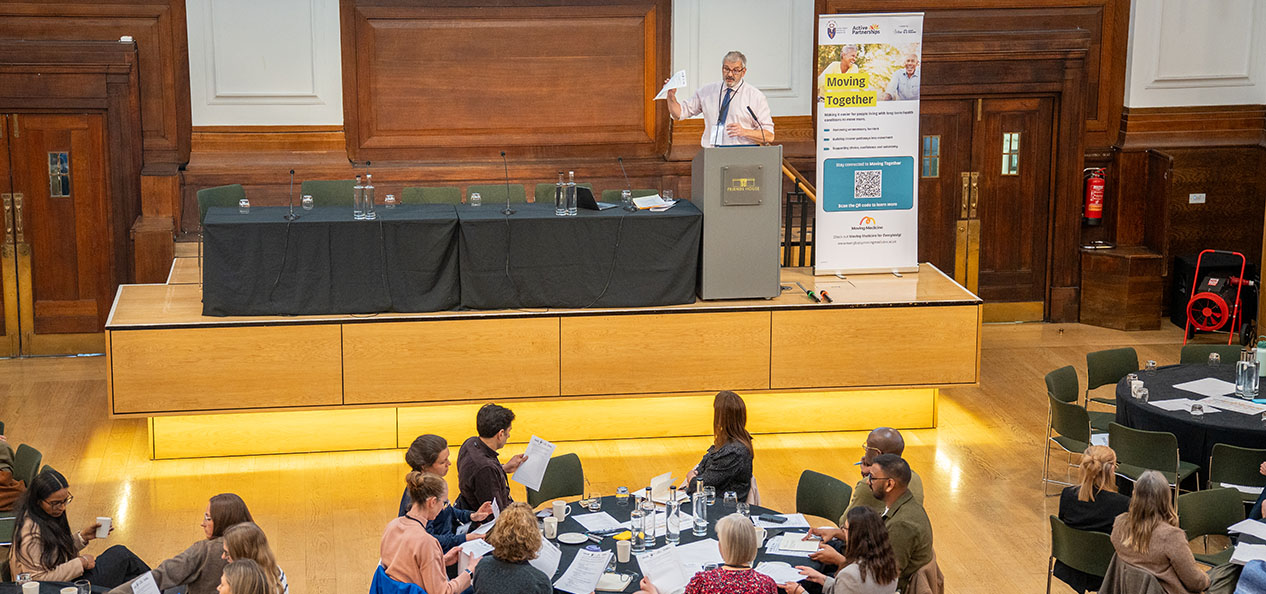
It’s also already proving valuable to our partners (including the Faculty of Sport and Exercise Medicine and the Active Partnerships National Organisation on the Moving Together programme), tapping into key expertise as meaningful contributors to work in development.

We’ll be lining up more opportunities for this collaborative working over the year and will continue to demonstrate to our network the impacts of their involvement.

In January we launched our new place-based approach, inviting expressions of interest from a range of areas, all of whom are already connected to the Sport England place expansion work.

The power of storytelling feeds through to our marketing efforts, with a social media influencer campaign and summer activation in development.

For it, we’ll be building on our previous successes with one in five people taking action having seen the campaign, 64% of people finding our advertising relatable and 66% agreeing that the campaign stands out from other advertising. Our insight hub offers more details about the response to the campaign.

And, while more details will come in due course, keep an eye out for a summer campaign and how you, and your networks, can get behind it.

Evaluating past efforts and looking ahead

While a lot of our lobbying and influencing work goes on behind the scenes, we’re particularly excited to kick start work on a follow up to our impactful Millions More Moving report from 2024 to see progress made against the policy shifts we set out to influence.

This time we’ll be going into it with greater depth on how and why to get millions more moving.

We’re also proud of our continued work on shaping the implementation of the 10 Year Health Plan, which will provide a focus for our lobbying and influencing work.

Our Lived Experience Insights Dashboard helps to inform our influencing work, so we’re delighted that this resource continues to be freely available for anyone who wants to access it as it now spans several years’ worth of data from 13,000 respondents with long-term conditions.

And finally (yep, there’s still more!), we’re heading into year two of having our very own app, which we’re about to get the first 12-month evaluation back from (thanks to GoodBoost and London Metropolitan University for working with us on that).

A sneak peek shows increases in physical activity for those engaging with the app and increases in personal motivation to be more active, which we’re thrilled to see.

With over 13,000 users registered already, this is a promising start to a fundamental part of the behaviour change journey for our audiences.

With such a busy year ahead there’s great cause for optimism that in 12 months' time we’ll have taken huge strides to achieving our goals within our role as a system partner and across our wider sector.    

Find out more

We Are Undefeatable

The future of inclusive sport

From the bloodandthunder drama of para ice hockey (I challenge anyone to watch a match and not feel exhausted) to the debut of mixed doubles curling, the Milano Cortina 2026 Paralympics Winter Games delivered far more than sporting excellence.

We’ve witnessed what human potential looks like when barriers are removed and inclusion is real, but climate change is shifting and rebuilding those barriers – making them higher, harder and, for some, insurmountable.

This is because climate change exacerbates inequality, threatening the hard-won gains made by disability activists over decades and, while progress has been huge, the extreme change in our weather and its effects on Earth are a stark reminder of how fragile that advancement is.

We even saw the impact of climate change at the Games, with some athletes voicing concerns that the March schedule for the event is now too late in the year and that competition conditions were being impacted by warm 'spring-like' weather.

The lesser known dangers of climate change 

Evidence submitted to Parliament is unequivocal: disabled people are more negatively affected by the health and social impacts of climate change than the general population – not primarily because of their impairments – but because systems already fail to meet their basic needs.

People living with disabilities – who are already twice as likely to be inactive according to our research, but who gain the most for their wellbeing from being able to take part in sport and physical activity – are disproportionately affected by rising heat, greater flooding risk and disruptions to accessible transport.

Sport England’s mission is to enable more people take part in sport and activity, but extreme weather is already making that harder.

From washed-out pitches to heatwaves that make outdoor sport unsafe, extreme weather has already prevented three in five adults in England from being active.

Climate research consistently shows why this happens and it’s simple and disheartening – disabled people are routinely excluded from climate adaptation planning.

Globally, 80% of national climate strategies fail to reference disability, leaving huge gaps in preparedness and emergency support.

And wherever disabled people are mentioned at all, they are often labelled as ‘inherently vulnerable’ – a misconception that shifts responsibility away from systems that fail to include them.
 

We’ve witnessed what human potential looks like when barriers are removed and inclusion is real, but climate change is shifting and rebuilding those barriers – making them higher, harder and, for some, insurmountable.

When torrential and constant rain hits it’s harder to manoeuvre a wheelchair outside. When a ramp floods, when accessible transport is disrupted, when a facility closes ‘for a few days’, some people lose far more than a chance to exercise. They lose independence, community and joy.

If we want to protect the magic of sport and movement – plus the hard-won progress of inclusion in sport for people with disabilities – we must protect the planet that makes sport possible.

That is why Sport England’s mission to help people get active now include helping the planet stay stable.

In May 2024, we launched Every Move, our first environmental sustainability strategy, to help the 150,000 sports clubs and 98,000 facilities across England sitting on the frontline of climate impacts.

We backed this with more than £45 million of National Lottery funding and already more than 570 interventions are underway, including solar panels on roofs, energy efficient systems in leisure centres or redesigned outdoor spaces to cope with flooding.

These changes cut carbon and also keep facilities open, safe and accessible for the communities who depend on them most.

On top of these, all of our partners must have sustainability action plans in place by March 2027 as a funding condition.

This isn’t a box-ticking exercise, but about futureproofing the places and spaces that people rely on to stay active, healthy and connected as communities, including our swimming pools, village halls, football pitches or athletics tracks, to name a few.

Community action agains climate change 

It’s great to see how sport is willing to innovate to face the disrupting weather conditions.

Football and all-weather pitches are working with us to explore transitions away from rubber infill and to increase recycling capacity, with the ambition to be the first in the world to have a fully sustainable system by 2035.

Elsewhere, leisure centres are switching to more efficient systems and community clubs are testing and implementing changes.

Be it the guys at Whalley Range Cricket & Lawn Tennis Club, who are planting trees on the outskirts of playing fields to better soak up excess water, or the river clean-ups hosted by Fulham Reach Boat Club – an organisation doing great work through Row to Rhythm, a project for individuals with visual impairments.

Actions like these collectively truly add up to major impact.

Going back to international competitions, the challenges facing the Winter Paralympics, and winter sport more widely, should not drive despair. They should galvanise us instead, because sport has always been about rising to the moment and responding to the now.

And right now, the moment demands that we confront climate change not just as an environmental issue, but as a justice matter – one that threatens to undo decades of progress in making sport accessible, inclusive and transformative.

If we want a future where Paralympians can still inspire the world from real snow and real ice, and where disabled people everywhere can access the benefits of movement, we must act together and we must do so right now.
 

A call to keep pushing

International Women’s Day is a date that, contextually, makes me reflect on how far women’s sport has come.

From being excluded entirely to selling out stadiums and becoming Euro champions, women and girls have had to overcome barrier after barrier in the UK (and beyond).

There is so much to celebrate in that progress, yet we’re still a long way from a world where sport is genuinely accessible and inclusive for everyone, regardless of identity.

Recognising this inequality is what shifted the direction of my own life and it continues to be the driving force behind my commitment to creating change for others. 

'Give to Gain'

This year’s theme, 'Give to Gain', really resonates with me because it reflects much of my own experience.

A lot of my journey has involved giving time, energy and care to support women, girls, trans and non-binary people, often alongside my main role, without always knowing what that would lead to.

What I’ve gained in return has been confidence, perspective and a much clearer sense of why this work matters. 

Through my role as activities and opportunities officer at Leeds University Union, I’ve been involved in work linked to the Women’s+ Sports Participation Project.

This is a great initiative that focuses on understanding why women and marginalised genders engage, or don’t engage, in sport and what needs to change to support them better.

Giving time to this work has reinforced how important it is to listen properly in order to create welcoming environments and challenge assumptions about who sport is for.

A lot of my journey has involved giving time, energy and care to support women, girls, trans and non-binary people, often alongside my main role, without always knowing what that would lead to.

Seeing people feel more confident accessing sport and physical activity has been one of the most rewarding parts of what I do. 

Recently, I joined Sport England’s Co‑Design Group and took part in an introductory session.

While I’m still very new to the space, what stood out to me straight away was the emphasis on lived experience and learning from one another.

Women's leadership in our sector

Being in a room where people are encouraged to share honestly and where those experiences are treated as valuable, felt important.

At this stage, my role is very much about listening, learning and understanding how these spaces work, but even that feels meaningful.  

Alongside this, being part of Leading the Movement has helped me reflect on leadership and what it looks like for women in sport.

There are positive signs, for example, that more women are stepping into leadership positions and that progress deserves to be recognised.

But when you look more closely, the number of younger women in leadership roles is still relatively small and that gap matters because younger women bring different experiences, challenges and perspectives that aren’t always represented.  

This realisation has also made me think about how often society equates age with experience.

However, I’ve learned first‑hand that this isn’t true because passion can outweigh knowledge and when someone is genuinely committed to making change, they will learn with purpose.

So I want to challenge the assumption that leadership must come with age, because it overlooks the value, insight and drive that younger women bring.

The future of sport

That’s why I believe that creating space for that passion to be recognised is just as important as creating space for experience, which is what I feel Leading the Movement has really committed to. 

All of this reminds me that progress in women’s sport has never happened by accident.  

It has happened because people have been willing to give their time, their voice and their energy to push for something better.

All of this leads me to the conclussion that 'Give to Gain' isn’t just a theme, it's a necessity.

Because when we give space to people’s stories, we gain understanding. When we give opportunities to those who are overlooked, we gain stronger, more diverse leadership. And when we give our passion to a cause, we gain the possibility of real, lasting change. 

As we celebrate International Women’s Day, I feel hopeful about what comes next.

There is still a long way to go, but there is also a growing community of people of all ages, identities and experiences who are determined to reshape what sport can be.

I want to be part of that movement not just to open doors for others, but by challenging the assumptions that keep those doors closed in the first place.

If we continue to listen, to learn and to lead with purpose, then the future of sport will not only be more equal, but also more representative of everyone it’s meant to serve. 

Safer Spaces to Move

International Women’s Day is almost here and while it’s always a time to celebrate progress, it should also be a moment to consider what’s still holding women back from being active.

For the This Girl Can team that means confronting the barriers that continue to drive the gender activity gap. A few years ago, one of those obstacles became impossible to ignore. 

Facing the unacceptable 

In 2021, through This Girl Can’s partnership with ukactive, I started looking more closely at women’s experiences in gyms and leisure centres. What we found was uncomfortable reading. That was the start of Safer Spaces to Move

A significant proportion of women told us they had experienced some form of sexual harassment in these spaces and for younger women aged 16–24, those incidences were even higher.

Gyms and leisure centres are spaces designed for health, confidence and empowerment yet, for many women, they come with an extra layer of vigilance.

That doesn’t sit comfortably with the ambition of This Girl Can, which has always been about creating environments where women feel free to move in whatever way works for them without judgement.

And while feeling judged is one thing, feeling unsafe is something entirely different and unacceptable.
 

International Women’s Day is almost here and while it’s always a time to celebrate progress, it should also be a moment to consider what’s still holding women back from being active.

The research forced us to confront something important: if women don’t feel safe, they won’t feel free; and if they don’t feel free, their participation will always be limited.

When we spoke to operators across the sector, there was no denial of the issue. To our delight, there was a huge amount of willingness to act, although there was also some uncertainty on how to do it.

Because how do you tackle something as serious as sexual harassment in a way that is meaningful, proportionate and practical? How do you communicate about safety without inadvertently making people feel more anxious?

That tension became the starting point for Safer Spaces to Move.

I want to make something very clear – this was never about calling out the sector, instead it was about supporting it.

We worked with organisations like CIMSPA and Women’s Aid to make sure any guidance we developed was grounded in expertise, legally robust, survivor-informed and realistic for busy gym environments.

One of the biggest lessons that we learnt along the way was that policies alone don’t change experiences. Culture does.

Helping positive change

You can have all the right procedures written down, but if the members of your staff don’t feel confident using them, or members don’t know they exist, their impact is significantly limited.

That’s why the most recent phase of the project, which we've launched earlier this week, has focused heavily on communication and culture, which made us consider questions like: how is safety talked about in our gyms, clubs and sport and physical activity centres? How are expectations set in these environments? Do members understand how to report an incident and trust that it will be taken seriously? And how are staff trained to respond?

We also tested messaging with women who use gyms and then sense-checked it with operators on the ground.

We went back and forth, refining language and practical steps so that what we produced didn’t feel alarmist or theoretical, but usable and reassuring. This is because our work isn’t about amplifying fear. It’s about building confidence.

On International Women’s Day, we often talk about breaking barriers.

Sometimes those barriers are structural; sometimes social and sometimes they’re the quiet assessment and security checks women make in their heads when entering a new physical activity space: "Is anyone watching me too closely? Are there other women around here? Can I do this exercise without feeling on display? Will staff step in if something happens?"

I think if we’re truly serious about closing the gender activity gap, we have to address all of these.

Safer Spaces to Move is part of our response to these barriers and sits alongside everything This Girl Can stands for: visibility, confidence and the right to take up space. Not just in theory, but in practice as well.

Because progress for our sector isn’t just about encouraging more women through the door.

It’s about making sure that when they walk in, they feel they belong there – fully and safely, and that’s something worth committing to this International Women’s Day and every day, before or after.
 

Find out more

Safer Spaces to Move

Sport and youth crime prevention

For more than ten years I’ve led the Sport and Safer strategy at StreetGames – a national sporting organisation committed to bringing sport to the doorsteps of young people in underserved communities.

Ten years of partnerships. Ten years of learning. Ten years of seeing what happens when sport shows up consistently where it’s needed most, and here’s what I now know: a decade of sport and youth crime prevention has changed many young people’s lives through sport, but we’re only getting started.

The policy moment is here

The conversation has changed.

Government strategies now talk about Safer Streets, Youth Matters, Child Poverty, Pride in Place, Freedom from Violence and Abuse and Fit for the Future.

And the common thread in all of these? That place matters, prevention matters and community matters.

The Government’s emerging Young Futures Programme – particularly its Prevention Partnerships and Hub model.

At StreetGames we have been doing something similar: identify vulnerable young people, focus on those in the 30% most underserved communities, connect them with trusted adults and engage them through high-quality, hyper-local sport, via a network of Community Partners.

The evidence has grown up

A decade ago, much of our work was powered by instinct and experience, but today it’s backed by robust research.

Our Theory of Change – Sport, Youth Offending and Serious Youth Violence was authored by Loughborough University, resourced by the Youth Endowment Fund and shaped with input from Sport England.

It sets out clearly how sport can reduce risk factors linked to youth offending while strengthening protective factors that keep young people safe.

That theory underpinned the Ministry of Justice’s £5m Youth Justice Sport Fund, which now informs more than a dozen place-based partnerships with Active Partnerships, Police and Crime Commissioners and Violence Reduction Units.

This isn’t theory gathering dust, but action that's shaping investment and practice, and that proves that when sport is delivered intentionally, it protects.

Why sport on the doorstep works

At StreetGames, we focus on doorstep sport – making it accessible, affordable and local. But this isn’t just about keeping young people busy. It’s about building identity.

Well-designed sport creates trusted adult relationships, safe spaces in the heart of communities, positive peer networks, emotional regulation and self-control, plus a sense of belonging.

These are protective factors – and protective factors matter.

A decade of sport and youth crime prevention has changed many young people’s lives through sport, but we’re only getting started.

When young people feel seen and connected, they are less likely to engage in harm and when they feel pride in their street or estate, they are less likely to damage it.

Doorstep sport also changes how places feel. A park filled with organised activity feels different. A street reclaimed for play feels different.

Putting a value on wellbeing

But ultimately, why does this matter?  Recently, we commissioned State of Life to conduct a social value study.

The research organisation looked at survey data from around 1,000 young people taking part in StreetGames’ doorstep sport, which many had entered through youth crime prevention pathways.

Using the WELLBY approach set out in HM Treasury’s Green Book guidance, the study estimated that the wellbeing uplift associated with participation equates to approximately £12,986 per young person, assuming the improvement lasts for one year.

That’s not a participation statistic. That’s the wellbeing value of doorstep sport.

Raising the bar

Our current Youth Endowment Fund-backed evaluation, Towards Sport, is using randomised control trials – the gold standard in evaluation. Results will land next year and we can’t wait!

But one thing is already clear: sport must be intentional. It must understand referral pathways. It must align with youth justice priorities. It must embed strong monitoring and learning. It must work in partnership, not in isolation.

Over the last decade, as a sporting organisation, we’ve become fluent in the youth justice system’s language – concepts and phrases such as trusted adults, contextual safeguarding, public health principles, system impact – and its significance.

This understanding has led us to a key learning: sport cannot simply turn up. It has to fit.

A decade in and still learning

We know many of Sport England system partners and Active Partnerships are active — or increasingly curious — in this space.

That’s encouraging because prevention is long-term work that requires humility, partnership and constant learning.

There is still more to understand and strengthen but the direction is clear.

Ultimately, this work is about supporting place-based community partners to support and protect vulnerable young people, getting them more physically active along the way. 

Think pro-social (not anti-social), build protective factors (not just manage risk) and, above all, use sport not as distraction, but as deliberate prevention and keep putting it where it works best and is needed the most.

These subjects, and more, will now become a series of deep-dive webinars that will be delivered in partnership with Sport England and the Active Partnerships National Organisation (APNO), and you can access the Quarterly Learning Session we had last week with Sport England. 

Together we will get more young people into sport and physical activity and away from crime.

Who's who in the System Partner investment universe

Sport England’s system partner investment has committed over £500 million, since 2022, to more than 130 partners in support of the organisation's Uniting the Movement strategy. 

This long-term funding provides up to five years of financial security and stability for organisations to focus on addressing the systemic changes needed to tackle the inequalities stopping individuals and communities from being physically active.

Moving forward together 

The latest findings from the evaluation of the System Partner portfolio, based on insights gathered throughout 2025, matures the understanding of how partners’ collective efforts are creating change.

It also shines a light on four distinct, yet interconnected, roles that System Partners play to influence change.

It’s important to say that while many organisations naturally combine these roles, understanding them helps us to be more strategic and effective.

Whether you are funded through the System Partner investment or from elsewhere, we encourage you to reflect on the roles your organisation play.

We hope this insight can prompt you to consider how you can strengthen your collaborations and benefit from the expertise and reach of others as part of your work towards addressing inequalities and increasing physical activity.

The four roles identified are:

  • The Improver. This role is the foundation of a safe and professional sector. Improvers focus on raising standards in governance, safeguarding, and equality, diversity and inclusion. They not only enhance their own practices but also support other organisations to do the same. An example is The Angling Trust, which – in response to a surge in demand for angling for wellbeing – introduced a 21-point checklist and new training to ensure its delivery partners met high standards for safety and quality.
  • The Influencer. Influencers work to shape the conversations and conditions that make it easier for people to get active. They advocate for policy change and champion the needs of specific communities. The Richmond Group of Charities, a coalition of health charities, exemplifies this role. By acting as a collective, they have achieved greater reach and successfully embedded physical activity resources into the healthcare system.
  • The Deliverer. This is where strategies are translated into opportunities for people to be more active. Deliverers create and adapt on-the-ground programmes for people to participate in sport and physical activity, with a focus on reaching under-represented communities. Chance to Shine’s ‘Street’ cricket programme illustrates this. By targeting deprived areas, recruiting local coaches and empowering young leaders, they have grown a programme that is youth-led and community-driven.
  • The Connector. Connectors bring people and organisations together at a local level. They use their understanding of a place to guide funding and activities where they are most needed. Active Partnerships such as the Yorkshire Sport Foundation demonstrate this role. They bring people and policies together to link regional policy and community action, using formal agreements and data-driven insights to translate high-level strategy into targeted, grassroots support.

The latest findings from the evaluation of the System Partner portfolio, based on insights gathered throughout 2025, matures our understanding of how partners’ collective efforts are creating change.

The insights emerging from the evaluation suggest that the benefits of these roles stem from how they connect as no partner plays just one role.

The magic of collaborative work

The System Partner investment has given organisations the opportunity to think beyond their primary function, build stronger relationships and adopt more collaborative, system-focused approaches.

We are sharing this emerging learning, and our revised theory of change, so that these insights can be used as a tool for conversation.

By understanding the unique contributions and how they fit together, we hope this evaluation is helping Sport England and others to better understand its place in the system.

Health drives wealth: gyms, pools and leisure centres play a big part

January is a difficult month for many of us. It’s dark, cold, wet and the glow of the festive season feels a long time ago.

But it’s also a moment when millions of people make a conscious decision to reset – to move more and invest in their health.

That’s why January matters so much for gyms, swimming pools and leisure centres. It’s consistently their busiest month of the year and not just because of New Year’s resolutions.

But beyond the first month of the year, there is a growing understanding that physical activity is preventative medicine and that a healthy population drives a healthy economy.

The places we move are of critical importance.

Earlier this week, alongside ukactive, I visited three very different facilities in one day – across both the public and private sector.

What struck me was how similar the stories were.

Operators talked about strong footfall, rising memberships and people coming through the doors for more than just exercise.

They’re coming for health, of course – but also for confidence, connection, and support.

This feels vitally important in a time that is characterised by increasing isolation, screens and polarised views.

Spaces open to everybody

Another feature which stood out was the remarkable diversity of the people there – from teenagers arriving in their uniforms after school, to the group of retirees who had originally been referred by the next door hospital and now were coming four days a week (and spending as much time over lunch as in the class).

It was also fantastic to see the level of innovation and use of technology to bring health and leisure closer together – with sophisticated health checks, devising personalised programmes for each individual, linking to 'e-gyms' and other virtual support.

This is the preventative health agenda in action. It’s getting active from the ground up and it sits at the heart of our ambition at Sport England, working with our partners to help millions more people become active.

January brings this ambition to life, but the real story is what’s happening year-round.

The scale and growth of the gym and leisure sector are significant.

The UK Health & Fitness Market Report 2025 shows a record 11.5 million people are now members of a health or fitness club – up 6.1% on the previous year – with 616 million facility visits recorded, an increase of 8.2%.

These are not short-term spikes. Participation has been growing over consecutive years, supported by a unique infrastructure of public, private, large, medium and independent operators working across the country.
 

Beyond the first month of the year, there is a growing understanding that physical activity is preventative medicine, and that a healthy population drives a healthy economy.

Sport England’s Active Lives Adults survey 2023-24 reinforces this picture.

Fitness activities and swimming continue to be major drivers of physical activity behind walking, with 904,000 more adults taking part compared to the previous year.

Demand is being driven by what people value most.

Polling from ukactive shows that 77% of members join a gym or leisure facility primarily to improve their mental health and wellbeing.

People also cite better sleep, increased confidence, managing health conditions and making new friends. This is about quality of life, not just physical fitness.

We’re also seeing important shifts in who is taking part. Female participation continues to grow, particularly through group exercise and classes.

Projects like Safer Spaces to Move, delivered with This Girl Can, are helping to remove barriers and make facilities more welcoming and safer for women.

Key community assets

Our latest Moving Communities report shows participation in public leisure has increased for every age group over 45, while gym activity is rising among under-16s, over-65s and people living in the most deprived communities.

Since 2017, the number of children and young people taking part in gym and fitness activity has increased by more than 12%.

Standards matter too. Facilities are improving every year, driven by initiatives such as The Active Standard, Quest and FitCert, ensuring that quality, safety and inclusion keep pace with growing demand.

All of this sits squarely within the Government’s priorities for economic growth and improving the NHS through the 10-year plan.

Health drives wealth and the social value created by being active is immense.

The sector contributes £122.9 billion in social value each year, including £15.9 billion in healthcare savings and £106.9 billion in wellbeing value – the equivalent of £2,600 per active adult – and more than double that for people with long-term health conditions or disabilities.

We gain £6 billion in productivity, thanks to a healthier workforce that takes fewer sick days.

The sector creates £5.7 billion in revenue and supports hundreds of thousands of jobs, many for young people at the start of their working lives.

These are extraordinary numbers.

January is important. But the real opportunity lies beyond it.

Gyms and leisure centres are not just places we go at the start of the year; they – and the people that work in them – are essential community assets, powering healthier lives, stronger communities and a more resilient economy all year round.
 

Find out more

ukactive

What kids really need

He wasn’t lazy. He was bright, funny and desperate to be out in the world. But his local park felt unsafe, the youth club had closed and the nearest sport sessions cost more than his family could spare.

By the time he came to my paediatric clinic, what looked like a 'health problem' – low mood, poor sleep, weight gain – was really a place problem.

Why local spaces are key

We often talk about children’s health as if it starts in the hospital or the GP surgery, but as I explored in my recent BBC Radio 4 series, Three Ages of Child, the real foundations of health are laid much earlier and elsewhere: in homes, schools, streets and parks – places where children feel they belong in their own areas.

Sport England’s latest place work and research puts into numbers what many of us see every day – like the fact that over half a million children, one in ten 12-17-year-olds, say they don’t feel they belong in their community.

This means that almost one in five don’t feel proud of where they live, often because there’s nowhere for young people to go to, and because of the worries about crime and antisocial behaviour.

Take a step back and look at how this paints a stark picture of children growing up in places that feel unsafe, unwelcoming and not really 'for them', so it’s no surprise that in those conditions activity levels are low and health problems multiply.

The same research also points to part of the answer.
 

We often talk about children’s health as if it starts in the hospital or the GP surgery, but the real foundations of health are laid much earlier and elsewhere: in homes, schools, streets and parks – places where children feel they belong in their own areas.

When asked what gives them a sense of community – beyond friends and family – the top answer from young people was sports clubs and activity groups.

Anyone who has ever watched a child beam with pride after football training or a dance class knows why: a club is not just about exercise; it’s about belonging.

It offers a safe place to go with people who know your name and that offers the chance to be part of a team.

Dangers of the postcode lottery

But access to those opportunities is deeply unequal.

In England’s most deprived places, over a third of people are inactive, compared to around a fifth in the least deprived areas – a postcode lottery for physical activity that deepens health inequalities.

As a paediatrician, I see every day that a child’s postcode can be a stronger predictor of their health than their genetic code.

When local streets feel unsafe, there’s nowhere affordable to go and young people don’t feel they belong, it shows up in their bodies and in their minds.

If we care about the future of public health, we have to turn our thinking on its head, because health isn’t built in hospitals. It’s built in communities.

Exercise and sport are a kind of miracle cure – for health, wealth and happiness – but only if everyone can actually take part.

According to research by Sport England, every pound spent on community sport and activity brings multiple pounds back in benefits to health, wellbeing and the wider economy.

That’s why I welcome efforts to work in a genuinely place-based way – including Sport England’s commitment to invest in the areas facing the greatest challenges.

But beyond the work of any single organisation, the principle stays: you can’t fix place-based problems with purely top-down solutions.

Making children proud

For me, this is what it looks like to move from treating symptoms to changing systems.

You can’t lecture a child into feeling proud of their area or prescribe their way out of a broken play park.

But you can bring together the people who know that place best – including children and young people themselves – and invest in the spaces, clubs and connections that allow them to move, play and belong.

That means co-production, not just consultation: listening to what families say they need, backing trusted local organisations, designing activities that reflect different cultures, bodies and lives and being in it for the long haul.

Our children are telling us they want to feel proud of where they live and that they want to be part of something bigger.

Working locally, listening deeply and backing places over the long term is how we start to make that real – street by street, pitch by pitch, park by park.
 

Find out more

Place Partnerships

Changing the game

At Sport England, we want to make physical activity and sport a normal part of life for everyone, as movement is not only great for everybody's mental and physical health, but because it also brings communities together, develops skills and confidence, and even contributes to boosting our economy.

However, we know that when it comes to being active, it’s not a level playing field across the country and some groups in our communities face additional barriers due to their background, gender, postcode, culture and/or disability (amongst others).

That’s why our focus on Equity, Diversity and Inclusion (ED&I) runs through everything we do and aims to tackle some of these systemic challenges, because for us it’s not about ticking boxes, but about making the world better for everyone.

As part of our long-term organisational strategy, Uniting the Movement, and our ED&I ambition to tackle inequalities, we have a specific focus on disability.

Our latest Active Lives data shows that one in five people in England have a long-standing limiting disability or illness, and that disabled people are almost twice as likely to be physically inactive.

We also know that an estimated 15% of the UK population are neurodivergent and that the more barriers people face, the less likely they are to be active.

On the other hand, we believe in the social model of disability – which means that people are disabled by society, not by their impairment – so we want to change the systemic and practical barriers they have to face as these, and not the person, are the real problem. 

Historically, societal systems and sporting traditions have (often invisibly) excluded neurodivergent people and that's why at Sport England we're so excited to be working with Neurodiverse Sport and Autism Action. Together we want to begin to address these issues and drive more inclusive practice.

We are all included

Everyone is neurodiverse because everyone’s brains are different, but 'neurodivergence' refers to the cases when cognitive profiles differ further from the statistical norm, as happens with autism, Attention Deficit Hyperactivity Disorder (ADHD), dyslexia or dyspraxia.

As with everything, neurodivergence is different for each individual and some experience greater challenges than others.

We believe in the social model of disability – which means that people are disabled by society, not by their impairment – so we want to change the systemic and practical barriers they have to face as these, and not the person, are the real problem.

A person’s experience depends on how their unique strengths and challenges interact with their environment – so designing better environments is key to better outcomes.

Not everyone sees neurodivergence as a disability and this often links to whether they align with the social or medical model of disability, which sees the disability as the problem.

But as a disabled person, this makes sense to me – I don’t see myself as disabled if I use the medical model, yet I do under the social model.

Being disabled doesn’t stop anyone from having significant strengths, experiences or ambitions. 

In fact, it definitely doesn’t stop those wanting to be involved in sport and activity, from grassroots through to elite (Paralympics, anyone?).

So what we want to see, and what our partnership with Neurodiverse Sport and Autism Action will help us progress with, is a more inclusive and skilled sector for neurodivergent people.

The investment will focus on increasing awareness, upskilling the workforce, creating health and wellbeing partnerships, and building best practice and innovation for change.

Additionally, it will develop a 'Blueprint to Inclusion' to develop, pilot and replicate neuroinclusive practices across the sport and physical activity sector that will equip it with tools and resources to change understanding and practice.

The document will be co-produced with people with lived experience and it'll focused on people's strengths, promoting practical and reasonable adjustments as standard, and considering both performance and wellbeing.

More information about how this work is developing will be shared in the new year.

Bringing barriers down 

In spite of our best efforts and Uniting the Movement, it’s clear that there are deep-rooted inequalities in sport and physical activity that mean many people feel excluded.

We want to reduce this for neurodivergent people by working together to understand the barriers some are facing, finding solutions and supporting the sector to take this forward.

But we can’t do this alone – not even with the extensive networks of our partners. So if you want to be involved and are curious and ambitious in how we can collectively make the world better, please get in touch. We’d love to hear from you.

Find out more

Moving to Inclusion

Closing the wellbeing gap

At StreetGames we are passionate about helping children and young people from the most deprived places build life-long habits in sport and physical activity.

We do this because we know the powerful role that sport and physical activity can play in helping young people build friendships, develop confidence, forge a sense of belonging, provide opportunities to connect with trusted adults, develop pro-social behaviours and improve attention, engagement and performance levels at school.

The triple dividend for young people

Sport and physical activity improves health and wellbeing for everyone, but for children and young people it delivers a ‘triple dividend’.

This refers, firstly, to the immediate gains from getting good active habits from a young age; secondly, to the potential of future benefits as today’s youngsters transition into adulthood and, thirdly, to the advantages that the next generation (i.e. their children) will enjoy from following their elders’ healthy behaviours.

As such, it’s encouraging to see this new research from Sport England and their research partners – State of Life, Sheffield Hallam University and Manchester Metropolitan University – which provides powerful data showing the significant wellbeing uplift children and young people gain from taking part in sport and physical activity.

The latest numbers include new calculations for 7-11-year-olds and applies the newly developed C-WELLBY measure, together with wellbeing values by demographic breakdowns for 11-16-year-olds.

The new results show an average yearly wellbeing value of an active young person aged 7-11 years of £3,100, and an updated average value of £4,300 for an active person aged 11-16 years.

There is also significant wellbeing value attached to young people who are ‘fairly active’, because taking part in at least some sport and physical activity regularly is better for the wellbeing of our young people than being ‘less active’.

Wellbeing calculations

In both cases, the average wellbeing values for participation are higher for children and young people than for adults, highlighting the importance of being active from a young age.

However, the research also highlights a ‘wellbeing gap’.

As we mentioned, the value of being active for 11-16-year-olds is £4,300, but analysis by demographic sub-groups shows a weaker association between physical activity and wellbeing among children and young people who are from low family affluence (£2,900), Black (£2,300), girls (£3,300), or disabled or living with a long-term health condition (£2,800).

Sport and physical activity improves health and wellbeing for everyone, but for children and young people it delivers a ‘triple dividend’.

As the report pinpoints, these wellbeing calculations do not take into consideration factors related to opportunity, motivation, enjoyment and experience – all of which are essential to developing a lifelong positive relationship with physical activity and that may go some way to explaining the disparities.

Indeed, recent analysis from Youth Sport Trust showed that motivation and enjoyment account for at least half of the wellbeing benefits of physical activity in school.

We also know from last year’s Active Lives Children and Young People 2023-24 survey data that only 37% of children and young people from low affluence families feel they have the opportunity to be physically active, compared to 57% of children and young people from high affluence families.   

This is a view that is very much echoed amongst young people StreetGames speak to and who are living in areas of high deprivation who tell us: “there isn’t a lot to do”, “parks don’t feel safe”, “the public facilities get vandalised and are not maintained”, “prices are very expensive” or “we would love to volunteer, but it’s difficult to find opportunities.

Equalising opportunities and provision 

However, when opportunity and choice are equalised – such as through school-based activity or accessible community provision – the association between physical activity and wellbeing appears stronger among more disadvantaged groups.

Youth Sport Trust analysis shows that the wellbeing benefit of physical activity in school is almost double for children who are disabled or receiving free school meals compared to their peers.

For those of us working to provide all children and young people with access to the benefits that come from taking part in sport and physical activity, this new research is important as it provides further evidence on the essential role that sport and physical activity can play in society. 

But also importantly, it emphasises the need to maintain an unwavering focus on reducing inequalities that exist, and on making sure all children and young people can take part in a variety of enjoyable and accessible opportunities that will help them to flourish not just now, but also in the future.

And if you still need further convincing, then we’ll leave the final say to young people who shared how sports and physical activity benefits them.

Some mention it’s all about having fun, others highlight how it helps them to meet new people and socialise, while for others being active brings “a nice break from daily stresses” that gives them a chance to “forget everything while being an active and healthy too”.

The advantages of being active really are too good to ignore and all children deserve to take advantage of them.

My day, my rights

Two years ago I shared my first blog for World Children’s Day to raise awareness of children’s rights.

Whilst progress has been made in our sector, the words of a member of a newly formed Youth Advisory Group (YAG) on behalf of the Children’s Coaching Collaborative (CCC), proves there is still work to do.

He said that children’s rights are something that he heard about in primary school, but that he now only finds “in random news articles". This young man is now 16!

However, ensuring that young people have positive experiences of being active that are safe and fun, and that also respect their rights, is one of the areas we at Sport England, and a number of partners across the sector, have been advocating for in the past few years.

And there’s an article about children’s rights in sport by Liz Twyford, from UNICEF UK, that I think is key because it highlights the subtle but important change that means putting the child first to make a difference, and the impact that coaches have on those they work with.

Supporting young people to Play Their Way

Play Their Way exists precisely to champion children’s rights in sport and physical activity.

The campaign was launched in 2023 with the idea of taking a child-first approach to coaching, to ensure that their rights, needs and enjoyment are always prioritised, so they can have a positive experience of being active.

The campaign has been gaining supporters non-stop and in September this year we celebrated reaching a milestone of 10,000 registered members.
 

Ensuring that young people have positive experiences of being active that are safe and fun, and that also respect their rights, is one of the areas we at Sport England, and a number of partners across the sector, have been advocating for in the past few years.

In a recent blog by our head of children and young people, a survey was shared to understand the range of youth voice and resources used across the sector.

Thanks to those who contributed, it has confirmed that listening to children and young people is an established priority with many brilliant examples.

However, for some, more support is needed to ensure a meaningful and sustainable youth voice practice to ensure children and young people feel included and supported to shape decisions affecting them through ongoing opportunities.   

Welcoming the Youth Advisory Group

To keep engaging and embedding the voice of young people in a meaningful way into the work of the CCC, earlier this year young people were invited to apply to join a YAG for our sector.

The initiative was led by Streetgames and saw 12 young people aged 14-19 with a range of experiences and backgrounds being 'recruited'.

Over the summer they spent time getting to know each other and understanding the role they would play as part of the group.

Within their applications, they were asked why they felt young people participating in shaping sport and physical activity opportunities was so important.

I was impressed by their thoughtful, positive and passionate responses that took into consideration not just themselves, but their peers too.

Some comments that I found particularly insightful mentioned that hearing what young people had to say is important as it “ultimately allows more young people to be able to access sport” (Poppy, 18).

That being listened to, allowed young people to have “a sense of empowerment” that made them see they’re “in control of the future” (Tasnuva, 16).

And, ultimately, that speaking out allows them to shape their own opportunities by
“influencing the accessibility and culture of sport for years to come” (Isobel, 18).

The group will be encouraged to share their experiences, views and opinions on coaching to inform the ongoing work of the CCC and will receive support to develop their own understanding of their rights. 

There are also other organisations with great initiatives to put children and young people’s views first in the sector.

For instance, the Positive Experiences Collective are hosting a range of resources and support connections to inspire advocacy for physical literacy, to help children and young people develop a positive and meaningful relationship with being active.

And the Centre for Youth Voice recently relaunched to continue to amplify the voices of young people and their impact. I recommend you check out their free online training and events on their website.

The future is young

Next month we’ll be releasing the Active Lives Children and Young People survey, covering the 2024-25 academic year.

This time we’ve introduced a new question to help us understand to what extent young people are heard by the adults delivering activity to them, which will provide a baseline to shape our work moving forwards.

This has only been a snapshot of the work we know is happening within the sector for children and young people, but we will continue to raise awareness of their rights.

For now we can all do this by listening to their voices and working with them to design and provide more opportunities to support all children and young people to be active, so they can enjoy it and gain the benefits that movement can bring into their lives both now, and as they grow into adults.
 

A positive force in many ways

On 26 November the Chancellor will deliver a much-anticipated budget.

In her pre-budget video message, the Chancellor has described the pressure on the NHS and the challenge of increasing growth, but among all the uncertainty, one thing is clear – finding the right package of measures will not be easy.

Against this backdrop, it feels timely to be publishing an update to our social value of sport and physical activity work. 

The new and expanded information shows what a positive force community sport and physical activity are.

A great cure with many benefits

The health and wellbeing benefits of sport and physical activity are well rehearsed and the UK Chief Medical Officers have previously described physical activity as the closest thing to a “miracle cure”, but based on the information we’ve published today, even that high praise seems to sell its value short.

Here are a few of the headlines from our latest data:

  • Sport and physical activity are good for the nation’s wellbeing and health. In 2023/24, the wellbeing value of sport and physical activity was estimated at £107 billion, and it prevented over 3.3 million cases of non-communicable diseases or chronic health conditions ranging from depression to heart disease. 
  • A more active nation means a more productive workforce. In 2023/24, £5.8bn of productivity losses due to morbidity were avoided due to sport and physical activity. 
  • A more active nation saves the health care system money. In 2023/24, sport and physical activity saved £8bn in direct healthcare costs through disease prevention and reduced use of health services. 
  • Community sport and physical activity is a net contributor to the public finances. In 2023, our sector generated tax revenue of £14bn for central government, compared with £2bn of public sector funding. This means community sport and physical made a net fiscal contribution of £12bn.

Furthermore, we know that sport and physical activity is a significant part of the economy. In fact, the Department for Culture Media and Sport’s 2024 Sport Satellite Account for the UK show that the direct contribution of sport and physical activity the English economy was £47 billion of gross value added and supports one million jobs.

So, from a public policy perspective, what’s not to like?!
 

Physical activity has been described as the closest thing to a “miracle cure”, but based on the information we’ve published today, even that high praise seems to its value short.

The value of sport and physical activity is significant and wide-ranging but with the right support it could be even greater.

The information published today also includes our estimate of the social cost of inequality in sport and physical activity, that is the amount of social value we miss out on because some groups of people are less likely to be active than others.  

We estimate this to be £19.6bn a year.

Tackling inequality in sport and physical activity, and realising this value, is at the core of our long-term strategy, Uniting the Movement, so I’d like to end by paraphrasing the Chancellor: “I commend the value of sport and physical activity to the House.”

Inclusive practice makes business sense

Imagine you’re missing out on talent, innovation and fresh perspectives, but not because they don’t exist, but because your systems weren’t built with them in mind.

That’s the quiet cost of inaccessibility in the workplace.

But with any challenge comes an opportunity and, in this case, it’s to realise that inclusive organisations perform better because they’re more adaptable, more trusted and more representative of the communities they serve.  

And with nearly one in four people in the UK identifying as disabled, this isn’t a niche issue – it’s a mainstream one.

So, just as the EmployAbility Guide highlights: “Inclusion isn’t just the right thing to do;  it’s a smart business decision.”

Group photo of disabled fitness professionals on a dance fitness certification training day at an indoors gym.

As someone who works at the intersection of disability and fitness, I’ve seen what’s possible when inclusion is built in, not bolted on, so I’m inviting employers and training providers to be part of shaping a sector that welcomes everyone and reflects our society.

What we’re building and why

The EmployAbility Leisure Strategic Partners Group was formed in 2022, and its members include Activity Alliance, CIMSPA, Community Leisure UK, EMDUK, Sport England, ukactive and UK Coaching.

The researchers are Professor Brett Smith and Dr Juliette Stebbings, and the lived-experience professionals are Lee Welch, Sam James and myself.

Together, we’ve developed three practical guides that support:

  • Employers recruiting and retaining disabled staff.
  • Training providers supporting disabled learners.
  • Disabled people building careers in the sector.
     

As someone who works at the intersection of disability and fitness, I’ve seen what’s possible when inclusion is built in, not bolted on, so I’m inviting employers and training providers to be part of shaping a sector that welcomes everyone and reflects our society.

Our mission now goes further and we promote sector-wide change by highlighting career pathways for disabled people, supporting inclusive education and recruitment and creating accessible cultures – physically and digitally.

From curiosity to commitment: my journey

As a partially blind person, I was excited – and curious – about training as a fitness instructor through the InstructAbility programme.

In 2014, I became the YMCA Fit’s first visually-impaired Exercise to Music trainee.

That milestone launched a career delivering audio-described dance fitness for blind groups, accessible fitness sessions for diverse audiences across the sector, and corporate energisers and team-building services.

I’m now an Exercise referral specialist and a member of the EmployAbility Strategic Partners Group.  

Why digital accessibility matters

I believe that inclusion must go beyond access to physical spaces and it must include the digital world, too, because we’re living in a digital age and accessibility is vital across the entire journey – from recruitment to training, development and as a constant on daily tasks in the workplace.

Accessible formats for blind and visually impaired people include Word documents and websites built to Web Content Accessibility Guidelines (WCAG), enabling screen-reading software to convert text into speech.

While I’ve had great support from training providers, some newer online platforms introduced unintended barriers, such as being incompatible with screen-reading software.

The good news? These issues are easily addressed through accessibility audits and expert scripting, making the platforms usable again.

You don’t need to scrap your systems but you do need to review them, so start where you are, get an audit, plan for access in your budgets and keep moving forward.

Why this work matters

In the UK, 16.1 million people, that is 24% of the population, are disabled yet only 54.2% of working-age disabled adults are employed, compared to 82% of non-disabled people, causing a 27.9 percentage point gap.

In our own sector, the gap is more acute with just 9% of disabled people saying they’ve had the opportunity to coach or deliver sport and physical activity, compared to 24% of non-disabled people.

At the same time, disabled adults are almost twice as likely to be physically inactive as non-disabled adults (39.5% vs. 20.2%).  

Good work is already happening, will you join in?

I’ve experienced inspiring commitment from training providers like YMCA Fit and dance fitness brands like Clubbercise and SOSA Dance Fitnesswho’ve trained and certified instructors with a wide range of disabilities.

Employers using Guide C have already improved our sector through an increased level of confidence among the staff, made recruitment more inclusive and enhanced feedback and onboarding processes.

Let’s connect!

Our free guides are here to support you, your team and your workplace. You don’t need to get it all right immediately, but taking steps forward is what matters.

We also want to say that we’re here for you and since Activity Alliance is currently acting as secretariat for the group, you can contact Dawn Hughes, their strategic partnerships advisor, and/or their workforce lead, Helen Newberry if you’ve got any questions, want to highlight any barriers or give us your feedback.

Let’s have a conversation, swap ideas, compare notes, celebrate your wins, tackle the challenges and keep learning together.
 

In the picture

The concentrated focus of Black History Month provides an opportunity to gain new perspectives through events, articles and media programming that might otherwise be overlooked.

At its best, this month should stir our curiosity and resolve as we look back at the achievements and struggles of Black people, helping us gain a fuller understanding of Black histories to strengthen our grasp of the present.

This celebration (and the round-the-clock efforts by many through the year) should move us to action, reminding us that we don't have to accept the erasure of some people and communities as normal.

A group of dancers hold fans as part of their routine during a session on an indoors gym.

One of the best ways we can use this month is to harness new understandings to permanently build more inclusive platforms for Black achievement and wellbeing, so if you’ve missed our series of articles this month, please do look back.

These guest blogs are all great stories that highlight examples of community leadership that push back against the status quo of erasure.

It’s vital that we recognise and celebrate this work, which truly models more local and equitable practice, shaped by communities themselves.

But what about the models in the digital world?

Black History Month should move us to action, reminding us that we don't have to accept the erasure of some people and communities as normal.

As the usage of virtual spaces increases in all areas of our lives (including work, leisure or physical activity), it’s important to push for equity online too.

But with the backdrop of ongoing online abuse and discrimination, which inhibit participation in sport and physical activity, we’re rightly focused on the importance of creating safe virtual spaces too.

However, safety is only one side of the equation because we’ve also been asking ourselves how we can use technology to improve representation.

An example of this is We Like the Way You Move, the latest phase of our award-winning campaign, This Girl Can.

Technology for good

This phase has included a push for greater visibility of Black women – as well as other underrepresented groups of women – in imagery that promotes participation by sport and physical activity organisations.

This is how it’s worked: with the help of AI, we analysed publicly-available photos that came from parks, gyms, sports clubs, community centres, swimming pools and other leisure facilities across England and sourced via Google Maps, and confirmed that – alongside other minoritised groups of women – those who look like me have been virtually erased.

I’m excited that we’ve found a way to use the power of AI to drive better representation in our sector, because at a point when we’re all figuring out how to be more purposeful in how we use technology, finding insights that we can act on in real-time to contribute to change feels like a tangible win.

This push for greater visibility marks a positive shift that has come with our strategy’s focus on tackling inequalities as we’re working on reshaping our existing efforts to collaborate with different audiences and leaders through initiatives like TRARIIS.

Having celebrated the 10th anniversary of This Girl Can earlier this year, We Like the Way You Move has also used some powerful new imagery of women who have conventionally been excluded from the picture of sport and physical activity.

These are pictures full of joy and love for movement and, at times, I’d say you can almost hear the music they’re moving to.

These images are also a great reminder that women are creating their own platforms in communities, leading change and putting their unique stamp on activities and spaces.

We hope that they will help shift mindsets and that other organisations will follow suit.

On a personal note, it’s wonderful to see references to Caribbean culture, dance and movement in the mix.

It really does make a difference to my motivation and sense of belonging when I can see parts of my identity reflected back to me.

And I’m confident that the breadth of images and ways of moving captured in the campaign will have a similar impact on lots of other women that should have always been in the picture.

Staying out of lane

Bristol Stepping Sistas is more than a walking group – it’s my walking group. Mine and that of the amazing women who've walked with me since 2021.

Together we are an award-winning walking group that enables us to reach out to other women in the Bristol area and encourage them to thrive in open spaces through the simple (yet powerful) activity of walking.

At the core, we are a grassroots group of Black women and women of colour who are passionate about walking and who want to share their identity and their lived experience.

We started to apply for funding so the group could carry on as it offers a well-needed support and it was great when Sport England was able to help us.

We regularly organise walks and we aim to cover different distances to keep our activities interesting for everybody, whether you want to stay close to home or you fancy venturing further. 

In any case, our aim is to help motivate women of colour to visit places they would not have ventured to otherwise, including rural areas around Bristol and further afield in the South-West; routes, all of them, that can be of interest for our women beyond the city borders.

Why we do what we do

Historically, women of colour have not always been up for exploring new, unfamiliar spaces where they feel they could be exposed, judged and/or remarked upon.

This has led to the feeling that we have to 'stay within our lanes', but at Bristol Stepping Sistas we want our women to break any limitation and stay out any of those lanes, so we can all thrive in the new experiences that come with that change of scenery.

We want to encourage women to step across these boundaries (physical and non-physical) and push their limits but, at the same time, to do so in the safety and the company of others who may have had similar experiences of discrimination and disadvantage.
 

Our aim is to help motivate women of colour to visit places they would not have ventured to visit otherwise, including rural areas around Bristol and further afield in the South-West.

Ultimately, we want to enable the activity of walking to be fun, uplifting and enriching to the lives of women of colour, regardless of their walking experience.

Because, for us, walking is more than putting a foot in front of the other and we're definitely not here to cover distances within a set time.

We couldn't care less about that!

At its core, the group is about walking but we use it as an excuse and an opportunity to chat, to reflect and to thrive in nature.

We use the enjoyment and appreciation of open spaces and environments to help address issues of mental health, which I can see have been on the increase in the last few years.

More than walking

So when we meet, we walk and talk about ourselves, our cultures, our favourite dishes and ingredients.

We mention recommendations of new places to go on holidays, other groups we may know and love, and we do all of that while enjoying the fresh perspective that only nature can give us.

So, basically, we talk and we walk, and then we walk and we talk some more. It’s brilliant!

There’s been some excellent feedback from the members that mention how Bristol Stepping Sistas has been a positive, life-changing experience for them.

Our typical walking day is always about fun and there are so many smiles and so much laughter coming from our women, plus our sessions also allow us to meet new members in the group.

There has been a lot to learn in the last four years, but organising the walks is super exciting and every time we go out I look forward to seeing our walkers enjoying and embracing the environment and, of course, improving their wellbeing.

At the end of the day we may end up in a cosy country pub for a well-deserved recovery lunch to get some energy back. It really is great!

As well as creating Bristol Stepping Sisters, I have also provided the first aid outdoor training for 24 women from the group, from which I’m happy to say we’ve all passed!

I’ve also provided the walk leader training for six other women from the group.

My dream is that, together, we keep walking and enjoying every step we take, breaking any fear or boundaries that dare stay in our way.
 

Find out more

Bristol Steppin Sistas

Leading with our hearts and minds

Today, on World Mental Health Day, I find myself reflecting not just as the new Head of the NSPCC’s Child Protection in Sport Unit (CPSU), but as a parent, a colleague and a lifelong advocate for the safety and wellbeing of children and young people.

Mental health is not a standalone issue. It's woven into the fabric of everything we do – how we parent, how we coach, how we educate and how we safeguard.

And in my new role at CPSU, I’m committed to making sure children’s wellbeing, their mental health and voices are instrumental in our work.

One of the most impactful ways we can help with mental health is through sport and physical activity as their benefits are well-documented and include movement boosting our mood, building resilience and fostering connection.

But sport and physical activity also offer something deeply human – it gives children a sense of belonging, a place to express themselves and a safe space to grow.

The power of communication

Whether it’s a kickabout in the park or through more structured team-training, movement can be a lifeline for young people – helping them navigate the complexities of growing up and it can also help them to cope with the world’s pressures.

But the act of playing sport or being physically active alone isn’t enough.

This week we are also celebrating Keeping Your Child Safe in Sport Week, and we think that sport and physical activity are key in highlighting that parents and carers play a crucial role in safeguarding their mental wellbeing.

This safeguarding starts with a conversation, because when we talk openly with our children about emotions, stress and support, we create a culture of trust and a safety net.

These conversations don’t have to be perfect – they just have to be real and, as parents, we have to listen.
 

Whether it’s a kickabout in the park or through more structured team-training, movement can be a lifeline for young people – helping them navigate the complexities of growing up and it can also help them to cope with the world’s pressures.

When children feel safe to open up, we strengthen the parent-child bond, we build relationships rooted in empathy and understanding and, in doing so, we lay the foundation for lifelong mental wellness.

So today I encourage every parent, coach and caregiver to take a moment and ask your child how they’re feeling, what support means to them, and what actions we can do as parents and carers to help them.

We also think that as well as listening, it’s important that you share your own experiences too and that you let them know they’re not alone.

At the CPSU we have new videos and conversations starters for parents, plus resources for sports organisations to help promote a culture of listening within their organisations.

Because safeguarding isn’t just about protection – it’s about connection.

Together, let’s make mental health a part of keeping our children safe. Not just today, but every day.
 

Find out more

World Mental Health Day

Our hidden health clubs

When most people picture senior Black men, they don’t immediately see us smashing forehand drives, diving for edge-of-the-table shots or celebrating doubles-wins with a triumphant chest bump (yes, it happens!).

But step inside an Over 50s Black Men Forum Table Tennis Centre and you’ll quickly realise that the sport is not just a pastime – it is medicine. It is therapy. And it is comedy.

A ping-pong ball, we often say, can travel faster than a GP appointment letter, making these centres our hidden health clubs.

But behind the rallies and the laughter, there is serious work underway.

A group of Black men pose during an Over 50s Black Men Forum Table Tennis session on an indoors centre.

Our hubs are what we call 'free health clubs in disguise' and alongside the games, we often run blood pressure checks, mental health workshops and health awareness sessions.

It is a Trojan horse approach: come for the table tennis, stay for the health education.

More than sport – a building-community exercise

Men who were once isolated are now part of a supportive network and those at risk of hypertension or diabetes are keeping active, informed and monitored.

The unexpected side effects? Friendships, resilience and a lot of good-natured bragging rights.

Some say that even when they hadn’t played table tennis in years the welcoming atmosphere makes it easy to return and that now they're used to the game, they can’t imagine their Tuesday evenings without it.

Others shared that while having lived in Luton for 15 years, never before had they made meaningful connections locally and that the group is a “real treasure, especially because of its focus on health and wellbeing”.
 

When most people picture senior Black men, they don’t immediately see us smashing forehand drives, diving for edge-of-the-table shots or celebrating doubles wins with a triumphant chest bump (yes, it happens!)

A man that had survived a stroke mentioned that, as well as camaraderie and encouragement, table tennis had helped him physically by helping him improve hand-eye coordination, building his confidence and combating post-stroke fatigue.

These voices remind us that this forum is more than sport. It is hope, dignity, recovery and community.

Rewriting the narrative

Black History Month is here and the importance of rewriting health inequality narratives becomes even clearer.

Too often older Black men are described as "hard to reach”, but our response is simple: “we are not hard to reach; we are not being seen”.

The reality is stark – Black men in the UK shoulder a disproportionate burden of chronic disease.

Rates of hypertension, cardiovascular disease (CVD) and type 2 diabetes remain consistently higher than those of their White counterparts.

And we can’t forget that Black men are also more at risk of prostate cancer, so it's always a good idea to use Prostate Cancer UK’s risk-checker.

These inequalities are deeply rooted and cannot be resolved overnight, yet the work of the Over 50s Black Men Forum shows what is possible when solutions are shaped by, and for, the community.

By creating culturally-relevant, community-led, spaces we have not only encouraged men to take part in sport, but also to engage in their own health and wellbeing.

They arrive for the table tennis, but they return with their friends and, together, they build something far greater than the game itself: a hidden health club where camaraderie, wellness and dignity thrive.

Our first regional competition

This September, we hosted the UK’s first Older Black Men Community Table Tennis Competition, bringing nearly 70 men together from Essex and Bedfordshire. The atmosphere was electric!

Chelmsford proudly lifted the singles trophy, while Luton triumphed in the doubles. There were cheers, groans and more than one disputed line call.

Even Westminster took notice and Sarah Owen, MP for Luton North, celebrated her local players with a shout-out in Parliament.

Table Tennis England joined us in the hall, the Mayor of Luton presented trophies and the Sport England logo stood proudly across the venue.

It was more than a competition; it was a statement that older Black men belong in the story of sport, health and community.

Serving the future

We are proud of what has been built so far, with seven hubs running and more on the way. But this is just the beginning.

Our vision is to embed these centres nationwide, creating a network where sport and health go hand-in-hand for older Black men.

And the best part? The model is replicable!

What works in Luton can work in Leeds and what works in Southend can work in Sheffield, because at its core, this is not just about table tennis.

It is about dignity, community and the belief that everyone deserves the chance to live longer, healthier and happier lives.
 

Communities on the edge

Coastal communities are some of the most beautiful places in England and many of the country’s wealthiest spots are on the coast.

But it is also true in England that a disproportionate number of the places suffering the most deprivation, worst physical and mental health outcomes and lowest healthy life expectancy are on the coast too.

All this may read contradictory, but coastal communities haven’t ended up in this position by accident.

Many were once thriving seaside economies, built on tourism and seasonal work, but as those patterns changed, they left behind communities with deep roots but with fewer opportunities than those in urban and rural communities.

This deteriorating state of coastal living standards is driven by deprivation and the complex and challenging issues around housing, transport and employment, which together lead to disproportionate lower levels of physical activity.

As Sport England highlight with their sustainability strategy, Every Move, adding to these challenges is that those facing the greatest inequalities are often the least active and the most affected by climate change.

Plus, coastal communities are facing significant climate effects through coastal erosion, flooding and the fact that industries on the coast are the ones producing the majority of the UK’s carbon emissions.

So how can we turn the tide on physical inactivity on the coast?

Can you define ‘coast’?

It is amazing that whilst we are an island, there is no agreed government definition for the term ‘coast’, unlike clear definitions for urban and rural areas.

This leads to the coast often being lost in talks around deprivation as the debate revolves around those in urban and rural areas.

The deteriorating state of coastal living standards is driven by deprivation and the complex and challenging issues around housing, transport and employment, which together lead to disproportionate lower levels of physical activity.

The Coastal Navigators Network, which tackles health inequalities on the coast, has identified that whilst coastal communities are often small individual places, when considered together, they are as large and significant as a national population group (19%) and the near equivalent of the entire North West and North East regions combined.

So with this in mind, what inequalities do people living in coastal areas face in terms of access to sport and physical activity?

The most obvious one is that for coastal communities half their catchment area is in the sea!

Away games are often long car journeys to the far away urban areas for at least half of their season and let's not forget about those extra carbon emissions!

However, it is the opposite for their urban colleagues, who consider their fixture in the season on the coast as going to the seaside for the day!

Sport and physical activity has come late to the policy work across England about improving opportunities for coastal communities, but is now beginning to build the partnerships with organisations like the Coastal Communities Alliance, OneCoast, the Coastal Navigators Network, and the Coastal Cultural Network.

In fact, in February 2026, the APPG Coastal Communities have scheduled a briefing session on the Culture, Creative & Sport Sector in coastal communities. (Please note that while no final information is available yet, the Coastal Community Alliance is currently organising this with the APPG, so check their sites and socials for more information.)

Where is the good work happening?

Five years on from its launch, Active Withernsea is making a real difference in creating physical activity opportunities and lifestyles and transforming its local community.

Local data by Sport England-funded Active Withernsea highlights that while in 2018, 44% of people in Withernsea were inactive (that is doing under 30 minutes of exercise a week), this number has gone down to 15 % of residents being inactive in 2024.

Further, the percentage of residents who are now active increased from 44% to 62% over this time period.

Happiness and satisfaction with life have also improved and anxiety amongst Withernsea residents has decreased, while activity for those with a disability has seen the biggest increase.

A Physical Activity and Community Engagement (PACE) network has been established to lead physical activity projects going forward and ensure that the work continues with more than 100 residents, groups and partners now directing the next steps to continue to deliver physical activity for the people of Withernsea.

What Active Withernsea has shown is that when national policy makers do focus on coastal communities, significant change can help increase physical activity levels. 

What is also clear is that Sport England place-based funding has begun to turn the tide for coastal communities and that, together, we will keep working to improve the lives of those living by the sea.

Find out more

Active Humber

Now is the time

This week is National Inclusion Week, an initiative started by our friends at Inclusive Employers to celebrate inclusion and to make changes that build workplaces where everyone can thrive.

This year the theme is 'Now is the time', but what does this mean exactly?

Basically, that there’s no moment like the present to take action and to make those practical steps in your organisations that embed inclusion and create a sense of belonging.

This really is one of my favourite weeks of the year!

‘Being inclusive’ is one of the guiding values for the work we do at Sport England and it highlights a collective commitment to Equality, Diversity and Inclusion (EDI) in sport and physical activity.

But we don't approach our commitment to EDI alone, because Moving to Inclusion is an initiative by all the home nations sports councils.

Its purpose is to provide resources and support for physical activity and sport organisations moving towards a more diverse, inclusive and socially responsible sector.

These commitments include an opportunity for self-reflection and continual improvement, which is key in our compromise to keep progressing and living by the values we want to promote.

A bit of history

The Moving to inclusion Framework was created to replace the former ‘Equality Standard - A Framework for Sport’ following a review and consultation with the sport and physical activity sector back in 2021, and it was later soft-launched in Autumn 2023.
 

This week is National Inclusion Week, an initiative started by our friends at Inclusive Employers to celebrate inclusion and to make changes that build workplaces where everyone can thrive.

The Framework guides organisations on developing inclusive practice through self-reflection and continuous improvement using the Moving to Inclusion Diagnostic Toolkit.

Through this self-reflection tool, our aim is simple: to embed equality, diversity and inclusion through incorporating action planning, implementation and review into an organisation’s everyday work.

It is important to note that the diagnostic tool is not mandatory to complete, or part of any performance management for partner-organisations' funding conditions in England. 

Benefits for everybody

In any case, and whichever way you choose to start your inclusivity journey, we believe there are benefits to joining our Moving to Inclusion community:

  • This framework enables your organisation to break down the areas around inclusion to make it more manageable and realistically achievable to embed change.
  • The process is broken down into five pillars: Culture, Leadership, Experience, Relationship and Communication.
  • The self-diagnostic tool within the Moving to Inclusion Framework will help you assess where your organisation is now on its EDI journey and consider where you might need to focus effort and make further improvements.
  • The Framework provides practical suggestions and resources to help you drive continuous improvement in your organisation. The reason for this is that a greater focus on EDI will benefit the whole business, including staff satisfaction and retention, reputation, diversity of workforce and thought, growth in participation and membership, innovation, better resilience and increased business opportunities.
  • Partners who are funded by Sport England may be able to access mentor support upon completing their diagnostic.  
  • As Moving to Inclusion evolves, it will create a learning culture and community to be part of.

Any organisation (either inside the sport sector or outside) can undertake the self-reflection process and benefit from the online resources that support it.

To get an idea of the impact it is currently having, check out this infographic for April 2024-March 2025.

Leading change on EDI in our sector

Sport England (and UK Sport) have introduced Diversity and Inclusion Action Plans (DIAPs) as a mandatory requirement of the Code for Sports Governance.

DIAPs set out the ambitions and practical steps that organisations in the sport and physical activity sector will take to achieve greater diversity and create inclusive cultures.  

The plans are applicable to Tier 3 organisations, with the aim to improve representation and inclusion on boards, in senior leadership teams and throughout the wider organisation. 

To date, Sport England and UK Sport have signed off 116 DIAPs that are now with partners to deliver on the actions within their plans and to improve diversity within their organisations and beyond.  

Organisations funded by Sport England will find that Moving to Inclusion provides additional, complementary and enduring support for their DIAP processes.

The themed pillars within Moving to Inclusion will help those organisations refresh their DIAPs and they may choose to incorporate the actions arising from their self-assessment within their own plans.

This National Inclusion Week (and every other week in the calendar, if you ask me) we all have a role to play in changing our behaviour, championing inclusive practices and challenging discrimination.

Collectively, we can create the conditions that support a kind, welcoming and nurturing environment for everyone to lead healthier and happier lives and we hope Moving to Inclusion can help you in that journey.
 

We need your help with ARI8

We've recently published our Sport England Areas of Research Interest (ARIs) that set out the key topic areas where we feel more evidence is needed to help us achieve our mission of tackling inequalities so everyone can enjoy the benefits of sport and physical activity.

One of these ARIs refers to the impacts of the changing climate on people, places and sport and physical activity, that's the one called ARI8.

We know that with greater knowledge of the implications of climate change for the sector we will be able to better develop evidence-based policy, practice and strategies for the future.

Help build our evidence base to inform policy and practice

For this reason we are now also looking to collate existing insight and evidence on how climate change impacts participation in sport and physical activity at grassroots level. Specifically, the impact on:

  • participants
  • those providing sport and physical activity opportunities (i.e. the workforce)
  • the places and spaces where people are active.

We are particularly keen on understanding how people may change their behaviours and how providers are adapting their activity offers in response to the changing climate.

We know that with greater knowledge of the implications of climate change for the sector we will be able to better develop evidence-based policy, practice and strategies for the future.

So if you have insight and evidence that can help fill this gap, please get in touch and share it with us by Friday 3 October.

We aim to produce a summary of the existing insight and evidence, as well as identifying where there are research gaps. This knowledge will help to guide policy, practice and future research.

What we’d love to hear about

To help us in understanding ARI8, we invite you to share any evidence and insight you have that addresses the following:

  • How climate change (e.g. more frequent and intense weather events) affects attitudes, behaviours and participation in sport and physical activity, for both the workforce and its participants.
  • How climate change is impacting facilities, infrastructure and the availability of opportunities to be active.
  • How the impacts of climate change and the ability to adapt vary across different audiences (including under-represented groups and those with higher health risks), places, sports and activities.
  • How the impacts of climate change on sport and physical activity are likely to evolve over the next five to 10+ years, and how the sector can adapt to these challenges, drawing on lessons from other countries and sectors.
  • Additional considerations and emerging areas of research that could enhance our understanding of the relationship between climate change, sport and physical activity.

What types of information are we looking for?

We’re looking for any research produced by our partners, researchers/academics, wider organisations or community groups.

Submitted insight should meet all of the following criteria:

  • It must address any of the five research questions outlined above.
  • Be predominantly focussed on grassroots (rather than elite) level sport and physical activity.
  • Be written in English or expressed visually.

How to share your evidence and insight 

Please share any evidence via the ARI contact form

As a reminder, the specific ARI relating to this is ARI8: Understanding the impacts of a changing climate on people, places and sport and physical activity.

By sharing evidence with us, you’ll become part of our ARI network as you'll have helped to build the evidence base and you’ll also be able to select, through the form, whether you’d like to hear about opportunities to connect with others on this area of interest.

Building on what we’re learning

In February I wrote a blog sharing our first Learning Synthesis Report, which gave a snapshot of how Sport England's System Partner investment is helping organisations across the country tackle inequalities and transform how people access sport and physical activity.

That initial report, produced by Ipsos, NPC and Sheffield Hallam University, highlighted different aspects within the sector and Sport England:

  • There is an ongoing shift from transactional relationships to more open, trusting partnerships with a more diverse range of stakeholders.
  • Identifying and engaging local champions can accelerate system change as these often hold the keys to unlocking new opportunities and relationships.
  • There are ongoing challenges where qualitative data is not valued as it is difficult to track and evaluate over time.
  • It is challenging to embed evaluation and learning into our work, and barriers like language, staff turnover, strategic planning and the complexity of demonstrating impact are very real.

Why this matters

As we reach the half-way point of our long-term strategy, Uniting the Movement, it’s vital that we reflect honestly on what’s working, where progress is happening and what barriers still stand in our way.

That’s why we’re sharing this second round of learning, which is based on extensive interviews, workshops and feedback from more than 130 system partners.

How this new report builds on the first

The original synthesis captured the foundations: diverse partners, new ways of working and the initial cultural shift towards greater collaboration and shared purpose.

This new report, which you can download below, shows how those ideas are taking root and where more focus is needed.

It also provides a clearer picture of how different organisations are playing unique roles – as connectors, deliverers, influencers or governance improvers – all contributing to system change.

As we reach the halfway point of our long-term strategy, Uniting the Movement, it’s vital that we reflect honestly on what’s working, where progress is happening and what barriers still stand in our way.

What are we learning?

There are different lessons that have come up from our research:

  • A diverse portfolio of partners playing different roles: No single organisation can change the system alone. System Partners are taking on roles such as improving governance and Equality, Diversity and Inclusion (EDI), influencing policy and local decisions, delivering programmes to underrepresented communities and connecting local networks – all working together to drive system-wide change.
  • Capacity remains a key challenge: many System Partners, especially smaller organisations, are telling us that their staff and volunteers' capacity is stretched. This can limit their ability to collaborate, deliver on compliance requirements and influence wider system change. Building stronger partnerships and investing in people is helping tackle this but it will need ongoing focus.
  • Delivery funding pressures are real: even with Sport England’s investment, partners face funding constraints that limit their ability to deliver activities in communities. Rising costs, limited local authority budgets and competing priorities mean that generating strong evidence and insights to influence other funders is becoming increasingly important.
  • Culture change takes time: shifting mindsets and ways of working to fully realise the vision of Uniting the Movement isn’t quick. System Partners are seeing the benefits of having time and space to innovate and build the right skills but changes in politics and performance expectations can slow their progress. That’s why ongoing support for organisations to recruit, develop and embed new ways of working is vital.
  • Consistency and coordination matter: partners report that inconsistent ways of working across Sport England teams can lead to duplication, extra workload and missed opportunities for collaboration. Clearer, more joined-up processes will help everyone work better together and make the most of Sport England investments.

Looking ahead and building on our learnings

The report contains recommendations for Sport England and questions for System Partners (overall and with different roles influencing, delivery, connector).

Sport England should commit to improving consistency, supporting partners in their distinct roles and keeping the focus on long-term, systemic change.

Over three years into our five-year, more than £600million investment in System Partners, we’re seeing the difference this collective effort can make across the system.

And here’s what we’ll do next:

  • Keep listening and adapting by using insight from the evaluation to refine how we support, fund and connect partners.
  • Back system enablers by investing in people and organisations that help others collaborate, learn and grow.
  • Improve how we convene by making our events, communications and shared spaces more purposeful and coordinated.
  • Act on feedback by being open about where we can do better and using your insights to improve our role.
  • Stay focused on system-wide impact by keeping the long-term view in mind as we plan for the next funding cycle and beyond.

Some considerations for partners are:

  • We ask all partners to continue sharing evidence of impact especially where it aligns with Uniting the Movement through their evaluation and reporting. This will be vital as our ability to demonstrate the value of working in this way and having compelling evidence and insight to support our shared mission and vision continues to be key.
  • Encourage partner-led collaboration  we ask all partners to create new, and continue existing, collaboration and to deepen the way they work with others, creating shared spaces and goals on the things that matter most and sharing their learnings around with other partners.

Why this matters to us all

Together, these insights reinforce the belief that transforming access to sport and physical activity isn’t just about delivery – it’s about culture, partnerships and everyone playing their part in the system.

We hope this report prompts reflection, sparks ideas and encourages all of us to keep challenging ourselves to do better for the communities we serve.

If you’d like to read more or share your thoughts, please get in touch.

We’d love to hear from you.
 

Find out more

Current evaluations

Creating an evidence-base for our work and sector

We want to work with researchers to build evidence that drives real change.

While we have a lot of great data on what’s happening in sport and physical activity, we often know less about why and about what works to help reduce inequalities in sport and physical activity.

That’s where our new Areas of Research Interest (ARI) come in.

They’re now live, and we’d love you to take a look and share your thoughts and any research evidence you have with us.

Why we’ve created the ARIs

In order to help us build our evidence-base, we’ve pulled together the key research questions we think need answering to help tackle inequalities in sport and physical activity.

They cover everything from how people think and feel about being active, to how we build more inclusive systems or how climate change is already reshaping sport and activity in people’s lives.

We’ve launched them to help steer research efforts and collaboration towards the areas where new evidence could make the biggest difference, not just to policy and strategy, but to people’s lives.

Why we’re looking for collaborators

We want to make an open invite to anyone in the research community, so if you’re working on any of the above topics  or want to – we want to hear from you.

Our goal is to build a growing network of people and organisations interested in these areas.
 

While we have a lot of great data on what’s happening in sport and physical activity, we often know less about why and about what works to help reduce inequalities in sport and physical activity.

We want to create a space where researchers, practitioners and policymakers can come together to better understand what works, for whom and in what context.

We’re especially keen to hear from people looking at under-researched groups, where the evidence-base is often thinner – like older adults with a disability or long-term health condition, or girls from lower affluence families, to name but just a couple.

What you’ll find in the ARIs

There are currently 20 ARIs, which are grouped into four themes:

  • How people think, feel and behave in relation to sport and physical activity.
  • What influences those thoughts, feelings and behaviours.
  • The people and organisations that make sport and activity possible.
  • The value of sport and physical activity to individuals and society.

We’ve also included Sport England’s definition of under-represented groups – shaped by our Inequalities Metric, which identifies who is least likely to be active.

But it's key to highlight that this isn’t a one-off publication.

Our ARIs will evolve through continued engagement, collaboration and learning with partners as new evidence emerges and priorities change.

How the ARIs can help you

If you're an academic, practitioner or policymaker, the ARIs can help you:

  • align your research with real-world priorities
  • identify gaps in the existing evidence
  • connect with others working in similar areas
  • strengthen funding bids (we can offer letters of support)
  • share your insight and help shape future decisions.

Ready to explore the ARIs?

Visit our ARIs page to explore the full list of topics, download version 1.0, and access our contact form to sign up to the network and share your ideas, research or feedback. We’d love to hear from you.

To end this piece, I have to say that I’m proud that Sport England is one of the first arm's-length bodies to publish ARIs alongside government departments.

This reflects the scale of the challenge – and the importance of building stronger, more inclusive evidence to meet it.
 

Celebrating children and young people

There are nearly 15 million young people in the UK under the age of 18. That’s more than a fifth of our entire population. So with almost 30% of us under the age of 24, that’s why it’s so relevant to highlight that today we get to celebrate International Youth Day.

Today is a day that highlights the challenges and opportunities faced by young people and, perhaps more importantly, it's a day that honours their contributions to society and that raises awareness of how meaningful youth engagement can build a better future.

This is something that we are passionate about, and collectively championing and advocating for across the sport and physical activity sector.

We want to encourage and support organisations across the sector to put young people first and to incorporate their voices into their practice – not just as beneficiaries or recipients, but as active, empowered agents of change.

Young people have a right to have their voices heard and acted upon in all matters affecting them – this is the starting point to creating positive experiences of being active and of building a positive, meaningful lifelong relationship with movement.

Celebrating young people’s contribution

So, in the spirit of celebrating young people’s contributions, I wanted to take this opportunity to mark their day by sharing just some of the many examples of great work happening across the sector where young people are being supported to lead the way.

As part of the Go! London Fund – set up to reduce barriers to being active that young people in the capital face and to tackle social and economic inequalities – Sport England have worked in partnership with the Mayor of London, London Marathon Foundation, London Sport, London Marathon Events and the School for Social Entrepreneurs to support two cohorts of young entrepreneurs to grow their own sport and physical activity-based enterprises.

These cover fitness, swimming, football, cycling dance and more – all making a difference to young people in their communities.

Young people have a right to have their voices heard and acted upon in all matters affecting them – this is the starting point to creating positive experiences of being active and of building a positive, meaningful lifelong relationship with movement.

Teenage girls have also been central to co-creating the new Studio You x Nike hub – a series of inclusive new video content for school PE lessons, teaching a variety of non-competitive activities like yoga, dance and strength training to ensure no girl is left behind in PE. 

Through in-person co-creation and online focus groups, girls chose everything from lesson duration and visual design, to their instructors.

One of the young people involved in the co-design process said that it felt “really good” to know that her voice was being heard and that it felt as if she was doing a service for the teenage girls who struggle with confidence and participation in PE. 

Also, through our Place Partnerships, there are some great examples of young people playing an active role in shaping the direction of work in their communities.

In Southampton, young people have created an evidence-informed model for embedding youth voice into decision-making processes; in Hull, young people have been sharing their views on barriers, perceptions and the future of physical activity; and in Bradford, young people have been leading the way to shape the development of their green spaces.

I’d also recommend taking a look at the Voice Opportunity Power toolkit if you’re interested in ways to involve young people in the design of their neighbourhoods.

To support the development of the government’s National Youth Strategy, a listening and co-design programme called Deliver You was launched in March this year.

It gathered views, feedback and ideas from more than 20,000 young people across England and we look forward to the publication of the strategy later in the year, which will set out a long-term vision for youth policy.

Some ways to get involved

Through the Play Their Way campaign, partners across the Children’s Coaching Collaborative (CCC) are working to create a movement of child-first coaches that put young people’s rights and voices at the heart of their thinking.

In fact, through the CCC, StreetGames are currently leading work to improve understanding of the range of youth voice work and resources available across the sector.

This is all with a view to maximising youth voice activity and supporting meaningful change across the sector.

They’d love to hear from partners working on youth voice activity and you’re invited to complete this short survey by the end of August.

Positive Experiences Collective – Patchwork Programme

Finally, if you’re interested in putting young people’s needs at the heart of your work and the principles of physical literacy into practice (a key and to-the-point explainer from the Youth Sport Trust), you can find out more about the Positive Experiences Collective and the Patchwork Programme.

The Positive Experiences Collective is open to all and exists to inspire more positive, meaningful experiences of movement for children and young people, embedding youth voice as a key enabler to help them build a lifelong relationship with physical activity.

At the centre of the Collective is the Patchwork Programme – a nine-month learning and leadership journey for 12 interdisciplinary teams.

The initiative is part accelerator and part leadership development, and it’s designed to embed physical literacy as a driving force for system change.

The next cohort of the Patchwork Programme is now open for applications until 5 September.

Final word to young people

I’d like to leave the final word to a young person who we heard from at the Sporting Communities Youth Innovation Conference in April this year, where we asked young people to tell us what is most important for us to share back with the sector to make sure that young people’s voices are heard.

They said: “Young people have the ability to speak out. Most don’t because they don’t think they have the authority to. That needs to change and be shown to young people.”

Let’s help them change that.

Find out more

International Youth Day

10 Year Health Plan – opportunities for physical activity

It’s been just over a month since the 10 Year Health Plan was published – a key milestone in the government’s commitment to create an NHS fit for the future.  

It’s taken me time to navigate the headline ambitions, shifts in language, structural implications and, critically, what this all means for physical activity. There are 160 pages to get through, after all… 

There’s lots to unpick and this post from the Medical Consulting Group includes a visual that usefully summarises the key points.

For patients, it’s a positive and empowering tone, underpinned by a digital revolution and receiving care closer to home.  

With Neighbourhood Health a cornerstone of the Plan and elected mayors playing a greater role in prevention, combined with Local Government Reorganisation and Devolution, this all presents big opportunities to align with Sport England’s investment into communities that need it most.
 

To what extent does physical activity play a role?

Well, there were multiple references, including: 

Since publication, much commentary has reflected that the Plan could have gone further in utilising physical activity’s preventative powers.

It’s true: the evidence and opportunity for impact at scale are significant. I have two glass-half-full thoughts on this:

  1. This Plan feels like it goes further on physical activity than any previous national NHS/health strategy. Whilst we can go (much) further, this is progress to build upon.
     
  2. Rather than considering ‘potential’ purely through physical activity’s reference, there are numerous levers throughout the Plan to capitalise upon. We’ve learned that framing physical activity’s role in supporting wider, shared outcomes is key – whether that be tackling health inequalities, preventing and managing multi-morbidity, falls/frailty or social isolation… the list goes on.
     

So, what next?

Below are five opportunities that could deliver significant impact, particularly for those who do little or no activity (where health and economic gains are the greatest), those at risk of or living with long-term health conditions and those out of work due to poor health (including the NHS workforce).

As with any emergent thinking, I’m also holding questions... 

1. A core part of Neighbourhood Health

An excellent opportunity to connect people with local physical activity that works for their holistic needs.

Whilst finding ways to move is about more than structured or organised activity, there’s a diverse asset and activity offer in almost every neighbourhood to connect with, build trust in and enable frictionless access into.

Work co-led by the Faculty of Sport and Exercise Medicine alongside the Active Partnership National Organisation can help make this a reality.

Additionally, could co-located services, often including leisure provision alongside GP practices, become neighbourhood health centres?

2. Support embedded within the ‘doctor in our pocket’

Physical activity must be embedded within the evolving NHS app – leaning into behavioural science and AI to ensure people get the level of support they need.

There’s lots of great work to build upon – for example, the ORCHA-accredited We Are Undefeatable app.

3. Maximising health and care data systems

Interoperability of data systems can help target the least active, empower decision-making and better understand local opportunities and demonstrate impact.

The Open Data Institute’s recent white paper makes the case for better use of physical activity data.

4. Wraparound provision of obesity and mental health support

Increased use of anti-obesity medicines (such as GLP-1) provide opportunities for physical activity’s complementary role in muscle maintenance/gain, strength and maintaining a sustainable healthy weight.

For mental health, particularly in children and young people, physical activity can intervene and support early, including within expanded school mental health support teams and new Young Futures Hubs.

5. Building upon what’s already working

And much is working, led locally by our network of Active Partnerships alongside wider place, leisure and system partners.

Learning and effective practice must spread and approaches should be rooted in lived experience and considered in the context of community need – underpinned by strong system leadership, applied proportionate universalism and applying consistent impact/return on investment measures (i.e. the WELLBY).

Two women walking in a park with water bottles

Five questions

  1. What does a coordinated physical activity response look and feel like?
    How do we ensure we’re coherent and consistent in our narrative, messages and offer? Is more support required for our wonderful frontline activity workforce?
     
  2. How do we maintain relationships and momentum throughout complex change?
    People are at the heart of this change – compassionate and supportive leadership is critical. 
     
  3. How can we capitalise on levers to support NHS England’s ambitions to harness the benefits of physical activity?
    A real milestone in our collective ambitions to integrate physical activity into routine healthcare. Perhaps this is an opportunity in itself! 
     
  4. How can we develop healthcare professionals’ confidence to promote activity, when mandated training is being reduced?
    The Physical Activity Clinical Champion programme is delivering brilliant impact and evolving the offer to support place-based working. 
     
  5. Are we still missing certain types of evidence?
    We’re not short on ‘why’ physical activity, but do we have enough around the ‘how’ we enable it in different contexts? 

So, could the Plan have gone further on physical activity? Of course. But are there opportunities throughout the Plan to capitalise on? Absolutely.

Yes, we’re still holding lots of questions, but let’s not dwell on what could have been and instead focus on the collaborative opportunities in front of us.  
 

No-one left on the sidelines

People might not expect Hazel, who is blind and living with complex disabilities, to enjoy skiing – but it’s an activity she absolutely loves

Hazel is a lot of fun – she’s got an amazing imagination and the warmest smile. However, because she’s blind and disabled, there have been times in her life when Hazel has been isolated and hasn’t had any opportunities to join in activities.

Amongst the many barriers preventing people like Hazel from being active is the lack of knowledge within the sports workforce to ensure disabled people feel included in activities.

A key figure for disabled people 

The 2023-24 Annual Disability and Activity Survey by Activity Alliance shows that the number of disabled people agreeing that ‘The activity leader met my needs’ has continually decreased over the past four years.

The role of the coach is crucial to the experience that a participant has in sport and physical activity.

We know it’s challenging for any coach to ensure their session is engaging for everyone in their group, so imagine working with a group of participants with complex disabilities, like Hazel.

In addition to adapting to their skill level, a coach must also consider their level of vision and hearing, their mobility and their understanding of the task.

They must ensure that both the environment and their own approach are tailored so that each participant can actively participate in the activity.

This requires changes to how a coach prepares, communicates and interacts.
 

Amongst the many barriers preventing disabled people from being active is the lack of knowledge within the sports workforce to ensure disabled people feel included in activities.

It's also important to reflect on the idea of ‘active participation’.

Any coach can deliver an ‘off-the-shelf’ session but it takes real commitment, care and creativity to develop opportunities which ensure people with complex disabilities can engage meaningfully and appropriately – in a way which supports them to achieve all the outcomes they want to achieve by being active.

Whether it’s their physical, mental or social wellbeing they are trying to improve, it’s never been more important for a coach to ensure they are meeting their participant’s desired outcomes.

Sense’s Potential and Possibility research found that 26% of people with complex disabilities report their health as ‘bad’ or ‘very bad’, compared with 9% of the general population.

In response to this data, we are determined to ensure that no-one is left on the sidelines.

We believe that everyone, no matter how complex their disabilities, should have access to high-quality opportunities that help them achieve the outcomes they desire.

Our 'person-centred' approach

That’s why our recently launched Complex Disabilities in Sport training has been designed to help coaches understand the outcomes people want to achieve from sport and physical activity and design their sessions in a way which supports them to do so.

The training was developed following consultation with Sense’s own coaching networks, as well as the wider sport and physical activity sector, who identified training on ‘How to plan sessions which are person-centred’ and in a face-to-face format, as the most desirable learning scenario.

Following plenty of piloting and tweaking, we’re now in the process of delivering these three-hour, practical and theory-based workshops across the country, targeting sport and physical activity providers who have a real commitment to utilising their newly learnt skills with a complex disabilities audience.

And we’re really pleased with the results so far, with coaches reporting on average a 30% increase in their confidence in coaching people with complex disabilities, post-workshop.

It’s safe to say that Hazel’s positive experience with skiing would not have been possible, had instructor James not taken a person-centred approach to delivery.

By understanding Hazel’s need to take things slowly, allowing her to explore her surroundings and feel supported, James created an environment in which Hazel slowly started to feel more comfortable.

We hope that over the remainder of our Sport England funded ‘Active Lifestyles’ programme and beyond, we can continue to build the confidence of the coaching workforce, allowing more people, like Hazel, experience what her key worker Tracey describes as ‘a real sensory explosion’.
 

Our new diversity and inclusion action plan

We’re pleased to announce the launch of our latest Diversity and Inclusion Action Plan (DIAP), which sets out our renewed commitment to creating a more diverse, inclusive and supportive workplace.

The new plan builds on the progress we’ve already made and reflects feedback from colleagues across the organisation, while setting out the priorities and the practical steps we’ll be taking over the short, medium and long term too. 

The DIAP meets the standards of our own Code for Sports Governance and our Public Sector Equality Duties, which require us to publish our equality objectives and report on progress.

Our vision

Sport England’s vision for sport and physical activity is at the front and centre of Uniting the Movement, our 10-year strategy.

Through it and our day-to-day actions, we’re determined to help people in England live happier, healthier and more fulfilling lives, and we are deeply committed to delivering the real and lasting change needed to achieve that. 

Our approach to equity, diversity and inclusion (EDI) (or to Equality Objectives, using the terminology of the Public Sector Equality Duties) is embedded in all areas of our work, both nationally and locally, because everyone deserves a positive experience when they are playing sport or being physically active, although this is not always what they feel.

How we will work

‘We are Inclusive’ is one of Sport England’s core values and because we have to practice what we preach, we firmly believe that we are at our best when everyone feels included.

We encourage every colleague to set an individual goal for themselves about being inclusive and we also want our teams to model inclusive behaviours in every interaction and decision.

These need to be everyday actions like respectful conversations, fair decision-making or real opportunities for development and progression.
 

Through Uniting the Movement and our day-to-day actions, we’re determined to help people in England live happier, healthier and more fulfilling lives, and we are deeply committed to delivering the real and lasting change needed to achieve that. 

Plus, we try to always to speak up, challenge non-inclusive behaviours and celebrate the diversity and strengths of our people.

But this plan goes well beyond any individual, internal goals for Sport England.

Uniting the Movement means we need to lead the sport and activity industry with intent and create national impact in a way that surpasses positive changes within our own organisation.

Our Tackling Inequalities Roadmap and Inclusion by Design work are examples of our leading from the front.

We’re committed to sharing our learnings with partners, in order to help spread good practice, and to deliver meaningful change.

A focus on equality, inclusion and belonging is our standard, and not as an added extra because, particularly when all the people taking part feel valued and supported, sport and activity have the ability to change lives.

Our equality objectives

Our latest Diversity and Inclusion Action Plan highlights four new equality objectives that have been developed in partnership with colleagues and are based on evidence and insight. 

These equality objectives are:

  • To take proactive steps to build and sustain a workforce that reflects the diversity of wider society and the communities that we work with.
  • To develop the awareness, confidence and skills of the Sport England workforce to drive forward our ambition to provide leadership to the sporting sector on inclusion.
  • To promote a culture of inclusivity across Sport England by prioritising actions that create meaningful engagement with the ambitions and actions in the Diversity and Inclusion Action Plan at every level across the organisation.
  • To act on new upcoming legislation, ensuring all our policies and practices align with evolving equality and inclusion legislation.

These goals will guide our actions over the next four years and everyone in our organisation has a role to play in our success.

Together we will remove barriers, measure progress with published targets and build a culture that supports equality at every level.
 

Together to Inspire

It’s only been a few weeks since I completed my first year as CEO of BAFA and I’ve been reflecting on the journey we’ve taken.

It’s been over 12 months of learning, growth and of laying foundations for the future of American football in the UK and this week I’m proud to share Together to Inspire – our new three-year strategy to inspire the next generation of British American football players, coaches, officials and volunteers by bringing the Britball (British American Football) community together alongside its partners and supporters.

Since securing our initial investment by Sport England we’ve made strong strides as a national governing body.

One of our first priorities was to reset the National Flag Football League under BAFA’s direct management, while reconnecting with clubs and players and also fostering a more inclusive, development-focused culture.

The support from the investment has allowed for some immediate short-term participation growth, but we now have a big opportunity in this space to grow the sport as we build towards the Olympic and Paralympic Games in Los Angeles in 2028.

We’ve also invested in our digital infrastructure – recognising that sound systems and processes are critical for long-term sustainability.

Platforms like JustGo are being enhanced to capture better data, helping us understand who’s playing and how to support them.

And in the meantime, our team continues to balance the efforts of our incredible volunteers with the consistency brought by skilled staff and contractors that then align into our chair and board members.

It hasn’t always been easy, but we think all these efforts are vital to our future.

Leading for now and what’s next

A key lesson this year was balancing ‘the urgent and important’ with the long-term priorities.

There’s always something pressing – a complaint to attend to, another scheduling to fix or a new opportunity for growth to be pursued.

But for me it’s been key to be able to step back away from the day-to-day business and connect with members across the game to ask them about the kind of sport we want to build.

That’s what our new long-term strategy aims to answer.

The support from the investment has allowed for some immediate short-term participation growth, but we now have a big opportunity in this space to grow the sport as we build towards the Olympic and Paralympic Games in Los Angeles in 2028.

With Together to Inspire we’re not just solving today’s problems – we’re building tomorrow’s potential.

And we’re doing so in continuing our alignment with Sport England’s long-term strategy, Uniting the Movement, by creating a sport that’s inclusive, connected and sustainable.

Whether it’s supporting clubs, widening access or growing the workforce, we’re proud to be part of that mission and the work we have delivered in year one.

Listening, learning and leading with community

The biggest insights in our strategy have come from conversations.

Hearing from coaches, volunteers, officials and players has shaped our understanding of what’s needed, but this is an ongoing activity.

Through National Flag League resets, youth competitions and GB performance camps, we’re creating more spaces for meaningful dialogue – not just consultation, but connection with our community.

U19 regional 11v11 pilot

In 2024, we piloted a regional 11v11 league for under-19 players – removing barriers while offering meaningful development.

It reached 400 players across 12 camps and six fixtures, and it led to 80 additional GB trial invites.

The result? A boost of 16% in under-19 registrations!

The pilot also developed new coaches, several of whom now contribute to GB performance teams.

This model reflects the Uniting the Movement’s focus on youth engagement and inclusive talent pathways.

Strengthening safeguarding

This year, we implemented MyConcern – a secure case management platform powered by First Advantage.

It streamlines case-tracking and integrates DBS checks via JustGo to streamline the process and make it easy and secure for the user.

We’re also working with CPSU and NSPCC to ensure our policies reflect best practice, by furthering a safe and trusted environment for all.

Looking ahead

There’s a lot to be excited about, including:

  • reimagining our participation pyramid around accessibility and values
  • building a flag-performance system for LA28 and beyond – backed by uksport
  • strengthening clubs, empowering volunteers and investing in coaches and officials.

The Los Angeles 2028 Olympic and Paralympic Games present a huge opportunity for us, not just for visibility, but for exciting partnerships with the likes of the NFL UK and BUCS that’ll aid long-term growth together.

We look at these games as the beginning, rather than the end.

Looking back, I’m proud of how far we’ve come – and even more excited about what’s next.

We’ll keep working with our clubs, volunteers and partners to build a thriving future for contact and flag football in the UK.

Together to Inspire is more than a strategy – it’s a goal to work with our partners to create a sport that is values-driven, to make a difference for our clubs, workforce and athletes.

Find out more

Together to Inspire

The School Games Organiser Network review – key takeaways

Technology visionary Steve Jobs used to say that the only way to do great work is to love what you do.

This quote perfectly captures the passion, energy and commitment of the 450 School Games Organisers (SGOs) across England that dedicate themselves to helping children and young people develop a lifelong love of movement through positive experiences in sport and physical activity, as highlighted in the findings of the SGO Network review

The independent evaluation of the SGO Network, funded by Sport England, was led by the Sport Industry Research Group at Sheffield Hallam University, Ipsos and Leeds Beckett University

The first objective of the SGO Network review, Objective A, aimed to assess “the intended and actual (additional) impact of the SGO Network, and what observable contribution is attributable to the direct/indirect action of the SGO Network”.

The findings of the Objective A report, released today as part of the SGO Network review, provide clear evidence of the value and impact of their work.

Launched in the 2011-2012 academic year as part of the legacy of the London 2012 Olympic and Paralympic Games, the School Games programme is jointly funded by the Department for Culture, Media and Sport (DCMS) and the Department of Health and Social Care (DHSC).

Sport England, via National Lottery funding, invests in the Youth Sport Trust (YST) as the national delivery partner.

Over the years, the School Games and the wider SGO Network have evolved into a more holistic offer, focusing on five core outcomes aimed at tackling inactivity and addressing inequalities.

The findings of the Objective A report, released today as part of the SGO Network review, provide clear evidence of the value and impact of their work.

Since its inception, the programme has created 13.4 million participation opportunities for young people, with 97% of schools in England eligible to take part.

The Objective A report highlights the impact and value for money of the SGO Network. Some of its key findings included:

  • 93% of schools reported that their SGO has a positive impact on their least active young people
  • 94% of schools indicated that their SGO has a positive impact on providing equal opportunities for young people to take part
  • 71% of schools highlighted that their SGO has helped develop new partnerships for their school
  • 88% of schools stated that if their SGO was no longer available (as they are now), their sport and physical activity offer would be reduced.

The report also suggests that the cost of the SGO Network is justified by the benefits it produces.

It is estimated that the SGO Network, costing £37m to deliver to secondary school-aged children over 11 years, yielded £91.7m in benefits.

This implied a benefit cost ratio of 2.48, suggesting that every £1 spent yielded £2.48 in benefits.

Furthermore, a sensitivity analysis was undertaken to understand the likely monetary impacts for children under 11.

The findings indicate that including children in school years 3 to 6 (ages 7 to 11) could yield £237.4m in benefits – enough to offset the total SGO Network costs of £154m (equivalent to a benefit cost ratio of 1.54).

The release of today’s report is particularly timely in light of the recent government's announcement on school sport.

The findings and recommendations from the SGO Network will be used to inform the new approach for School Sport Partnerships.

We look forward to contributing to this co-design phase, especially by sharing the valuable insights from the 70 stakeholders who participated in Objective B of the SGO Network Review.

Their contributions helped shape a compelling and collective vision for the future of school sport.

Find out more

School Games Organisers

Making the outdoors work for everybody

I’ve lost count of the times people assume better inclusion means compromise or something that’s expensive, difficult or time-consuming. It doesn’t.

What it really means is changing how we think and design spaces, activities and experiences so they are built with everybody in mind.

It also means not asking large parts of society to work around barriers that shouldn't be there in the first place, because 24% of the population are part of the disabled community and, what many don’t realise, is that any one of us could join them at any point in our lives.

At the heart of Accessible Outdoors Month is a simple message: being active outdoors should be for everybody, in whatever way works for each person.

That could mean simply stretching in a quiet garden and moving through a local park, or taking on something more high-energy like skateboarding or climbing.

The campaign returns this July for its second year as part of ParalympicsGB’s Every Body Moves, powered by Toyota.

Closing the gap for an accessible outdoors

Too often disabled people are left out of the picture when it comes to getting active, particularly outdoors.

There are different reasons for this: the terrain’s wrong, the facilities don’t meet the community’s needs, signposting isn’t accessible or access just wasn’t a consideration. 

When access isn’t considered, people are excluded. Not because of their ability, but because the environment wasn’t built with them in mind.

According to Activity Alliance's research, only 44% of disabled people say it’s easy to access outdoor spaces, compared with 78% of non-disabled people.

And yet, around three-quarters of disabled people want to be more active and many of them want to do that outdoors: on beaches, in parks or through forests or towpaths, to name just a few.

So the demand is real but it’s not always being met.

Accessible Outdoors Month is our way of showing how, together, we can start to close that gap between demand, provision and uptake.

It’s a social media-led campaign platforming real people and real experiences that launched in 2024 with community-led content showing accessible beach days, inland water sports, inclusive cycling, adaptive mountain biking and all-terrain wheelchair walks.

We didn't use glossy ads on our campaign, but simply honest, joyful stories rooted in lived experience.

When access isn’t considered, people are excluded. Not because of their ability, but because the environment wasn’t built with them in mind.

We saw standout examples right across the UK along with moments of challenge and connection with people saying: “Let’s try to make this work for everybody.”

We saw people refusing to ignore the problem and we saw movement in every sense of the word.

Together, those short clips reached over 240,000 people and generated more than 4,000 meaningful engagements.

The need for collective action

This year we’re attempting to go even further by shining a light on more inclusive ways to get active outdoors.

That part’s a given and this time it’ll include urban parks, coastlines and more examples of the disabled community choosing to move in whatever way works for them across our great outdoors.

We now want even more of you to get involved and embrace the idea of a truly accessible outdoors.

At the heart of the campaign is the social model of disability, which tells us that it’s the environment, not the individual, that disables people, so meaningful progress relies on collective action and everyone (designers, organisers, providers, funders etc) has a role to play.

The outdoors shouldn’t be a privilege.

It should be welcoming with everybody in mind, so we’re encouraging organisations, community groups, clubs and disabled people to join the conversation and we want you to share what’s happening in your area.

Post about your experiences and help grow visibility using the hashtag #AccessibleOutdoors, all in the spirit of celebrating the great examples we know are out there and that crucially encourage change, so more and more of our outdoor spaces are available to everybody.

Throughout July, we’ll be curating and sharing those stories through our social media channels with @EveryBodyMoves and on our website.

We’ve also launched the ‘Every Body Moves Club' on Strava to help more people connect, so please follow along and join the conversation with like-minded people.

Every Body Moves is co-produced with disabled people and exists to transform how sport and physical activity are delivered, represented and accessed across the UK.

Campaigns like #AccessibleOutdoors help shift public perception, influence design decisions and create ripple effects that stretch far beyond a hashtag.

There’s still a way to go, but the more people taking part or spreading the message, the closer we can get and I hope you’ll be part of it.

Follow #AccessibleOutdoors Month or join us on social media by searching @EveryBodyMoves on X (formerly Twitter), Facebook, Instagram, Threads, TikTokYouTube and LinkedIn.

Beyond the logo

Pride Month is an annual celebration of all identities that fall under the LGBTQ+ umbrella. It is about self-love, celebration of achievements, education, protest and allyship.

It’s important to remember that Pride’s history is steeped in rebellion against a society that did not accept a group of people, tried to limit their participation in society and to take away their right to be themselves.

Police raids on gay bars at the time were routine, but this time in June 1969 the police lost control of the situation and the Stonewall patrons fought back, with the action lasting several nights.

Although the Stonewall Riots were not the first incident in which the LGBTQ+ community had fought back against the police, they are still widely viewed as a pivotal point in the LGBTQ+ rights movement.

The first Pride march was the Christopher Street Liberation Day March in 1970 to commemorate the Stonewall uprising the year before.

Pride Month is an annual celebration of all identities that fall under the LGBTQ+ umbrella. It is about self-love, celebration of achievements, education, protest and allyship.

This year at Pride many people will be advocating for trans inclusion, particularly as we’ve seen hate crimes against trans people increase significantly in recent years.

In England and Wales, police recorded 858 transphobic hate crimes in 2015/2016, rising to 4,780 in 2023/2024. However, Government data shows that up to 90% of hate crimes against the communities go unreported.

Also, the proportion of people who characterise themselves as “not at all prejudiced” against trans people has fallen from 82% to 64% since 2019 in the UK.

Physical activity in the LGBTQ+ community

Research conducted by the National LGBT Partnership looks at participation in physical activity and highlights its impact on people's health. It shows that:

  • compared to 45% of women in the heterosexual population, 56% of LGBT women were not active enough to maintain good health
  • the same statistic for men was 55% of LGBT men compared to 33% of heterosexual men
  • 64% of LGBT+ people who identified as something other than male or female (e.g. genderfluid or genderqueer) were not active enough to maintain good health.

Dr Abby Barras’ research from March 2023 shows the impact sport can have on young trans individuals with 69% of young trans people saying that taking part in sport has improved their mental health, while 63% say that being excluded from sport has made their mental health worse and 41% say it’s made their physical health worse.

Everybody should have the right to physical activity

The need for Pride is as strong as it ever has been and the need for accessible and inclusive sporting environments is now more crucial than ever for the LGBTQ+ community.

To create LGBTQ+ inclusive physical activity environments, you must ensure the following:

  • take a zero-tolerance approach to homophobia, biphobia, transphobia etc. and challenge any incidents, myths or stereotypes
  • respect privacy and confidentiality, and adhere to data protection rules so that individuals feel safe
  • work with the LGBTQ+ community to understand their needs and co-collaborate so there’s a sense of ‘doing with’ rather than ‘doing to’
  • consider language, which includes challenging bias and microaggressions, and using individuals' correct names and affirmed pronouns
  • always consider the impact of your actions/programmes on the LGBTQ+ community. Collaborating with people from within the community will help you to be inclusive of all genders and sexual orientations.

Taking action this Pride (and beyond)

Changing logos to rainbow flags may look great but is not enough.

Instead, aim to listen to LGBTQ+ communities both externally and within your organisations, ensure your policies, procedures and guidance are LGBTQ+ inclusive, consider delivering training sessions which support LGBTQ+ inclusion, check in with colleagues and partners, and show allyship.  

And last, but not least, remember to celebrate success and happiness and to find positive moments, especially when times are tough.

A welcome new approach to school sport

The Prime Minister has announced a bold new vision for school sport, introducing plans for new School Sport Partnerships and an Enrichment Framework.

The announcement also sets a clear commitment for equal access and the protection of two hours of high-quality physical education for every child each week, along with the introduction of new ‘sport profiles’ that outline each school’s sport and enrichment provision.

We welcome this announcement as the latest Active Lives Children and Young People Survey Report highlights persistent and significant challenges in how children and young people engage with sport and physical activity, reinforcing the urgent need for more inclusive, youth-led and enjoyable movement experiences:

  • Fewer than half of children meet the Chief Medical Officer’s Physical Activity Guidelines.
  • Only 49% of children strongly agree that they enjoy being active.
  • Government guidelines recommend that children and young people achieve 30 minutes of physical activity during the school day, and 30 minutes outside of school. However, our research indicates that only 45% of children meet this target during school hours and just 56% meet it outside of school, with participation levels varying significantly across different demographic groups.
  • For some young people, school is their only opportunity to experience the benefits and enjoyment that sport and physical activity can bring in these formative years.

The announcement sets out a clear strategic vision that will benefit generations to come.

We welcome this announcement as the latest Active Lives Children and Young People Survey Report highlights persistent and significant challenges in how children and young people engage with sport and physical activity.

Given the strong link between physical activity and improved whole-school outcomes – from embedding essential life skills to broadening horizons and helping young people build a positive, lifelong relationship with movement – we support plans for this more concerted effort around the school sport agenda.

The announcement builds on the work the government is already doing with partners including the Youth Sport Trust and ourselves to boost participation, having already invested £100m to upgrade sports facilities back in March this year.

We strongly believe that this new approach to school sport should build on the existing strengths, assets, and resources of the current school sport system.

We look forward to working with government to bring this new approach to life, sharing the insights from the recent School Games Organisers Network Review (whose Objective A report will be published towards the end of the month), shaped by the contributions and time of many colleagues across the school sport landscape.

A new step in tackling inequalities

At Sport England, our mission, which we call Uniting the Movement, is clear: to ensure that sport and physical activity are accessible to everyone, particularly those who need it most.

As part of this commitment, we are excited to launch the Place Need Assessments.

These are a collection of key resources designed to help organisations better understand the specific needs of different communities and where (and how) to target efforts in tackling inequalities, so everyone is able to be active.

The new assessments demonstrate how our Inequalities Metric and Place Need Classification can enable us and our partners to make more informed and data-driven decisions.

But what exactly are the Inequalities Metric and Place Need Classification?

The Inequalities Metric is a tool that identifies the key characteristics that have the most impact on people's minutes of activity.

It shows that those with two or more characteristics of inequality (for instance, someone with a disability and who is also over 65 years old) are significantly less active than those without these attributes helping us focus our support where it’s needed most.

On the other hand, the Place Need Classification highlights the areas with the greatest need by combining data on physical activity levels and wider social information, including the Index of Multiple Deprivation and Community Need Index.  

The new assessments demonstrate how our Inequalities Metric and Place Need Classification can enable us and our partners to make more informed, data-driven decisions.

This classification helps us and our partners target investment and action in the areas where it will have the most impact.

These tools have been instrumental in shaping our work and informing investment decisions..

The importance of intersectionality

A key message from the Inequalities Metric is that intersectionality has an impact on activity levels.

If we're to level the field so everyone is able to be active, we need to do more to cater for people with multiple characteristics of inequality.

The numbers are clear:

  • 75% of adults with no inequality characteristic meet activity guidelines, compared to 44% for those with two or more.
  • 51% of children with no inequality characteristics meet activity guidelines, compared to 39% for those with two or more.

These figures prove that if adults with one, two or more characteristics of inequality were active at the same levels as those with zero characteristics of inequality, there would be over four million more active adults and an estimated £15.6 billion more annual social value created by sport and physical activity.

Therefore, the good news is that there is an opportunity to be more focused and tailored to those whose behaviour we’re trying to influence and where (which places).

This doesn't mean we should solely focus on people with two or more characteristics of inequality, or that there aren't other groups who experience inequalities in participation or who experience discrimination. 

What it means is that where we're applying the Inequalities Metric (and Place Need Classification, of which the Inequalities Metric is a component), we're using the data to inform (not restrict) our decisions, and we'd expect the same from our partners and other organisations.

How the Place Need Assessments work

The Place Need Assessments are designed specifically to support other organisations to use the Inequalities Metric and the Place Need Classification to support localised decision-making.

These two tools provide a structured approach to identifying and understanding inequalities in sport and physical activity at local and neighbourhood levels. 

Using national and local data, organisations can:

  • identify priority areas and groups where interventions can have the greatest impact
  • assess both sporting needs (where people are less active and inequalities in participation are high) and social needs (where health, wellbeing and economic outcomes are poorer, meaning that increased activity could have the greatest benefits)
  • tailor interventions and programmes to address local characteristics effectively.

The assessments are an example of how to take a data-driven approach to guide decision-making and ensure that investment, support and interventions are directed towards, and tailored to, the communities where they can create the most meaningful change. 

Thanks to our Place evaluation we know that this type of analysis is an important foundation for locally productive partnerships.

And we also know that partners collaborating on an approach like this can help build shared understanding and purpose, increasing the likelihood that combined actions are aligned and effective.

They are not an exhaustive approach and, within them, we highlight where different types of data (e.g. local, national, qualitative – including lived experience – and quantitative) can play a role.

They are intended to provide a framework where organisations might need support but, of course, there are other datasets and other means of analysis that can achieve similar outcomes.

Next steps and how to get involved

We've developed a range of resources to support organisations to use the Place Need Assessments. These are:

  • What you need to know: a summary highlighting the insights you'll gain from carrying out a Place Need Assessment.
  • A Step-by-Step Guide: a document outlining how to conduct a Place Need Assessment.
  • Real-World Examples: three assessments to serve as examples demonstrating how need differs from place to place and how to draw conclusions from the data.
  • Supporting data files: the data needed to conduct a Place Need Assessment, following the approach outlined in the Step-by-Step Guide.

By using these resources, you'll be able to better target interventions, ensuring that sport and physical activity reach those who need them most.

If you’d like to learn more, please visit our new webpages or get in touch to discuss how the assessments can support your work.

Let’s continue working together to tackle inequalities and to create more opportunities for everyone to be active.

Find out more

Place Need Assessments

Time to rethink the school uniform

National School Sports Week 2025 is here and schools across the UK are ready to celebrate the power of movement and play.

This year’s theme – Always Active – is more than a campaign. It’s a call to action for a mindset shift in how we think about physical activity in education.

The week, powered by Sports Direct x Under Armour, encourages all schools to help children reach the UK Chief Medical Officers’ recommended 60 active minutes a day through PE, sport, play and active learning.

A blue banner is split into two - to the right, a girl on a wheelchair smiles and wears PE-style clothes and trainers, while on the left on the top there are three logos: Youth Sport Trust, Sports Direct and Under Armour's, followed by National Sport Week 2025, 16-22 June, always active and a series of four icons. From left to right a person on a wheel chair, a person jumping a rope, a person swimming and a person spreading legs and arms.

What is an Always Active Uniform?

The concept we're presenting is simple but transformative: a flexible, comfortable and durable school uniform that encourages movement throughout the school day.

It’s a small change with the potential for significant impact – helping children to be more physically active, more included, more focused and ready to learn.

Unlike traditional uniforms – often stiff, formal and impractical for physical activity – an Always Active Uniform is designed with movement in mind.

It supports children to be active in the spaces between lessons, during playtime, on the way to and from school, and throughout the wider curriculum.

It also removes the unnecessary friction of changing into PE kit, especially for younger children or those with additional needs.

The case for change

The need to help children move more has never been clearer.

According to Sport England’s latest Active Lives Children and Young People survey, only 47% of children in England meet the recommended daily activity levels.

At the same time, Youth Sport Trust’s own 2025 research with YouGov shows growing parental and teacher appetite for practical changes that make movement more accessible at school.

Our analysis shows that 74% of parents with children aged 4–11 and 67% of primary school teachers would support their children/students adopting an Always Active Uniform policy.

Plus, 63% of parents agree it would be beneficial for their child’s education and development.

The support is even greater among those most concerned about cost, inclusion and wellbeing.

And it’s not just about preference – it’s about impact.

Unlike traditional uniforms – often stiff, formal and impractical for physical activity – an Always Active Uniform is designed with movement in mind.

Research published by the University of Cambridge in 2024 found that traditional uniform policies can act as a barrier to physical activity, particularly for primary school-aged girls.

This is echoed in polling from the Active Uniform Alliance – a coalition we’re proud to co-found alongside OPAL, Play England, Play Scotland, the Centre for Young Lives and Learning through Landscapes.

Their findings reveal that:

  • 81% of the public believe being active during the school day improves children’s mood, focus and wellbeing.
  • 72% say an Always Active Uniform is more appropriate than a smart, office-style one.
  • 58% agree that skirts and dresses can discourage girls from participating in physical activity. 

The role of uniform in an active school day

One school already successfully trialling this approach is Dame Dorothy Primary School in Sunderland, with whom we've filmed a great case study.

Since introducing an Always Active Uniform, the school has experienced a significant rise in participation in sports and girls especially now feel more comfortable and able to use all the equipment.

The school headteacher, Iain Williamson, points out that school standards have not fallen. Instead, it's all about creating a generation of children who are healthy and well equipped on their journey to adulthood, with positive attitudes towards food and exercise that they will carry for the rest of their lives.

Parents are supportive of the idea, particularly those with children of sensory needs.

It’s interesting how clothing might seem secondary to education, but it has a profound influence on inclusion, identity and participation.

If we want to normalise 60 active minutes a day, we need to make movement a seamless part of school life – not a special event confined to a sports hall or a single PE lesson.

We also need to think about the children most at risk of missing out on physical activity: those with sensory needs (for whom formal school wear can be uncomfortable or distressing), girls who often feel less confident moving in traditional uniforms and families on low incomes, for whom buying separate PE kits and branded uniforms presents an additional barrier.

By removing the logistical and psychological obstacles to movement, an Always Active Uniform creates the conditions for children to move more, connect more and learn better.

Join the movement

This year we’re encouraging every school to use National School Sports Week as a moment to trial a new approach – whether that’s offering one day of active uniform as part of the week or consulting pupils and parents about what their school uniform could look like in future.

So let’s use this year’s campaign to imagine what’s possible when children are truly free to move.

Sign up now and join us in championing a future where every school day is an active one.

Make sure to follow National School Sports Week social activity by using #NSSW2025 on our social media platforms: X (formerly Twitter), LinkedInInstagram and/or Facebook.

Find out more and sign up

National School Sports Week

Taking the long view on volunteering

For many, the beginning of June is the unofficial start of the summer.

Holidays are on the horizon, Wimbledon and the Tour de France are getting closer and we get to celebrate volunteers in the best week of the year – Volunteers Week!

The latest data from our Active Lives Adult Survey Report shows that almost 10.5 million adults volunteered to support sport and physical activity across the 12-month period from mid-November 2023 to mid-November 2024.

This is an increase of 488,000 over the last 12 months and it shows a continued recovery of volunteering since the pandemic in 2020.

This huge contribution of people’s time, energy and skills in sport and physical activity is really something to celebrate, and everybody in Sport England wants to say a massive thank you to everyone who volunteers to keep the nation active. 

Volunteering not only enables participation opportunities for others, but it significantly boosts the wellbeing of volunteers themselves.

Our research into the social value of sport and physical activity demonstrated that adult volunteering in England is worth £8.2 billion annually in social value and these benefits to wellbeing are in addition to any value that comes from being physically active.

The present of volunteering

The recovery we’re seeing post-pandemic is positive and it demonstrates the resilience of sport volunteering, and that millions of people are still motivated to give their time.

However, there are also some more worrying trends that we need to take note of.

This huge contribution of people’s time, energy and skills in sport and physical activity is really something to celebrate and everybody in Sport England wants to say a massive thank you to everyone who volunteers to keep the nation active. 

Volunteering levels have been falling over the long-term and this was accelerated by the pandemic, plus we are yet to see volunteering return to pre-pandemic (November 2018-19) levels, as there are still 1.7m (4.8%) fewer volunteers compared to seven years ago (November 2016-17).

This decline is not unique to the sport and physical activity sector.

The Community Life Survey, which measures volunteering across sectors is also reporting that levels of formal volunteering have been in decline, suggesting that there are wider social and economic factors at play.

Our recent State of the Nation report points to some of the wider changes we’ve seen that provide interesting context for the data.  

There has also been little change in who volunteers.

Women, people with disabilities or a long-term health condition and those from lower socio-economic backgrounds continue to be underrepresented in volunteering, plus those with two or more characteristics of inequality are least likely to volunteer.

The data shows that, in many ways, volunteering mirrors the stubborn inequalities that we see in sport and physical activity participation.

As a result, community sports clubs and community groups continue to miss out on the valuable skills and experiences a more diverse volunteer base could bring.

It also means that the volunteers who help deliver sport and physical activity are not always representative of the communities they serve, which can pose challenges in staying relevant to the changing needs of diverse participants and communities.

Changing this is fundamental to creating a more inclusive and welcoming environment for everyone.  

Making a difference

A good starting point, and our focus in Uniting the Movement, is to focus on the volunteer experience; on changing culture and practices to enhance it, and on making it more inclusive and welcoming.

We recently commissioned Leeds Beckett University to complete an evidence and scoping review to understand the existing evidence and insights out there on the volunteer experience in sport and physical activity.

We’ll publish more details from this work as soon as we can, but it felt relevant here to share a snapshot of what the existing evidence tells us works to enhance the experience of volunteers, particularly those from underrepresented groups. These include:

  • supporting the development of feelings of connection to the purpose, values, work or people of the organisation
  • ensuring roles align with the individuals’ motivations to volunteer and that these roles are suited to their skills and experience
  • making sure volunteers feel able to manage role demands with their available personal resources and know where and how to access support
  • establishing an organisational culture that is welcoming, caring, safe and inclusive
  • creating environments volunteers feel seen, heard, known and valued throughout all stages of their volunteer journey
  • ensuring that organisations critically reflect on volunteer management, policies and practices
  • developing person-centred approaches that underpin the recruitment, development and retention of volunteers
  • providing a volunteer offer that is diversified and that's made easier through flexible, accessible and appealing roles
  • designing non-linear pathways to support the development and retention of volunteers and to address any skills gaps.

What about the future?

Imagine it’s 2035 and these principles and approaches have been embedded across sport and physical activity volunteering.

What changes would we see in the data about who volunteers?

Would there be an increase in volunteering with more people encouraged to give their time to support others to get active?

What we want is to see a future where volunteering in sport is uncomplicated, meaningful, well supported and easily integrated into people’s life.

And for this to be possible we need an inclusive, accessible, people-centric culture where volunteering is accessible and relevant to everyone.

We hope that, in the future, the volunteer workforce will reflect the diversity of the communities they serve, and that the experience of participants is richer and more positive within this inclusive environment.

I’m really looking forward to discussing and reflecting on these findings with our partners to understand how we might create these conditions in more of the clubs, groups and organisations to improve the experience of volunteers across the country.

In the meantime, I hope that this provides some inspiration for even small changes to help improve the experience of volunteers right now.

Find out more

Volunteer's Week

Levelling the playing field

It’s undeniable that the Lionesses’ recent triumphs and the professionalisation of the women’s game, the strong performance of the men’s team and the fact that the number of girls watching and playing football has doubled in recent years, has made the country proud.

We know that the scale of grassroots football in England means that the sport is well positioned to influence people and communities in tackling inequalities in sport and physical activity.

So because of all of these reasons, we thought that our case study with The Football Association (FA) would be a great way to close our series of blogs.

The FA is the National Governing Body for one of the country’s most popular sports and receives significant funding through Sport England’s system partner investment.

We know that the scale of grassroots football in England means that the sport is well positioned to influence people and communities in tackling inequalities in sport and physical activity.

This funding, while a small proportion of The FA’s overall turnover, drives initiatives aimed at tackling inequalities and increasing participation among under-represented groups.

What we've learnt from football 

There are different learnings we’ve achieved from these initiatives that are also contributing to Sport England's long-term strategy – Uniting the Movement

Efforts should be made to keep girls in the sport 

Recognising the common challenge of drop-off in girls’ sports participation during teenage years, The FA developed ‘Squad’– a programme that’s designed to be a fun, non-competitive initiative for girls aged 12-14.

This model, which could be replicated across other sports, prioritises enjoyment and social connection, and aims to retain girls in football while building their confidence and leadership skills.

In addition, they have developed a new talent ID programme called Discover My Talent, shifting the way they find and support talented footballers.

The FA’s learnings from this programme highlight that moving away from a traditional approach, focused on existing clubs and academies, enables them to identify potential "anywhere, anytime."

This approach aims to identify talented players across the country, within diverse groups and at any kind of football events and sessions to broadening opportunities across different communities, resulting in more diverse talent pathways for women and girls.

The FA reports that they are seeing positive results, with increased diversity in the top talent programmes.

Increasing opportunities for disabled players 

The FA is committed to growing para- and disability football and to closing the disability gap, partly through initiatives like ‘Comets’ – a recreational program for disabled children aged 5-11 that provides fun and accessible entry opportunities to the sport.

While aiming to expand Comets and the provision of disability football, The FA acknowledges challenges such as workforce training, confidence levels of local coaches to support disabled people and logistical barriers to attending sessions – like the time and financial costs of travel – for para-athletes.

In response, The FA are providing disability training and toolkits for clubs, called Journey to Inclusion, with the aim of proactively addressing these challenges.

The FA have identified potential for cross-sector collaboration and knowledge sharing with other system partners to continue to address these difficulties, as well as using football as a hook to engage disabled people and connect them with other sports.

Investing in the workforce to reflect the communities served

As many system partners have told us, local champions have an important role for creating local change.

Recognising the need for a diverse workforce to help diversify participation, The FA is actively working to increase the number of Black and Asian coaches in grassroots football.

And by targeting specific localities and offering more coaching opportunities, The FA aims to create a coaching landscape that reflects the communities it serves.

The role of local partnerships for building a stronger ecosystem

The FA is increasingly working locally, tailoring programmes to the unique needs of different communities.

Their experience is that partnerships with community groups and schools are key to reaching under-represented groups.

Ensuring safeguarding standards when partnering with non-accredited organisations is recognised as a challenge, so they are actively supporting community organisations in developing their safeguarding processes through training and qualifications.

Looking at what's to come

The new Learning Synthesis report based on the year two evaluation report will be published soon with more insights from the ongoing evaluation.

It will also include the collective contributions that partners are making to changing the sport and physical activity system.

We hope this series of blogs have been useful and if you have any comments or questions, we'd love to hear from you, so please get in touch.

Integrating physical activity into future healthcare training

Many people will have heard of Hippocrates.

He’s widely considered to be the father of western medicine and his name is given to the original code of ethics followed by healthcare professionals around the world – the Hippocratic Oath.

But did you know he was also a firm advocate for the role that physical activity plays in our health and wellbeing? He said:

“If we could give every individual the right amount of nourishment and exercise, not too little and not too much, we would have found the safest way to health.”

Back to the present time, evidence tells us that being active is one of the best things we can do for ourselves, bringing with it a broad range of health and wider benefits.

Patients do listen

But we also know that 25% of adults are inactive and that over half don’t meet the Chief Medical Officer’s muscle strengthening recommendations.

And when it comes to children, things are looking sadly similar with 29.6% of children doing less than 30 minutes of physical activity per week.

The good news, however, is that one in four people say they’d get more active if a healthcare professional told them to.

But why is this good news?

Healthcare professionals have around 10,000 patient contacts in a year and trainees have around 5,000 in the same period.

This volume of interaction provides a huge opportunity for physical activity to be better used as a tool to drive improvements in health outcomes for individuals, communities and the nation.

One in four people say they’d get more active if a healthcare professional told them to.

The recently published NHS Four Ways Forward to harness the benefits of physical activity includes empowering health and care professionals with the skills and confidence to discuss and promote physical activity with their patients, and to integrate it into key clinical pathways.

This includes incorporating physical activity into the undergraduate healthcare curricula and continuing professional development offers for health and care professionals.

The Moving Healthcare Professional Programme set out to understand routes to doing just this.  

And to better understand how we ensure the next generation of healthcare professionals has the knowledge, skills and confidence to support their patients to be active, The Office for Health Improvement and Disparities (OHID) in collaboration with Sport England hosted two workshops in 2023 with different stakeholders, from government, academia and health organisations among others.

Building movement into the classrooms

The first focused on identifying the content that should be taught, how it should be delivered and how knowledge and skills should be assessed, while the second focused on the required stakeholder actions to progress the integration of physical activity into undergraduate healthcare education.

The conversations during these sessions resulted in consensus on what needs to happen with four stakeholder groups that were identified as having an important role in shaping the future of healthcare in education – professional bodies, universities, course leaders and students.

Today these have been published in full on the Sport England website to share the learning, drive future conversations and deliver change. 

Some of the headline points of consensus from the conversations included:

  • learning outcomes need to include the importance of physical inactivity as a modifiable risk factor for noncommunicable diseases, along with the physical activity recommendations for specific subgroups like children, pregnant women and older adults
  • emphasis is needed on communication skills to talk about physical activity with patients
  • physical activity content should be included in all years of study. Theory-based learning should be the focus in early years of training, progressing to more practice-based learning in later years to support translation to practice
  • medical and health schools should also provide physical activity placement opportunities and promote participation among students so they can experience its benefits first-hand and become role models for patients
  • students’ knowledge should be assessed, as well as their competence in communicating physical activity information to patients, and these evaluations need to be done using a variety of assessment formats, like structured clinical examinations, case studies and role play
  • the different professional bodies should provide clear and concise guidance on learning outcomes for the different health professional groups and issue educational standards that clearly describe the minimum expectation for physical activity teaching within health-related courses
  • universities and medical schools should identify institutional leaders to drive this agenda and provide faculty staff with dedicated time to facilitate the incorporation of physical activity into curricula
  • course leaders should take responsibility for integrating physical activity into the curricula and develop and implement a spiral curriculum, and students should input into the education programmes' design and content.

Whilst the required actions largely lie with those involved in education, stakeholders felt that greater and faster traction may be gained through strong government leadership for this agenda.

For example, through raising the profile of physical activity within the higher education sector or by seeking to influence professional bodies to modify their current professional standards.

It would be great to see stakeholders coming together to help advance action to ensure that the healthcare workforce is equipped to promote and support all patients to be physically active, just like Hippocrates recommended so many centuries ago.

Place support for children and young people’s activity levels

According to the results from Sport England's latest Active Lives Children and Young People Survey Report, more than half of all children and young people (52.2%) aged from five to 16 are not meeting the Chief Medical Officer’s guideline of taking part in an average of at least 60 minutes of sport or physical activity a day.

The results also show that significant inequalities remain in activity levels, with Black (42%) and Asian (43%) children and young people, and those from the least affluent families (45%), still less likely to play sport or be physically active than the average across all ethnicities and affluence groups.

The outcomes are, of course, concerning, not only for the current physical and mental health and wellbeing of our children and young people, but also for their future too – if people aren’t active when they are children, they are also less likely to be active as adults.

Starting young and local

However, seeing results like these, has led the APNO and Active Partnerships network – a group of 42 organisations who are immersed in their places and that work with local communities and local partners in different parts of the country to help everyone live a more active life – to underline their commitment to working with children and young people.

It’s why we’re more determined than ever to support this key group – especially those who face barriers to be active – and to help them develop a life-long love of sport, physical activity and movement.

This week, around 100 people from across the Active Partnerships network and Sport England will be coming together in Birmingham to explore how we can better support young people through our work in place, as evidence suggests that the place where a person is born and lives has a huge influence on how likely they are to be physically active.

According to the results from the latest Active Lives Children and Young People Survey Report, more than half of all children and young people (52.2%) aged from five to 16 are not meeting the Chief Medical Officer’s guideline of taking part in an average of at least 60 minutes of sport or physical activity a day.

Place work involves Active Partnerships, along with a multitude of partners, and it's supported by investment from Sport England to dig into the detail of the specific issues and challenges that are preventing people from being active in a particular area.

This kind of work also looks at the systems they are connected to (or influenced by) in the areas that they live, and to find how best to provide support and work together to try and find sustainable solutions.

We know this approach works thanks to existing Place Partnerships (previously known as local delivery pilots) like JU:MP in Bradford, which is funded by Sport England and is supported by the Yorkshire Sport Foundation.

Among other important cross-cutting themes that will be discussed and explored, the event in Birmingham will focus on how to embed positive experiences in sport and physical activity for children and young people, the role of active environments, youth justice and health, and how we continue embedding youth voice.

Supporting the future generations

Positive Experiences and Youth Voice are two interconnected approaches.

Youth Voice is about ensuring that young people get to choose how they move and it focuses on respecting their right to have their voices heard and acted upon.

Embedding youth voice is one of the key ways that we can keep making sure that children and young people have positive experiences, because when young people feel heard, they’re more likely to continue participating in sport and physical activity.

Youth Voice has been a particular focus of the Opening School Facilities (OSF) – a three-year programme where Active Partnerships and partners supported more than 330,000 children and young people (as well as nearly 120,000 community users) to take part in physical activity sessions in more than 1,600 schools across England.

In fact, one of our OSF consortium partners, Street Games, undertook a series of Youth Voice consultation sessions with students and this research helped to provide insight around the type of activities that young people want to take part in.

So, where else can Active Partnerships play a key role?

It was good to hear that the Government wants to create the happiest and healthiest generation of young people ever and movement, physical activity and sport can clearly play a crucial role in achieving this.

So, as well as continuing our work with partners in places across England, we’re also looking forward to finding out how we can play our part in achieving this mission, as we continue supporting all children and young people to live active lives.

Celebrating our communities

The Mental Health Foundation is the home of Mental Health Awareness Week and has been setting the theme for more than 20 years.  

The campaign runs every May and it's designed to engage the public in discussion, education and positive action to support and nurture good mental health.

This year, the theme for the week is focused on the power of community to support good mental health and wellbeing.

Reconnecting through sport

Recently I saw firsthand the power of community in action as people danced, pushed, cheered, ran, walked, marshalled and waved along the 26.2-mile route of the TCS London Marathon.  

I laughed, cried, lost my voice and apologised to the people standing next to me that they would undoubtedly hear my voice in their sleep that night.  

But my favourite moment was seeing a friend who I’d not seen for four years, running past and then taking thirty seconds to give me the biggest hug!  

What a big sweaty moment of joy as we briefly reconnected!

Occasions like this truly showcase the incredible ways in which sport and moving our bodies bring us together as a community.  

This statement is supported by the latest Active Lives data, which was published last month, and it shows the positive association between activity and the life satisfaction levels, as those who are more active also achieve higher life-satisfaction scores.

Recently I saw firsthand the power of community in action as people danced, pushed, cheered, ran, walked, marshalled and waved along the 26.2mile route of the TCS London Marathon.  

The survey also demonstrates that those who are lonelier, have less social trust and feel less integrated and included, report lower life-satisfaction scores.

But when it comes to being active, it’s not all about grand marathon events, because special moments happen all year around, and up and down the country, in gyms, swimming pools, parks, courts, pitches or greens, to name but just a few.  

Coming together as a group for a shared common purpose, to connect, to be ourselves, to feel safe and to have purpose is good for our mental health, and sport and physical activity offer fantastic opportunities to foster community.

Creating inclusive environments where everyone belongs

Whether participating or cheering on our local teams, people come together to have fun, move their bodies, boost their mental health and wellbeing to celebrate or commiserate.

Movement brings incredible benefits for both mental and physical wellbeing and everyone should have the chance to experience them.

From players and umpires to volunteers, spectators, families, friends – and even our dogs! – everyone has a role to play in creating welcoming spaces.

Clubhouses, cricket greens, parks, and sports halls can be vibrant, inclusive environments where people feel encouraged to participate, connect and enjoy themselves.

The sport and physical activity community is filled with wisdom, experience and creativity, and there are so many ways to get involved.

Here are just a few practical ideas to bring this vision to life:

  • invite a friend or colleague to join you on a walk – you don’t have to walk a marathon, think of short, pleasurable distances at least to start with
  • as an organisation, maybe add an extra low-key activity before or after your weekly training or game to provide time for connecting as a community – maybe open up the clubhouse and invite people to have a cup of tea and cake
  • open up a club session to include family members and friends, perhaps have a fun introduction to the game that is accessible and suitable for those you want to attract
  • organise a volunteering activity which benefits the club or local community and  bring people together to help meet a need, such as painting the club house, organising the store cupboard that hasn’t been sorted since 1974, or hosting an afternoon tea party for a residential home.  

The key thing is to think about those who may feel isolated or going through a low point in their lives and to let them know they’re not by themselves – that they’re part of something bigger, a community that moves, in which there’s space for everybody and that shouldn't let anyone behind.

The future is coming; let’s act now

In 2021 we published our first horizon scanning project, looking at the key trends likely to shape sport and physical activity over the following decade.

At the time we were emerging from the pandemic, artificial intelligence (AI) was still a niche topic and economic uncertainty was turning from a concern into a crisis.

Fast forward to today and the world looks very different: AI isn’t just evolving, it’s everywhere; the cost-of-living impact is reshaping the way people spend on leisure and fitness; and climate change is actively changing when and where people can be active.

So three years on, we knew it was time we took another look around us.

We asked ourselves a series of key questions: what’s progressed faster than expected? What’s shifted in unexpected ways? And what do these changes mean for the future of sport and physical activity?

We worked with Trajectory, a specialist foresight agency, to revisit and refresh our original Horizon Scan, which allowed us to get a clearer picture of how the world is changing and what that could mean for our sector.

What is horizon scanning? (and why does it matter to us?)

Horizon scanning isn’t about predicting the future. No one has a crystal ball that works like that!

Instead, it’s about spotting signals of change, challenging assumptions and thinking ahead so that when shifts happen, we’re ready.

This way of working helps us ask the bigger questions, like:

  • what if rising living costs permanently change how people engage with sport and fitness?
  • what happens if extreme weather patterns disrupt traditional sports seasons?
  • how will AI and automation reshape the way we track, coach and even participate in physical activity?

Our aim is not to spread alarm, but to explore these issues now so we can build more resilient strategies for the future.

Most of the key trends from our original scan still hold strong, but some have evolved more than others.

The full Horizon Scan explores 16 trends under six major themes and there are two that stand out:

The cost of living is reshaping sport and leisure

In 2021, we highlighted growing income inequality as a long-term concern, but what we’re seeing now is more than a trend it’s a lived reality.

Horizon scanning isn’t about predicting the future. No one has a crystal ball that works like that! Instead, it’s about spotting signals of change, challenging assumptions and thinking ahead so that when shifts happen, we’re ready.

Rising costs, slow wage growth and job insecurity mean people have less disposable income for things like gym memberships, fitness classes and sports participation.

Families are making tough choices about where to spend and for many, paid-for physical activity is slipping down the priority list.

At the same time, local authority budgets remain stretched, making it harder to provide affordable sport and leisure facilities.

Some communities are feeling the impact more than others, deepening inequalities in access to physical activity.

This shift means organisations may need to rethink pricing models to keep participation affordable, local authorities will have to balance economic constraints with long-term health benefits and the rise of low-cost and community-driven physical activity – like parkrun or outdoor group workouts – could accelerate.

As a result, we can see that affordability and accessibility are becoming even bigger factors in how people stay active.

Climate change is already changing the way we move

Three years ago, we identified sustainability and climate change as an important but emerging trend. Now, it’s clear: it’s not just emerging. It’s here.

Heatwaves are affecting summer participation in outdoor sports, floodings are making pitches and playing fields unusable, and government sustainability targets are reshaping sports infrastructure and travel habits.

But there’s a tension emerging: economic pressures could slow down sustainability efforts in sport and leisure because when people are struggling to make ends meet, will eco-friendly sports initiatives remain a priority, or will financial concerns push them down the agenda?

Facility managers will need to balance sustainability investments with budget realities, outdoor sports may need to adapt to new weather patterns – from changing competition calendars to investing in weather-resistant facilities  and we can see that the push for active travel, such as walking and cycling, is growing but whether it will be supported at a local level is something that remains uncertain.

Climate change isn’t a future issue it’s a right now issue, and sport and physical activity will have to adapt.

Ok, so what’s next?

This is just a snapshot.

As we mentioned, the full Horizon Scan explores 16 key trends across six broad themes, from demographic changes to the role of digital technology in sport.

For those working in the sector, this isn’t just about awareness it’s about action, so we encourage you to read the report and to ask yourself questions like:

  • what challenges or opportunities do these trends present for my organisation?
  • how can we ensure sport and physical activity remain inclusive, accessible and resilient in the face of change?
  • what can we do now to prepare for the next wave of shifts?

English music legend David Bowie once said: “Tomorrow belongs to those who can hear it coming.”

Let's listen.

Horizon scanning

A wheelchair basketball player in action Horizon scanning helps us anticipate the future trends shaping sport and physical activity, guiding innovation and better outcomes for people and communities.  Research

Using local insight to influence data-driven change

Ipsos, in partnership with NPC and Sheffield Hallam University, are working with Sport England on an evaluation of their investment into system partners. 

This blog, the second in our series, provides an opportunity for us to explore how this new approach to funding by Sport England is ‘building a movement for change’, by looking in depth at the work of a sample of system partners.

Our case study with Intelligent Health highlights what they are learning about influencing systemic change while also delivering programmes on the ground.

Intelligent Health was established in 2010 to provide opportunities for people to improve their health. 

Their flagship programme is Beat the Street (BTS) – an interactive game that aims for people to increase their levels of physical activity and engage with green spaces. 

When running BTS campaigns, Intelligent Health build partnerships with local councils and community-based organisations, involving people across health, transport, education and leisure to create an integrated and locally-owned initiative.

Since 2022 they have been funded through Sport England’s long-term system partner portfolio

This funding aims to enable Intelligent Health to both deliver their place-based programmes and to act in a new and wider systemic role, connecting and influencing others in the system nationally to tackle inequalities through sport and physical activity.

We were interested in considering whether, and how, a wider-reaching systemic role is making a difference to the work of different system partners.

There are two points that particularly stand out for us about how Intelligent Health are operating as a system partner:

There is power in using local-level data as evidence to national policy-makers.

The mass engagement generated through the different local Beat the Street interventions generates a wealth of data on population health, physical activity behaviour, rural accessibility and social isolation among specific groups.

Intelligent Health use the data gathered from various Beat the Street programmes to inform national discussions to advocate for policies that support wider implementation of successful approaches. 

We also bring their knowledge of the national policy context back into their development of local interventions and partnerships, illustrating the mutual benefits of having local delivery and wider system-facing roles working together.

Genuine collaboration is essential for local ownership, but is not always easy.

Running Beat the Street campaigns in different locations relies on securing matched-funding from local authorities, which is challenging in the current economic climate. 

Intelligent Health also have to navigate the long-standing silos between organisations that work across the health and wellbeing agenda, and engage with organisations with different levels of maturity or readiness to engage in system-change approaches.

However, Intelligent Health’s experience suggests that, when there is genuine collaboration and commitment from different partners, there are ripple effects on local system strategies that support improvements to community health and wellbeing.

We believe the learning from Intelligent Health illustrates how Sport England’s system partners are able to use data as an instrument for change. 

Our ongoing evaluation and learning activities seek to explore further the collective contributions that partners are making to changing the sport and physical activity system.

Our next blog will explore how data and insight on inequalities in sport participation are prompting system partners to develop more targeted interventions.

Get in touch

Please let us know if you have any comments or questions.

Contact Ipsos

We want it all and we’ll keep working for it

Today we’ve published our Active Lives Adult Survey Report, which looks at the results from November 2023 to November 2024, so let's dig beneath the surface to understand a little more about what the data is telling us and why that matters.

As a reminder, activity levels are up and inactivity levels are down since we started the survey in 2015.

In fact, levels of activity in England are at their highest since the survey began – with 2.4m more people active since 2015.

That growth is coming from a number of different places, with really big gains coming from fitness activities like yoga and pilates.

More people have also been visiting leisure centres and gyms in the last couple of years, and more and older people are getting and staying active, suggesting some fundamental changes in how people are choosing to engage in physical activity.

There’s also really positive news for sports like football, netball, cricket and swimming, with increases across the board since the pandemic, meaning that team sports have recovered from the huge and lasting impact of lockdowns and restrictions.

At Sport England we’ve been working closely with partners across all these sports to help support new and different ways to reach people and break down barriers to participation.

A great example of this is the revolution seen in women’s football, which continues its long-term growth.

It’s also really satisfying to see levels of enjoyment of sport rising faster for those that have typically enjoyed it the least – evidence, we think, that our collective work to make sport more open, welcoming and accessible to everyone is starting to show its impact.

At Sport England, we’ve been working closely with partners across all these sports to help support new and different ways to reach people and break down barriers to participation.

Of course, the picture isn’t perfect – there are still too many people who don’t feel like sport is for them, especially those people who share two or more characteristics of inequality.

We make no apologies for disproportionately targeting our work and our investment to better support those groups to get active.

But I also wanted to share why this is so important.

We know that current activity levels save the NHS £10bn a year, add £87bn to the economy every year and increase people’s wellbeing in a way that’s valued at £107bn annually. You can find all these stats on our website.

What that means is that if we can close the gap between those that are active and those that aren’t, we can further reduce costs to government, boost the economy and improve wellbeing even more than we do right now.

Lastly, I want to say thanks to the thousands of organisations and millions of individuals that have joined us in our vision to make sport and physical activity accessible to everyone – we haven’t finished the job, but the story so far looks like a positive one.

Download the report

Click on the link below to read our report – if embedded links in the PDF do not function correctly in Google Chrome, please use another browser, or open the report in a dedicated PDF viewer: 

What you need to scale your impact

Today we’ve published a new resource in which we share the learnings from our Volunteering Scaling Programme.

By sharing practical tools and approaches that have worked within the programme, we hope to help other organisations develop their own actionable plans to scale, which in this context means to expand their reach and create lasting impact in sport and physical activity.

The resource is called 'Tools and mindsets to scale your impact' and you can download it at the bottom of this page.

The importance of scaling

We know that some of the partners we work with have really great solutions to some of the challenges we’re trying to address together in Uniting the Movement, but perhaps don’t know where to start when planning how to scale the impact of what works.

And it was exactly to address this challenge that the Volunteering Scaling Programme was originally designed.

A group of women walking - part of the Diversity Matters North West project

Not-for profit consultancy Spring Impact came on board to help, bringing with them a wealth of experience and expertise to support the cohort of organisations on the programme. 

Spring Impact work with mission-driven organisations and funders to scale their impact sustainably.

It’s all in the mind

Okay, well, that’s not exactly true, because scale also requires careful planning and an input of time and resources to work properly.

However, what we learned through the programme, and what Spring Impact have discovered in their extensive work in this field, is that having the right mindset in the approach to this work is key.

With this point at the front and centre of everything they do, Spring Impact have identified the Six Scaling Mindsets needed to achieve sustainable impact at scale.

Our aim with the resource we’re publishing today is to unpack these mindsets in more detail so you can explore what shifts you might need to see in your own thinking and approach. 

This shift wasn’t easy for anybody on the programme, so if what you read sounds challenging, it’s because it is! But it’s so worthwhile.

Some of our partners have really great solutions to the challenges we’re trying to address together in Uniting the Movement, but perhaps don’t know where to start when planning how to scale the impact of what works. The Volunteering Scaling Programme was originally designed to address this challenge.

The resource and the learnings within it are based on the real experiences of the five organisations that took on the scaling mindsets to improve their outcomes.

It took time for them to change existing ways of thinking and for them to apply this new approach consistently when implementing their plans for scale.

However, the organisations that were part of the programme saw wider value and benefits in their learnings and how these could be applied in their wider work and decision-making. 

The value of space and time

What really stands out to me from the Volunteering Scaling Programme was how valuable Sport England’s support was to provide the capacity and in allowing space and time for organisations to do the work to plan effectively for scale. 

The expert support and guidance from Spring Impact along the way also helped to ask the right questions and to create the space to positively challenge existing ways of thinking and doing things. 

The space and time needed to focus on this would not have been possible without our support and it led to wider benefits, such as beneficial opportunities for reflection and a transformative shift in how they worked. This had an impact beyond just planning for scale.

The cohort who took part reported that their approach is now more impact-driven and focused on long-term outcomes rather than short-term project outputs. 

In practical terms, this new way of working meant:

  • creating more space for careful decision-making, including improving existing processes
  • implementing a more strategic approach to identifying when to say 'no' to opportunities that wouldn’t support progress towards long-term vision and goals
  • using the knowledge and tools from the scaling programme to embed this behaviour and approach into other aspects of their organisation and overall work.

Wheels for All, who were part of the Volunteering Scaling Programme, said that as a result they had committed to working in a new and efficient way. 

They adopted a new mindset for the whole charity and believed this was key to them moving away from being project-led to more strategic in their approach. 

This has led to significant organisational transformation to support impact at scale.

A boy rides an adaptive three-wheel bike ahead of a girl in a similar bike being pushed by a woman.

The cohort also benefitted from the peer support of others on the journey, which helped build confidence as they embedded new skills and behaviours. 

Within this programme it felt like we were genuinely working with our partners in a different way to support them to shift their thinking and approach and that was really exciting to be part of!  

What next?

We're sharing this learning across our partners and networks; it will also influence how we think about scaling the impact of our own work at Sport England and how we can better support our partners on this journey. 

The scaling programme shows that, as funders, we can play a really important role in creating the right conditions, the right relationships and in building skills and confidence to allow organisations to succeed in scaling their impact.

Context is everything

The other day I came across a quote that I thought it was perfect to add to this blog.

It’s by the American sociologist Alvin Gouldner and it says: “Human action can be rendered meaningful only by relating it to the contexts in which it takes place. Context is everything.”

As we approach the release of our Active Lives Adult Survey data on 24 April 2025, which covers the period from November 2023 to November 2024, it’s important to take a step back and reflect on the wider context we live in.

This is because what we think and do can be better understood when considered not in isolation, but against other circumstances that surround them.

So what was happening during this time that may have influenced participation levels, attitudes and volunteering in sport and physical activity?

To help set the scene, we’ve worked with Trajectory, a specialist trends and foresight agency, to develop a State of the Nation report that offers insights into key events, trends and factors that may have shaped the way people engaged with sport and physical activity over the past year.
 

What we think and do can be better understood when considered not in isolation, but against other circumstances that surround them.

Through this work we’ve explored six key areas: politics, economy and employment, demographics, society, technology and connectivity, and community and activity.

A year of change and polarisation

The past year was marked by political shifts, economic uncertainty and societal change in the UK.

Some of the events that marked its agenda were:

  • a general election in summer 2024 that brought political stability but lingering distrust, while an uneven economic recovery left many still feeling financial strain. These events are likely to influence the types of activities people are able to afford and take part in
  • immigration, demographic shifts and the rise of artificial intelligence-shaped national debates, as well as concerns over healthcare and housing
  • overall satisfaction with life and our communities improving, but polarisation remained - particularly across generational and socioeconomic groups, potentially playing a part in the inequalities we see across sport and physical activity
  • climate patterns continuing to shift, with 2023/24 ranking among the UK’s warmest years on record. While warmer weather can be a key factor in influencing positive physical activity behaviours, the extreme weather patterns we encountered from November 2023 to November 2024 led to many pitches and areas dedicated to sport and physical activity becoming unusable  
  • many major sporting events taking place, such as the Men's UEFA Euro 2024 and the Paris 2024 Olympic and Paralympic Games, which often inspire many to get involved in sport and physical activity.

Why these circumstances matter

Acknowledging these broader influences helps to give context to the upcoming Active Lives data and trends, by recognising the challenges and opportunities that may shape how, why or where people engage in sport and physical activity. 

Understanding data not only helps us make sense of the origin of the results that we’ll soon be able to publish, but also help us design the work to maintain any positive trends and help tackle any challenges we may uncover.
 

Find out more

Our Active Lives surveys

Unlocking the power of movement in the NHS

Imagine a world where physical activity behaviours are as routinely discussed within your NHS consultations as smoking, or 'prescribed' as routinely as medications.

One where your healthcare professional (HCP) helps connect you into ways of being active that work for you.

That’s the aim of the work we are doing with our health and physical activity partners, through our Uniting the Movement strategy, to strengthen the connections between sport and physical activity, and health and wellbeing.  

Through cross-sector collaboration we’re enabling the conditions for systemic change, the spread and scale of effective interventions and a coherent joined-up movement for change.

Working together for people's wellbeing

The NHS is one of the most trusted sources of physical activity advice for people with long-term health conditions and for disabled people who, according to our latest Active Lives Adult survey, are almost twice as likely to be inactive than those without health conditions or disability.

Modelling undertaken by our health team, using Active Lives data and the social value of sport and physical activity data, concluded that supporting the one in four people who say they would be more active if advised to do so by HCPs would mean 2.9 million fewer inactive adults and 550,000 fewer less-active children and young people in England, saving up to £0.9 billion from the healthcare system.

Through cross-sector collaboration we’re enabling the conditions for systemic change, the spread and scale of effective interventions and a coherent joined-up movement for change.

That is why we are so excited about the recent launch of NHS England’s four ways forward, which aim to empower and support NHS leaders, managers and HCPs to unlock the protective power of physical activity to improve patient care and deliver NHS priorities. 

Supporting the four ways forward 

Sport England, alongside the Office for Health Improvement and Disparities (OHID) and NHS Horizons, have supported NHS England in developing these as a route to going further and faster in integrating physical activity within and alongside routine NHS care.

This approach is built upon strong evidence and significant progress to date, blending local and national-led action to spread good practice across England.

Lots of our work with partners is already supporting the delivery of these four ways:

Empowering health and care professionals

  • We’ve supported training and education with the Physical Activity Clinical Champion Programme being accessed by over 56,000 HCPs; with 54,600 modules on physical activity completed on the British Medical Journal e-learning platform; with initiatives like This Mum Moves, which has trained 900 health and physical activity ambassadors who’ve then cascaded the training to colleagues and partners; and with the award-winning Moving Medicine platform, which has enabled over 308,000 HCPs to confidently discuss physical activity with patients.
  • Our work with partners has also facilitated change with The Active Hospital toolkit that has been developed to help NHS Hospital Trusts to integrate physical activity into secondary care pathways, and the We Are Undefeatable campaign that has been successfully changing the narrative on being active with long-term health conditions.

Integrating physical activity into clinical pathways

Supporting the NHS workforce to gain the benefits of physical activity

  • According to the latest data, 462 GP practices have received the Royal College of GPs Active Practice Charter accreditation in recognition of utilising physical activity to support staff and patient health and wellbeing.
  • Many sport and physical activity partners provide discounted membership rates to NHS colleagues, e.g. local authority leisure offers.

Supporting innovation and evaluation with partners 

This is achieved through collaboration between health and physical activity partners to influence the provision, access to and use of local assets and facilities.

  • The Sport for Confidence Prevention and Enablement model evaluation report concluded that the positive impact of their innovative approach to embedding physical activity into a whole-system approach to adult health and social care could deliver £58.72 of social value per pound invested.
  • Active Dorset are working with their integrated care system and public health partners to build physical activity into the county’s approach to integrated population health-data management.

Looking ahead

With physical activity’s brilliant infrastructure and a new NHS policy context, the publication of the NHS four ways forward enables us to accelerate cross-sector collaboration and spread good practice – particularly through place-based action between our sector (including active partnerships, local authorities, leisure providers and community sport) and integrated care boards, acute trusts, integrated neighbourhood teams, primary care networks and GP practices.

We have a prime opportunity to get this right – amplifying impact on the health and wealth of the nation and focusing support on those that would benefit the most.

Doing so will create an NHS fit for the future, empower communities and ensure physical activity is a must-have for all of us and for future generations.

System change in action

Sport England have recently published our interim evaluation report of their investment into System Partners, in which we talk about our evaluation and learning programme, and reach a high-level synthesis of learning from all funded organisations.

In simple terms, the System Partner investment is a new approach to funding by Sport England.

It provides stability to organisations with up to five years of funding to enable them to focus on the wide-reaching changes needed to support people to be more physically active.

Following this new proposal we wanted to consider what this means in practice, by taking an in-depth look at the work of a sample of system partners.

Our case study with Active Essex – a snapshot of one of over 120 system partners being supported by Sport England’s System Partner investment – highlights their learning from working with local organisations and how this is enabling improvements to the way they deliver programmes and influence wider system change.

Active Essex is hosted by Essex County Council and is one of the 43 Active Partnerships working across England.

They receive funding from Sport England as a System Partner, as well as other funding from Sport England’s Place Partnership programme and The National Lottery.

Our case study with Active Essex highlights their learning from working with local organisations and how this is enabling improvements to the way they deliver programmes and influence wider system change.

The System Partner funding has enabled Active Essex to provide support and deliver programmes with locally trusted organisations.

These include voluntary groups, charities, housing and residents’ associations, sports clubs, youth clubs, local authority teams, parish councils and food banks.

The way in which Active Essex are supporting these organisations illustrates how system partners are working locally to create a cohesive and integrated approach to system change.

Active Essex have provided long-term funding for some of their locally trusted organisations, convened workshops to bring them together as a network and have also provided targeted training and support.

The learning that particularly stands out for us relates to the importance of working flexibly and responsively to support organisations working on a local footprint.

This is enabling change locally because:

  • it is helping to change relationships between these organisations, as while in the past many of them had been in competition with each other for backing, the new long-term funding approach has allowed them to work more collaboratively
  • they are gaining a deeper understanding of the interconnectedness across the local systems, which is helping them to gain a better understanding of how to enable change at a grassroots level
  • Active Essex provide a link between these local organisations and local decision-makers, like public health, the integrated care boards and primary care networks. We know that local system dynamics are often highly complex to navigate but Active Essex are well placed to be able to communicate their local insight to policymakers in order to advocate for change at a higher level.

This approach within Active Essex requires significant time and resources to dedicate to developing local partnerships, connecting local organisations and building capability.

Their experience highlights the benefits of doing so by harnessing the expertise and connections of local organisations to improve the sport and physical activity provision in different local communities across Essex.

We encourage you to read the report and please get in touch if you have any question, comments or suggestions.

Movement, wellbeing and social justice

One of the central views of social work is the key value and importance of everyone having access to the same opportunities to live full, active and healthy lives, regardless of anyone’s circumstances and background.

In the spirit of this rights-based approach and as we celebrate Social Work Week, I wanted to highlight the Moving Social Work (MSW), a training programme that harnesses the skills and values of social workers to support the health, wellbeing and human rights of people with disabilities.

MSW focuses on increasing physical activity and the benefits this generates for the mind and body, actively creating resources and co-produced strategies for new and established social workers to adopt as part of their practice.

The initial research findings (our study will continue through 2025 and until the end of next year) indicate that disabled people want to have more conversations about physical activity with health and social care professionals, including social workers.

Our ongoing analysis also indicates that social workers are trusted because they are empathic, a reliable source of information and knowledgeable of individual circumstances.

They also tend to spend more time with the people they support and are best placed to advocate for the upholding of their human rights.

That said, our research showed that conversations in relation to improving physical activity can be lacking, so this is where MSW can and has helped.

What kind of programme are we talking about?

MSW is an education programme designed to encourage social workers to speak about physical activity to disabled people and other groups.

The programme is evidence-based and has been co-produced with multiple partners including Sport England's funding and Durham University, who's leading on the training delivery and research – while always keeping disabled people’s needs at the front and centre of it all.

Moving Social Work is embedded in the Government Disability Strategy (2021) and is a real opportunity to tackle health inequalities.

Listening to the research

Social workers are highly trusted professionals and disabled people welcome conversations with them about physical activity.

Organisational leaders also agree that these key workers can play a vital part in advocating physical activity – but why?

We know that physical activity improves wellbeing and mental health, but on top of that it’s also an excellent way of upholding the Care Act (2014) about the care and support for adults and for those looking after vulnerable people.

Another benefit associated with being physically active is that moving helps tackle health inequalities and social challenges, including loneliness, substance abuse, crime, unemployment and community involvement (to name just a few!) showing the adaptability of the training throughout social work practice.

Initial research findings indicate that disabled people want to have more conversations about physical activity with health and social care professionals, including social workers.

Along with these benefits, our ongoing research showed a need to improve the knowledge, skills and confidence of social workers in physical activity.

The goal of MSW is to do just that and the quantitative and qualitative results show that it works!

Echoing the evaluation from those who’ve attended the training in the past, the MSW proposal is considered “interesting, insightful and valuable” with people coming out of it feeling “enthused and energised” by what they learnt.

Many considered MSW as more than just learning about physical activity or disability, but as a facilitator that opened up conversations to help understand the Care Act and that helped guide conversations about mental health, drug and alcohol use and prevention, adult and child social work, strength-based working or community wellbeing.

And the fact that many consider they’d “100% recommend” MSW to their peers is a great cause for pride for those behind the training.

Is physical activity really part of social workers' role?

As we mentioned at the start of this blog, social work is about improving people’s lives by helping them with social difficulties, upholding human rights and promoting wellbeing, and one way to do this is by empowering people to be more active, so we could say the answer to the above question is yes.

But does that mean a social worker should tell everyone to play sport or go the gym every day? No, really.

Research tells us that small amounts of movement, such as gardening, walking to the shops and making a cup of tea are equally good for people, and this analysis also highlights that physical activity is safe for nearly everyone when done at a level that works for them.

MSW aims to ensure social workers can confidently promote physical activity and recognise the benefits for disabled people and themselves making everyone a winner.

We continue to roll out MSW nationally, in universities, county councils, for the NHS and elsewhere in the health and care sector.

So if you’d like free physical activity training and education to support wellbeing, promote social justice and tackle health inequalities, or want to learn more about us and our goals, please get in touch.

Calling all women!

It’s hard to believe that just a decade ago, seeing real women – sweaty, jiggly, unfiltered, and unapologetically themselves – moving their bodies in whatever way worked for them would be such a defining moment in advertising.

But that’s exactly what This Girl Can did.

The creative campaign smashed through airbrushed ideals, rewrote the rules of aspiration and told women they were already enough.

Aerial view of a group of women on a colourful pitch with the This Girl can logo in white in the middle.

That flick of the bikini bottom spoke louder than words and, in doing so, it sparked something powerful.

Over the last 10 years, it has inspired over four million more women to get active, proving that when you create campaigns that genuinely reflect women’s realities, they don’t just engage – they act.

Empowering women through movement

This Girl Can was more than just an advert – it became a cultural force to be reckoned with.

One that not only got women moving but also got them talking, challenging and pushing for change, because we didn’t just launch campaigns; we started campaigning.

In 2023 Let’s Lift the Curfew was a pivotal moment, shining a light on the very real fears women have about exercising after dark and demanding safer spaces.

The campaign gave voice to what so many women always felt but had never seen reflected at them.

This Girl Can has also broken taboos, from periods and menopause to mental health, showing that movement isn’t just about fitness – it’s about building confidence, feeling comfortable in your own skin and rejecting the pressure to conform to unrealistic expectations.

And when it comes to social media, today #ThisGirlCan is more than a hashtag – it’s a shorthand for self-belief, a rallying cry for thousands of women every single day.

This Girl Can was more than just an advert – it became a cultural force to be reckoned with.

Fast forward to 2025 and the barriers have shifted again.

The cost-of-living crisis is hitting women hard and those from lower-income backgrounds are being disproportionately affected.

Tackling new barriers to exercising

Our latest research, which we’ll be publishing at the end of the month, reveals a shocking reality - only one in ten women from lower-income households feel like they completely belong in the world of physical activity.

And for those from underrepresented communities – including Black women, Asian Muslim women, pregnant women, new mums and older women – that sense of exclusion is even more profound.

But the problem isn’t just money and time – it’s confidence, culture, representation and feeling like movement spaces weren’t made for them.

And while brands once scrambled to embrace diversity, we’re now seeing a roll-back of diversity, equality and inclusion programmes, with less investment in the work that actually shifts the dial.

That’s why the next phase of This Girl Can – Belonging Starts with Inclusion – is laser-focused on ensuring no woman is left behind.

It’s about reaching those who feel the furthest from sport and movement and making sure cost, confidence, social, structural or cultural barriers don’t stand in the way.

So we’re shifting the conversation once again. This time making sure that every woman, no matter her income, background or life stage, can see getting active as something for her.

This Girl Can has changed the game for the last decade, not just for advertising but for how brands talk to and represent women.

The campaign has set the benchmark, forcing the industry to rip up old marketing playbooks and to rewrite the rules on representation.

But now is not the time to slow down.

Despite the challenges in the cultural landscape, This Girl Can has a unique opportunity to be an influential voice, connecting with women who need it most and ensuring they feel seen, supported and inspired to move in a way that works for them.

This Girl Can isn’t just a campaign. It’s a movement. And as we step into the next decade, our mission is clear: if we want every woman to belong, inclusion must come first.

What’s good for the nation and even better for you?

The answer to the riddle in the title is easy – sport and physical activity.

At Sport England we’re always talking about the benefits of being active, but for nerds like me, the past few months have provided a particular treasure trove of data about the social and economic value of sport and physical activity.

And then on 1 October 2024, DCMS published a new Sport Satellite Account for the UK.

The positive ripple effect of being active

This revealed that during 2021, the combined economic impact of sport (direct and supply chain – including the production of sports equipment and apparel, the construction and maintenance of sports facilities or their marketing services) was equivalent to £83.1 billion, or 4.1% of the UK’s productivity (gross value added).

The document also showed that every £1 invested in sport generates £1.55 as gross value added in the economy.

A few weeks later we published the results of our new research on the social value of community sport and physical activity, revealing that in 2022/23 the social value of sport and physical activity in England was £107.2b.

This value consists of the individual wellbeing benefits of sport and physical activity (both participation and volunteering) and the wider health benefits of a more active population.

However, the report also highlighted the £15.6b of social value that we are missing out on due to inequality in sport and physical activity, and how the value of being physically active is greater for some of those who are least likely to be active, like adults with a disability or living with a long-term health condition.

The past few months have provided a particular treasure trove of data about the social and economic value of sport and physical activity.

The conclusion from all this information is clear – tackling inequality is a challenge that we must address with all our energy and resources.

And it doesn't stop there.

In the past couple of weeks, we’ve also been able to provide two further reports about how the social value of adult participation in sport and physical activity is distributed between local areas, and an overall return on investment figure for the social and economic value of community sport and physical activity in England.

Local values range from £72 million in the small local authority area of Rutland, in the East Midlands, up to £1.6b in the large metropolitan area of Birmingham.

We’ve also found out that for every £1 spent on community sport and physical activity, £4.20 of social and economic value is created.

What these numbers really mean for people

But with clever economists producing all these impressive population-level figures, it’s easy to lose sight of the underlying truths they’re based on.

So here are just a few for you to think about:

  • People who are physically active are more satisfied with their lives than those who are inactive.
  • According to the brilliant guys at the State of life site and their Where’s WELLBY? poster, the individual wellbeing benefit of being physically active is nearly as high as that of being in a marriage or civil partnership. 
  • People who volunteer to support sport are more satisfied with their lives than those who don’t.
  • In 2022, more than three million cases of disease (ranging from coronary heart disease to dementia) were prevented by physical activity.
  • Being physically active reduces someone’s risk of developing Type 2 Diabetes by more than 25% and the risk of hip fractures amongst people aged 65 or over, by more than 50%.

So sure, sport and physical activity is good for our economy and society but, more importantly, it’s good for you!

And how often can you do something that’s both in the public and your own self-interest?

Unfortunately not very often, so do the right thing and get active – it’s good for the nation but it’s even better for you.

The game improving everybody’s lives

Since 2018, we’ve worked with Sport England towards a healthier, more inclusive society.

Becoming a system partner in 2022 has allowed us to develop a more direct relationship with local communities, which in turn has help us create stronger partnerships and drive large-scale impact.

Through collaboration, Beat the Street evolved from a game into a community tool, improving public health through cross-sector partnerships and local engagement.

Beat the Street allows partners to engage across a community by working closely with people, local organisations and assets, such as parks and canals, to make a shift in behaviours and attitudes in order to deliver positive, lasting change.

At its core, Beat the Street is a free, real-life game designed to encourage people to move more, explore their local areas and connect with their communities.

Its purpose is to connect people to each other and their place and it works as a major event where the participants are the residents – whether these are adults or children.

Participants of the Beat the Street programme pose with the cards on the street.

The game takes part in social institutions – schools, workplaces and community groups – where people compete on leaderboards and have fun in the process.

In order to take part, participants register providing demographic and attitudinal data on how they move and how they feel about their place and their community.

Policy and practice

Our system work has helped us articulate the value movement and social connection have for people and our planet.

We believe that our social nature is core to us as humans and activity, civic or physical, can enable us to connect and thrive.

It also makes us care more about our environment.
 

At its core, Beat the Street is a free, real-life game designed to encourage people to move more, explore their local areas and connect with their communities.

We also believe that health is created in and by communities and that our role is to create the supportive conditions to enable it. 

We use our Sport England system partner funding to champion policy asks to improve health through movement, using insight to make the case and working closely with many partners to build a unified voice.

For 2025, our policy priorities are underpinned by these beliefs and the vision for a better future that must include children’s voices.

In a nutshell, our policy focus includes:

  • creating healthy childhoods
  • activating healthy and engaged communities
  • designing healthy places
  • nurturing thriving, natural environments
  • walking, wheeling and cycling towards an active nation.

Driving systemic change at scale

We use our delivery funding to unlock local funding and support from public health, transport and integrated care board partners for places. 

With at least 10% of the local population taking part, Beat the Street builds a narrative on how good health could be, with everyone working together with a clear purpose, using the programme as a platform to prototype new ways of working in a place.

The evidenced behavioural change continually benefits the participants well beyond the intervention, with positive outcomes lasting at least two years and possibly longer.  

There is so much positive activity already happening in place, but it often is in siloes.

We now see that Beat the Street’s galvanising mechanics bring partners together, supporting policy and professional practices.

The programme also surfaces rich data and marginalised voices tackling structural inequalities by working with local institutions and assets, plus it enables people to act in ways that strengthen them both as individuals and their roles in the community.  

We understand that Beat the Street's real impact is in social connection, increased feelings of belonging and trust across a place.

Ultimately, the programme has shown that even small, sustainable steps toward active living can have lasting impacts on community health and social connectedness.

This sustainability manifests itself in three key ways:

  • Shared purpose – there is value and energy in bringing partners and community together, developing collective purpose.
  • Insight-led direction - using insight to inform next steps.
  • Behavioural change - building trust, sense of belonging and agency for citizens that enable small changes in daily behaviour, now and in the future.

We're really proud of what the programme has achieved so farTo date, Sport England’s Beat the Street has engaged 754,000 participants.

The programme has:

  • achieved 10% of population engagement on average, comprising 48% adults and 52% children.
  • reached a third of participants (27%) belonging to areas of Index of Multiple Deprivation (IMD) 1 and 2 (the two most deprived areas in a classification of five areas in England). Out of the people reached, 69% are women and 19% have disabilities or a long-term health condition.
  • engaged with 1042 schools, 1133 community groups and workplaces.

In terms of behavioural change, the data from 31,461 matched pairs across 31 Sport England games shows an average 9% decrease in adult inactivity and 7% reduction in proportion of less active children.

However, the greater change was seen in adults with a disability or long-term conditions, showing an 18% decrease of inactive adults and, for girls, a 9% decrease in less active.

But the impact goes beyond just physical activity as Beat The Street fosters social interaction, strengthens community ties and improves mental wellbeing.

We will also continue to work across the country, including a return to Burnley for the third time as they use Beat the Street to drive forward their collective Outdoor Town vision.

It’s been an incredible journey and eight years in it feels like we are only getting started!
 

Find out more

Beat the Street

Building a movement for change

At Sport England, collaboration and learning are at the heart of what we do.

That’s why we’re excited to share the highlights from the recent interim evaluation of our investment into system partners – the Learning Synthesis report – a document that offers valuable insights and lessons for organisations tackling inequalities through system change.

In short, our system partner investment is a new approach that’s aligned with our Uniting the Movement strategy by committing over £500 million since 2022 to more than 120 partners. 

This long-term funding provides up to five years of financial security and stability for organisations to focus on addressing the systemic changes needed to tackle the inequalities stopping individuals and communities from being physically active.

Learning together – why this report matters

It’s important to highlight that this investment by Sport England is about more than funding. It’s about building a movement for change and the Learning Synthesis report is key in this mission.

The report was conducted by Ipsos, New Philanthropy Capital (NPC) and Sheffield Hallam University, and it sheds light on what’s working and where challenges remain within the sector.

But it goes beyond that by posing questions – and presenting answers – about how we can work together to tackle inequalities so everyone can enjoy the benefits of being active.

What we’ve learned so far

The result? Insights that are key for our work at Sport England and for critical points of reflection to anyone striving to make a difference through systemic change at local or national level.

Some of the main findings of the report are:

Overcoming challenges to collaboration is key

System partners build partnerships with diverse stakeholders – from local councils to schools and community groups – that create a more cohesive and integrated approach to system change.

We know that Uniting the Movement has provided a framework for building trust and encouraging alignment and shared goals, but we also know that collaborative working takes time, and that this is often hindered by financial constraints, recruitment challenges and cultural barriers.

These obstacles are further exacerbated by political and leadership changes, which can disrupt momentum and require the continual rebuilding and realignment of relationships.

Change champions make a difference 

System partners have found that identifying and engaging local champions can accelerate system change as these often hold the keys to unlocking new opportunities and relationships.

It is important for us and our system partners to think strategically about how we can influence the system, through engaging with these individuals and groups moving forwards, and how we can best identify them within our communities, places and/or organisations.

Quantitative and qualitative data together tell the full story

While numbers are important, stories and case studies provide rich context for understanding our impact and uncovering learnings about why things work, for whom and in what context.

We need to tackle the ongoing challenges within the system, where qualitative data is not valued as it is difficult to track and evaluate over time.

Learning from challenges

System partners recognise that system change isn’t easy. Barriers like language, staff turnover, strategic planning and the complexity of demonstrating impact are very real. But recognising these hurdles allows us to address them head-on with a mindset of learning and growth.

Looking ahead – building on these learnings

As an organisation, Sport England is on a journey to reshape its relationship with its partners and develop a more relational approach to working together to tackle inequalities in physical activity.

It’s important to highlight that this investment by Sport England is about more than funding. It’s about building a movement for change and the Learning Synthesis report is key in this mission.

Our evaluation to understand the impact of this ‘new way of working’ is therefore very complex and it's represented in an evolving theory of change.

This hypothesis sets out how and why we think change will happen over the short, medium and long-term, and guides our evaluation accordingly.

The interim evaluation findings we’re sharing today provide a foundation for reflection and learning on our progress so far.

The conclusions and the improvements achieved by our partners, plus the challenges these partners and also us at Sport England still need to face, underscore the importance of adaptability, transparency and a long-term perspective in driving system change.

As we move forward, we think it will be essential to:

  • continue sharing what works and what doesn’t work when addressing the challenges that arise through our collaboration between our partners and colleagues
  • use our successes and our innate value in our work with system partners to continue to build new partnerships and engage with diverse stakeholders, whilst nurturing those we’ve already established
  • focus on sustainable approaches to evaluation, learning and insight that balance the immediate need to demonstrate impact, whilst recognising that true systemic change is a long-term impact.

Join the conversation

We're already working closely with our system partners to share and act on these findings through our capability and capacity-building sessions, and our learning and knowledge exchange work.

We also think the findings have wider value to anyone who’s part of a complex system and exploring how to reduce inequalities. Is this you?

If that’s the case, we’d love to hear your thoughts on these findings, what resonates most with your work or what lessons we can learn together.

And if you have any questions, reflections or feedback on this report or any other element on this blog, please get in touch.

Find out more and get involved

Are we there yet?

When we are travelling it is easy to get impatient and start wondering how long we’ll still have to go before we reach our destination.

And this edginess often appears even more so when we are on a long journey – like our quest for sustainability in the sport and physical activity sector.

But it is not just sustainable sports centres (to name one example) that we’re after.

We also want more sustainable homes, more sustainable businesses and more sustainable communities – so we are in for a long ride!

Looking back as we celebrate

And just to finish with the journey metaphor, it’s true that sometimes a trip can take you through breathtaking and inspiring places, while other times it drags on with no apparent progress being made.

The efforts around the sustainability journey are no different.

Cynics amongst us may say we are not making any progress with our sustainability efforts but I’d like to disagree.

At Sport England sustainability is a key part of our work, so I thought that as we celebrate the fourth anniversary of our long-term strategy, Uniting the Movement, it’d also be a great moment to reflect on the steps we’ve made so far and how we can keep moving ahead while ensuring we make the most of our natural resources without damaging or limiting our environment.

In 2022, we committed to ‘stepping up on environmental sustainability’.

Back then we highlighted three key points:

  • We recognised there was considerable work to do not only to reduce our negative impact on the environment but also to prepare our sector for a changing climate.
  • We committed to being clear on what actions we needed to take and to improving Sport England’s own environmental performance.
  • We said we’d collaborate with other organisations to make these things happen across the sector.

So, can we say we are nearly there? I’m afraid not quite, but we we’ve taken our first steps and we’re not alone, so we can’t stop now.

Plus we’ve done what we said and more. Much more!
 

Cynics amongst us may say we are not making any progress with our sustainability efforts but I’d like to disagree.

We listened to our partners and our internal teams and produced an environmental sustainability strategy and action plan, which we called Every Move.

We have a small team to deliver the action plan and embed sustainability across all our work but we can see people across the sector getting constantly involved with our efforts, like when almost 200 organisations signed our Going for Green Pledge last summer after our our Chair Chris Boardman cycled for eight days from Manchester to Paris to inspire action for climate change.

But perhaps the biggest change I’ve noticed is the cultural attitude to sustainability across the sport sector.

Our partners have embraced sustainability and a sign of this is that the language around sustainable development is dropped into everyday conversations.

As a collective we’re really beginning to understand the inter-connection between climate change, inequalities, participation in sport and our role in tackling that.

Environmental social governance is now included in the Code for Sports Governance, setting out levels of transparency and integrity for our funded partners.

Working together for everybody's future

In addition, many of our partners have developed, or are developing, their own sustainability action plans and these recognise the importance of tackling climate justice - addressing the unequal impacts of climate change on disadvantaged communities.

There are shining examples of projects across the country which reduce emissions, increase biodiversity, improve the sustainability of the things they buy and improve the accessibility and quality of our natural environment.

Projects include recycling, second-hand buying or looking at repairing broken items before buying brand new ones, using LED flood-lighting and solar panels on facilities, improving access to natural environments, purchasing goods without plastic packaging and medals made from bamboo, re-distributing good quality kit, cleaning up our natural surroundings or sowing wildflower gardens around cricket pitches.

These initiatives invariably make sport more accessible and appealing to a wider audience by creating inviting natural environments, reducing utility costs or providing the kit to enable sport to happen, plus these are ventures most of us can get involved with.

In England there’s over 75,000 sports and physical activity centres and, according to our latest Active Lives Adult Survey, our sector is powered by 10 million volunteers.

These numbers show that we have the perfect vehicle to spread the word around sustainable action being able to improve the quality of everyone’s life.

The journey ahead looks exciting but it looks tough too as, let’s face it, we still have a long way to go!

The focus must now be on delivery and ensuring we talk about it and share good work practices.

We need to make sure that we tackle sustainability at place-level, underpinning our actions with sustainable approaches.

Sustainability is inextricably connected to deprivation and will become even more so as our climate continues to change.

We must prepare for the future ensuring the places where we are active do not overheat or flood, have clean air and clean water, and are welcoming and accessible for all.

We also need to ensure energy security for our communities, building confidence in the ability to budget and plan.

So no, we’re not there yet, but will we ever get there? I believe the answer is yes.

Happy fourth anniversary, Uniting the Movement. Let's keep working to ensure we have even more to celebrate for your fifth!
 

Tools to close our sector’s work gap

When looking at creating inclusive opportunities for disabled people in our sector a lot of focus falls on participation, but fairness for this group of people applies to its workforce too.

For years our Annual Disability and Activity Survey has shown disabled people as underrepresented in our sector’s workforce. 

Understanding what needs to change 

The 2023-24 edition revealed that disabled people are half as likely to see ‘people like me’ working in sport and physical activity compared to their non-disabled peers, and that only 9% of disabled people agreed they have the opportunity to become a coach or take on a role in delivering sport or physical activity compared to 24% of non-disabled people.

Off the back of these concerning figures, we commissioned a research project to explore the barriers and enablers for disabled people to work in our sector.

The final report has now been published on our website and is fascinating reading for anyone working in sport and physical activity.

Initial findings showed that there are limited sources of data and that most of the insights were very high level, identifying barriers such as negative attitudes towards disabled people. 

However, the evidence to help understand these in more detail was limited and while national disability employment statistics delved into specific impairments, these were not broken down to reflect the reality in our sector.

When looking at creating inclusive opportunities for disabled people in our sector a lot of focus falls on participation, but fairness for this group of people applies to its workforce too.

Some research considered other marginalised groups in the sport and physical activity workforce, but did not take an intersectional perspective and treated each identity in isolation.

Coverage of enablers and barriers to disabled people’s participation in the sport workforce was limited, tending to offer a wider commentary reflecting statistics, rather than personal perspectives of disabled people. Only a handful of sources provided some insights, which helped us structure the primary research design and interview questions.

Two of these were Aspire’s EmployAbility Guides and ukactive’s Everyone Can initiative.

Based on initial findings we decided to carry out in-depth interviews to understand the barriers and enablers experienced by disabled people in the professional world, and to develop recommendations that would make a real difference.

Interviewees shared personal stories with examples of both good and bad practices, including a personal trainer who had to hear that the reasonable adjustments put in place to help them do their job were perceived as ‘unfair’ by a colleague.

The need for further change

Accessible application processes, upfront information about roles or inclusive approaches to interviews (for example, choice of video or in-person) made a real difference and gave many the opportunity to consider a role.

To truly understand the reality of employment for disabled people in sport and physical activity, the report should be viewed as a whole and organisations should take a person-centred approach to ensure people can apply and remain as part of our sector’s workforce.

We published three key headline recommendations:

  • Adopt a ‘flexible by default’ approach to job roles. Normalise adaptations and consider flexibility beyond whether the employee could choose their hours to include how adjustments could be made across the wider team. For example could the disabled employee do certain tasks while a non-disabled colleague picks up others?

  • Provide advice and guidance for employing disabled people. There is a clear need for an effective source of advice and guidance for employers to turn good intentions into action and organisations should aim to create a culture that values - and is informed by - diverse voices and experiences.

  • Proactively identify and remove barriers that exist at all stages of the 'work journey'.
    In our research we tried to break down this path into different stages to explore barriers and enablers at each point, but it became clear that many challenges recurred throughout. Employers need to provide clear information about their available role using diverse and suitable communication platforms. They need to learn continually and listen to their disabled staff continually. A good way to achieve this is employing disabled consultants to identify and remove barriers through an inclusive culture.

Organisations who were seen to be committed to inclusion appealed to participants, but the main conclusion to take from the report is clear: there is still a lot of work to be done in creating equal opportunities for all and there’s an urgent need for the sport and physical activity sector to address recruitment and retention strategies.

We hope that in highlighting real-life experiences we can shine a light on both the good, the bad and on the way forward.

There is undoubtedly a desire in the sector to ensure disabled people do not have to overcome barriers to enter the workforce and we firmly believe that this piece of research could be a key tool to unlocking those opportunities.

An integrated approach to increase activity and wellbeing

The first time the importance of spatial planning in creating population-level increases in physical activity was articulated was through the You’ve Got This (YGT) programme – the Sport England-funded Place Partnership in South Tees.

Sport England has worked on different approaches to capacity and hosting when taking a place-based, whole-systems perspective to work and I'm happy to have contributed to the latest set of resources published by the organisation.

YGT adopted the socio-ecological approach to systemic change, where policy and the physical environment appear as key components of the wider determinants of health. 

These aspects are recognised as carrying a high weighting in this framework – difficult to influence but once achieved, the changes are highly impactful over the medium and long-term.

The need for cooperation and understanding

These considerations resulted in the creation of my role.

My post looks at improving collaboration between public health, transport planning, and planning departments across South Tees to promote health, well-being, and physical activity through the Local Plan, the wider policy framework, and innovative new programmes.

My job looks at improving the collaboration between public health, transport planning and planning departments across South Tees to promote physical activity through the Local Plan and the wider policy framework for local healthcare services in a number of community wards and venues across Middlesbrough, Redcar and Cleveland, and Hambleton and Richmondshire.

Previous attempts to enhance collaboration across South Tees had faltered due to time constraints and heavy workloads.

Recognising this, YGT facilitated initial meetings where urban planners, transport planners and public health practitioners could gather away from the office environment.

This process revealed issues such as a limited understanding of each other's roles and decision-making processes, alongside a shared commitment to creating healthier environments and a strong desire to collaborate.

You've Got This has adopted the socio-ecological approach to systemic change, where policy and the physical environment appear as key components of the wider determinants of health.

Over the course of a year, three additional workshop sessions were convened to further explore these issues.

Simultaneously, through Sport England's partnership with the Town and Country Planning Association (TCPA), YGT established a new relationship with one of their experts, Gemma Hyde, who played a pivotal role in charting a path forward.

The culmination of these efforts brought together senior planners, transport planners and public health practitioners supported by Sport England, the TCPA and The Royal Town Planning Institute (RTPI).

Despite initial slow progress, participants valued the time for reflection and identified key issues like capacity and staff training.

Collectively, it was agreed that there were specific challenges related to coordinating the work and addressing the need for knowledge and training among staff and elected members.

To support the process, YGT agreed to fund a position initially for a period of two years and that this role would encompass the whole of South Tees, with Middlesbrough Council (MC) serving as the employer.

This is where I join the story.

Reflecting on progress to date

My background as a behavioural scientist and public health spatial planner definitely came together on this project, as behavioural science studies the patterns, motivations, and factors that influence human behaviour across different contexts, using scientific methods to understand why people make the decisions they do and how behaviour can be modified or improved at individual and societal levels.

Our boroughs, MC and Redcar and Cleveland Borough Council (RCBC) are currently at different stages of the Local Plan cycle.

In the emerging Local Plan for MC, I contributed to the Health and Wellbeing Policy and successfully secured an agreement to require Health Impact Assessments (HIAs) for all residential developments that exceed 100 dwellings.

I also devised an additional HIA screening process based on health and open-space ­deprivation on a ward-by-ward basis to be conducted for all major development across town.

There was also the completion of a Health in All Policies (HiAP) assessment of the emerging plan (Regulation 18).

Productive discussions with colleagues in RCBC have centred on the potential for a similar approach in the future review of the Local Plan.

I've also facilitated, with colleagues across public health and spatial planning and other stakeholders, the creation of MC’s first HIA toolkit, which has physical activity at its heart and taking as our primary model the well-respected HIA materials created by John Wilcox and colleagues at Wakefield City Council.

Public Health South Tees recently completed our Joint Strategic Needs Assessments (JSNAs), to which I also contributed, ensuring that the JSNA is integrated into MC's emerging local plan for health and wellbeing policy.

Once adopted in late 2025 or early 2026, this will provide developers with clear baseline information about our communities and our priority goals for health and wellbeing across the borough.

Looking ahead

The foundational changes we're beginning to implement in South Tees represent a significant shift in how we integrate public health, planning and transport policies to promote physical activity and wellbeing.

However, we face significant challenges ahead.

We'll need to secure sustained funding beyond the post's initial two-year period, maintain momentum across different planning cycles between our boroughs and ensure consistent implementation of our new policies.

Looking to the future, our next steps of sharing best practices through Sport England's expansion process and deepening collaboration with the Tees Valley Combined Authority are crucial for scaling our innovations.

If we succeed, we could contribute to a new standard for how local authorities approach integrated planning for health and physical activity, potentially influencing national strategy and contributing to more active, healthier communities across England.

If you want to win, you'll need to lose

Our male weight loss programme celebrated its 10th birthday in 2024 – a key milestone in its support of men up and down the UK and beyond!

MAN v FAT currently has over 8,500 men of all ages participating in its more than 150 owned club locations in England, Scotland, Wales and Northern Ireland and has seen its members lose more than 750,000 lbs of weight combined.

This year the organisation started supporting those interested in rugby with MAN v FAT Rugby and football with MAN v FAT Football, and there’ll also be new 'MAN v FAT sports' in the coming years.

Men from the MAN V FAT programme celebrate a victory after an outdoors football game.

In the early days it was really difficult to get funders and partners on board due to our bold brand name, but we  believed in our vision.

The latest NHS figures from England estimate that slightly more men (67%) than women (60%) are above a healthy weight and, according to the National Institute of Health and Care Research, only 15% of those who get weight-loss support in the UK are male, so we knew something different had to be done.

Thankfully some early adopters like Sport England and a small number of councils supported trialling a different approach.

Sport England funded 20 new clubs in areas of high deprivation, high obesity levels and levels of inactivity in regions including Newcastle, Blackpool and Slough.

This funding was to the tune of £200,000 and played a big part in us stepping up our support for men.

What’s more, while some previous funders had requested modifications like name changes, Sport England believed in the programme, the brand and how it had been put together.

In the early days it was really difficult to get funders and partners on board due to our bold brand name, but we believed in our vision.

That support enabled MAN v FAT to stay true to its honest brand and integrate gamification and collective accountability into the weigh-ins and scoring system.

For instance, members can achieve a host of bonus goals for tracking food and drink consumption, week-to-week weight loss and hitting landmarks.

These aspects help them stay engaged and to keep on track while achieving these extra points, as they want to be able to support their team and teammates to win games.

There’s a real peer-to-peer accountability to make sure success happens for their group and these fundamentals have been integral to MAN v FAT players shedding pounds at an incredible rate. 

More than a weight-loss programme

We may offer the only football programme where losers win, as those who lose weight on the scales after a game can contribute to the overall match result with their weight-loss-related bonus goals.

But it’s not just weight-loss that is proving important and beneficial for our community and how our members feel.

Physical and mental health and wellbeing improvements, peer-to-peer support and the creation of a community network are all key parts of the programme’s success and something that the users mention and value.

Many of the MAN v FAT clubs have taken their community beyond the core membership offer that our programme provides, which includes access to an online gym and a mental health platform, along with the expert support of their coach, who either comes from a health and wellbeing background, has lived experience of obesity or has lost weight with the programme.

Those ‘extra-curricular’ activities include weekend coffee-clubs, mass participation in parkrun, or community project work across the regions.

They also include additional football, with the MAN v FAT XIs programme giving those men seeking to increase their physical activity the chance to test themselves even further.

When men first join MAN v FAT, being able to play even five minutes of football is an achievement, whereas the MAN v FAT XIs programme takes them from small to full-sized football pitches in 11-a-side matches that are 28 minutes long, to 11-a-side games that are 90 minutes long!

All these options and support have contributed to us experiencing phenomenal organic growth since we were born 10 years ago: from 80 guys in 2014, to over 8,500 these days.

MAN v FAT communities now include our members' families and a range of social events evolving around our weekly MAN v FAT sessions.

Our secret? To keep our eyes and ears open so we can continuously improve and develop our offer to men who need that support in the clubs around the country.

One great example of how MAN v FAT’s communities flourish is the Warrington branch, our 2023 MAN v FAT Club of the Year.

Each week, coach Dan Edwards and his team support over 100 guys with their weight loss and wellbeing.

This care includes a broad schedule of activities to keep them engaged while looking for new ways to keep participation growing.

And with global obesity continuing to be a major challenge for everybody, MAN v FAT are aiming to remain at the forefront of the support needed for the male population and last summer they took their award-winning programme to the US to pilot MAN v FAT Soccer.

We want men to feel comfortable in our communities and to be able to speak about their challenges.

If we can do that in more towns and cities in the coming year and beyond, we know that we can make a difference.

Find out more

MAN v FAT

Why integrate activity into health and care?

Health has never been higher on the nation’s agenda and if this was ever in doubt, the launch of the government’s consultation to build a health service fit for the future confirms this.

Their ambitions are clear and aim to move health care ‘from the hospital to community’ and for us at the Active Partnerships network, this is high on our agenda too. 

Unfortunately we also know that our health and care systems are under huge pressure.

According to the Richmond Group of Charities, more than 14 million adults in England live with two or more long-term health conditions. That’s one in four of us and as an ageing population this number is set to grow.

We believe that wealth will be built through health, as people leading active lives turbo-charge our wellbeing and help to prevent and manage illness, saving the NHS billions and thereby boosting economic growth.

Backing this statement is Sport England’s latest social value of sport and physical activity report, which found that being active relieves some of the NHS burden by preventing 1.3 million cases of depression, 600,000 cases of diabetes and 57,000 of dementia. 

Health has never been higher on the nation’s agenda and if this was ever in doubt, the launch of the Government’s consultation to build a health service fit for the future confirms this.

Further, their research found that leading active lives saves the NHS £540m on reduced GP visits and £780m on reduced mental health services usage.

It’s clear that supporting people to get active is the sustainable way to secure the future of our NHS and that this is key to creating healthy, active and long lives for everyone in England.

Physical activity and sport must therefore be at the heart of a prevention-first health system and, by default, integrating physical activity into our health and care systems will help achieve this. 

Local work for a national ambition

Across England, we are seeing more and more collaboration between physical activity and the health and care sectors, but we need to keep moving this forward and at pace. 

However, for this to work it must happen locally, starting at a community level. But what does this look like in practice? Let me share a couple of examples.

Take the work of wesport. The team there has brought the falls prevention programme – Fall-Proof – to communities across the West of England, including Bath, Bristol, parts of Somerset and South Gloucestershire. 

This strength-and-balance campaign consists of easy-to-follow guides, a series of Move to Improve self-help cards and classes to prevent falls.

By building simple exercises into people's everyday lives and routines, this helps to keep them steady, strong and able to get out and about, improving their quality of life and opportunities. 

The programme was made possible because of the system-wide advocacy and investment across the South West – from integrated care boards and from the voluntary and community sectors.

Elsewhere, Active Essex forged a strategic partnership with Essex County Council’s adult social care and community organisation, Sport For Confidence.

The aim is to create further opportunities for disabled people and for those living with long-term health conditions to be active and to engage in physical activity within their community in order to enable independence and to achieve wider outcomes.

The resulting Prevention and Enablement Model (PEM) was a range of system-led, co-designed and context-specific opportunities.

The programme also included an integrated falls-prevention programme, inclusive activity sessions in leisure centres and support for health and social care professionals to embed physical activity into their everyday practice.

Independent assessments of the programme by the University of Essex, found that the social value calculation was that for every £1 invested there was a £58 return of investment of social value.

And their insights revealed that people who accessed PEM services perceived themselves to have experienced benefits such as enhanced health, wellbeing, confidence, skills, independence and improved routine and structure to their days. 

The success of the programme speaks for itself as it is now being rolled out county-wide through Reconnect.

A goal best achieved together

Ours is a complex challenge where collaboration is key, which is why – thanks to funding from Sport England – our network is working with specialist physical activity consultancy Move Consulting on a 15-month project that will support people living with, or at risk of, long-term health conditions to be more active.

Our Integrating Physical Activity Pathways for Health project will provide consistent, quality-assured models of delivery trusted by health and care colleagues to offer better assistance for those communities in most need.

Together, we aim to develop a framework of support that includes information, guidance and resources and tools that can be applied and used locally to help improve access to community-based activity.

By working closely with the health and care sector – including our partners NHS Horizons, the Richmond Group of Charities and CIMSPA  and in a sustained and systemic way that allows understanding, listening and acting on the needs of our communities, physical activity can be delivered alongside routine care as a key intervention to support our health. 

So our mission is clear: working together to develop physical activity as a core component of our health and care systems and provide opportunities and programmes of support for those who need it most, so people feel empowered to lead more active, healthier and happier lives for longer.

Digital transformation – join the journey

Sport England and ukactive recently released the latest Digital Futures report, marking a successful fourth year of consultation.

It’s incredible to think that four years ago we didn’t have a true sense of our digital maturity as a sector, whereas now we’re at a place where we can see clear trends and focus areas for our future efforts.  

There are gaps that our sector needs to address, including the need for leveraging data and insights to deliver your business strategy, the importance of considering our organisations’ environmental impact as we invest in digital and the need to start to embed emerging technologies like open data and AI.

We are incredibly grateful to the 295 organisations that took part in the consultation by allowing us to understand their experience so far and that shared perspectives on their digital transformation journey.

A promising result but there's still lots to do

This year the average score for digital maturity and effectiveness among the surveyed UK organisations was 51% – an increase of 4% from 2023.

This level (40-59%) is defined as ‘Digital Experimenter’, typically meaning that organisations are making great strides forward but missing investment, goal alignment and rapid advances to yield a strong performance digitally.

However, many organisations are still at the start of their journey, where the importance of implementing strong and relevant foundations is absolutely critical, which is the point where we are at Sport England's digital journey.

It’s incredible to think that four years ago we didn’t have a true sense of our digital maturity as a sector, whereas now we’re at a place where we can see clear trends and focus areas for our future efforts.

We’re investing in improved systems and processes to manage our data assets and scoping how best to design a data strategy that can support us into the future, alongside learning how to be more user-centered and service-driven in how we support our partners.  

And that's what is so important to remember with these results – there is no perfect score. We are all finding our way through and our end destinations will all be slightly different due to the different roles and customers or partners that we are supporting.

Navigating the digital challenges

The world of digital is also going to continue to evolve as new and emerging risks and technologies are developed, so we must stay focused on our lane.

The needs of our employees and our customers, partners and communities should always come first.

The better we can understand them and learn how to be the best buyer of digital services, the more we will then be able to adapt and flex as the world around us does too.

What is shining through clearly when speaking to organisations who’ve also have completed the consultation, is the importance of peer support and of being able to learn from each other as we go.

The Digital Futures cohort have shared that they would like even more support to learn from each other in the coming years, particularly from people like them or from organisations that are further ahead in the journey,

The goal? To be able to avoid some of the mistakes made by those that came before them or to test different approaches to similar problems in order to grow together.  

We welcome your feedback

Looking ahead to 2025, we would love to hear from even more organisations, particularly our own partners, including national governing bodies, Active Partnerships, charities and equality and diversity partners.

So if you are reading this and work for one of these organisations, I encourage you to speak to your colleagues and complete the Digital Futures survey when you can.

Or if you don’t quite feel ready to do that, please complete this feedback form, so that we can understand how best to support you over the coming years.

Here’s to a better digital future for the sport and physical activity sector in 2025. Let’s help each other to get there.

Enabling disabled people to thrive at work

Disabled people face significant challenges in participating, volunteering and working in sport and physical activity due to financial, physical, psychological and structural barriers.

This data has inspired a partnership programme called Recover and Reinvent between Sport for Confidence (SfC) and Activity Alliance (AA) designed to promote roles enabling people with lived experience to work in the sector.

According to the Department for Work and Pensions, in 2023 the employment rate of disabled people was 53%, compared to 82% of non-disabled people – a gap representing a difference of over two million individuals.

And disability charity Scope says that disabled people are almost twice as likely to be unemployed, with jobseekers often facing barriers at every stage of the employment ladder.

Many employers have not seriously considered the inclusivity of their workplaces and, as a result, biases or misconceptions – such as believing it’s too difficult, risky or expensive to hire disabled individuals – remain widespread.

Sharing my experience

These attitudes impact disabled jobseekers’ ability to apply and get into work every day, plus they can also create inaccessible workplaces, so this problem needs to be addressed.

I am proud to contribute to the Recover and Reinvent partnership, which works to foster positive change because for many of us involved, discrimination is not theoretical – it is lived and deeply felt.
 

Disabled people face significant challenges in participating, volunteering and working in sport and physical activity due to financial, physical, psychological and structural barriers.

In my experience a failure to make reasonable adjustments meant my health constantly worsened – I would burn out, end up bed-bound or in hospital, recover and return, only for it to happen all over again.

The pressure to turn up to work every day despite the pain, fatigue, mental strain and sense of failure I felt was intense and overwhelming. 

This negative cycle eventually reduced my capacity to stay in long-term stable employment despite all the years of training and dedication to my profession, which ended in my career and purpose in life being taken away from me.

The lack of flexibility in many professions exacerbates these challenges, which have also been further amplified by the COVID-19 pandemic and cost-of-living crisis.

I was expected to use my planning and preparation time (which is time given to teachers to allow them time away from classroom delivery to do planning, preparation and assessment-based work each week) to attend hospital appointments and had to cancel many others because they didn’t ‘fit’ within the timetable and working hours.

As a result I missed treatments and my mental health spiralled, leading to a five-week hospital stay and recovery that meant I was unable to leave the house by myself for seven years let alone consider employment.

Finding solutions together 

So the solution is clear: workplaces must adapt to ensure equal opportunities for all current or future employees.

Change is needed across the board, making job advertisements, application processes and interview practices accessible to disabled individuals.

We need to support candidates through often rigid recruitment systems to foster experiences where people feel safe and supported.

For example, in my recent interview for the position on the Recovery and Reinvent Programme I felt much safer knowing that my lived experience would be considered a strength rather than a weakness or an obstacle to being able to do the job.

Potential employers may offer reasonable adjustments for application and interviews, but are these being communicated effectively to the 10 million working-age disabled people in the UK?

Simple measures can make a big difference.

For me, it was helpful to be able to bring my personal assistant to the interview without feeling self-conscious about it.

And for my personal assistant it was great having a place to wait and to be welcomed by the interview panel and provided with a drink.

This adjustment allowed me to focus on my interview with reduced anxiety levels.

Employers face challenges in integrating disabled people into the workplace, but these are not excuses.

Barriers like inaccessible environments, inadequate adjustments, biases and a lack of understanding must be addressed.

Talent assessment organisation Chally published an inclusion quote that I really relate to:

 “The workplace is one of the best scenarios where these differences can engage, support, challenge, and inspire curiosity. Championing diversity in an organisation leads to better outcomes and greater success for individuals and teams.”

Through our partnership we are collaborating with many national partners to reduce inequalities for disabled people to challenge organisations, partners, employers and individuals to bring about lasting societal change.

And we need to acknowledge and work against negative attitudes towards disability as these disempower individuals and fuel social exclusion.

Empowered by our lived experiences, occupational therapists and peer support workers working with the sport and physical activity sector are essential to the success of the programme.

Together, we aim to create a network of individuals who will enhance opportunities for disabled people to engage in physical activity, sports, volunteering  and employment.

If you share our passion and values, please get in touch and share your experiences (good or bad) because both will help us grow.

Let’s learn together, grow together and create opportunities that foster belonging among disabled people.
 

We all want to play

Being left out of sport from a young age just because you’re disabled sounds like something out of a dystopian novel and yet, sadly, this isn’t fiction but the reality of too many disabled children in the United Kingdom today.

This can look like a local park without specialist play equipment, a school PE teacher who lacks the knowledge to adapt sport for disabled pupils or a sports centre without accessible sessions.

As we celebrate Disability History Month and the International Day of Persons with Disabilities, which took place earlier this week, I would like to consign this woeful state of affairs to history, where it belongs.

Guidance from the UK’s Chief Medical Officers says that disabled children and young people should be doing 20 minutes of daily exercise, as well as doing strength and balance activities three times a week. But how can they achieve this with the odds stacked so heavily against them?

Sport England’s own research reveals that disabled people are twice as likely to be physically inactive as non-disabled people. Hardly surprising given their lack of opportunities to get active.

Locking us all firmly in sport

The side-lining of disabled people from sport and physical activity goes to the heart of why I founded my charity.

It was while I was volunteering for a disability charity myself, that I noticed gaps in the provision for disabled people.
 

Being left out of sport from a young age just because you’re disabled sounds like something out of a dystopian novel and yet, sadly, this isn’t fiction but the reality of too many disabled children in the United Kingdom today.

Put simply, most schools, colleges and community groups were just not providing inclusive sports activities.

I wanted that to change, so I decided to create my own inclusive activity sessions, working with a range of organisations and teaching coaches how to run sports sessions so that no one was left out. 

My idea grew and 11 years ago I founded my own charity, Disability Sports Coach (DSC), running London-wide inclusive community sports clubs.

Without our clubs, members are locked out of sport.

Many cannot access gyms or leisure centres independently and it’s not just the physical barriers to participation – our members need a friendly, calm and accepting environment in which to exercise.

DSC also offers coaching and training services as it’s vital there are opportunities to play inclusive sport in schools, colleges and community groups.

That’s where our expert coaches come in – they go on site and teach the techniques of how to adapt sport for every impairment.

Our training courses help coaches and teachers to improve their knowledge of disability sport and how to deliver it.

Using my experiences as motivators

My work has been driven by my own personal challenges and experiences of being on the sidelines.

I have a severe stammer and dyslexia, which led me to experience bullying at school and in the workplace.

At one stage I was rejected at 39 interviews while looking for a job in sports development.

None of this has stopped me from pursuing my mission of levelling the playing field for disabled people in sport.

Now I’m proud to say that since DSC was founded, we have empowered more than 21,000 disabled people and their families through inclusive sport and physical activity.

We’ve also just introduced an exciting programme that is changing lives through sport – Inclusive Activity Leaders –  a free initiative in partnership with Nike to train disabled and non-disabled people side-by-side to qualify as sports coaches.

DSC has employed disabled programme graduates to coach in its community clubs with great success. Our graduated coaches get a paid job and become great role models for members. It’s a win-win!

The power of Paris

Forming partnerships is an effective way of broadening our reach.

We collaborate with national sports organisations and we link up with specialists when needed, such as delivering our first aid training.

This year it’s been great to see the Paris 2024 Paralympic Games shine a much-needed spotlight on disability sport.

ParalympicsGB is spearheading its #EqualPlay campaign to ensure that disabled children have the same access to PE at school as non-disabled children.

Their research reveals that just one in four disabled children say they take part in school sport.

As a society we need to ask the question ‘are we doing enough to ensure that sport and physical activity is accessible for disabled people?' And if the answer is no, we need to do more.

We must right the wrongs and ensure that disabled people are no longer left on the sidelines of sport.

History will be the judge of our efforts.

You've viewed of items.