Skip to content

Taxonomy term

Content type

A call to keep pushing

International Women’s Day is a date that, contextually, makes me reflect on how far women’s sport has come.

From being excluded entirely to selling out stadiums and becoming Euro champions, women and girls have had to overcome barrier after barrier in the UK (and beyond).

There is so much to celebrate in that progress, yet we’re still a long way from a world where sport is genuinely accessible and inclusive for everyone, regardless of identity.

Recognising this inequality is what shifted the direction of my own life and it continues to be the driving force behind my commitment to creating change for others. 

'Give to Gain'

This year’s theme, 'Give to Gain', really resonates with me because it reflects much of my own experience.

A lot of my journey has involved giving time, energy and care to support women, girls, trans and non-binary people, often alongside my main role, without always knowing what that would lead to.

What I’ve gained in return has been confidence, perspective and a much clearer sense of why this work matters. 

Through my role as activities and opportunities officer at Leeds University Union, I’ve been involved in work linked to the Women’s+ Sports Participation Project.

This is a great initiative that focuses on understanding why women and marginalised genders engage, or don’t engage, in sport and what needs to change to support them better.

Giving time to this work has reinforced how important it is to listen properly in order to create welcoming environments and challenge assumptions about who sport is for.

A lot of my journey has involved giving time, energy and care to support women, girls, trans and non-binary people, often alongside my main role, without always knowing what that would lead to.

Seeing people feel more confident accessing sport and physical activity has been one of the most rewarding parts of what I do. 

Recently, I joined Sport England’s Co‑Design Group and took part in an introductory session.

While I’m still very new to the space, what stood out to me straight away was the emphasis on lived experience and learning from one another.

Women's leadership in our sector

Being in a room where people are encouraged to share honestly and where those experiences are treated as valuable, felt important.

At this stage, my role is very much about listening, learning and understanding how these spaces work, but even that feels meaningful.  

Alongside this, being part of Leading the Movement has helped me reflect on leadership and what it looks like for women in sport.

There are positive signs, for example, that more women are stepping into leadership positions and that progress deserves to be recognised.

But when you look more closely, the number of younger women in leadership roles is still relatively small and that gap matters because younger women bring different experiences, challenges and perspectives that aren’t always represented.  

This realisation has also made me think about how often society equates age with experience.

However, I’ve learned first‑hand that this isn’t true because passion can outweigh knowledge and when someone is genuinely committed to making change, they will learn with purpose.

So I want to challenge the assumption that leadership must come with age, because it overlooks the value, insight and drive that younger women bring.

The future of sport

That’s why I believe that creating space for that passion to be recognised is just as important as creating space for experience, which is what I feel Leading the Movement has really committed to. 

All of this reminds me that progress in women’s sport has never happened by accident.  

It has happened because people have been willing to give their time, their voice and their energy to push for something better.

All of this leads me to the conclussion that 'Give to Gain' isn’t just a theme, it's a necessity.

Because when we give space to people’s stories, we gain understanding. When we give opportunities to those who are overlooked, we gain stronger, more diverse leadership. And when we give our passion to a cause, we gain the possibility of real, lasting change. 

As we celebrate International Women’s Day, I feel hopeful about what comes next.

There is still a long way to go, but there is also a growing community of people of all ages, identities and experiences who are determined to reshape what sport can be.

I want to be part of that movement not just to open doors for others, but by challenging the assumptions that keep those doors closed in the first place.

If we continue to listen, to learn and to lead with purpose, then the future of sport will not only be more equal, but also more representative of everyone it’s meant to serve. 

Running, representation and resilience

Movement has always been more than exercise for me.

My first motivation was staying healthy and trying to stave off hereditary diseases like hypertension and diabetes that run in my family (and, so far, I'm happy to say it has worked!).

But movement quickly became my outlet, my reminder that I am alive, capable and able to set goals.

The power of movement

When I lace up my trainers and step outside, I am not only moving my body. I am moving through history, community and identity, and I am claiming me. I do this for me.

This year the theme for Black History Month is ‘Standing Firm in Power and Pride’, highlighting the resilience and contributions of the Black community, and I am reminded that movement has long been a form of resistance, survival and celebration for Black people.

From dance to sport, movement has always been our way of claiming space, telling stories and showing strength and, for me, running is my chosen form of movement. It gives me freedom, resilience, and connection – three qualities that shape how I live and lead.

Growing up, I saw elite athletes who looked like me on TV, but I did not see everyday women like me running.

Running was not something I thought belonged to me as an adult (child me, yes, because children always run), but the first time I tried it outside as an adult, something shifted – it was not about speed or medals, it was about finding a rhythm that was mine.

Over the years, running has carried me through joy and pain.

It has helped me navigate life’s challenges, from grief and motherhood to menopause and leadership, and it has also changed how I see myself, not as the fastest or the best, but as someone who shows up, puts one foot in front of the other and keeps going.

This year the theme for Black History Month is ‘Standing Firm in Power and Pride’, highlighting the resilience and contributions of the Black community, and I am reminded that movement has long been a form of resistance, survival and celebration for Black people.

Running has also shown me how much representation matters.

There have been times I felt invisible at races or out of place in running communities, but when I began sharing my story and weaving my Jamaican heritage into my running, I discovered others felt the same and that, by stepping forward, I could help them feel seen.

Showing the real deal

That is why I am proud to be part of the advisory board for This Girl Can.

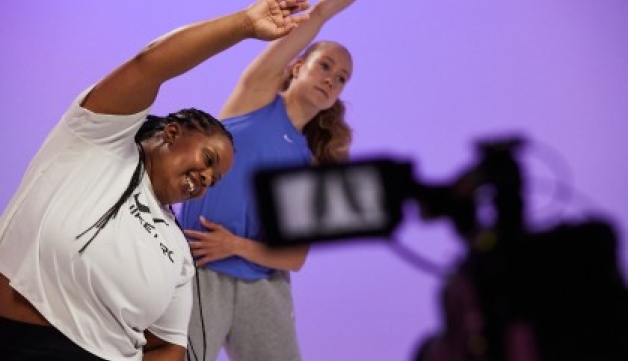
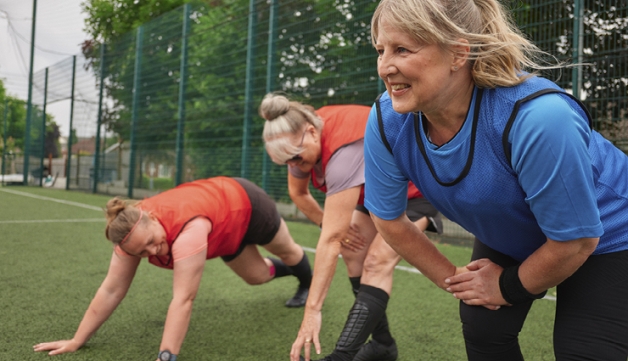
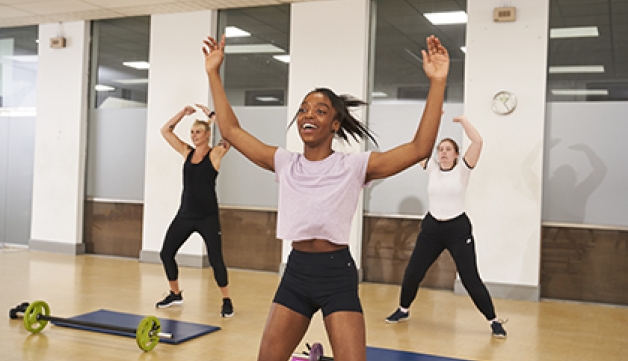
For the Phase Six of the campaign, we have focused on showing women as they truly are: sweaty, busy, imperfect and joyful.

Not polished versions of women exercising effortlessly, but showing real women making time for movement in the midst of their busy lives.

Being on the advisory board has given me the chance to share my perspective, especially around the barriers that Black women face in sport.

From worries about hair care, to feeling unsafe in certain spaces, to simply not seeing ourselves represented, these are real issues that stop many of us from moving freely.

Phase Six is about breaking those barriers down and telling a wider story of who belongs in movement.

This new stage of the campaign is also about making sure that when women see the campaign, they see someone who looks like them, lives like them and feels like them. Because when you can see yourself, you start to believe you belong.

From local to national

In 2019, I founded Black Girls Do Run UK.

What began as a small idea, creating space for a handful of Black women to run together, has grown into a nationwide community, because we are more than a running group. We are a family!

We celebrate milestones, we share struggles and, more than anything, we create spaces where Black women can move without judgement or stereotype.

Alongside leading the community, I hold both the Leadership in Running Fitness and Coaching in Running Fitness qualifications.

These have allowed me to support runners of all abilities, from beginners to those chasing big milestones, and to bring structured, safe and inclusive coaching into our spaces.

For us, running is not about chasing times, and all about creating a memory bank, not metrics.

It is about laughing mid-race, stopping for photos and supporting each other at the back of the pack. It is about belonging.

Together in strength

Black Girls Do Run UK exists because representation matters.

Too often, Black women are absent from the imagery of running, but by showing up in our kit at races and online, we are rewriting that narrative. We are saying we are here, we run and we belong!

For me, movement is freedom. It is the freedom to be myself, to take up space and to live well in my body and during Black History Month, that freedom feels especially powerful.

We honour the struggles of those before us, celebrate the present and move with hope for those who will come after because movement connects past, present and future.

It reminds us that while the barriers are real, so is our resilience, and it proves that when women move, communities move and change becomes possible.

So this Black History Month, I celebrate movement in all its forms: the steps, the strides, the miles and the memories. Movement has shaped me, and I will keep moving, for myself, for my community, and for the generations yet to come.

You've viewed of items.