Skip to content

Taxonomy term

Content type

The closer the problem, the nearer its solution

Oxfordshire is one of ten early testers for Place Universal Offer (PUO) funding in England and we’ve used this support to turbo-charge our community-driven work to tackle systemic inequalities and to get more people moving.

With Oxfordshire becoming a Marmot Place, proportionate universalism is writ large in our work as a system.

PUO investment gives us a practical opportunity to provide a universal offer of leadership training, supporting work in culturally-competent ways, upscaling what works and sharing learning; all whilst, simultaneously, focusing more intensely on where needs are greatest and inequalities are most stark.

The role of Community Anchor Organisations

Our belief is that the closer we are to the challenges, the nearer we are to finding their solutions too.

PUO work is more than simply starting from scratch or creating new projects or programmes.

Instead, it’s about identifying community leaders in priority areas who already understand their barriers and have trust within their own communities.

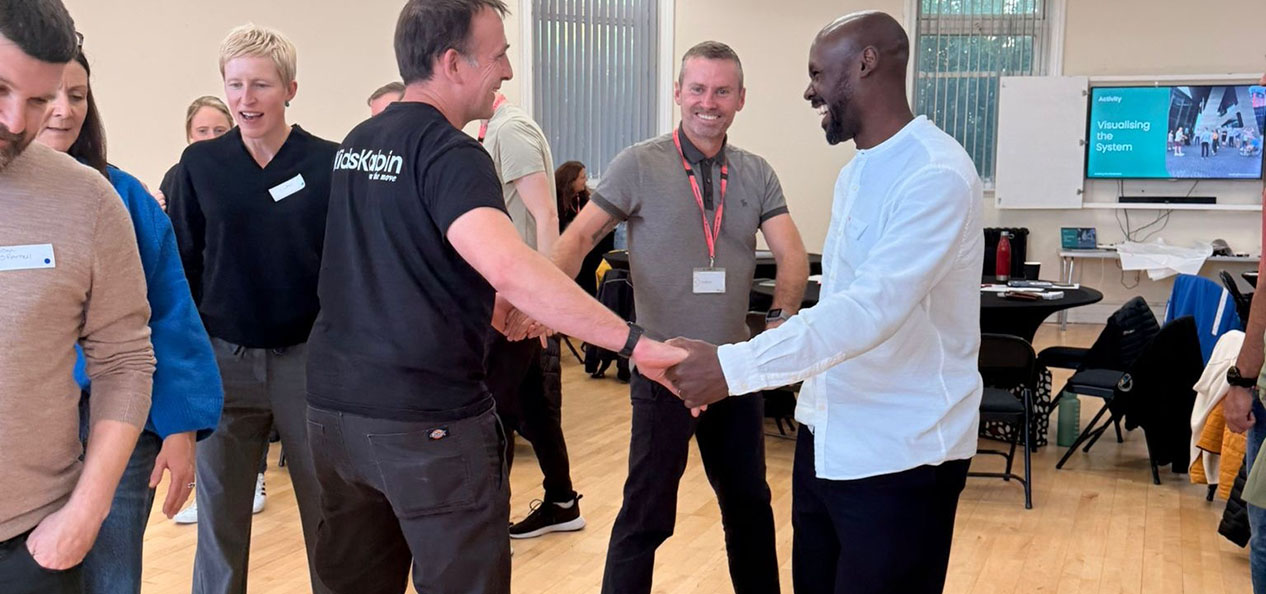
PUO is also about working with and through them to create the biggest impact, and it’s about listening far more than talking and being ready to learn and shift the way that we work to optimise processes and results.

That’s why we have made a deliberate choice to work with a small number of Community Anchor Organisations in our priority neighbourhoods, including Oxford Community Action.

By working in this way, we can put lived experiences at the front and centre in the creation of solutions.

What difference is being made so far?

Whilst it is early days for our PUO journey, we are seeing some positive early signs that reinforce how it’s possible to enable both short-term action and long-term systemic shifts.
 

PUO is about identifying community leaders in priority areas who already understand their barriers and have trust within their own communities.

Communities can’t wait years for change, and they shouldn’t have to, but PUO funding has enabled us to start creating the environments needed for long-term change to empower action now.

The conditions defining these new environments are:

  • an increase in referrals from communities in priority areas into sport and physical activity interventions, which have proven to decrease inactivity and to improve wellbeing
  • regular dialogue with community leaders, which has strengthened our organisational knowledge and our understanding of community matters
  • direct community feedback and collaborative work with national governing bodies and their constituent clubs, which has resulted in the creation of new provisions, especially Sunnah activities
  • placing community needs at the front and centre of physical activity opportunities, which has resulted in five grassroots organisations receiving support to sustain these activities by Oxford Community Action
  • more upstream, systemic conversations taking place about how community groups can access leisure, sport and activity more easily.

Key learnings so far

So how has all this work helped us grow?

These are the key learnings that we’d like to share in case they can help others too:

  • Community leaders are not just vehicles through which communities can be reached and physical activity delivered. They are strategic trailblazers and face the same challenges as any other leads. In fact, the stakes on them are arguably higher as they live, work and play in the communities they serve.
  • Community work is a 24/7 job for community leaders. Organisationally, they need to be prepared to work differently. As one community leader told us: “For us, this is our live". We need to demonstrate that we truly care and want to make a difference to successfully build trust to undertake place-based work.
  • We need to be ready to step out of our comfort zone and be prepared to really listen to understand and speak honestly with each other.
  • We aim to blur the line between organisations, so there’s no more “us and them” and the system and communities see each other as part of the same team.
  • By working through Community Anchor Organisations, our network and reach naturally grow to include people and organisations we may not have met otherwise. This allows for the rapid growth of movement, as each person and organisation in turn introduces more people and organisations to this way of working.

We are six months into our three-year PUO journey and are really excited by early learnings and future potential.

This is a system-wide effort, with organisations like Oxford Community Action at the heart of change and, together, we are working to create healthier futures for the residents of Oxfordshire.
 

Preventing crime from the ring

Boxing is my religion. Like all spiritual journeys it began with a moment of divine inspiration and my baptism was conducted whilst watching Muhammed Ali defeat George Foreman in “The Rumble In The Jungle”.

I grew up in boxing gyms with the sport giving me purpose, discipline and titles – including representing my country on numerous occasions.

These days it offers me the chance to inspire the next generation of boxers and to help anyone who walks through the gym door, to believe in themselves and choose a positive path in life. 

When people ask me why boxing matters so much to me, my answer is simple: it changes and saves lives.

A safe space for all

Of course, it also improves health and builds confidence, but boxing keeps people – especially young people – away from anti-social behaviour and crime, something that I can personally verify as a former Youth Justice Manager. 

With the number of proven offences committed by children seeing an increase of 4%change has never been so important and there are many ways boxing helps fight crime.

Firstly, boxing gives young people structure and boundaries.

Many of the children and young people who walk through the doors of a boxing gym – like mine in Oldham, Greater Manchester – come from difficult backgrounds and have challenging lives. 

Having little or no access to opportunities and therefore a lack of agency in the world, may result in challenging behaviours. But not dealing with these pressures means they risk spilling out onto the streets and that’s where crime starts. 

Not because young people are 'bad', but because they have nowhere positive to pour their energy into. But boxing gyms can change that, as these spaces are built on discipline, respect, routine and team spirit.

Boxing gyms offer me the chance to inspire the next generation of boxers and anyone who walks through the gym door, to believe in themselves and choose a positive path in life.

You don’t just turn up to your gym whenever you feel like it. Instead, you’re expected to train on time, plus you have to listen to your coach, and you learn that effort leads to results and that shortcuts rarely work.

These lessons transfer directly into everyday life and children who understand discipline in a boxing gym are far less likely to make reckless decisions outside it.

Boxing also teaches emotional control, becasue contrary to what some may think, this sport helps a young person understand how to control their emotions, particularly aggression, and how to think and act under pressure.

I’ve seen it first hand – children who once lashed out can calm themselves because boxing gave them an outlet for their emotions and that allows them to thrive.

The many lessons of boxing

Boxing is a good metaphor for life and can help to develop those personal and social skills that people need, contributing to tackling deep seated worklessness and low aspirations.

The sport also fosters the development of positive character, self-esteem, self-discipline, courage, perseverance and resilience.

Instead of throwing punches on the street, they hit the pads, the bags and their coach or opponent inside the ring, but always with respect to the sport’s rules, under supervision and with a reason.

Boxing also teaches respect — for yourself and for others. You shake hands, you follow rules and you learn that real strength comes from self-control, not intimidation. These values reduce crime at its roots.

Another factor that's key is the sense of belonging among those practising the sport. A boxing gym offers identity and loyalty because, at a gym, you’re part of a team.

You train together, look out for each other and you wear the gym name with pride. That sense of identity can pull someone away from a path that leads to anti-social behaviour and crime.

I’ve seen boxing change lives in Oldham and Greater Manchester, where young people that were heading toward trouble now have focus and a reason to stay on the straight and narrow, and I’ve also seen young people who had no confidence, find self-belief.

Not all these children will become a champion boxer and that's okay.

Building better lives through sport

The real victories happen when a young person chooses to stay in school, can find a job or simply chooses not to commit a crime because they don’t want to let their gym or coach down.

At our newly refurbished Greater Manchester Boxing and Development Hub, we’ve been lucky enough to benefit from Sport England funding. 

To my mind, our investors aren’t just putting money into a boxing club and community gym. They’re investing in crime prevention and harm minimisation.

It costs less to fund a gym than it does to deal with the consequences of crime and anti-social behaviour policing, court cases, prison and reform  as recent estimates place the total economic and social cost of serious youth violence at £11 billion between 2009 and 2020.

For me, boxing is more than titles and trophies, it’s about giving people a chance.

Every time a young person chooses to walk into a gym and away from 'the road', I believe that’s crime prevention in action and that’s why boxing will always matter. 

As one of the 10 boroughs of Greater Manchester, Oldham forms part of Sport England’s Place Partnership with Greater Manchester Moving and other local bodies to implement Sport England's Uniting the Movement strategy for getting people active.

I’m proud of what boxing can do to change lives.

In the words of the iconic social activist, pacifist and politician, Nelson Mandela: “Sport can awaken hope where there was previously only despair.

Every day, I get to see the truth in these great words in action.
 

The not-so-obvious benefits of being active for young men

Suicide prevention and increased employability among young men might not be the traditional aims of physical activity programmes, but at Rise – the leading North East health and wellbeing charity – we're showing how lives and communities can be transformed using the power of movement.

Rise is the active partnership for Tyne and Wear, Northumberland and County Durham, and we’re using physical activity as part of a pioneering approach to reduce inequalities and to boost physical and mental health.

As part of this work, we’ve undertaken a significant project in Berwick called Rise’s Healthy Minds for Healthy Livesworking directly with more than 100 men aged 16-30.

Understanding the issues faced by our young men

Like many communities in the North East, young people in Berwick face complex socio-economic problems including unemployment, poor health, relationship difficulties and issues surrounding debt, poverty and substance misuse.

These struggles have had a consequential effect on the mental health of young men in town.

Using data from referrals and initial interviews of the young men we worked with in Berwick, we found that:

  • 43% constantly considered suicide
  • 76% had diagnosed mental health disorders
  • 81% had substance abuse issues
  • 67% were unemployed
  • 43% faced significant debt.

Our work within the community in Berwick addresses the physical and psychological aspects of wellbeing but it goes beyond that, giving people practical skills as well.

This broad and comprehensive approach helps build stronger and resilient mental health, enhancing young people’s overall quality of life, and by working directly with people who need our help the most, we aim to improve their immediate health and wellbeing.

We also build on their ambitions, motivations and employability prospects, which helps them grow their confidence, improve their mental health and to strengthen their wellbeing through physical activity.

Deacon's story

One positive example from our work within the Berwick community is Deacon’s story.

A local resident of 29 years of age, Deacon had struggled with social issues including anxiety and depression from a young age.
 

Suicide prevention and increased employability among young men might not be the traditional aims of physical activity programmes, but we’re showing how lives and communities can be transformed using the power of movement.

Following a difficult living environment, Deacon moved away from his support network to Berwick with his father and that's when isolation set in.

Deacon said: “I needed to be more active and find solutions. I’d never filled in housing applications; I’d never filled in job applications. That help was there when I needed it and I’ve improved in every aspect of my life. I refer to Jaki as the woman who saved my life. She’s absolutely amazing, I cannot thank her enough.”

When Deacon came to see us, I could have scraped him off the floor – he had no sense of self-worth – and I think that had been destroyed by the environment that he had been in.

But then I was able to get him enrolled onto an outdoor equine and nature activity course followed by an employment and wellbeing course.

Fortunately the course providers paid for the transport, which took away that barrier of him getting in from where he lived and he even helped him secure a job out of it!

After gaining employment, Deacon was able to acquire a bike and that enabled him to cycle to and from work, which helped him improve his physical health.

A month after that, he was also offered a local authority flat. The smile on his face was immense. I’m proud of how Deacon has turned it around.

The power of physical activity

Our internal data reflects that since May 2021, Rise has supported 118 young men to improve their lives. Recent evaluations found that: 

  • 96% showed a reduced risk of anti-social behaviour
  • 76% had successfully applied for a job, training or further learning
  • 87% now take part in physical activity
  • 75% felt confident with themselves and felt they were making positive choices.

Rise’s Healthy Minds for Healthy Lives project was initially supported by the Northumbria Violence Reduction Unit and London North Eastern Railway and has subsequently been funded by the National Lottery to enable the work to continue.

Through working within communities, we've helped transform the lives of young men, demonstrating how physical activity has the power to enact positive change. 

Find out more

What kids really need

He wasn’t lazy. He was bright, funny and desperate to be out in the world. But his local park felt unsafe, the youth club had closed and the nearest sport sessions cost more than his family could spare.

By the time he came to my paediatric clinic, what looked like a 'health problem' – low mood, poor sleep, weight gain – was really a place problem.

Why local spaces are key

We often talk about children’s health as if it starts in the hospital or the GP surgery, but as I explored in my recent BBC Radio 4 series, Three Ages of Child, the real foundations of health are laid much earlier and elsewhere: in homes, schools, streets and parks – places where children feel they belong in their own areas.

Sport England’s latest place work and research puts into numbers what many of us see every day – like the fact that over half a million children, one in ten 12-17-year-olds, say they don’t feel they belong in their community.

This means that almost one in five don’t feel proud of where they live, often because there’s nowhere for young people to go to, and because of the worries about crime and antisocial behaviour.

Take a step back and look at how this paints a stark picture of children growing up in places that feel unsafe, unwelcoming and not really 'for them', so it’s no surprise that in those conditions activity levels are low and health problems multiply.

The same research also points to part of the answer.
 

We often talk about children’s health as if it starts in the hospital or the GP surgery, but the real foundations of health are laid much earlier and elsewhere: in homes, schools, streets and parks – places where children feel they belong in their own areas.

When asked what gives them a sense of community – beyond friends and family – the top answer from young people was sports clubs and activity groups.

Anyone who has ever watched a child beam with pride after football training or a dance class knows why: a club is not just about exercise; it’s about belonging.

It offers a safe place to go with people who know your name and that offers the chance to be part of a team.

Dangers of the postcode lottery

But access to those opportunities is deeply unequal.

In England’s most deprived places, over a third of people are inactive, compared to around a fifth in the least deprived areas – a postcode lottery for physical activity that deepens health inequalities.

As a paediatrician, I see every day that a child’s postcode can be a stronger predictor of their health than their genetic code.

When local streets feel unsafe, there’s nowhere affordable to go and young people don’t feel they belong, it shows up in their bodies and in their minds.

If we care about the future of public health, we have to turn our thinking on its head, because health isn’t built in hospitals. It’s built in communities.

Exercise and sport are a kind of miracle cure – for health, wealth and happiness – but only if everyone can actually take part.

According to research by Sport England, every pound spent on community sport and activity brings multiple pounds back in benefits to health, wellbeing and the wider economy.

That’s why I welcome efforts to work in a genuinely place-based way – including Sport England’s commitment to invest in the areas facing the greatest challenges.

But beyond the work of any single organisation, the principle stays: you can’t fix place-based problems with purely top-down solutions.

Making children proud

For me, this is what it looks like to move from treating symptoms to changing systems.

You can’t lecture a child into feeling proud of their area or prescribe their way out of a broken play park.

But you can bring together the people who know that place best – including children and young people themselves – and invest in the spaces, clubs and connections that allow them to move, play and belong.

That means co-production, not just consultation: listening to what families say they need, backing trusted local organisations, designing activities that reflect different cultures, bodies and lives and being in it for the long haul.

Our children are telling us they want to feel proud of where they live and that they want to be part of something bigger.

Working locally, listening deeply and backing places over the long term is how we start to make that real – street by street, pitch by pitch, park by park.
 

Find out more

Place Partnerships

Making physical activity fun for all

At Get Doncaster Moving (GDM) we have a mission: to support the youngest in our society and their families to be as active as possible, because the benefits of moving are something that will accompany them for the rest of their lives.

It is with that mission in mind that across Doncaster, partners within our network are working together to create the conditions to help children, young people and their families build healthier, more active lives.

Through a place-based approach, the network is enabling innovative programmes, unlocking new partnerships and supporting communities to develop sustainable activity habits.

This is something we’ve undertaken as a long-term mission.

A group of poeple pose around a Pokemon ball that's been painted on park's floor.


Thinking outside the pitch

Reflecting on the past year, there are some stand out examples of how innovative partnerships have been the key driver behind GDM’s work to support children and young people – and their families – to move more.

Firstly, we’ve been developing new outdoor experiences to help children and families connect with local parks in different ways.

For example, GDM’s partnership with Enigma.Rooms introduced interactive digital trail games in parks across the city that engaged new and younger audiences through fun problem-solving and exploration.

The initiative was a success and contributed to Hexthorpe Park receiving the national ‘Green Space Innovation Award’ in 2025.

Then in November, and thanks to the efforts of the local Pokémon community, Doncaster was selected to host a Pokémon GO: Community Celebration event (the first place in Europe be chosen!), attracting thousands of local players and visitors.

The trails across two major parks showcased Doncaster’s green spaces while promoting movement through play.

Through a place-based approach, the network is enabling innovative programmes, unlocking new partnerships and supporting communities to develop sustainable activity habits.

GDM is continuing its work with local Pokémon Go group ‘Raiding Doncaster and beyond’ to grow this welcoming, inter-generational walking and gaming community, and encouraging new players to engage in this family-friendly activity, and to move more – particularly within Doncaster’s parks and green spaces.  

Trying something new

In sport, the ‘Free Park Tennis’ initiative started a couple of years ago in a local park to expand opportunities for children and families.

Resident volunteers have been trained as Free Park Tennis Activators to deliver free, weekly sessions to the community in two Doncaster parks, which led to one park being awarded ‘Park Venue of the Year’ by Yorkshire Tennis.

Our most recent park venue to host Free Park Tennis sessions, Haslam Park, which started in May this year, has already seen 369 attendances, with four local volunteers upskilled to deliver the weekly sessions.

This has been a fantastic opportunity for people to come along and 'have a go' at tennis in a relaxed and social setting, and it has been very popular with both children and families.

Doncaster’s place-based model played a key role in connecting partners and enabling the Active Start initiative, a programme designed for staff working with children aged 2–5.

Active Start is led by Yorkshire Sport Foundation, working in partnership with, and funded by, the South Yorkshire Integrated Care Board's Children and Young People’s Alliance. Their latest Impact Report: Giving children an Active Start is full of learnings and data.

This information is key to the training and resources they provide to early years professionals to help embed movement and active play throughout everyday learning.

This approach not only supports physical development but also communication efforts, social skills and school readiness, giving children the strongest start in life.

Doncaster’s Public Health and Early Years teams have trained as tutors, offering one-on-one support, continuing professional development opportunities and resources to nurseries, schools, childminders and all 12 family hubs, which are places for families to go within their communities to access groups and support.

Many settings have already taken part in centralised training and are now better equipped to encourage movement in class and at home.

But this is not all, because work will continue into the 2025/26 academic year as the programme develops further across South Yorkshire.          

Looking ahead, shifting the dial on children’s engagement in activity will require continued place-based collaboration.

Sustained shared learning, creativity and innovation – alongside a connected, empowered GDM network – will help Doncaster’s young people to move more, play more and thrive.

Find out more and connect with us

You've viewed of items.