Skip to content

Taxonomy term

Content type

What’s good for the nation and even better for you?

The answer to the riddle in the title is easy – sport and physical activity.

At Sport England we’re always talking about the benefits of being active, but for nerds like me, the past few months have provided a particular treasure trove of data about the social and economic value of sport and physical activity.

And then on 1 October 2024, DCMS published a new Sport Satellite Account for the UK.

The positive ripple effect of being active

This revealed that during 2021, the combined economic impact of sport (direct and supply chain – including the production of sports equipment and apparel, the construction and maintenance of sports facilities or their marketing services) was equivalent to £83.1 billion, or 4.1% of the UK’s productivity (gross value added).

The document also showed that every £1 invested in sport generates £1.55 as gross value added in the economy.

A few weeks later we published the results of our new research on the social value of community sport and physical activity, revealing that in 2022/23 the social value of sport and physical activity in England was £107.2b.

This value consists of the individual wellbeing benefits of sport and physical activity (both participation and volunteering) and the wider health benefits of a more active population.

However, the report also highlighted the £15.6b of social value that we are missing out on due to inequality in sport and physical activity, and how the value of being physically active is greater for some of those who are least likely to be active, like adults with a disability or living with a long-term health condition.

The past few months have provided a particular treasure trove of data about the social and economic value of sport and physical activity.

The conclusion from all this information is clear – tackling inequality is a challenge that we must address with all our energy and resources.

And it doesn't stop there.

In the past couple of weeks, we’ve also been able to provide two further reports about how the social value of adult participation in sport and physical activity is distributed between local areas, and an overall return on investment figure for the social and economic value of community sport and physical activity in England.

Local values range from £72 million in the small local authority area of Rutland, in the East Midlands, up to £1.6b in the large metropolitan area of Birmingham.

We’ve also found out that for every £1 spent on community sport and physical activity, £4.20 of social and economic value is created.

What these numbers really mean for people

But with clever economists producing all these impressive population-level figures, it’s easy to lose sight of the underlying truths they’re based on.

So here are just a few for you to think about:

  • People who are physically active are more satisfied with their lives than those who are inactive.
  • According to the brilliant guys at the State of life site and their Where’s WELLBY? poster, the individual wellbeing benefit of being physically active is nearly as high as that of being in a marriage or civil partnership. 
  • People who volunteer to support sport are more satisfied with their lives than those who don’t.
  • In 2022, more than three million cases of disease (ranging from coronary heart disease to dementia) were prevented by physical activity.
  • Being physically active reduces someone’s risk of developing Type 2 Diabetes by more than 25% and the risk of hip fractures amongst people aged 65 or over, by more than 50%.

So sure, sport and physical activity is good for our economy and society but, more importantly, it’s good for you!

And how often can you do something that’s both in the public and your own self-interest?

Unfortunately not very often, so do the right thing and get active – it’s good for the nation but it’s even better for you.

Listening to disabled people to help them become more active

At Sport England we're lucky to have the leading voice for disabled people in sport and activity as a key strategic partner.

I'm talking about the national charity Activity Alliance, a vital organisation full of knowledge and passion that's working with us to achieve our long-term strategy - Uniting the Movement.

This month sees the release of the fourth Activity Alliance Annual Disability and Activity Survey.  

The report has warned that the rising cost of living and its wider impact are having a negative effect on disabled people’s levels of activity and wellbeing. 

It's also said there has been no improvement in the proportion of disabled people who feel they are being given the opportunity to be as active as they want. 
 

Activity Alliance has warned that the rising cost of living and its wider impact are having a negative effect on disabled people’s activity and wellbeing.

This year, Activity Alliance spoke to almost 2,000 disabled and non-disabled adults to help track disabled people’s perceptions and experiences of sport and activity.  

Their survey helps us all understand this audience better than we’ve ever done before and has proven the fact that a greater insight is needed if we are ever going to close the activity gap.

Some stats for you 

According to our Active Lives Adult Survey, disabled people are much more likely to be inactive compared to non-disabled people and they continue to remain as one of the least active groups in society.  

Before Covid-19 we saw some of the highest activity levels by disabled people ever, thanks to some great work done by partners in the sector. The pandemic destroyed those hard-fought gains.  

We've also seen that taking part in activity is less common for adults with a disability or long-term health condition (47%), than those without (68%). 

But there are some positives as well, as adults with a disability or long-term health condition have seen activity levels recover over the past 12 months. 

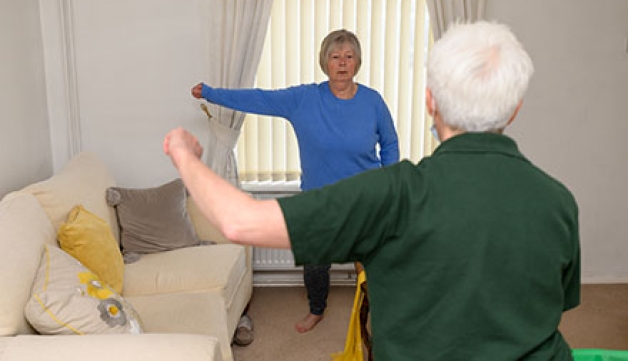
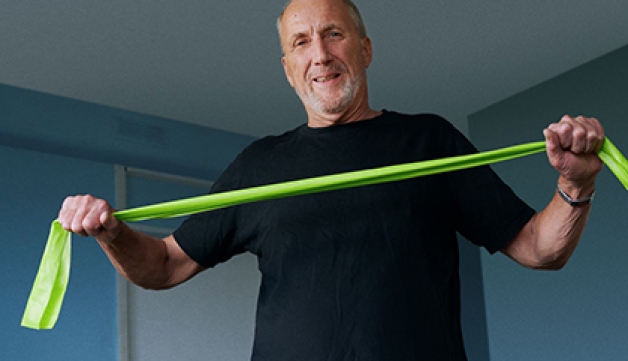
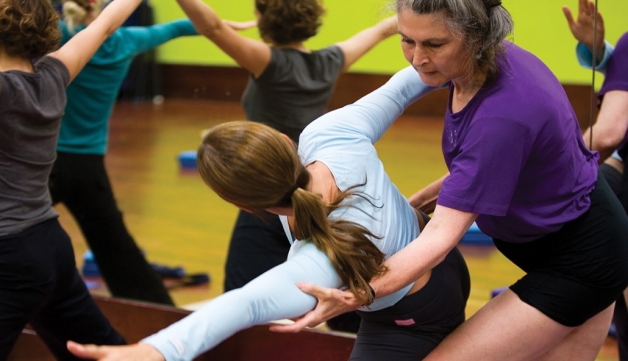
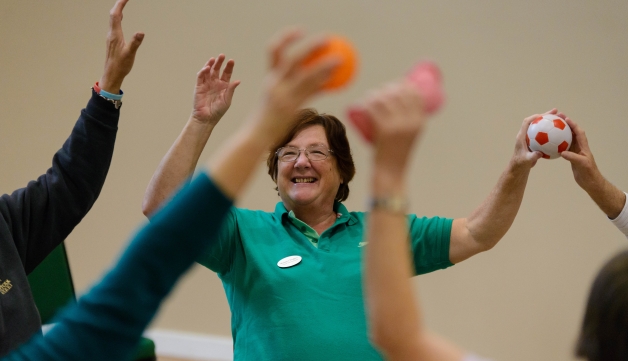
A group of senior men and women stretch with the help of some elastic bands on an indoor gym.

Plus, after the decline seen during the pandemic, both groups have returned to November 2018-19 levels, so there are now 3.8% more adults from this group who are active than in November 2015-16 when Active Lives started. 

What else do we know?

Interestingly, in the 2021 census, 18% of all disabled adults were aged 16-34, up from 9% in 2011 census. However, those aged 35+ still dominate the overall figures and drive the trends. 

Disabled people over 55 are responsible for the increase in activity levels and there is long-term growth. 

Our insight suggests that a key activity contributing to pre-pandemic recovery is walking for leisure.

Change is not seen across all impairment groups, however, as we have not seen increases in activity levels for people with dexterity, mental health, breathing or behavioural conditions, when compared to baseline (November 2015-16).

We can see, as always, that inactivity sharply increases after 75 and the more impairments a person has, the less likely they are to be active.   

Back to the story…

We all know that the past few years have proven to be hugely difficult for everyone, but they have been significantly worse and disproportionately more impactful for disabled people. 

The findings from this year’s Activity Alliance survey support this.

We’ve learned that:

  • the cost-of-living crisis is reducing the chance of being active
  • the levels of loneliness felt among disabled people are increasing but that being active could help them feel less lonely
  • disabled people are less likely to have positive attitudes and tend to see less improvement in their view of things, which considerably affects their mental health and wellbeing. 

Crucially, we also now know there is still an ongoing unmet need: disabled people were more likely to say they wanted to be more active compared to non-disabled people (77% vs 54%).

This 'activity gap' has remained consistent with previous years.

What can the sector do?

Activity Alliance’s report helpfully details some actions that we, in the sector, can take to support disabled people, which are based around the seven themes explored in the survey.

We also need to think about what we might put in place to combat the major challenges identified around cost of living and tackling loneliness.

And so it urges leaders and organisations to look at what changes they can make - both short and long term - and explores the ways we can build on some of the great practice already seen in the sector. 

One important element to bear in mind is that too often the people with the most to gain from being active are the least able to take part. 

That’s why we’re on a mission to address this injustice and work with an array of partners to ensure disabled people are heard, understood and included. 

We have seen great progress recently from organisations who are determined to make a difference for disabled people’s inclusion in sport and activity.

Therefore, we need to harness that enthusiasm and understand that together we all have a role to play to continuously shape and adapt our activity offers to disabled people.

Only by working together, collaboratively and collectively, will we ever be able to effectively unite the movement and close the disability activity gap.
 

The 'wonder drug' to improve your mental health

Our mental health is our most valuable asset and moving regularly is proven to help us to look after it as well as our general wellbeing, which is key to leading a happy, healthy and fulfilling life.

The benefits of physical activity are well evidenced, playing a role in both protecting us from ill-health and in managing and alleviating mental health struggles and, for this reason, physical activity is often described as a ‘wonder drug’.

However, it remains as one of the most under-utilised public health interventions.

Whilst anyone can experience a mental health challenge at any point in their life, we know some are more at risk than others, and challenges such as the Covid-19 pandemic and the cost of living crisis are also contributing negatively.

Being active can significantly support those with mental health conditions but the symptoms associated with mental health problems such as low mood, fatigue, lack of motivation and anxiety – the focus of this year’s Mental Health Awareness Week – make it even harder to do so.

It really can be a vicious circle that many people find difficult to break, and that’s because it’s not as easy as ‘just doing it’ or ‘telling’ someone to move more. If only!
 

Our mental health is our most valuable asset and moving regularly is proven to help us to look after it as well as our general wellbeing.

We don’t always consider how the various barriers towards being active can be too significant to overcome for some, and that these many need greater support to get started.

For this reason, Uniting the Movement focuses on supporting people on their journey to living a healthier and more active lifestyle by helping remove barriers and scaling up the enablers that will address these inequalities.

What we'll do

We know that mental health challenges start young – half are established by the age of 14 and three quarters by the age of 24 – and that’s why, as a foundational step into children and young people’s mental health we will be conducting an evidence review.

The aim is to establish the evidence for the role of sport and physical activity in the treatment of diagnosed mental health challenges for this segment of the population, and to identify what works and where the gaps are to inform future investment.

Through our adult funds, we will continue to explore how we can better connect sport and physical activity provision with local NHS Talking Therapy services so more people have the opportunity and support to access physical activity as a treatment.

Plus we will be exploring the impact this has on clinical outcomes and comparing against standard talking therapy.

We will also work with partners to develop a series of support resources to make it easier for mental health services to understand how to go about embedding physical activity into routine care, plus we will keep building on our existing work with Rethink Mental Illness.

There's currently a lack of studies that focus on the role of physical activity on those affected by severe mental illness, so in order to tackle this shortage of knowledge we'll explore how physical activity can play a major role in improving physical and mental health, as well as social and overall wellbeing in Tower Hamlets and North East Lancashire

Working in local health systems, these trailblazing projects will aim to improve the support to those from culturally diverse communities and deprived communities.

This will require understanding the determinants (barriers and enablers) to physical activity for people severely affected by mental illness, while specifically exploring how local systems can better support people living with severe mental illness.

But that’s not it!

Our long-term relationship with mental health charity Mind, will focus on helping community-based sport and physical activity organisations to support the mental health of people experiencing inequalities, with a focus on young people aged 11+ (especially those experiencing trauma), people from ethnic minority groups (who are both disproportionately impacted by mental health problems and inactivity) and people from the most deprived socio-economic groups.

We'll also continue to advocate to national and local policy makers the role of physical activity as a helpful population health tool and a driver for supporting the nation's mental health and wellbeing.

While we know the coming months and years won't be without their challenges, we have one simple ask of you today (and every day, actually) - when things get a little difficult or stressful, get up and move.

Keep moving while you make that cuppa.

Get yourself outdoors and take notice of nature.

Turn that Teams meeting into a walking meeting.

Your mind and your body will thank you for it.
 

Want your kids (and you and the planet) to feel better?

Walking is one of the easiest ways for people of all ages to keep healthy and spend time with friends and family but less than half of primary school children walk to school in England today, compared with 70% in the 1970s.

So, each year Living Streets runs Walk to School Week to help reverse this decline.

Walk To School Week sees us motivate families to swap the school run for a school walk and celebrate the many benefits of walking to school.

Families are encouraged to walk, wheel, cycle, scoot or ‘Park and Stride’ for the week to see the big differences that come from small steps - from healthier and happier children to fewer cars outside the school gates.

Our fun and engaging week-long activity packs for primary schools are designed to teach pupils about the importance of this simple activity.

Last year, more than 200,000 pupils across the UK took part in our Walk to School Week challenge, and we’re hoping that this year will be bigger than ever. 

This year's theme, Walk with Wildlife, encourages children to travel actively to school every day of the week.

With a different animal for each day of the school week, kids can learn about the important reasons to walk and the difference it can make for individuals, communities and the planet.
 

Walking is one of the easiest ways for people of all ages to keep healthy and spend time with friends and family, but less than half of primary school children walk to school in England today compared with 70% in the 1970s.

Because while, according to Sport England's Active Lives Children and Young People Survey, children and young people’s activity levels overall have recovered to pre-pandemic levels (47% are exercising for 60 minutes or more each day), which is definitely good news, there are many more kids who could – and should – be enjoying a regular walk.

Walking to school helps contribute to the 60 active minutes a day recommended by health experts to keep children healthy and happy.

Being active helps to prevent long-term chronic health conditions such as certain cancers, type 2 diabetes and heart disease, and the potential mental health benefits of walking to school from a young age are also significant.

Walking stimulates the release of neurotransmitters and brain chemicals, including endorphins, oxytocin and serotonin. These trigger positive and happy feelings, help improve mental wellbeing and reduce stress and anxiety.

A boy and a girl walk side by side towards their school.

An active lifestyle can tackle more serious forms of mental health issues, including depression and social withdrawal, too.

Encouraging children to move is a great way to balance out screen time and regular walks can improve sleep cycles, as well as the quality of their rest.

Walking with your kids also provides quality time together as a family and is a chance for children to spend time with their friends and peers outside of school.

But there's more - getting children into walking from a young age creates healthy habits for life, promotes independence and freedom, and teaches road awareness.

And let’s not forget that walking can protect the planet too!

In the UK, the school run is responsible for half a million tonnes of CO2 emissions each year, but swapping driving for walking reduces harmful emissions and improves the quality of the air we breathe.

In schools taking part in WOW, the walk to school challenge campaign from Living Streets, we see a 30% drop in cars driving all the way to the school gates, and this stops a massive 190kg of CO2 per participating school each year. 

It is never too early or late to start walking to school, so if you have a child going to school this week, give walking a go and you’ll soon notice the difference in how you all feel!
 

Find out more about Walk to School 2023

Walk with Wildlife

A new era for English basketball

Never in my wildest dreams did I think the Birmingham 2022 Commonwealth Games would end like that for England’s 3x3 teams.

I knew we could achieve something great, but for my team to win gold and for the women's team to win silver at a home Games, in the inaugural 3x3 competition and in front of our friends and families, plus millions watching at home, is Hollywood!

It's incredible. I'm still trying to figure out the words to put it together.

The Team England 3x3 basketball team with their gold medals at Birmingham 2022 Commonwealth Games

Life’s all about moments, so when Australia’s Daniel Johnson’s two-pointer rolled inside the rim I was ready to take the loss on the chin.

Then Orlan Jackman tipped me the rebound and I paused before I took my shot.

In that moment, I felt confident in my ability to win gold for England, for my brothers on the court: Orlan, Jamell and Kayne and to make my city proud.

I didn’t realise the seismic reaction that game winner would have for basketball in this country.

I'm going to carry this moment with me for the rest of my life. It was a two-year process; we worked so hard as a four in the two months prior to competition.

We beat Australia, one of the best teams around, after such a short time together. Just imagine what we can do if we can push this now.

We received mainstream and regional news coverage, across TV, radio and print, as well as hundreds of thousands of interactions with fans via social media – people who knew nothing about basketball, nor its popularity in this country, were reaching out to us to tell us how much they enjoyed watching us play and about their newfound interest in basketball.

I didn’t realise the seismic reaction that game winner would have for basketball in this country.

As a professional and international player for England and GB, I used to hear from those removed from the game that basketball isn’t big in our country.

Statistically, basketball is the joint-second most played sport in England after football.

From our exploits in Birmingham, I think people are sitting up and noticing that English and British basketball is thriving – and is played here with a dynamism, grit and poise.

Characteristics that people can get behind.

News of a basketball legacy plan, backed with financial investment from Sport England and the National Lottery, Basketball England and Birmingham City Council, in my home city makes all the blood, sweat and tears my teammates and I put into our Birmingham 2022 campaign even more worthwhile.

I am from Birmingham, so this means so much.

Ultimately, grassroots basketball is where the love for the game - and physical activity - is sown. It’s also the first stage to creating and moulding champions.

I played basketball in every corner of this city, from playing in my yard with my brothers to using Birmingham’s indoor and outdoor courts to grow my skills and improve.

From there, I moved to play for clubs City of Birmingham Rockets and Birmingham As before embarking on a professional career and now, winning medals for my country. 

We have inspired thousands of children and young people, and adults through our 3x3 performances and a high-level of interest in basketball is set to peak now the Commonwealth Games have come to an end.

It’s right we leave the next generation not only with great memories but high-quality basketball facilities to enjoy.
 

Find out more about basketball and how you can get involved.

Basketball England

People and places, an introduction to our story

Most of you will have heard of the phrase ‘building the plane as you fly it’.

They say real change takes place in real work, and for the last few years the experience of working with our local delivery pilots has certainly felt like this.

Yet it is very easy as you are going along, immersed in the challenges of the moment, to forget the learning and insight that you pick up along the way – what went well, what didn’t really work and how to confront and use that.

Before you know it, you’ve worked with others to build something different and you have to work hard at remembering the journey.

Today, we are publishing the story of the local delivery pilots, ‘People and Places: The story of doing it differently’, in order to capture and share the collective learning to date. Covering the period from concept in 2017 through to the vivid realities of the current pandemic, I hope our collective story will resonate with anyone who is wrestling with the challenge of tackling inequalities through ‘system change’ in places.
 

This isn’t a simple step-by-step manual of instructions on ‘how to do it’, but it will explore the ‘how’ and ‘why’ of the approach, the amazing people and places that have shaped the change, and where we think this journey could take us next.

The fundamental question was to understand how working with, and in, places, we could address the stubborn inequalities that exist among the least active through community-led solutions.

We wanted to explore how the social and physical environment we live in, the organisations that serve us and how local and national policies could join up to help communities to be active and thrive.

What we've learnt

Through this work we now understand that, while people’s motivations and attitudes are part of the picture, what’s happening in our lives day-to-day in the places we live and work, and the extraordinary community assets that exist, are much bigger factors.

I’m convinced the best chance for success is a more integrated and holistic approach to increasing physical activity based around the places and spaces where people spend their time.

It’s in communities where the ‘jigsaw pieces’ can best come together. To get to this point was hard. We looked for willing partners with an appetite to explore a different and ‘messier’ more iterative style of working.

We ourselves had to change and embrace new behaviours as a funder. This different approach required us to start with people and place, to be needs-led and framed within the challenges and opportunities, as opposed to any pre-judgement of interventions.

The fundamental question was to understand how working with, and in, places, we could address the stubborn inequalities that exist among the least active through community-led solutions.

On reflection, I think there was a degree of expectation that one of the pilots would create a single innovative breakthrough – a silver bullet – that could then be scaled up or just done everywhere. We soon came to realise that this was a mirage.

In fact, the real change was in changing how we work and an emerging set of ‘ingredients’ that has shown impact, value and progress. All the theory in the world won’t help change the system if you don’t have the right people, mindset and values in place. 

Benefits have come from a more bottom-up approach to our work and investment. Working with – not doing things to – communities and helping those affected to play a role in what happens in their neighbourhood and how it gets done.

We have seen the true nature and power of collaboration.

Looking ahead, we need to ensure we work in collaboration with places – the people within them and the organisations relevant and trusted by them. No lesson has been learned more from our collective work with the pilots.

Please do take some time to have a read of our story and feel free to share what it provokes in you.

People and Places: The story of doing it differently.

Find out more

2020 - the year of data and insight

In a year that felt like nobody knew anything for sure anymore and public health numbers dictated our lives, we’ve depended on data and insight like never before.

I can’t be the only one who’s scrutinised the daily coronavirus (Covid-19) case rates to second guess what might happen next – feeling reassured when the ‘seven-day average’ line points down, alarmed when it shoots up.

At a national level, data, evidence and insight has played a critical role in helping us make sense of things, directing decision-making and guiding investment.

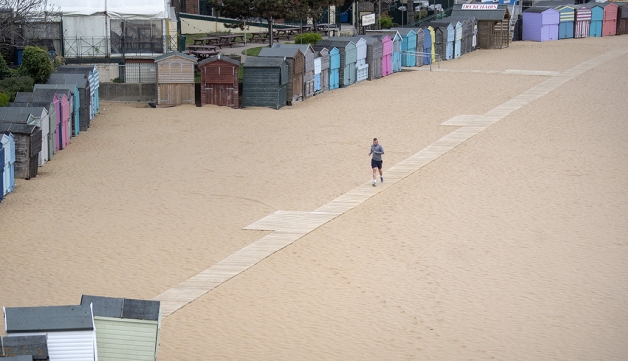
A man runs alone on Broadstairs beach, Kent

At Sport England, we’ve had to rapidly respond to a sector in urgent need of support. Together with our stakeholders, we’ve had to keep the nation active when much of what we knew about sport and physical activity no longer applied.

What would happen when some of the nation’s major activities, such as swimming, football and elements of fitness weren’t possible at times? How would the nation’s behaviour change and who’d find it hardest to adapt? Who needed the most support? Where did they need it? And what did they need?

We needed answers. We needed data and insight!

In the last nine months we’ve commissioned several pieces of research (1), consulted with the sector and reviewed secondary sources from our partners and beyond. We’ve applied behavioural theory to explore how people might behave in these unprecedented circumstances and to inform our approach (and that of our partners) to addressing their needs.

Together with our stakeholders, we’ve had to keep the nation active when much of what we knew about sport and physical activity no longer applied

It hasn’t always been easy conducting research in a global pandemic (whilst adapting to remote working, home schooling children, baking banana bread and of course doing PE with Joe Wicks) but it’s been a great time for data and insight.

Here are some highlights and headlines from what we’ve learnt – to find out more, take a look at our research page.

Physical activity behaviours have been highly disrupted

  • Although national activity levels fell by 7% in the first few weeks of full lockdown (March-May), for many people the importance of being active was more salient and relevant than ever and lockdown was perceived as an opportunity to experiment and try new things (2).
  • As a result, cycling for leisure and sport, outdoor running and jogging, and home activities such as dance and garden trampolining all saw thousands more participating than ‘usual’ in lockdown (3).
  • Despite the vast majority (more than nine in 10) of children doing something to stay active , the amount they have done has been impacted by the restrictions, and declined for many in lockdown (March-May) with some recovery back to ‘normal’ levels on the return to school in September (4).

While many stayed resolutely active, some found it harder than others

  • Disrupted routines, financial stress, lack of support for informal carers and anxiety around catching coronavirus all contributed to lower activity levels for many (5).

In an otherwise challenging year, some have found their experience of sport and physical activity in the 'new normal' better than 'normal'

  • Some children told us they were not only more active than usual but they were enjoying being active more than usual and, interestingly, it was those typically under-represented groups (girls, children from Black or Asian backgrounds) who were most likely to say so (6).

  • Many people (adults and children) have recognised for themselves, for the first time, the benefits of being active and have particularly appreciated the social component of exercising with others (7).

  • Taking part as a family (usually going for a walk) has been key to keeping adults and children active and ensuring their enjoyment (7).

Things can only get better...

...but we need to look out for those who need more support than others

Our new strategy, to be published in January, will place tackling inequalities at its heart. So, watch this space.

References

  1. Savanta ComRes Covid-19 Physical Activity tracker and Join the Movement evaluation; Childwise BUZZ Omnibus May 2020; EdComs’ qualitative research to understand children’s experiences; Family Kids and Youth Insight panel September 2020; In collaboration with the Richmond Group, RDSi We Are Undefeatable qual communities and DJs We Are Undefeatable quantitative tracking
  2. EdComs qualitative research of 62 children aged 5-16 and Join the Movement evaluation
  3. Childwise Buzz Omnibus May 2020 and Parent data from Savanta ComRes activity tracker
  4. Childwise Buzz Omnibus, May 2020 and Family Kids and Youth Insight panel September 2020
  5. Join the Movement evaluation
  6. Childwise BUZZ omnibus, May 2020, EdComs’ qualitative research of 62 children aged 5-16
  7. Savanta ComRes Covid-19 activity tracker 2020, EdComs’ qualitative research

Questions, questions and more questions

As we came to the end of spring, around the country leisure centres, swimming pools, gyms, sports clubs and community centres were starting to think about reopening.

But there was lots of uncertainty and lots of questions.

Will we be able to reopen and when? What will the restrictions and rules be? What does a ‘covid-secure environment’ mean and what does it look like for my sport or venue? Will people want to come back if things look and feels different? And importantly, with different rules and social distancing, will my venue or activity be financially viable?

A closed playground with netting over the bottom of a slide

We, at Sport England, set up our Return to play (RTP) working group in May 2020 to focus on understanding the emerging issues for the reopening of community sport and activity, identify where support was needed and, crucially, get answers to the questions.

We also set out to support the sector to develop guidance for their own specific environments or sports and to help government produce guidance that was applicable to the grassroots sector.

The RTP ‘mailbox’ was also set up to capture questions, queries and information – and there were lots!

Coming from all angles, including local authorities, leisure operators, national governing bodies (NGBs), charities and community organisations. The questions weren’t just about what activity would look like but about the workforce, training and competition structures, travel to other areas, spectators, and sport taking place alongside other activities.

The RTP page was set up on our website and launched in June, becoming the hub for all our shared information, including the all-important FAQs and links to the latest government guidance which have been revised time and time again to reflect the changing, new situations and regulations which have emerged.

The hub quickly developed to include everything from guidance on legal risks and duties of care in returning to play, to hygiene guidance for facilities – and everything else in between.

How people felt

In August we carried out an RTP survey which, alongside our conversations with delivery partners, helped bring greater clarity to how people were feeling about getting back to activity.

The findings showed that, although many people were keen to get back to their activities in clubs or groups, they had some concerns:

  • Hygiene, cleanliness of the activity or facility
  • The impact of restrictions on their experience – a modified version of the activity might not work for everyone
  • How well other participants stick to the rules around hygiene and social distancing.

Those feeling most anxious about returning to activity, unsurprisingly, were people with long-term health conditions or a disability, women and older people.

Successfully returning

One of the key characteristics of organisations getting back up and running successfully, in re-assuring participants and in building their confidence, has been good communication.

Here’s how people did it:

  • Telling and showing customers what measures had been put in place before they came back.
  • Outlining to them what to expect when they arrived for activities and explaining the rules.
  • Reminding them, on a regular basis, in a friendly way.

There was lots of uncertainty and lots of questions

We’ve seen so many organisations do this well over the last few months as they work to rebuild their activities, and our sister website Club Matters has produced a series of videos with Peterborough Town Sport Club to show how they’ve done it.

Learning from experience

A return to play after the first lockdown felt like a huge challenge for everyone.

The initial development of the ‘frameworks’ for different types of activities to be ‘covid-secure’ e.g. outdoor team sports, understanding how leisure centres, gyms and swimming pools could operate and keep everyone safe. Then the practical understanding and implementation of that by the volunteers and paid staff who make it happen on a daily basis.  

The second return to play after the national restrictions in November was more straightforward in some ways as everyone had got to grips (to an extent) with all the regulations but we now had the tiered structure which added a layer of complexity.

It’s not over yet

The emergence of tier 4 brings the latest review of our RTP FAQs and another check through the guidance and resources to make sure everything is still accurate, relevant and helpful.

We recognise that return to play hasn’t happened for everyone yet and that there are still organisations who are struggling to work out how they go forwards in these challenging times.

And there’ll be more to think about in the New Year as we continue to develop our understanding of how clubs, community groups, leisure providers and event deliverers are coping, adapting and planning to get back to activity.

Tearing up plans and making new ones

I’d planned to celebrate the year I turned 50 with lots of (undoubtedly cliched) firsts – roller skating lessons in Hyde Park, walking up the UK’s highest mountains (not in the same weekend), an Olympic-distance triathlon and a tattoo.

I was still compiling the list when it became clear 2020 had other ideas – my year of firsts replaced by a year at home; an unprecedented nine months (and counting) that generated new experiences, all of which (perhaps naively) I didn’t have the wit to conjure up. Even as we were sent home in March, I couldn’t believe we’d still be here now.

A mother and daughter exercise in their garden, using garden tools as weights

Back in March, as it became clear the pandemic would force some restrictions on our movements for a few weeks at least, at Sport England we considered how we could help people stay active. Although our primary role is to support the sport sector, in recent years our campaigns – This Girl Can and We Are Undefeatable – talked directly to groups of consumers who found it harder to get active.

Both campaigns have large and diverse target audiences, but as the whole country faced the pandemic together, could we successfully talk to everyone at the same time? And should we? With intensive care units filling and the lockdown being announced, weren’t there more important things than sport and exercise for people to focus on?

Keeping the nation active

At Sport England we always believed that sport and physical activity are important and, as normal life stopped, that importance was heightened. It mattered for all the reasons it always did, supporting our long and short-term physical mental health, personal development and social connections. But there were new reasons too – keeping us healthy, supporting our immune systems and helping us manage the stress, anxiety and fear caused by the virus itself, as well as isolation, home-schooling, working from home, not working at all and so on. Slumping on the sofa for the duration (even when we thought it might only be a few weeks) was tantalising but unhelpful.

Our Join the Movement campaign and online activity hub countered this – and it worked. When the campaign was in full swing, we could see activity levels rising (compared to the beginning of lockdown) and our evaluation showed 49% of the adults who recognised the campaign said it prompted them to take action.

We also worked with local and national partners to help them keep their communities active – gaining intelligence, providing clarity on the guidance, involving them in campaign creation and developing toolkits that help them tailor messages to meet local needs.

My year of firsts replaced by a year at home; an unprecedented nine months (and counting)

But the job is not done. Motivation was harder to find during the second period of national restrictions – bad weather and boredom blending into a dreary cocktail of tedium that could become more potent as we move into a January that may offer more same old, same old, than new year, new beginnings.

And while Strava recorded a very welcome record amount of activity in 2020, particularly from younger women, we know that not every demographic group has been able to get active.

Not surprisingly, our population-wide Active Lives survey shows falls in both the numbers of men and women getting active, especially those aged 55 and over. While our coronavirus activity tracker shows that older audiences, those on lower incomes and from Black, Asian and minority ethnic backgrounds are more likely to be inactive.

The pandemic has reinforced existing inequalities and that must change. We all, collectively, must change that.

This too shall pass

As we prepare to return and reinvent in 2021, there is an opportunity for change.

This year has been too terrible to talk about positives, but the disruption and dislocation have opened up established routines, attitudes and behaviours. The need for daily exercise and fresh air is widely discussed along with its link to mental health. We’ve all got better at asking each other if we’re ok and saying if we’re not. We’ve validated activities that may not look like traditional exercise – walking has been big this year – which makes it possible for more people with all abilities to see that regular activity is feasible for them. And many of us have found or rediscovered our local areas.

All of this needs to be nurtured as we move, eventually, into recovery so that more and more people can benefit from regular movement by finding what works for them – and this has to be done in collaboration with the partners who helped us respond so quickly.  

The start of that recovery may coincide with my 51st birthday. I’m not making any lists yet, but I will get that tattoo. It was always going to be the Persian adage my mum said to me when I was full of angst about, well, whatever: This too shall pass. It’s more apposite than ever. This will be over one day and we must plan now how we are going to take the lessons we’ve learned with us.

Innovating in the middle of a pandemic

It’s been just over a year since we launched our organisational values of ambition, inclusivity, collaboration and innovation.

Each of these hold equal weighting for us as an organisation, and they can’t just be words on a piece of paper – our values define who we are as an organisation and highlight what we do to go the extra mile to set us apart.

But innovation has particularly come into its own this year, in terms of how we want to be and how we can help our partners and the people we work with to view this pandemic as a chance to create opportunities for growth.

The unpredictable nine months we’ve just come through have provided an accelerated opportunity for us, and the sport and physical activity sector as a whole, to put our talk about innovation into action.

2020 - a year to innovate

For so many, it’s been a terrible year and has presented challenges for sport and physical activity like no other. Survival has been paramount for many businesses in our sector, yet without the headspace to consider adapting and innovating. For others, with the normal rules thrown out the window, 2020 presented an opportunity for change and great ideas to get people moving in different ways.

According to Be the Business, British businesses had to do three years’ worth of innovation in three months to keep their businesses going during the first national lockdown, with over half a million businesses (37%) in the UK changing their operating model to find new ways to meet customers’ needs – our sector was no different.

When we were told we had to stay at home we switched our gym classes, 5-a-side football matches and socialising with other households for Instagram fitness challenges and Zoom quizzes. Face-to-face sport and physical activity ceased to exist overnight and the traditional ways we deliver and reach our audiences didn’t fit the new world order – we all had to improvise and adapt.

But innovation means different things to different people. We’ve been thinking about what innovation means to us and come up with some starting principles. This isn’t the final list, and we’re exploring this further, but for something to be considered innovative it we think it:

  • is driven by, and connected to, the needs of the community that it’s trying to serve
  • addresses a specific consumer problem rather than just being a light bulb idea in the night.

How did we respond?

Like everyone else, the pandemic challenged us do things differently. As part of our overall coronavirus (Covid-19) response, we ensured £5 million was dedicated to innovation - particularly for those who the pandemic’s affecting the hardest.

Our research showed the major inequalities causing some audiences to miss out on opportunities, were being widened. And we believed that now was the time to find out more about who was out there working on innovative solutions to support key audiences like women, people on lower incomes, older adults, people from Black, Asian and minority ethnic backgrounds, disabled people or people living with long-term health conditions. 

Our first offering was our first ever ‘Open Call for Innovative Solutions’, which was deliberately different to our more traditional funds and looked to address widening inequalities. Its aim was to find solutions that are using innovative methods to tackle the very real problems that certain communities were facing. We discovered, and are in the process of supporting, 27 organisations.

Now the journey's started, there's no turning back

Ali Donnelly

There are some brilliant projects in here, from Slow Ways – who are recruiting volunteers to help create a network of 7,000 walking routes across the UK, connecting towns, cities and villages to encourage more walking – to Dance Centred CIC, who are using physical postcards with accessible movement tasks to motivate and encourage individuals who are either shielding or digitally excluded.

840

The innovation open call received 840 submissions

While the open call was about existing solutions that needed support, we also want to support new ideas that address some of the problems that have never been tackled before. We knew we couldn't do that on our own, so we’ve partnered with the Design Council – a recognised leader in design thinking and innovation, and we’ll be announcing the detail of this exciting partnership in the new year. 

As inequalities in activity levels continue to persist, we believe there’s an amazing opportunity for innovative ideas to support those finding it harder to be regularly active. And we must recognise the realities of life at the moment. We’d encourage innovators out there to understand the barriers facing the less active audiences and solve for these as that’s where we’re most focused and where the focus for our new strategy, out next year, will be.

The Open Call for Innovative Solutions and partnering with Design Council are just the beginning for us and our work to truly deliver on our innovative value.

Now the journey’s started, there’s no turning back.

While we have lots to learn about what innovation is and looks like when addressing inequalities in sport and physical activity, we’re excited about the potential it brings. We’ll be sharing our learning openly and honestly in the hope it motivates and inspires others to do the same. And our hope for our next strategy is to shine a light on the role of innovation and how it can be a catalyst for truly relevant and inclusive sport and physical activity in the future.

Find out more about the 27 organisations we're supporting.

Innovation open call

Youth voice can be a game changer

Before coronavirus (Covid-19), more than half of 5-16-year-olds were not active enough to get the associated health, social and educational benefits.

The single biggest driver of activity for young people is enjoyment, but too often the current system doesn’t deliver this. In order to change this, we need to listen more to children and young people and involve them in decision-making to create the type of experiences young people want.

By embracing youth voice and allowing young people to have a say in shaping sport and physical activity, we can help to make opportunities more relevant, more fun, and enable young people to support their peers to be more active.

A group of boys at a Volunteer it Yourself project, building a clubhouse, throw footballs at the camera

It can also help us better understand and address some of the barriers young people face, from confidence to take part or issues like body image or sexism. We’ve seen this demonstrated by our Potentials Fund projects.

It’s about creating opportunities for the ideas, opinions, knowledge and experiences of young people, in all their diversity, to inform and shape decisions and what you do as an organisation.

Youth voice has the potential to be a game changer for sport and physical activity.

What works?

Every day, thousands of young people are supporting others to get active and experience the benefits and #iwill week is a great time to celebrate this. But embedding youth voice goes beyond just having a programme or project to engage young people.

So, here are some of the key ingredients behind some of the successful approaches to embedding youth voice in sport.

It's got to be genuine

It’s not enough to just have young people in the room where decisions are taken, there needs to be a genuine openness to listening to their views and commitment to taking action in response. Without this, it can feel tokenistic and organisations miss out on the benefits of the ideas, skills and experience young people can bring.

This requires buy-in and commitment to youth voice across the organisation, and an understanding that part of this commitment requires giving young people the support and training they need to feel confident going into new contexts and articulating their views in spaces like a board meeting.

It must be inclusive

Creating accessible opportunities for young people from diverse backgrounds is a key priority for many sports and something we need to build on.

There’s a significant gap in participation between low-income young people and their wealthier peers, and we see a similar inequality in activity levels – with 54% of children from the most affluent families considered active, compared to 42% from the least affluent families.

Before coronavirus

More than half of 5-16-year-olds weren't active enough

It’s therefore crucial we provide accessible opportunities and tackle the barriers low income young people face to getting involved. This can include addressing practical barriers such as providing expenses for travel to events or meetings for all young people, or making it possible to join meetings online or remotely. Scheduling meetings and opportunities that fit in around work, studying or caring responsibilities can also make it easier to join in.

Making adverts for roles or communications about getting involved feel accessible and relevant is also important. For example, using social media to share adverts for roles or allowing video applications.

Why not collaborate more, too? Working in partnership with organisations that young people trust and relate to can be an effective way of reaching out to new audiences, or a way to seek expert guidance on how to improve access to opportunities.

Remember that young people know how to do this better than you

This perhaps should be obvious! But sometimes it’s easy to forget that young people are experts in what works for them, or for us to not give the views of young people enough weight in our decision-making when we’re looking through the lens of our role as professionals, or indeed as adults.

We often think it’s up to us to find the solutions, but in this mindset we fail to really embrace the value young people can bring and we take a familiar path.

54%

of children from the most affluent families were considered active, compared to 42% from the least affluent

What came across from some of the examples shared with us is that if we truly embrace young people’s ideas, imagination, creativity and skills, and are brave enough to try something new, it often delivers a much better solution than we could ever have come up with.

Why not ask a young person to work with you to reflect on the mindset and culture of your organisation and look at your decision-making processes to helping you enable more of this to happen?

It's a journey

Embedding youth voice doesn’t happen overnight. It takes time and resource, and so it’s important to plan and invest in the longer term.

The ultimate ambition for many in the sport sector is to get to a place where consulting with young people is not an afterthought, but instead is embedded at all levels throughout their sport.

England Golf shared with us the journey they’d been on with their Young Ambassadors, developed in partnership with the Golf Foundation. It took time, but they’re now in a place where young people are actively involved in key decisions and the Young Ambassadors are finding their feet in leading the development of the game – helping to make the sport feel relevant to young people and sharing their passion to help challenge stereotypes about the sport they love. They produced this film to do just that.

What next?

Our role as a match funder in the #iwill Fund, a joint investment from The National Lottery Community Fund and the Department for Digital, Culture and Media and Sport, was an important step on the journey for us and our Potentials Fund has helped us learn more about how to put youth-led social action at the heart of sport and physical activity.

Other funders are also considering how they can do more, like the National Lottery Community Fund and their Young People in the Lead advisory panel.

Considering how effectively we involve young people in our work will continue to be important as we move to implementing our new strategy next year, with positive experiences of children and young people an important priority for us.

Equality is about support, opportunities and listening to what people have to say

It may sound overly simple, and it is – I appreciate the issue of racial inequality in all walks of life is incredibly complex – but one way to help people is just to say 'yes' a bit more.

Saying 'yes' to people, regardless of their race, gives people opportunities to show what they’re capable of.

I lived in Bristol until I was 11, when we moved to Tanzania for five years. In 2012 we returned to Bristol, I was in my teens, naïve and thought that if I can’t play football, I don’t know what I’m going to do.

Bristol Flyers basketball player Greg Streete shoots a freethrow

But with the help of others who had a better understanding of it all and who said 'yes', I understood that life wasn’t just football.

It wasn’t a smooth journey to get to that point, though. Equality is about support, opportunities, chances and listening to what people have to say – which hasn’t always been what I’ve experienced.

Barriers to progress

When I was in college I didn’t get the support I felt I needed. After coming back from Africa, my twin brother and I went to a college and the learning aspect was fine. But when it came to sport and PE and opportunities and chances and yesses – we didn’t get any of those.

I was focused on football at the time and I’d go to a trial for the college team and we didn’t get the opportunities others did.

Saying 'yes' to people, regardless of their race, gives people opportunities to show what they’re capable of

I don’t harbour any ill will towards anyone who got in ahead of me and my brother, but there would be guys who would join months after us and they were automatically given the chance to progress and show what they could do.

I’m not envious of others’ ability, some people are better, but we didn’t even get a chance.

The way we were spoken to, looking down their noses at us, the kissing of the teeth, the air of disapproval, the body language when addressing us, was all very negative.

I did ask for opportunities and they would just say 'come to the next session, come to the next session' – but there would be no progress despite the effort we put in.

A chance to shine

But I love sport so much, I didn’t want to use those experiences as a negative and to start hating it.

So, in the summer of 2014 my brother and I went to Hillfields Youth Centre in Bristol, were introduced to the staff and became part time workers there.

As we were a bit older, we started coaching the youths. We spoke to them, listened to them, heard what they said and offered support and coaching in any way we could, at whatever level it was.

I enjoyed it all, coaching, listening, meeting new people. The kids were showing off and it was great to see – I wanted to encourage that enthusiasm for physical activity.

That same summer I met Greg Streete, at the time he was the captain of the Bristol Flyers basketball team. He was doing basketball coaching at Hillfields and before I knew it, he thought he saw something in me – even though I’d always been focused on football

I love sport so much, I didn’t want to use those experiences as a negative and to start hating it

I thought he was insane, I didn’t have any skills! But he convinced me to keep trying and told me to come along to a couple of other open sessions he was running.

He said I didn’t have to pay anything, said that if I needed help with transport then the centre could help provide it and so he made it hard for me to say 'no'.

He even said that if I changed colleges, to one where he coached, I could bring my work so I didn’t have to start again.

He was so positive and before I knew it, the basketball community in Bristol just opened up to me.

Going to City Academy gave me so many more opportunities. The academic side of things was still good, and in terms of the actual sport, I was all in. I got opportunities, not only to join the team but to play in games.

That might seem like something little but I never got that in football, I never got that in the previous college, or academies, or clubs I tried to join.

I thrived on that and I brought that energy and motivation back to the youth centre and wanted to volunteer and do more for them.

University and Coach Core

University may not have worked out for me. I seemed to do OK with the academic side of things, but the pressures of the student life in general really got to me.

It built up so much depression in me and I eventually found that uni wasn’t doing me any good, I was in a dark place.

But even during that time I’d still found basketball to be a great release for me, and my tutor had highlighted that I seemed to enjoy coaching and teaching – passing on knowledge.

That stuck with me and when I left uni, I went back to Bristol and was looking around for jobs – looking everywhere – my friend eventually found an advert for Coach Core that sounded perfect for me.

Right from the introduction session it felt right.

My mentor, David Smith, made it such an easy and supportive transition for me to become a part of Coach Core.

He helped me a lot and regardless of everything else, he made sure we all got an equal opportunity – it was a really positive experience for me.

I don’t have a single negative thing to say about Coach Core, they gave everyone a chance and I’m now an assistant manager for Shine – a job I got straight after completing my apprenticeship because I was on placement there – because of their desire to give everyone a chance.

That’s why we need more things like Coach Core, why we need Sport England to continue to support things like this that allow people the opportunity to find out that there’s more to life than hearing 'no'.

Shine employs qualified coaches to deliver sport and physical activity sessions at state, private and special schools across the south west. And Coach Core is an apprenticeship scheme giving young people aged 16-24 the chance to become the next generation of inspirational coaches.

Active Together

Teenagers try out Nordic skiing, on roller skis A £7.5 million fund, with up to £10,000 in match funding, as part of a support package to help clubs and organisations set up and run crowdfunding campaigns related to the ongoing impact of Covid-19, as well as the emerging energy, cost of living or other local crises - such as adverse weather. Active Nation Funding

I’m not doing this just for fun... I’m doing it to do something with my life

Sport’s had a big impact on my life. When I was growing up, all I thought about was sport.

Once you’re on that pitch then there’s nothing else on your mind, all your problems disappear and the only focus is on the ball, nothing else.

I believe that it brings a lot of people together. You can all speak different languages, but you communicate through the ball and that’s all that matters in that moment.

Black football referee Uriah Rennie, officiating a Football League match

I was born in Guinea-Bissau, West Africa, I grew up in Portugal and moved to London eight years ago, aged 14.

I’ve not personally experienced overt racism while playing sport – you’ll always hear some unkind words, that’s part of sport sometimes, but it’s not been racist with the people I’ve played with.

That’s not to say it doesn’t exist in football, or sport in general, though. We know it does – you can see it on TV happening to players like Mario Balotelli and Raheem Sterling.

There used to be a belief for Black people that if we became professional footballers, that racism wouldn’t be directed at you.

But when you see it so openly on TV, with monkey chants and gestures from the crowd, it shows that whether you’re rich or not, whether you’re a great player or not, it’s still going to happen to you.

It shows that people aren’t abusing you because you maybe live in a poorer area than them, it’s just about your skin colour, and that is really painful.

I try not to think about it often, but it is there and sometimes you can’t avoid it.

ARCA Generation

I had a lot of free time in college and I didn’t have a job, so instead of hanging around doing the wrong things, a friend told me to come and play futsal with him at ARCA.

When I arrived, I met a lot of new people and started coming here more often – it felt like a family.

I’m now part of their workforce diversity project and four months ago I became a youth leader – it’s given me an opportunity to learn as an employee.

I try not to think about it [racism] often, but it is there and sometimes you can’t avoid it

I just graduated from university and they’ve given me some training in how to present myself in interviews. I’m also mentoring people now and I’m adding skills to my CV that can be useful for me.

I’ve been a part of ARCA for five years and I’m part of the family. I believe they’ve helped me to mature and become more aware of my actions.

I used to be very impulsive. I think that was due to my environment and the difficulties I’ve faced in my life. But they’ve taught me to approach things differently and to interact with people in a positive way.

Battling preconceptions

My life could have gone the wrong way, with a couple of different decisions. Where I studied, in Tottenham, it was very easy to go in the wrong direction.

Where I was, we all had similar thoughts. We’d never met people who’d experienced different things in life. I didn’t know about ARCA or anything like it, me going there was just down to my friend. He brought me into a different situation. That got me out of the mindset I was in and I can’t thank him enough for it.

I believe the lack of opportunities for me at that time were a combination of both my race and the area in which I lived. There were White people there as well and they shared the same mentality as some Black people.

If you grow up in one place and all you see is violence, violence, violence, you get accustomed to it and you believe there are no better ways to fix things than by reacting through violence – because that’s what settles disputes all the time.

What leads to this being the case in the first place is a complicated mix of things. A Black person is often portrayed as someone who doesn’t show weakness or emotion, so for you to stand up for yourself in a group you need to show that you’re not afraid of anything.

If someone approaches you and challenges you, the only solution to that problem is through violence, otherwise that person will never leave you alone.

Generally, depending on the area you come from, I believe that this affects a lot of Black people. And, as a result, people don’t believe you’re capable of doing something else.

Forging a new path

At ARCA there’s a whole mix of people. The only thing we share is that we live in a community that’s often discriminated against by other people, so we all face the same challenges. It’s not all about being Black, it’s about helping people from economically disadvantaged backgrounds.

They’re giving me the opportunity to do an FA refereeing qualification. I believe there aren’t enough Black referees in football – I don’t think there’s a single Black referee in the Premier League at the minute.

So, I’m trying to make changes myself. My journey on that path is just about to start. I’m preparing for it now but I hope I can change the perspective of some other Black people.

In reality, very few Black people chase a coaching or refereeing qualification, they only go for the playing side of things. So I believe if I chase this, and we get more numbers doing similar things, then eventually there will be more Black representation in other areas of football, and other sports, other than playing on the pitch.

In football specifically, we need more support from large organisations, big teams, the FA itself, so people can get qualifications and believe that they can become a referee or a coach.

I’m not doing this just for fun, or to run away from problems, I’m doing it to do something with my life and hopefully show others that they can do the same.

ARCA Generation is a non-profit organisation using sport, recreation and educational activities to help develop the skills of young people – enabling them to build a bright future for themselves and contribute to the growth of their own community and generation.

Working to keep the nation active

Earlier this year, as lockdown closed the entirety of the sport and physical activity sector and confined people largely to their homes, we refocused our work to concentrate on a small number of short to medium term priorities. 

One of these priorities focuses on our work to ‘keep the nation active’ and from a working group which I have been chairing, several important actions have emerged – including a campaign to help people to get and keep fit at home called Join the Movement, and investments into helping people who were finding it most difficult to be active, like our partnership with Demos on 10 Today which supports older people.

Underpinning all of this has been our work, through insight and research, to really get to grips with how people are feeling about sport and activity and what is happening to activity levels. So, today we are setting out what our insight has told us are the three strongest themes that could impact people’s return to sport and physical activity.  

A gym in Manchester reopens with signs up on how to social distance and use equipment safely

Through weekly tracking during lockdown, by working with Savanta Comres, we were able to understand the picture of what was happening to activity levels and say that while lots of people were finding new ways to be active – such as discovering great fitness at home products or taking up running or cycling – many others were having a much more difficult time, particularly young people for whom the absence of school settings had a particular impact.  

In recent weeks we have concentrated on understanding how people feel about sport and activity reopening and about how their lives have changed. And we want to share that insight today to help everyone involved to understand and adapt, so people continue to feel they have the choice and ability to be active in ways that work for them in this new era.  

We have identified three specific consumer groups and themes – combining our work with Savanta Comres, the qualitative evaluation of our Join the Movement campaign and through leaning on other data sources – and the slides attached further down this page give additional depth to this insight.  

These themes are important because if not well understood by everyone involved in delivering sport and physical activity, levels of activity across the country could be seriously hampered and fewer people will stand to access the enormous physical and mental wellbeing benefits that being active brings. 

1) People who feel worried or anxious about contracting coronavirus for a prolonged period 

Coronavirus has had a profound effect on people’s psychological wellbeing. People have experienced fear and uncertainty, and personal circumstances including work stress and the fear of illnesses and the reality of bereavements has been extremely difficult to manage. Some people still feel afraid to go out. 

In many cases the burden of these demands has inadvertently diverted attention away from the importance of physical activity and exercise. 

There are, however, short-term opportunities to support people who feel like this. One opportunity includes the gradual reopening of sport and activity and the gradual return to workplaces. 

However, a threat that we are already seeing happen is that as the sector opens up, many do not return for an extended period of time and levels of worry and anxiety about whether it is safe to attend persist.  

Providers should consider simple and accessible ways to manage anxiety as they reopen and restart.  

That will require ongoing reassurance around issues like hygiene, proximity to others, policing behavior and so on. Providing videos and clear ‘in-advance’ messaging and imagery would be a major benefit to support people’s concerns. 

Worry and anxiety might also mean that many might avoid public transport as a means of travel. This presents an opportunity to encourage more active travel – walking and cycling in particular – rather than only considering car use.

Audiences mostly affected: Those with longstanding physical or mental health conditions, disabled people, those who are/have been shielding, Black, Asian and minority ethnic (BAME) people and older adults said they are most likely to feel worried or anxious about contracting coronavirus. 

2) People disproportionately affected financially as a result of coronavirus 

The financial uncertainty as a result of coronavirus has had a profound impact, particularly among those already on low incomes, as well as young people, and we know that this has had a knock-on impact on their ability to be active.    

When facilities were closed, money was a major barrier for people put off by the price of buying their own equipment – although lots of people have found cheap and accessible ways to get fit, including free online resources.  

There are both opportunities and risks to help with financial concerns to grow or maintain activity levels.   

The reduction in disposable income may lead to a reduction in memberships of clubs or organisations and this will be further impacted as the furlough scheme ends, and as perhaps more people lose their jobs. This means that activities that are free / low cost / provide good value for money are becoming more and more appealing and providers need to consider hybrid models to maintain their audiences in the short term.   

There are opportunities here too around the increase in domestic holidays and outdoor providers should consider where they can have the biggest impact. We are currently exploring partnerships in this space ourselves.  

Audiences mostly affected: Women, people under the age of 25, people from lower socio-economic groups, disabled people, BAME people and unpaid carers said they are most likely to be disproportionately affected financially. 

3) People experiencing a greater burden of care because of coronavirus 

People with caring responsibilities remain very concerned about going outside or being around groups of people, but there are significant short-term opportunities/risks for this group, especially the gradual return to workplaces and children returning to school.  

Many people who were looking after children during lockdown were able to embrace being active as a family and this may be lost as this context changes once more. But there is an opportunity that an increase in time (for some) may enable more time for physical activity.   

At-home opportunities remain important for this group and our own campaigns, especially This Girl Can, which targets women, and Join the Movement, which helps people find ways to be active around the home, and we are working hard to continue to find more innovative ways than ever to activate our audiences through these channels. As restrictions ease, those in this group tell us they are also more likely to actively seek opportunities to be active and spend time with those they care for – especially outdoors.

Audiences mostly affected: Women, families with children and carers (paid or unpaid) said they are most likely to be experiencing a greater burden of care. 

We hope presenting this insight is useful to help those who are finding it hardest to be active and to ensure those who deliver sport and physical activity understand the wide-ranging issues facing possible consumers and participants.

We will continue to share our insight and research on our website, and you can read more about the topics I've covered today in the above customer insights document.

Please do reflect on this with your Sport England lead contacts and talk to us if you want to discuss how we could align more closely to these audiences.

Why it's vital we get parkrun up and running as soon as possible

In March this year, the UK went into lockdown as coronavirus (Covid-19) cases rapidly increased and the severity of the pandemic became clear.

All sport and physical activity events, from mass participation to small local gatherings, were stopped with immediate effect, and exercise was limited to within your home or, if outside, no more than once per day and only alongside the people you lived with.

This represented a level of restriction that none of us could have imagined just a few weeks before.

People taking part in a park run before the coronavirus crisis

Over the following weeks, as we began to come to terms with what was happening, it became clear that each of us was experiencing the situation in a very different way.

Some people had more time on their hands, time that could be spent being active with close family members, or getting out running, or cycling. It was great to see people becoming more active, particularly where it was families getting out for a daily walk or play in the park.

Sadly though, for many other people, lockdown meant exclusion from their local community, the removal of their support networks, and huge reductions in physical activity levels.

Fuelled by constant bad news and tightening restrictions prohibiting their ability to meet with other people, many found themselves more isolated and inactive than ever before.

At parkrun, we’ve always seen our events as local support networks, helping people to feel part of their community and giving them the motivation and inspiration to get outside and be active, together.

Right when people needed that the most, as the coronavirus took hold, we closed our events. A profound moment for us all, and, again, something we never imagined would happen.

Over the last five months, it’s become clear that coronavirus and the associated lockdown has impacted disadvantaged communities more than more affluent ones.

Inequalities in physical activity have increased, and whilst social media is full of Strava PBs and Zwift victories, huge numbers of people have become inactive, lonely, and isolated.

As we look forward, it’s clear that outdoor sport and physical activity events have a huge role to play. They bring people together, they give people purpose, they enhance community cohesion, and they get people moving.

It’s become clear that coronavirus and the associated lockdown has impacted disadvantaged communities more than more affluent ones

Tom Williams

parkrun's global chief operating officer

We’re often asked why parkrun is so successful, and our answer is that we believe all human beings have an innate need to be active, social, and outdoors.

We believe that these are fundamental building blocks of health and happiness, and that without any one of them, regardless of steps counted or calories burned, our health deteriorates.

It is critical then, that as we look toward the future of sport and physical activity, we hold on to the human interaction that makes people healthier and happier, and that we continue to remove barriers to participation.

A future where events are more complicated and costly to deliver, and therefore harder to access, will only serve to further increase inequalities in health and happiness. We must strive to make outdoor events as simple, sustainable, and accessible as possible, and we must do everything in our power to engage those most in need.

Importantly, it is becoming increasingly apparent that outdoor environments present far less risk of transmission than indoor settings.

And as autumn approaches, with winter right behind it, understanding that difference, and supporting appropriate interventions, becomes more and more critical.

Not only do outdoor events have the ability to increase people’s activity levels, provide them with focus, structure, and the pride of achievement, but they also have the ability to move people out of indoor environments where the risk of infection is much greater.

The seasonality of coronavirus is not yet fully understood, however as the weather deteriorates and people move indoors, the more we can do to get people active, social, and outdoors, the better.

As part of this process we have recently commissioned a formal review of the evidence regarding the risks of coronavirus transmission in outdoor environments.

If, as we believe to be the case, gathering outdoors is shown to present an incredibly low risk of transmission, then we must do all we can to open up our streets, parks, and open spaces to everyone from mass participation providers to local volunteer groups.

Being active, outdoors, and social, improving our health and happiness, and getting off the couch, has never been so important as it is right now.

Doing it differently in Pennine Lancashire

Twenty years ago, my mum passed away in her early 40s. Despite being a sporty family, my mum could have been a little more active... who knows whether that would have made any difference. I’ve often wondered whether the doctors and nurses could have done more to encourage my mum to do more exercise in the early stages after her diagnosis.

I’ve wondered whether the running club, cricket club, dance schools and others could have been more encouraging of parents stood on the sidelines. I’ve wondered whether we could have done more as a family, whether I could have done more.

What I don’t wonder about, is whether we as a collective group of councils, health professionals, sports clubs, community groups and government 'the system' – could do more. Could we more effectively encourage, support and adapt the way we do things to make it easier for people to be active? The answer is a resounding yes!

Over the last two years I have been working with colleagues on the Sport England-funded local delivery pilot (LDP) in Pennine Lancashire – Together an Active Future (TaAF). Right from the start, the TaAF project intrigued me because it wasn’t about more programmes or new activities, but rather doing things differently that could make a difference.

Pennine Lancashire is a collection of six local authorities, half a million people, a fifth of whom are inactive and facing huge health inequalities. In the early stages of the LDP, during discussions with stakeholders, it occurred to me that rather than focusing on demographic cohorts, perhaps we could focus on the events that happen in people’s lives and the impact these have on physical activity and mental wellbeing. For me, everything fell into place as we started to think about system change through the lens of life’s events.

Born to be active

As a father of five young children, I’m convinced that humans are innately active. Babies roll, crawl, run and jump without prompting. Unfortunately, traditional ‘good parenting’ involves training our children to 'sit still', 'stop fidgeting' and then as we go through our lives some of us never fully recover.

Not only do changes in activity levels link with life events, but we realised that in those pivotal moments people often interact with the ‘system’. Unfortunately, those conversations with system professionals rarely involve encouragement to be physically active. If we could change the focus of those existing conversations, to be centred on the person’s wellbeing, could it positively impact activity levels?

We’ve progressed some of those life-event workstreams and started engaging with colleagues who work with new parents, people looking for a job, and those experiencing other key life events too. Through our work with the local job centres, we’ve discovered that despite often challenging relationships between job centre teams and local people, in the right setting the conversations around physical activity can be incredibly positive.

“It makes you think about how much you don’t do in terms of exercise,” said one customer attending a Department for Work and Pensions (DWP) event. “I know how good it does make you feel when you’re down, you do get a sense of purpose, so doing more would be great. But then I know on the other side that when I do get down, you have no motivation and you get so lazy and you don’t want to see anyone. It’s shown me that I can make a change.”

The keys to change

We’re finding that there are a few important principles that can underpin positive change to the conversations we are having with people and the processes and policies that sit behind the way we work:

  • It’s crucial that our focus is on people and the things happening in their lives. We must find ways to empower people to be part of changing the system with us.
  • We need to be much more creative and authentic in the way we foster conversations and interactions with local people, communities and organisations.
  • Building on the existing systems, process and assets we have is essential. We don’t need lots more stuff, we need lots more connection.
  • Changing the system really means evolving the way people think and feel about the work they do, the place they are working in, and the way increased physical activity can help people with the challenges in their lives.
  • Collaborations and partnerships need to be focused on shared successes and better outcomes for communities, rather than a transactional relationship that is simply moving resources. We need a connection focus not a contract focus.

When you combine all these various elements, it’s clear that the biggest change is going to be on a place basis. Everything and everyone are based in a place. Whilst the NHS can move structures from clinical commissioning groups to primary care networks, and the DWP can change national protocols, it’s not national policy alone that will lead to a narrowing of the significant health inequalities in our towns.

Our attitudes, relationships, and the collaborations and connections we form within our place will make the biggest difference. We have to find ways to change those existing conversations and ultimately, if we want to change the system, if we want healthier and fairer communities, it starts with a change in me, and it starts with a change in you.

Using sport and physical activity to tackle obesity

After the Prime Minister’s comments about tackling obesity, I wrote to Health Secretary Matt Hancock to offer our support and expertise.

Sport England hugely welcomes the government’s direction of travel in prioritising tackling obesity and all of the associated challenges it brings, including significant pressure on the NHS.

We have sent across proposals to the government that could support this work which we are particularly keen to be involved in because we believe that we have relevant insight, expertise and solutions to do so.

A group of women train for netball in an indoor hall.

While diet and nutrition are clearly two of the most important factors in tackling obesity, our view is that getting adults and children more active through sport and physical activity must be a key part of any overall public health strategy.

As the chief medical officer’s (CMO) physical activity guidelines set out last year: "In adults, there is strong evidence to demonstrate the protective effect of physical activity on a range of many chronic conditions including... obesity. Regular physical activity can deliver cost savings for the health and care system and has wider social benefits for individuals and communities."

Activity levels

We know from our work in tracking activity levels during lockdown that coronavirus (Covid-19) has massively disrupted people's ability to exercise, but this is especially true for children and young people, where we know that the pandemic is in danger of affecting the health and wellbeing of the next generation well into the future.

The statistics bear this out. Some 47% of children were active for an average of more than 60 minutes per day before the pandemic, but amidst lockdown, the proportion of children doing this and meeting the CMO’s guidelines for physical activity, has fallen drastically to just 19%.

With inactivity estimated to cause one in six deaths and costs the NHS around £1 billion per year, we’ve been working hard to turn these numbers around and Sport England is well placed to support the development and delivery of a national obesity strategy.

Campaigns

We have a deep understanding of how to design carefully targeted campaigns to support the health and wellbeing of the nation through exercise and activity. We believe a targeted behaviour change campaign which is underpinned by the years of detailed insight and research we have been gathering, would be an excellent addition to the interventions the government is considering – perhaps specifically looking at children and young people where the need is so great.

In recent years, Sport England has built strong partnerships with public health and the NHS, with our Moving Healthcare Professionals programme with Public Health England (PHE) helping healthcare professionals to embed physical activity into their clinical approach.

We’ve worked with PHE and Disney on the Change4Life 10 Minute Shake Up, and we've also been working with NHS England and the National Academy for Social Prescribing to ensure high-quality physical activity advice and support forms part of all social prescribing schemes.

These schemes are all vital in helping to embed physical activity into the lives of people who most stand to benefit and it is this sort of approach we believe can complement the government's undoubted plans to tackle obesity through making food healthier and more nutritious.

Location, location, location

Beyond health, our view is that a place-based approach will be key to the success of any national plan to tackle this. Our 12 local delivery pilots have tested and championed placed-based solutions over the past three years, and working in this way we have seen a reduction in inactivity levels by an average of 2% (more than 70,000 people in gross population terms) across the 12 pilots.

Studies of coronavirus patients in a number of countries have also identified chronic conditions that place even younger patients at risk. Near the top of the list is obesity. This highlights the need to treat obesity not just as a disease, but also as a public health emergency.

Sport and physical activity plays a transformative role in creating a healthy, happy nation, but it is more important than ever that it is put at the heart of the national response to improving people’s health, including tackling obesity, and we are ready to play our part.

Our open call - enabling change in a crisis

On Wednesday 10 June we launched our first open call for innovative solutions and we’ve received a great response so far with more than 400 proposals.

We’re seeing everything from tech to non-tech, from Cornwall to northern England and from charities to individuals.  

We’ve been so inspired by the response that we’ve extended our open call to noon next Wednesday, 1 July.  

An outdoor gym taped up because of coronavirus

It gives us confidence that many others believe, like us, that now is the time to act, innovate and do things differently to affect positive change. We feel the positive response is also reflective of our deliberate design of the process to make it as inclusive as possible and to embed our new organisational values in how we do things.

How is the open call different?

Our usual approach would be to announce a fund and encourage people to apply against a set of criteria. But we didn't think that was the most appropriate way to hear about the innovation that’s happening to help people and communities who have been hardest hit by the pandemic.   

The open call is all about starting a conversation with local people and organisations about how they could help solve one of three key challenges. The next step is how we can support them to deliver on this ambition.  

We wanted to remove as many barriers as possible to that conversation. For example, we’ve been conscious and deliberate in the way we’ve designed the online form, including its structure, the number of questions and the language used. And we’ve provided a captioned video to ensure the call is as inclusive as possible.  

This open call is our first step to doing things differently to support even more innovation that removes barriers and inequalities stopping people from getting the benefits of physical activity. We are going to learn loads, and while we won’t be able to support every idea, we are excited about how we can build on this in the coming months. 

What’s on offer?

We are offering more than just money – we are opening access to our connections, advice, research and insight, as well as the possibility of a small amount of funding. We don’t just want to put money in a place and step away. We want to support a group of 15-20 organisations that can learn and guide each other over the next six months.   

We are keen to connect with industries and sectors that may never have heard of us in order to build collaborative relationships, rather than just being seen as a funder.

Who’s it for?

This open call is all about reducing inequalities and this can’t be stressed enough. We want to hear about solutions that have been designed for one or more of the following groups: women, people on low incomes, older adults, people from BAME backgrounds, disabled people or people living with long-term health conditions.

We are focusing on these audiences because our data tells us people who identify with one or more of these categories were already less active before coronavirus (Covid-19) and have subsequently been hit hardest by the crisis.  

The strongest proposals we are seeing so far are already working with a local community that matches our priority audiences. 

What do we want to see more of?

Lots of people are contacting asking us what the criteria are. We purposely didn’t publish any, but we understand it is sometimes helpful to know if it is worth your energy in submitting a proposal. So to help guide you, we are really keen to see proposals that hit the sweet spot of these three things:

  • It solves one of our challenges
  • It’s specifically targeted at a community or audience we care about
  • The solution is right for both the challenge and the audience.

We would like to discover more solutions that are tackling the digital exclusion challenge. And we would like to hear more from individuals and organisations that are working with people with long term health conditions, disabled people or older adults.  

If you, or someone you know has a solution that helps people who are experiencing changes in circumstances, mental health problems or digital exclusion as a result of coronavirus, we want to hear from you by noon on Wednesday!

Return to play - preparing for the next steps

In recent weeks we’ve seen parts of the sport and physical activity sector begin to open up again.

Although this has so far been confined to those sports that can safely operate outdoors and within public health guidelines, it's been brilliant to see such high demand for outdoor facilities such as basketball and tennis courts, to see small groups of people safely getting together to exercise or begin team training and to see people embracing cycling, walking and running.

However, we recognise that those operating indoor facilities are also keen to understand how best they can prepare for reopening, when a decision is taken on that.

An indoor gym with tape over some machines to enable social distancing

In recent weeks we've been consulting widely with the sector to get a sense of the kind of resources that would be helpful in advance of that.

While we don't yet have a decision on when restrictions will be loosened further, we wanted to let you know what support to expect from us directly when that happens.

As part of the guidance that will be issued, there will be resources that will help plan for a safe return to sport and physical activity and support the sector to keep staff, volunteers, members and participants informed of their responsibilities around social distancing.

Our resources will include:

  • Inclusion and accessibility guidance – helping you to understand who can get active, how you can engage specific audiences and how to ensure your facilities are, and remain, accessible to all when allowed to reopen.
  • Support for the professional workforce – including advice on staffing considerations for the safe reopening of facilities, as well as news on support available from the government and links to resources such as training and development opportunities.
  • Volunteering guidance – setting out some of the main considerations to help your volunteers return safely, well-informed and prepared.
  • Managing liability and risk guidance – to give providers, be they clubs, governing bodies, community groups or regional associations, advice on what issues need considering and how they might tackle them in order to safely return to play.

Club Matters

There will also be support for sports clubs and organisations on the Club Matters website, including:

  • Reopening toolkit – this will include information on how your club/organisation can plan its return to sport, with advice on what you need to think about across different areas such as reopening your facility and protecting your people.
  • Risk register template – this template, with a dedicated user guide, is designed to help your club/organisation introduce or update your practices regarding how you manage risks.
  • Creating a risk assessment – this draws from the current Health and Safety Executive advice and provides step-by-step guidance to help organisations address risk, including coronavirus-specific considerations.
  • Social distancing guidance – this resource covers the different practices and considerations your club/organisation may need to introduce so that social distancing can be implemented in line with current government advice.

A number of priorities have guided this work, alongside simply helping the sector to get back up and running. These have particularly included making sure that there’ll be a strong focus on tackling inequalities that have been exacerbated during lockdown; making sure that providers are focused sharply on accessibility and ensuring that volunteers are given the support they need to return, when it is safe to do so. 

We’ll continue to evolve and develop this suite of resources as and when the government guidance changes, and in response to your feedback.

Tomorrow, we’re also publishing a specific toolkit to help with implementing hygiene procedures at sport and physical activity facilities that are applicable for outdoor facilities now, as well as insight into people's current attitudes to sport and physical activity.

And you can see the other support for projects and organisations we have compiled, here.

While London Sport has also compiled a list of guidance notes, on returning to play, from sports’ national governing bodies.

Pride Month 2020: How we're making sport more inclusive for the LGBT+ community

June marks Pride Month in the UK and across the world.

Taking place in the middle of a global pandemic of course means that marking Pride is going to be very different. Most Pride marches and demonstrations have been cancelled or postponed, while some will take place online.

The Pride flag flutters in the sky

But regardless of how it is marked, Pride is a time for all LGBT+ people and their friends and families to celebrate their identities and be themselves, and a time to remember the history of the LGBT+ rights movement

At Sport England, we’re marking the month by updating our logo across all our platforms to feature the inclusive LGBT+ rainbow flag, including blue, white and pink colours to represent transgender inclusion, and black and brown colours to represent LGBT+ people of colour.

This blog is an update on our work around LGBT+ inclusion in sport and physical activity.

What do we know?

We recently commissioned Pride Sports to undertake a 10-week study examining the levels of participation of LGBT+ people in sport.

The report investigates issues affecting take-up and the impact of projects currently out there that are successfully delivering more opportunities for LGBT+ people.

The study focused on:

  • Initiatives aimed at improving participation
  • Volunteering
  • Spectating.

We’ve also established a network for academics across the UK who are working on research in LGBT+ participation in sport. This helps us to keep right up to date with world-leading insight in this area. 

What are we doing?

For the last 18 months, we have worked with a range of partners and organisations to support our work to get more LGBT+ people more involved in sport and activity, because our vision is that everyone in England, regardless of background, feels able to participate.

One part of that work has been with Pride Sports and Gendered Intelligence which has covered a wide range of delivery, most notably the delivery of the Pride Sports Summit and the update of the LGBT+ sport club finder.

We’ve also funded a number of LGBT+-specific projects. These include a grant to Birmingham LGBT+ to deliver the Activate project and funding Trans Pride Brighton to be able to add a wider range of physical activities into the week-long programme

We’re also currently funding The Proud Trust through our small grants fund to deliver a project that will engage young people in Manchester and the surrounding area who’ve been put off from taking part in sport because of LGBT+ phobia in sport settings.

And through our Active Partnership innovation fund, we’re funding Energise Me to develop a ‘Pride in our Workforce’ model for LGBT+ inclusive coaching, as well as to recruit more LGBT+ people into the coaching network.

Elsewhere, we have been working very closely with the Youth Sport Trust and the network of governing bodies of sport based on campus at Loughborough University to develop a space for these organisations to talk more openly about how best to advance LGBT+ inclusion in sport.

What are we planning to do next?

Now that we have an established work programme in this area, we’re able to do more work on LGBT+ inclusion in sport and physical activity than ever before.

Our investments and partnerships across a range of projects will help us to identify “best practice” support and further insight around how to best support LGBT+ people to take part in sport and activity, and we continue to work with the government to help them to achieve their ambitions in the LGBT+ Action Plan.

We're also developing our new strategy for 2021 and beyond. We recently released a document that outlines the direction we'd like to head in, shaped by more than nine months of engagement with our colleagues and the community of organisations who care about sport and physical activity. 

You can review the document and let us know your feedback via this short survey.

Sport England and responding publicly to Black Lives Matter

As they have for so many, the events that have unfolded across the world in the past week, initially sparked by the disgraceful killing of George Floyd, have horrified me – as has the quality of some of the debate that has followed. 

It has been compounded here by the unavoidable truth that coronavirus (Covid-19) is having a disproportionate effect on the Black, Asian and minority ethnic (BAME) community as a whole, and the Black population in particular.

A black women enjoying playing sport in the park

Acknowledging this situation is obvious. Knowing how to respond, both individually and corporately, is harder. At Sport England, we have not found it easy to determine how best to react to the events that began in America but have rocked the world through outcry and protest.

It is not because we do not have something to say – or no desire to speak out. Everyone feels impacted and I have many Black colleagues in particular who are hurting and finding recent events traumatic, and some who have taken to our internal networks to express this powerfully.

And we have already focused much of our work on tackling long-standing and deep-rooted inequalities that mean currently only just over half of Black people in England reach the recommended amount of physical activity every week.

There are some things which we can sincerely feel we have achieved – not least some groundbreaking research into the levels of activity of Black, Asian and other minority ethnic groups that seeks to make a genuine difference and was vividly brought to life at a major conference we hosted earlier this year in Birmingham, and a partnership with Perrett Lever which has in the past year placed 23 candidates – 61% of whom are from the wider BAME community - onto the boards of sports organisations. Sport England itself also focused on ensuring a genuine diversity in its Board membership, with over a third of its membership coming from Black or Asian heritage. 

But it did not feel appropriate to add our voice to the Black Lives Matter conversation earlier this week. In part that was because we are very wary of a trite or contrived response. Mostly though it was because we wanted to step back, listen, seek to understand and then genuinely say what we are doing to help make change. I felt that particularly keenly on Tuesday when observing the Blackout day on social media. That gave space to pay attention to voices that at that moment mattered far more.

It won’t be on this blog that we will be judged. It will be on our actions in the future, and the positive change we can help to deliver.

Because in my view the truth is that sport has never done enough properly to tackle racism, has never felt entirely comfortable discussing race, has too often been a follower not a leader, and is not honest about why so many Black people feel excluded and are let down by a system that perpetuates a significant ethnicity gap, both in terms of participation and leadership.

We have had conversations within Sport England that have rightly been uncomfortable this week as we have sought to support and listen to Black colleagues who have particularly found this time so challenging, and asked questions of ourselves as to what we are actually doing to make change.

Among the questions we have been asking ourselves is how we as an organisation of influence can say that we abhor racism and injustice and are committed strategically to tackling the inequalities that prevent people taking part in sport, whilst not at the same time being honest that collectively we simply have not done enough.

This was laid out starkly for all of us who attended the ‘Sport for All?’ event in Birmingham - where we set out via an in-depth report the deep-rooted inequalities that exist across this country when it comes to participation in sport and activity, and where it was obvious that despite years of well-intended investments and interventions, we have just not gone far or deep enough to make long lasting change.

It is apparent internally too in both the number of Black people employed overall across Sport England and particularly in our most senior roles.

So what are we going to do? Initially as chief executive my focus is on three areas:

Be a part of the change we want to see

Sport England must do better as an organisation. Beyond the Board, the organisation itself is significantly lacking in diversity and not nearly representative of the communities we are looking to serve. We have some immediate action in place – including dedicated organisation-wide race awareness training with Business in the Community - but there is much more we can do to redouble our efforts and have greater impact, not least in our recruitment practices. The internal colleague network we have for our BAME colleagues will play a key role here in helping shape our future, but primarily this is the responsibility of leadership.

Use our coronavirus response to focus unashamedly on those members of our community hardest hit

We have just launched a £20 million coronavirus ‘Tackling Inequalities Fund’ with a focus wholly designed to reach out to under-represented groups, including BAME communities. This sits alongside other elements of our approach that specifically seek to support hardest hit communities and organisations that work with them – and our ongoing support for partners like Sporting Equals and other important key stakeholders in this area.

Use our next strategy as a catalyst for long-term change

We are in the middle of working on a new long-term strategy for Sport England. We are listening hard to what both organisations and individuals are telling us, and are determined that this will focus around disproportionate attention on, and investment in, communities least well served currently. This will be at every level of the sporting infrastructure that we have responsibility for supporting – including the talent development pathway, with a project already underway to focus more than ever before on ensuring genuinely diverse, culturally representative England and Great Britain teams in the future.

There is no easy response. I am not sure either personally or corporately our publishing this blog is the right one. But it represents a sincere view, one that properly reflects Sport England’s role and need to take action. But it won’t be on this that we will be judged. It will be on our actions in the future, and the positive change we can help to deliver.

Why I coach

Like a lot of coaches, volunteers and instructors, during the last 10 weeks I’ve spent many hours online accessing the plethora of learning and development opportunities that have been made available. Some of it has been excellently delivered and has challenged my practice as a coach, whilst others have only acted as a simple refresher. And between you and I, it feels like I’ve become an armchair coach.

It reminds me of films I watch where there’s so much going on and I struggle to take it all in, so I end up asking my better half ‘what is happening now?’. I kind of feel like that with my learning, I need more time to make sense of it. However, in doing so I know now that learning is not why I coach, but is an important by-product to me for why I coach. So, why do I coach?

A volleyball coach demonstrates the technique for a dig shot.

The sport I coach is futsal and I’m lucky enough to work in a talent pathway with the best players in the country, as well as with a local club in Bedford helping those newer to the game – yet I’ve not seen any of them in more than two months. Coaching continues somewhat digitally, but we all know it’s not the same. Perhaps nothing will be again - crikey, that’s a scary thought.

For one, the way we deliver sessions as coaches might be constrained for many months to come and that’ll certainly test our ability to provide positive environments. However, what aspects will remain and do they resonate with why I coach?

Motivations

The planning and preparation time? The time spent communicating with players and parents? Making sure the players have a fun time? All important, and aspects of coaching I enjoy. But it still feels like there’s something else I’m yearning for. I ask again, why do I coach?

Currently, each weekday morning at 8.45am, for 35 minutes, I’ve entertained my two children, Arthur and Sadie, with daddy’s homemade PE. I say daddy’s, but the truth is that the activities are pretty much governed by them. I do coach though, so I guess it’s in my nature to each night, taking the most honest feedback from Arthur, prepare another session for the next day to ensure they’re remaining as active as possible in these strange times.

Some days it goes well, and other days can be more challenging, but certainly each one is good fun and the fact they want to do it every day is a positive sign. I love seeing that enjoyment on their faces and that’s very important to me in coaching, but I also see that smile from other things they do, playing with friends and family, riding their bikes or even from playing a board game. So, why do I coach?

Two young children play an improvised game using cones and balls in their front garden.

Then it hit me. We‘d finished home schooling for the day and I sat outside in the sunshine about to finish the book I’m reading – ‘The Greatest’ by Matthew Syed. Arthur and Sadie started playing in the garden and I noticed Arthur assuming the role as a coach asking Sadie to undertake various movements. Then, what happened next spelt out to me exactly why I coach. Arthur supported Sadie to learn a new skill.

She’s only two and the skill she learnt was hopping on one leg. In that 60 seconds Arthur explained the activity very clearly, differentiated it so she could work towards an achievable goal, supported the learning by holding her hand to begin with and even used demonstration and positive praise to motivate her to achieve. By George, she got it! In 10 weeks of daddy’s home school PE, this was by far the best bit of coaching that had taken place. That minute was full of surprise, a glorious feeling that filled everyone’s faces.

That was it – being surprised! I realised why I coach. I coach to be surprised, to create environments where young people do the most amazing things.

I was surprised that Arthur so brilliantly took on the role of coach, showing great empathy to support his younger sister to learn. He was surprised that his sister actually responded so well to him and what he was doing. A huge smile appeared across his face as he stepped away and she continued to hop. And of course, Sadie surprised herself by being able to hop on one leg for a distance of about six metres. She had a huge smile across her face. You could see her computing what she’d just done, and she was rightly very proud of herself.

All three of us had been surprised! It was a beautiful moment, a moment that made me reminisce about my 16 years of coaching and all the players and participants who’ve surprised me in all sorts of amazing ways – finding happiness, learning a new skill, achieving something quite personal. Those are the moments I long for again, for young people filled with happiness, passion and a desire to do things differently to achieve something for a split second they were not sure was possible.

Conclusions

Surprise. That’s why I coach!

It’s important we remember, especially during what would’ve been Coaching Week, that the sport and physical activity workforce are people, and that these amazing people do so much for participants up and down the country. We need to thank them and, more importantly in these crucial times, ensure they’re reminded why they do what they do. As without them, there would be no sport, nor indeed opportunities for surprise.

Thank you to the sporting volunteers

We’re marking Volunteers' Week this year by saying a heartfelt thank you to those who give their time to sport and physical activity.

Although we find ourselves in a challenging period, it’s still important to take the time to recognise volunteers both for the contribution they made pre-coronavirus (Covid-19) but also recognising the contribution volunteers continue to make across the country, helping to keep the nation active.

Beyond just keeping activity happening, volunteers are also continuing to help support mental wellbeing and maintain those social connections in our communities that matter so much at this time.

As part of our weekly survey monitoring activity habits nationally, we asked some questions on volunteering in the fourth week.

This showed that 50% of sports volunteers responding to the survey were still volunteering in sport or physical activity, in the same or different roles. Half of volunteers said they plan to support the coronavirus response in the next 12 months and a third to support sport and physical activity in the future.

Given all the challenges people are facing at this moment, it seems that giving time to support others through the crisis is still at the forefront of people’s minds and people are motivated to help.  

Keeping the nation active and connected

Volunteers continuing in their existing roles have been essential in helping and supporting local sports clubs to make it through the crisis; from treasurers and committee members looking after the sustainability of the club and its activities, to volunteers ensuring pitches and facilities are in good condition to open when the time is right.

Through Club Matters we’ve been showcasing how volunteers in sports clubs have been responding to the challenges and stepping up. Like Brighton Table Tennis Club’s Daily Check In to help keep members and volunteers connected, keep them moving and spirits high!

Our Active Lives Adult Survey shows that six million people, or 13.4% of adults, gave their time to support sport and physical activity at least twice in the last 12 months.

This is a huge commitment and it’s important we don’t forget the contribution volunteers have already made, supporting people to get active day in, day out before the pandemic.

Volunteers like Joy Jenkins, who won the Access Sport Volunteer of the Year Award for her role with the Women on Wheels Cycling Club and Team 100. Joy received her award as part of an online award ceremony - a creative way of still recognising volunteers with social distancing in place!

New ways of volunteering

But for many it’s not business as usual and volunteers and the causes they support have had to find new and creative ways to volunteer and keep people taking part. Girlguiding North West England have taken youth social action challenges online through their Motivate project, which is match funded by the #iWill Fund.

And Sport Young Leaders in the north west have been meeting online to record activity sessions to help other Guides stay active at home. Their water bottle challenge has also made the most of social media to keep girls connected and raise the profile of the Motivate project.

Many volunteers have been redeploying their efforts and skills in different ways to help support the wider community response to coronavirus.

Up and down the country volunteers are still making a difference, keeping the nation active and communities connected. We hope that you’ll join us this Volunteers’ Week in saying thank you to volunteers who give their time to help keep the nation active.

Share your volunteering stories and thank you messages on social media from 1-7 June using #VolunteersWeek2020 and tag Sport England.

Physical activity during lockdown: the story so far...

Over the last six weeks, we’ve published a weekly survey by Savanta ComRes that reveals the public’s behaviours and attitudes towards sport and physical activity during the coronavirus lockdown.

The findings have directly informed our response to the pandemic and, with the country taking its first tentative steps out of full lockdown, it’s a good time to take stock and consider the story so far.

Disruption, but a new appreciation of being active

It’s clear that being active still matters to people – now perhaps more than ever.

Overall, activity levels have held up throughout and we’ve seen many people resiliently and resolutely choose to stay active in whatever way they can.

Feelings and motivations have wobbled but stabilised and, for many, the virus has been a stark reminder of the intrinsic enjoyment of being active and the benefits it brings.

As sport shut down and clubs and facilities closed their doors, the lockdown became an opportunity (if not a necessarily welcome one) to try new things and build new habits and experiences.

Indeed, many people told us that they have discovered walking, jogging and cycling and they want to continue these beyond lockdown.

New habits, but the same inequalities

However, looking below the surface we see familiar inequalities replicated, even exacerbated.

The whole population has been affected, but not affected equally.

A person’s gender, affluence, ethnicity, disability and age all have a huge impact on their likelihood to be active and the demographic groups and audiences we were focusing on prior to the pandemic are still finding it harder to be active.

Our survey shows that females and people with longstanding conditions are less likely to say they enjoy solitary exercise and are also more likely to worry about leaving their homes to exercise.

Females place a greater importance on being active during the pandemic, yet are more likely to feel their exercise regimes have been disrupted.

Those aged over 55, with a longstanding condition, or from less affluent groups, are less likely to say they’ve found new ways to be active during the lockdown and are less likely to say they are exercising to help with their physical health.

On top of this, these groups feel less able to be active, are finding it less enjoyable, and are placing less importance on regular exercise.

Activity across ethnicity – a complex picture

Looking across ethnicity, the findings are more complex but just as interesting.

People from a White background were most likely to have been active for at least 30 minutes on five or more days, despite their motivations being notably lower than for other ethnicities.

Mixed, Asian and Black ethnicities are all more likely to feel they are doing more activity during lockdown than before, yet this doesn’t appear to be translating into more regular participation on five or more days.

People from a Chinese background, however, appear to have the lowest motivations, being least likely to say they enjoy physical activity and that it’s important to exercise regularly.

A women skips in the park

But there’s plenty to build on here.

People from Mixed, Asian and Black backgrounds were more likely to agree with the five COM-B statements about capability, opportunity and motivation that affect behaviour and were more likely to have been encouraged to exercise by the government guidance.

They’re also more likely to say they have found new ways to be active since the outbreak.

Looking across all of these less active groups, many of the current barriers and challenges aren’t new, but they’re now compounded by further ones specific to the situation.

For example, across the whole population we can see that people living alone, people without children in the household, and people without access to outdoor space, have all found it harder to be active.

Again, everyone is affected, but not everyone is affected equally.

The story goes on

So, what are the implications as we move forward?

It’s clear that while many have found ways to be active, many others have had yet more barriers put in their way.

What we learn now, about both sides of that equation, will give us crucial insight as we respond to and ultimately move out of the current crisis.

We’re also inviting you to find and tell your own stories with the data we’ve collected. We’ve launched a new interactive Power BI tool where you can explore and analyse the data yourself.

We’ll be adding new waves of data to this each week so please check it out, have a go, and share what you find with us at [email protected].

Understanding the new restrictions and our role moving forward

The Prime Minister’s announcements on Sunday night will have significant implications for the sport and physical activity sector.

We know the restrictions that were originally put in place in late March to combat coronavirus (Covid-19) have had a profound impact on community sport.

With activity literally stopped overnight, many clubs and organisations have been dealing with the significant challenges that created and the financial implications of lockdown. Alongside that, it has undoubtedly led to a change in many people’s relationship with physical activity,

That’s why even a small change to the restrictions on our way of life, and an increase in the amount of physical activity we are all able to do, is to be welcomed.

I know keeping up with what can and can’t currently be done can be confusing, so we’ve updated our website to explain what the new regulations coming into force tomorrow mean for us in practical terms

These changes represent significant steps forward for many sports and activities and it will be great to see those like golf, tennis and watersports resume in at least some form.

While many of us will be desperate to get going again, however, it’s vital all organisations thoroughly understand the guidelines and create detailed and robust plans before they even think of restarting. 

It’s also important national governing bodies, sports clubs and community organisations communicate with their members so they clearly understand their rights and responsibilities and are reassured that a more widespread return to sport will be as safe as possible.

Failure to do this could see the public return too soon, which could see the infection rate rise and a harsher lockdown re-imposed, or people feeling too anxious to return to organised sport and the long-term problems this would cause. Both would represent retrograde steps from where we are now.

A groundsperson gets a golf course ready for action.

At Sport England, we’ll continue to work very closely with the government to ensure the needs of community sport are considered throughout this process and work hard to provide the latest information and correct interpretation of the restrictions.

Our website has a dedicated coronavirus section that lists all the resources we have available and includes a detailed Q&A that explains the new regulations in more detail. This will be updated with more information in the days and weeks to come.

We’ll also continue to offer as much economic support to organisations and clubs who have been financially hit by coronavirus as we can and know our £210 million funding package will have a huge impact in helping the sector come through this in as strong a position as possible.

This includes our Community Emergency Fund, which is now worth £35 million in terms of direct financial support, and has already helped support thousands of clubs and organisations.

As expected, this fund has been heavily oversubscribed and will be paused at 11.59pm on Thursday 14 May to enable our assessors to process the remaining applications as quickly as possible. Any group still hoping to access this fund should submit their application before then.

I’ve been incredibly proud of the work Sport England has done so far, although I know there will be plenty more for us to do in the days and weeks ahead until the challenge caused by coronavirus is finally defeated.  

It is up to us all to make the latest situation starting tomorrow work positively and for the good of the nation – safely and correctly increasing the opportunity for activity and the physical and mental wellbeing we know it provides.

Coronavirus

People exercise along Southsea seafront, running and riding past a sign warning about social distancing. A weekly survey to show the impact of the coronavirus (Covid-19) crisis on people's activity levels and motivation to exercise during the pandemic. Active Nation Research
Why this Active Lives report is still very important

Today, we released our latest Active Lives Adult Survey report covering the 12 months from November 2018 to 2019.

It gives us a glimpse into a world before the unprecedented disruption caused by coronavirus and the social distancing guidelines, and indeed the floods, which were so widespread towards the end of 2019 and into early 2020. 

We’re all experiencing significant disruption, and I don’t think any of us were surprised to see the impact it is having on sport and physical activity come through via our weekly Savanta ComRes Survey

So far, that disruption is not impacting the collection of data for the Active Lives Adult Survey, so the next set of results in October 2020 will be even more fascinating... if that were possible!

But what of today’s results? And are they still relevant? The simple answer is yes.

They provide their usual comprehensive view of what was happening, where we were seeing success and where we need to continue to work hard to address inequalities.

It’ll help shape future decisions and influence policies that will help our sector recover from the impact of coronavirus. 

Overall, the report reveals a positive picture.

It shows there was an increase of just over 400,000 regularly active adults in England, with a record high of 28.6 million taking part in at least 150 minutes of moderate intensity physical activity a week.

During this period, there was also a drop in the number of inactive adults of 159,500, and once again, the majority of that reduction is driven by women.

The results also show the continued growth we were seeing in the numbers of regularly active adults with a disability or long-term health condition – including those with multiple or more complex conditions.

This is especially pleasing as it suggests the We Are Undefeatable campaign has had a positive impact on activity levels. 

I was also pleased to see a further reduction in the gender gap, and strong growth in participation for people aged over 55.

However, although there is no change in the activity levels of those from lower socio-economic groups, it remains the case that activity levels amongst adults from less affluent families are still significantly lower than those who are well off, and activity levels differ significantly when comparing adults from different ethnic backgrounds.

We’ve also seen a decline in activity levels of people aged 16-34, and with the numbers regularly active falling by 265,100 and the numbers inactive increasing by 176,600, there is a suggestion that the change is being driven by people shifting from active into inactive.

Reengaging this group will be a major challenge and one of the priorities for the sector in the months and years to come.

Today’s release provides the latest picture of volunteering and the continued positive association between engaging in sport and physical activity and mental wellbeing, individual and community development.

It also, for the first time, looks at loneliness and its relationship to how active we are.

Perhaps unsurprisingly, the results show active people are less likely to feel lonely than inactive people, an important message to reinforce in this most difficult of times.

Sport steps up

We all love sport and being active, it’s why we do what we do. Some of the enthusiasm to keep the nation moving that has been so visible in the last few weeks is brilliant.

The physical and mental benefits of sport and physical activity have never been more important than now. But it’s one of the other benefits that we’re starting to see more and more of now - sport’s role in the community.

Sport and exercise can have a profound effect on where we live. And it’s here – in our communities – that we’re seeing amazing acts of kindness, generosity and compassion from the sporting sector.

Inevitably, with so many good things going on to help out in this time of need, I can’t capture all the positives out there – but I do think it’s worth mentioning some examples of the power of sport.

Sport for good

So whether it’s Scottish javelin record holder James Campbell turning his hand to running and completing a marathon in his 6.4m-long back garden to raise almost £30,000 for the NHS, or Premier League footballers setting up a collective fund for the same cause – it’s encouraging to see everyone from individuals to big sporting organisations wanting to play their part.

James was not the only one to run a garden marathon either, as British Canoeing’s slalom coach Gareth Wilson also got in on the act – and he even did it wearing his full kit!

James Campbell runs a marathon in his back garden

Olympic champion swimmer Adam Peaty has also been getting active in his garden, but he decided to switch feet for wheels and ride 100km on a home trainer, also in aid of NHS charities.

The world record holder is also raffling off the racing trunks he wore to win Olympic gold in Rio  – following in the footsteps of Jos Buttler, who auctioned off the shirt he wore when winning the 2019 Cricket World Cup for England to raise £65,000 for two London hospitals.

Jos has also said that the England players would like their £500,000 wage donation – the result of centrally contracted players taking a 20% cut in salary – to help cricket’s grassroots initiatives.

Also in cricket, the Edgbaston cricket ground is now a drive-through coronavirus testing centre for NHS staff, while the hotel of former Manchester United players Gary Neville and Ryan Giggs is being used to house NHS workers free of charge. Chelsea FC has also pledged to match donations to domestic abuse charity Refuge.

Community ventures

Also supporting the NHS are users of the exercise tracking app Strava, through a challenge of one activity a day, of at least 10 minutes, for 12 days in a row. To fully complete the challenge and gain the virtual badge, users must donate at least £5 to the NHS – which proved so successful that it raised more than £80,000 before it even began and it’s now up to nearly £400,000.  

While the Run For Heroes movement has seen more than £2 million raised for NHS Charities by people running 5km, donating £5 and nominating five other people to do the same.

A woman runs alone in a park, wearing a Good Gym t-shirt

Sticking with running, one of our funded partners Good Gym has created a function on its website allowing people to request support for vulnerable people from their members – such as delivering food and medicines, or doing basic tasks for hospital discharges. Similarly, This Mum Runs has switched away from its free group runs to delivering medication on foot.

Continuing on the volunteering theme, Active Essex is recruiting a 1,000-strong volunteering team for their programme of community support to those at greater risk from coronavirus.

While another of our funded partners, the Team 100 volunteering project, is making and delivering 200 meals a week to vulnerable adults and families in one of the most deprived areas of the country.

Team sports – despite all fixtures and training being cancelled due to the social distancing guidelines – are also chipping in, with the Rugby Football Union having compiled examples of their members’ efforts here.

And professional clubs are also doing their bit, with Premiership Rugby sides, among other things, donating to community causes and providing home learning resources for children.

A This Mum Runs volunteer holds a pharmacy bag during a delivery to a vulnerable person

Football League members are getting involved too, with players doing everything from becoming NHS volunteers to delivering food parcels.

And finally, a nod to ‘Captain Tom’, whose efforts in walking 25m laps of his garden – aiming to do 100 before his 100th birthday, on 30 April – have now seen him smash (to put it mildly) his initial £1,000 target and is up to a staggering £6 million, at last count, raised for NHS charities.

Thank you

To everyone who is helping others through these unprecedented times, we say a heartfelt thank you from everyone at Sport England.

There are also many people in the sport industry whose day job sees them doing key roles to help the nation cope during this time.

Kim Daybell and Vicky Wright are two examples – both being high performance athletes but putting their sporting careers on hold to return to work as a junior doctor and surgical ward nurse.

Club medics are also helping out on the front line, along with thousands of other key workers who would normally be enjoying their sport with the rest of us.

We thank you all.

How we're helping clubs through coronavirus

I’d like to start this blog by saying thank you.

Thank you to all the clubs and organisations that are currently connecting communities, keeping people active and looking after everyone around them during this difficult time.

It would have been very easy to start this blog with a negative, as we know how tough the current situation is and how great the coronavirus challenge will be for clubs in the days and weeks ahead.

But that wouldn’t do justice to the fantastic and exceptional work that so many people are doing at sport and physical activity clubs and organisations all over the country.

It feels wrong to pick just one example, but our Club Matters team have produced this video about Brighton Table Tennis Club, which we believe perfectly illustrates the impact clubs are having on their communities.


What this video really embodies is that the people who make up a club or organisation can really make the difference. By reaching out to members, staying connected to your committees and your organisers, you can continue to be the focal point for so many even when it is impossible to meet in person.

We’d love you to get in touch with your own stories and examples of how you’re keeping your club going so please email us at [email protected] with what you’ve been up to.

Sports clubs and organisations are very important to us. We know they provide a great way for people to be physically active and stay socially connected. We know they positively contribute towards the mental wellbeing of their communities. We know they create our next generation of talented athletes, and that they provide millions of opportunities every week for volunteering and coaching.

Sadly, we also know the coronavirus pandemic has made things very difficult for England’s 72,000 sports clubs, their 4.6 million volunteers and 11 million members.


Many of you have been in touch and we know how worried you are. 

Questions such as ‘when will be able to start playing again?’, ‘how many of our members will come back?’ and ‘how will we manage financially?’ have been common.

We don’t have the answers to all those questions right now, but we are doing all we can to help you through it as much as possible.

Last week we announced our Community Emergency Fund, which we’d encourage clubs in financial difficulties to look very closely at, and Club Matters has also produced some practical advice for getting through the next few weeks and months.

Understanding financial support and business rates

We know clubs are structured in lots of different ways, which means that getting to the bottom of what support is available can be difficult.

We’ve gathered lots of the information available to help you decide what the best option is for you.

Business continuity, financial planning and securing your premises

These might not sound like the most interesting tasks, but right now they will help you plan for the short and medium-term impact of coronavirus.

Operating your club virtually and keeping in touch with people

Staying connected with your committee and making decisions doesn’t need to stop. There’s lots of ways that you can connect via video so that committee meetings, subgroups and even AGMs can still take place.

You can find some quick tips about working online here, including the ways you can maximise social media.


We can’t predict the future right now, but we know the impact sports clubs and organisations have will be more important than ever in the weeks to come.

Join the Movement

Mum and daughter yoga pic - JTM We launch a new campaign to give people ideas about how to be physically active while still following the government advice on staying at home and social distancing. Active Nation

The new normal

Saturdays seem to be the hardest. We’re all getting used to a ‘new normal’ in our lives, but it hits home most at the weekend. Not just the complete absence of high-level sport. Not just the loss of the feeling you get thinking about your own team’s game and whether the vital three points away at QPR will be won.  

Rather, it’s the absence right now of usual opportunities to feel the true power of sport on your life.

No parkrun. No spinning or Zumba workout. No football or rugby game. No mixed doubles on the badminton court. 

A woman runs on a playing field

I don’t write this thinking it should be otherwise. To do so would be not just irresponsible but, given my role as our chief executive, completely against everything I’ve heard from the government and its scientific advisors about what is needed to combat the pandemic we’re encountering. And I know this is shared by everyone in our sector – from a local sports club and community group, through to the Premier League, we all know that right now what matters most is what needs to be done to contribute to our collective fight back.

What that can’t and mustn’t mean is we stop being active which we believe is now more important than ever. 

From the Prime Minister down, everyone recognises the vital benefit that being active can have. It's not just a means of building and retaining your physical wellbeing, but also crucially it's a way of supporting your mental health and battling back against some of the worst moments of isolation and fear that the coronavirus has instilled in all of us.

While public buildings may be shut, people can still go outside as long as they’re following the government’s advice on how and when to do so.

Observing social distancing protocols, it remains perfectly possible to build activity into your daily routine – going for a run, or a walk or a bike ride – and we believe it is best to do that local to where you live. The opportunity has always been there and the need has never been greater.

But I cannot reiterate enough the importance of following the official protocols.

Going outside means staying two metres from others. People should also stay local to where they live and avoid going anywhere where it might be hard to follow the guidelines.

Helping the nation stay active is in our DNA and I believe it’s now more important than ever

And even if social isolation means being inside – if you feel well, it's easier than ever to get active.

There are now literally hundreds of options online helping people to keep fit and stay healthy

We’re launching our own campaign in the coming days seeking to bring much of that together and showcase some of the ways we know being active in and around the home is possible.   

As many organisations have already introduced daily workout routines over the internet that are proving immensely popular and beneficial, we’re using #StayInWorkOut as a way to help bring some of this together online. There are already some brilliant contributions, from parents and kids dancing to our This Girl Can Disney workouts, to people trying yoga from their living room for the first time.

This is only one side of the equation, however. As the shutdown intensifies, we’re seeing more and more how sport is part of the fabric of our communities. Whether it’s the professional clubs opening up their stadium hotels to NHS workers, or the community trusts of many of the Football League sides reaching out to the most vulnerable among us to offer support. At a grassroots level it’s the local hockey or cricket club turning its energy to mobilising its members as local volunteers to help make sure the most in need have help.

Two thirds

A YouGov poll showed two thirds of people surveyed said sport and sporting events play an important role in public life

Wherever you look, we’re seeing how the nature of sport as a true team game can be brought to life and its ability to bring communities together, to give individuals a sense of identity and purpose and, most of all, to matter to people in a way that helps them, and others, get through the day. 

In a YouGov poll last week, two thirds of respondents said that for them sport, and sporting events, play an important role in public life. Almost half said they thought major sporting events were good for the nation’s spirits. 

There’s no doubt that when the time comes we’ll embrace once again our weekend routines, look forward once more to the goals being scored, the medals being won, the dressing room camaraderie with our teammates and friends, the joy of just getting out in a group and doing something together.

I believe, however, that we’ll also see a profound change in the relationship in our communities towards sport and the need for physical activity, realising more than ever how much it matters to our own sense of wellbeing and, more importantly, how powerful it can be in ensuring the connectivity of communities and in bringing people together.  

Until then, our message is to stay active – do it safely, do it locally and enjoy doing it differently.

Beyond LSEG - doing things differently so we can reach everyone

Our Active Lives Adult Survey data release in October 2019 showed that a record 1 million more people are now active than when the survey began in 2015, with 28.6 million people hitting the amount of physical activity needed to benefit their health and wellbeing. This is the highest number ever recorded and tells us that sport and physical activity is meeting the needs and fitting into the lives of many millions of people.

But while this is fantastic news, there is also a challenge beneath the figures that means we still have so much more to do, and myself and the LSEG (lower socio-economic groups) team are committed to doing just that.

The reality is that sport and physical activity still isn’t reaching everyone - millions of people are not able to benefit from being active and are not getting the positive benefits that an active lifestyle can bring.

A group of cyclists line up on a BMX track

To put this in the stark terms, just 16% of inactive people fall into the highest socio-economic group – meaning they do less than 30 minutes of physical activity or sport a week.

By contrast, a third of inactive people (33%) come from the lower socio-economic group, often referred to as NS SEC 6-8. Correspondingly, opposite patterns can also be seen when you look at the socio-economic backgrounds of active people.

This inequality is unacceptable and represents a huge shared challenge for all of us with an interest in helping more people from this demographic to not just access sport and physical activity, but to shout about the importance and value of doing so as part of a lifestyle change.

These inequalities follow through into the development of elite athletes too, which means national teams aren’t representative of the nation and provide few role models to inspire more young people to be active – making the challenge ever harder.

That’s why addressing this is such a priority for us and is at the heart of our strategy.

The reality is that sport and physical activity still isn’t reaching everyone

While we have to use standard measurement, we must remember that behind the neat classifications of NS-SEC 6-8, or the phrase LSEG used so often by us in the sector, there are millions of real people, experiencing all the complexity, diversity and, sometimes, chaos that characterises real life.

New research

In the coming months we will publish a new evidence base, focused on people from lower socio-economic groups and their experiences of sport and physical activity. This research will help us and our partners to think about the actual people behind the socio-economic classifications who don’t see sport and physical activity as a high priority.

To be really blunt, it’s very difficult for physical activity to be high on your agenda when there are choices to be made between putting food on the table and paying a utility bill, when pressures and challenging circumstances make life really hard and difficult to comprehend at times, and when sport and physical activity provision hasn’t ever really been designed to consider your needs and perspectives – particularly around cost, accessibility and location.

33%

of inactive people come from LSEGs, with just 16% from higher socio-economic groups

Our work with a range of partners, including our £4m National Lottery investment into organisations working with people facing economic disadvantage, is a big part of that. Just one year in, we are already starting to change lives and deliver real impact – 5,000 people have had the opportunity to get active so far through a range of projects.

And, crucially, this work is adding to our understanding of how we can help to reduce barriers to participation, and teaching us some valuable lessons that are shaping our ongoing approach.

By investing in organisations that wouldn’t traditionally approach Sport England, we’re building a strong network of valued partners who may not have sports expertise, but bring a deep understanding of their audiences, their challenges and needs, and how to do things differently so that sport and physical activity can meet these needs.

Let’s be clear, there is no silver bullet or single programme that will create immediate change. Circumstances vary from place to place and person to person. It takes time to genuinely understand communities, time to build relationships and establish trust, time to try different approaches and to understand why something is or isn’t working.

Creating sustainable, relevant opportunities to be active that genuinely help the people who take part to build sustainable habits, is the priority.

Swooping into a place with a short-term project or programme will only create resentment and that can sometimes be more damaging than delivering no project at all.

Our work has also reinforced that collaboration is key, within sport… and beyond.

Our partners are showing us that how sport and physical activity is delivered can be as important as what’s delivered.

We are learning: the value of a flexible and patient approach for people new to being active; that language matters (the word sport can be off putting); that some settings like gyms can be intimidating; and the crucial role a supportive coach and session leader has in building trust.

A groups of people doing exercise outside, in front of a graffiti mural

Our partnership with the sport for development coalition is playing a key role in our learning. They represent a number of organisations, meaning they have breadth and reach into groups who collectively share our ambition to reduce stubborn inequalities and use sport to deliver positive social outcomes.

Community comes first

This work has also reinforced our belief in community-led provision. Ideas to connect people with sport and physical activity can’t be ‘done to’ communities, they can only ever be ‘created with’.

Communities know their needs much better than any national body or organisation like Sport England ever can. The best approaches are those that enable, equip and empower people to create change for themselves.

Developing community networks that tap into the relationships, trusted organisations and connections that already exist, and using trusted local volunteers, greatly improves the chances of sustaining a project.

And as we look ahead and begin to develop our new strategy, we are determined to do things differently, fill in our empathy gap and help more people who don’t feel that being active is for them.

We will maximise the learning from the important work our 12 local delivery pilots are doing, recognising the importance of dedicating the right amount of time to understand the local system – the combination of local authorities, leisure providers, community groups, transport providers etc. – how it operates and the benefits and challenges that the system presents.

Our ability to influence this system, in the places with most need, is critical in helping to remove the barriers that have existed for so many years, leading to a different way of working that promotes collaboration and inclusivity.

Volunteer funds - what we've learned so far

In November 2017 we launched our volunteering funds - Opportunity and Potentials. The 32 investments we made aimed to mobilise a new generation of volunteers, seeking to reach those who were underrepresented in sport and physical activity volunteering.

We’re now more than two years on from those investments being announced and, to learn what’s working, what isn’t and where to invest in the future, we’re running an evaluation process in partnership with CFE Research.

Our interim report launched today, and shares some useful insights into what projects have achieved to date and what we’ve learned is key to success so far.

One of the key findings is that, to date, 4,116 volunteers have taken part in 82,594 hours of volunteering. On average, each volunteer has taken part in 20 hours of volunteering spread over nine occasions. This is a huge commitment of time, skills and energy to help others get active!

Volunteering football coaching facing camera

Our funds

Potentials and Opportunity

Our Potentials Fund targets young people aged 10-20 who want to give their time, while our Opportunity Fund is designed to attract those aged 20 and above from disadvantaged communities.

Here are some of the other highlights from the report:

  • Social outcomes

    Volunteering in sport and physical activity through the volunteering fund has had a positive impact on all social outcomes for volunteers

    Volunteers reported improvements across a range of wellbeing measures, including their satisfaction with life and happiness. They also experienced benefits to their individual development, particularly a positive impact on their confidence, resilience and sense of community trust. Not only did volunteers report improvement in these areas, many agreed it was the project that had positively impacted on them.

    Read less about Social outcomes
  • Satisfaction

    The more satisfied a volunteer was with their experience on a project, the more likely they were to report an increase across these outcome measures.

    Overall, volunteers reported they were satisfied with their volunteering experience, with a mean score of 8.2 out of 10 for the quality of the experience. This highlights how critical a positive experience is to ensuring projects can have a positive impact on volunteers.

    This is an important learning for us and our partners, and it emphasises the importance of providing the right support for volunteers and ensuring that once they’re recruited, organisations play an ongoing role in ensuring volunteers continue to want to give their time and that their motivations and expectations, whilst volunteering, are met.

    Some projects also had an objective to increase the physical activity levels of volunteers. Among these projects, 43.6% of volunteers reported an increase in the number of days on which they took part in physical activity.

    Read less about Satisfaction
  • Community impact

    People thought the volunteering they’d undertaken through their project had positively impacted their community.

    Volunteers gave a mean score of 8.4 out of 10 for ‘a positive impact on other people’ and 8.1 out of 10 for ‘it has brought different community members together’.

    Each project is tailored to the local area it’s being delivered in and so the specific ways volunteers had impacted on communities varied greatly across the projects. One common impact was encouraging individuals in their community to become more active. This was often reported for young people or groups who typically have higher levels of inactivity.

    Other impacts reported included improved community cohesion, providing a service to community members and renovating community buildings or assets.

    Read less about Community impact
  • Recruitment success

    Projects have been successful in recruiting volunteers from more diverse target audiences.

    This shows early signs of success in reaching the objectives we set out to achieve and are reaching those who are new to volunteering. One third (34.2%) of volunteers taking part had never volunteered before.

    Potentials Fund projects had particular success in recruiting young volunteers (aged 10-20) from school, college or sixth form, which is also reflected in other national data that shows that education is an important route into volunteering and social action for young people.

    Opportunity Fund projects, focused on those aged 20+, have recruited many volunteers living in areas of high deprivation. What we’ve learned about how to reach volunteers in these communities is important, as people from lower socio-economic groups are currently the most under-represented as volunteers and are also less likely to be active. Our latest Active Lives data showed that lower socio-economic groups make up only 11% of current volunteers in sport and physical activity, which is striking when this group represents 31% of the adult population.

    Across both the Opportunity and Potentials Fund projects, a high proportion of volunteers recruited are from Black, Asian and minority ethnic (BAME) groups and are disabled.

    Read less about Recruitment success

A group of women walking

What works to reach more diverse volunteers?

Although there is much more to learn, we can start to identify some of the approaches that have enabled projects to be successful in engaging diverse groups into volunteering.

  • Understanding experiences

    Understanding target audiences and the barriers they experience to volunteering should be considered early on during the project design phase.

    Each project is engaging with different groups of volunteers that have different motivations and face different barriers, however, the evaluation found that there are a number of common factors which can influence a low uptake of volunteering among projects’ target audiences.

    This included a lack of interest and identification with more traditional or stereotypical volunteering opportunities among the audiences projects were trying to reach. Some also didn’t see volunteering as something people like them did.

    Other barriers to engaging in volunteering included a lack of confidence or self-esteem, language barriers, poor IT skills, a lack of flexibility in existing opportunities, a lack of time or money to undertake volunteering activities, or cultural sensitivities.

    These all needed to be considered when developing volunteering opportunities and activities.

    Read less about Understanding experiences
  • Building trust and working with the right partners

    In some instances, projects found that the under-represented groups they were trying to reach often lacked social trust and so, at times, projects found recruitment difficult or that it took longer than expected.

    To overcome these barriers, projects highlighted the importance of finding avenues to build trust with their target audiences.

    This included identifying and building relationships with local organisations and partners who have existing relationships with communities they were working in. They also reported that building organic recruitment networks helped to support recruitment through word of mouth and recommendations through friends and family.

    Almost half of all volunteers (45.9%) reported that they had encouraged others to volunteer since joining their project, and so volunteers themselves could become advocates for volunteering in their communities.

    Read less about Building trust and working with the right partners
  • Meeting motivations

    Designing volunteering opportunities that overcome barriers and meet the motivations of specific target audiences is key.

    Projects who understood their target audience well were successful in designing opportunities that overcame the varied barriers they faced and were able to develop volunteering roles that were of genuine interest to them and aligned with what was going to motivate them to volunteer.

    Consulting with the target audiences and the wider community at the start of the project was key to doing this effectively. Ongoing consultation was also important to ensure that projects continually improve.

    Read less about Meeting motivations
  • Building in flexibility

    Flexible volunteering opportunities that don’t require volunteers to be available at set times and intervals were found to help address barriers to volunteering.

    Once volunteers were in place, projects found they needed to continue to consider how they could support volunteers to continue to take part, and this required them to be flexible and adapt the opportunities they offered.

    Ensuring opportunities are local and easily accessible could also help to overcome issues related to travel time and cost. Projects also explored offering solutions to overcome specific barriers, e.g. running a crèche for mothers or running female-only sessions for female volunteers with low self-confidence, or those from BAME communities where cultural sensitivities might exist around mixed-gender activities.

    This is all part of taking a volunteer-centric approach to supporting the engagement of volunteers over time.

    Read less about Building in flexibility

You can read the full report, or find out more about how we're evaluating our volunteering funds below.

Our final report should be available in 2021.

Welcome to our new website

Hello and welcome to the Sport England website.

You may still be getting used to finding your way around our new-look site – we know it looks quite different to what we had before.

But the changes we’ve made are so much more than making it look better, important though that is.

Sport England homepage

We know you’ll come to us and our website for lots of different reasons – it might be to see what funding we can offer you, but we also, for example, have a vast amount of research and expertise you can tap into.

So we’ve spent time making sure you can see all of that online in as clear and helpful a way as possible.

Finding your way around

Our ‘know your audience’ section sets out what we, and others, know about how different people get active and the barriers that exist, with a huge amount of rich research that you can look through.

And ‘how we can help’ has lots of information that can help you today, be that guidance about facilities and planning, information on our open funds, the support we offer clubs, and so much more.

There is also, of course, lots of information about some of our existing work, partnerships and campaigns in the ‘campaigns and our work’ section, and ‘why we’re here’ explains our mission, and the work we’re doing to build a more active nation.

I hope you’ll find the changes we’ve made positive – please do get in touch if you have any comments – and I look forward in future blogs to sharing more about the work we’re doing and the difference we’re making to people’s lives.

Westway development trust

In the late 1960s the Westway A40 elevated flyover, providing a fast route from White City into Central London, was driven through the heart of North Kensington. Around 600 houses were demolished and more than 1,000 local people moved away. By 1970, a decade of community action networks had grown up in North Kensington fighting for better housing and open spaces.

The following year, the trust’s original incarnation – the North Kensington Amenity Trust – was set up in partnership with the local authority. It had two goals: to use the mile-long strip of land under the motorway to compensate the community for damage and destruction caused by the road, and to ensure that local people would be actively involved in determining its use.

Long-term benefits

Over the years the trust has successfully combined the roles of charity, developer, social enterprise and landlord. Eighty per cent of the land has been developed for community facilities and 20% developed commercially, providing a long-term income stream.

As well as managing the commercial portfolio and delivering community projects, education and the arts, the trust also provides a wide range of sport and fitness opportunities to the community of Kensington and Chelsea through the trust’s flagship facilities – the Westway Sports Centre, (354,000 user visits in 2009/10), and the Portobello Green Fitness Club, (95,000 user visits in 2009/10).

Portobello Green pioneered GP-referral fitness programmes in the late 90s, while Westway operates a Performance Tennis Centre, one of the country's leading climbing and bouldering centres and football pitches, basketball and netball courts, cricket nets and the only publicly available handball fives court in London. The trust's ethos is about all members of the community enjoying sport in a fantastic environment on a 'pay and play' basis.

The trust learnt very quickly that well-used facilities can become very tatty, very quickly

John O'Brien

Sport and fitness director, Westway Development Trust

Although the specific circumstances surrounding the origins of the trust are naturally unique, a history of pragmatic financial management and a policy of re-investment in facilities is a transferable principle for the sustainability of any asset transfer of a community sports facility. Scheduled refurbishment works to the playing surfaces of pitches and large sections of the climbing wall are vital elements of meeting the demands of the trusts' customers.

As John O'Brien, sport and fitness director at the trust, explains: "The trust learnt very quickly that well-used facilities can become very tatty, very quickly. We used the published industry standards for the life-span of materials but found that going and seeing similar operations elsewhere in the country gave us a much better idea of typical wear and tear.

"From that benchmark we've built up historic cost models with suitable inflation measures for sub-elements, which are under periodic review in response to fluctuations in price."

Facilities management

The trust has also developed a pragmatic, but realistic, approach to its facilities management. After large scale contractor arrangements did not bring the promised economies of their scale, the trust now uses the services of a smaller local provider combined with a policy of training duty managers in day-to-day preventative maintenance and minor repair tasks.

"Our new contractor is smaller, but locally based and more responsive," says John. "The relationship is more of a partnership. They give us health and safety credibility and, combined with using committed staff as our eyes and ears on the ground, many issues can be tackled relatively cheaply before they become critical."

155,000

Kensington and Chelsea is the fourth most densely populated borough in London

Other contractor and supplier arrangements are also under constant review to maximise their efficiency and effectiveness. Cleaning is currently outsourced, (with a condition that the supplier pays the 'living wage' of £10.55), and a longstanding catering franchise has proven better value than in-house efforts.

A specialist climbing kit retailer rents a unit from the trust, which provides a consistent income stream and provides customers with a more specialised service than the trust itself could provide. And, as a result of a recent partnership with a new enterprise, customers can now enjoy the experience of 'endless pools', which use a flow of water to swim against.

Innovative partnerships

Although the trust has won national awards for its approach and is often cited as an example for others to replicate, with mainstream fitness club competition the trust has to continually look at forging innovative partnerships and providing distinctive programmes.

"We need to take another big step to stay ahead", says John. "Being known for GP referrals isn't enough. We're now planning a more holistic wellbeing offer that will positively affect the health of a critical mass of the local population. This will be attractive to the NHS as well as trusts and foundations whose priorities also include youth and education."

This ambition will also entail a big investment in upskilling the trust's staff, so that more of them will have a broader knowledge of the health benefits of exercise.

The continuous development of staff is seen as a critical success fact for the trust. Enthusiastic staff who have sympathy for the area and the community they serve bring an extra level of commitment to their roles.

Long-serving coaches have built deep networks into the community

John O'Brien

Sport and fitness director, Westway Development Trust

"Their friendliness rubs off on customers, particularly young people", says John. "Long-serving coaches have built deep networks into the community and when the kids keep coming back, their parents start to get familiar with the environment and the staff, and want to get engaged too."

In an effort to revitalise itself, the trust has also taken on five apprenticeships, with an ambition to bring this up to 10.

Beyond sport, staff are also encouraged to build relationships with key people and networks in the local authority and NHS Kensington and Chelsea, including the local education authority, environmental services, children and families and adult social services.

"You don't know where that new funding opportunity is going to come from next sometimes, so you need to keep knocking on a lot of doors and making yourself known", says John.

"We benefited from some last-minute funding from a local Olympic legacy fund. If we weren’t known and trusted, I suspect we would have missed out on what was a good opportunity for us."

Despite its status as a royal borough and its glamorous image, Kensington and Chelsea, with a population of around 155,000, is the fourth most densely populated borough in the UK where extremes of wealth and poverty co-exist.

For more than 50 years the trust has been meeting the changing demands and expectations of its cosmopolitan, multi-ethnic and multi-faith community. Through its re-investment in physical assets and continuous improvements in programming and maintaining highly skilled and motivated staff, the trust provides a good model of how to run a community sports facility for the long term.

Critical success factors

  • Scheduled maintenance and re-investment in facilities is essential for health and safety reasons, but also maintains their value as an asset to the organisation.
  • Benchmark against similar operations to understand patterns of usage and wear and tear, rather than relying on industry and supplier data.
  • Keep supplier and franchise contracts under constant review to ensure value for money and customer expectations are met.
  • Health and safety is everyone's job - staff can play a vital role in spotting things before they become critical and expensive to tackle.
  • Invest in staff skills and areas of interest, encouraging them to build key relationships with partners beyond their job role.

Learn more

For more information, visit the Westway Development Trust's website.

You've viewed of items.