Skip to content

Taxonomy term

Content type

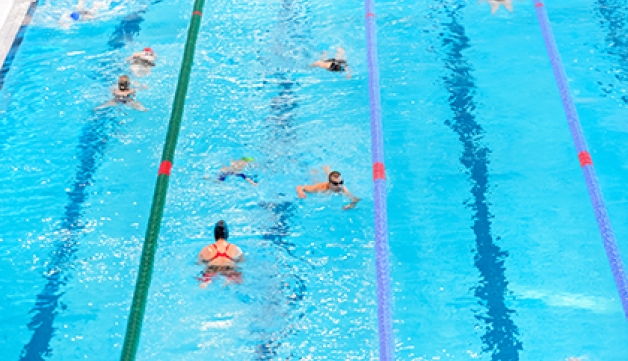
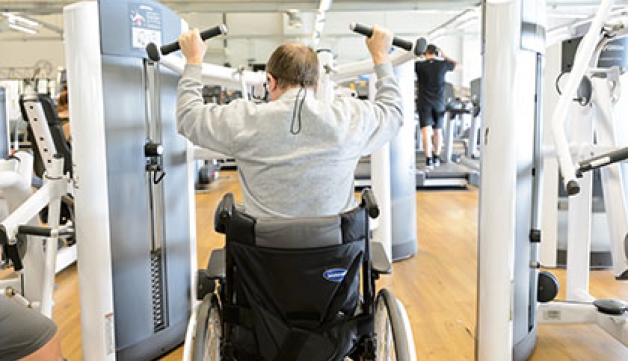
Health drives wealth: gyms, pools and leisure centres play a big part

January is a difficult month for many of us. It’s dark, cold, wet and the glow of the festive season feels a long time ago.

But it’s also a moment when millions of people make a conscious decision to reset – to move more and invest in their health.

That’s why January matters so much for gyms, swimming pools and leisure centres. It’s consistently their busiest month of the year and not just because of New Year’s resolutions.

But beyond the first month of the year, there is a growing understanding that physical activity is preventative medicine and that a healthy population drives a healthy economy.

The places we move are of critical importance.

Earlier this week, alongside ukactive, I visited three very different facilities in one day – across both the public and private sector.

What struck me was how similar the stories were.

Operators talked about strong footfall, rising memberships and people coming through the doors for more than just exercise.

They’re coming for health, of course – but also for confidence, connection, and support.

This feels vitally important in a time that is characterised by increasing isolation, screens and polarised views.

Spaces open to everybody

Another feature which stood out was the remarkable diversity of the people there – from teenagers arriving in their uniforms after school, to the group of retirees who had originally been referred by the next door hospital and now were coming four days a week (and spending as much time over lunch as in the class).

It was also fantastic to see the level of innovation and use of technology to bring health and leisure closer together – with sophisticated health checks, devising personalised programmes for each individual, linking to 'e-gyms' and other virtual support.

This is the preventative health agenda in action. It’s getting active from the ground up and it sits at the heart of our ambition at Sport England, working with our partners to help millions more people become active.

January brings this ambition to life, but the real story is what’s happening year-round.

The scale and growth of the gym and leisure sector are significant.

The UK Health & Fitness Market Report 2025 shows a record 11.5 million people are now members of a health or fitness club – up 6.1% on the previous year – with 616 million facility visits recorded, an increase of 8.2%.

These are not short-term spikes. Participation has been growing over consecutive years, supported by a unique infrastructure of public, private, large, medium and independent operators working across the country.
 

Beyond the first month of the year, there is a growing understanding that physical activity is preventative medicine, and that a healthy population drives a healthy economy.

Sport England’s Active Lives Adults survey 2023-24 reinforces this picture.

Fitness activities and swimming continue to be major drivers of physical activity behind walking, with 904,000 more adults taking part compared to the previous year.

Demand is being driven by what people value most.

Polling from ukactive shows that 77% of members join a gym or leisure facility primarily to improve their mental health and wellbeing.

People also cite better sleep, increased confidence, managing health conditions and making new friends. This is about quality of life, not just physical fitness.

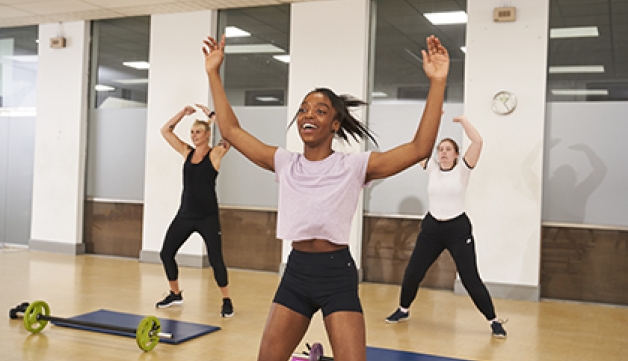
We’re also seeing important shifts in who is taking part. Female participation continues to grow, particularly through group exercise and classes.

Projects like Safer Spaces to Move, delivered with This Girl Can, are helping to remove barriers and make facilities more welcoming and safer for women.

Key community assets

Our latest Moving Communities report shows participation in public leisure has increased for every age group over 45, while gym activity is rising among under-16s, over-65s and people living in the most deprived communities.

Since 2017, the number of children and young people taking part in gym and fitness activity has increased by more than 12%.

Standards matter too. Facilities are improving every year, driven by initiatives such as The Active Standard, Quest and FitCert, ensuring that quality, safety and inclusion keep pace with growing demand.

All of this sits squarely within the Government’s priorities for economic growth and improving the NHS through the 10-year plan.

Health drives wealth and the social value created by being active is immense.

The sector contributes £122.9 billion in social value each year, including £15.9 billion in healthcare savings and £106.9 billion in wellbeing value – the equivalent of £2,600 per active adult – and more than double that for people with long-term health conditions or disabilities.

We gain £6 billion in productivity, thanks to a healthier workforce that takes fewer sick days.

The sector creates £5.7 billion in revenue and supports hundreds of thousands of jobs, many for young people at the start of their working lives.

These are extraordinary numbers.

January is important. But the real opportunity lies beyond it.

Gyms and leisure centres are not just places we go at the start of the year; they – and the people that work in them – are essential community assets, powering healthier lives, stronger communities and a more resilient economy all year round.
 

Find out more

ukactive

The great (and inclusive) outdoors

For more than 10 years, I’ve had the privilege of being part of a partnership between Sport England and the National Trust that’s been quietly but powerfully changing lives.

This is more than just getting people outdoors – it’s about creating real, lasting opportunities for everyone, especially those who need it most, to connect with nature and feel the benefits of being active in green and blue spaces.

Being outdoors and connected to nature has demonstrable health and wellbeing benefits.

Studies have shown impact such as lowering stress levels and reducing cortisol and inflammation, which are increasingly seen as factors in depression, autoimmune diseases and cancer.

Our work at the National Trust is shifting towards a more ‘place-based’ approach, but what exactly do we mean by that?

Rather than parachuting in with one-size-fits-all solutions, we’re considering what’s already happening in local communities, at National Trust properties and on their land, and finding ways to make those spaces more accessible, more welcoming and more connected to the people who live nearby.
 

This is more than just getting people outdoors – it’s about creating real, lasting opportunities for everyone, especially those who need it most, to connect with nature and feel the benefits of being active in green and blue spaces.

Whilst we consider how to be more locally responsive, we continue to work at a national scale on initiatives such as improving navigational and orientation signage to ensure paths are easy to find and follow, and refining path-grading methodologies to better reflect the diversity of users.

This work focuses on describing the path itself rather than the person using it and it goes in line with the Equality, Diversity & Inclusion (EDI) principles and the Equality Act.

What I love about our work is that it’s about making meaningful connections between the land and the community.

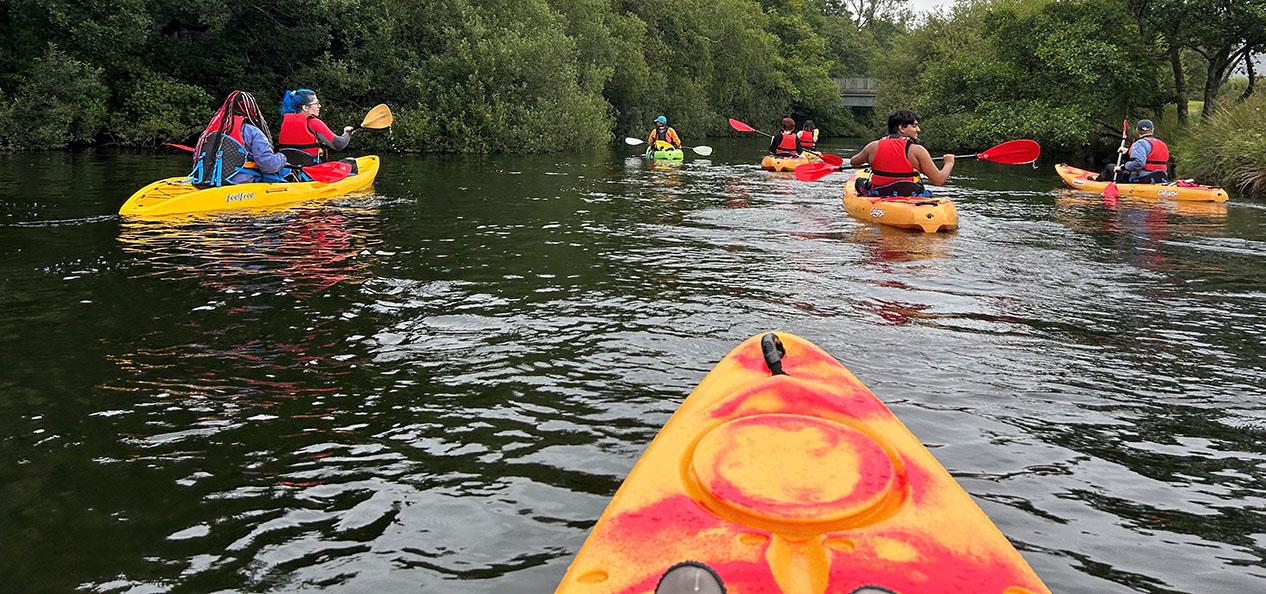
It’s not just about trails or facilities – it’s about creating safe, natural, traffic-free environments where people can walk, cycle, run, paddle or simply be.

I’ve seen firsthand how many barriers can stand in the way of people accessing the outdoors.

Things like fear of getting lost, finding themselves in unfamiliar terrain, safety concerns, challenges around travelling to our places or just not knowing where to start.

We’ve worked hard to design experiences that support people who are new to the outdoors and it’s making a real difference.

For that we’ve been able to capitalise on the strength of the National Trust brand.

Our properties are trusted spaces, with essential facilities like cafés and toilets, which makes them perfect for families, groups or individuals who might be taking their first steps into nature.

The multi-use trails that have been developed are a great example. They’re accessible, enjoyable and range from three to 5km, which makes them ideal for walking, wheeling, running or cycling.

And the impact has been incredible!

We’ve seen a 23% rise in visits from people of ethnic backgrounds, which indicates we’re reaching new audiences and helping more people feel like they belong in these spaces.

This is fantastic news since we strive to improve the experience for communities that often find barriers to exploring the great outdoors.

I’ve also been inspired by the way this work helps those who may need deeper support.

Whether it’s supported paddling sessions, inclusive activities for families with SEN, or community-led cycling groups like the Muslim Cycle Sisters at Osterley, there’s a real commitment to inclusion.

And it’s not just about participation but about representation, too.

The Trust is working with partners to tackle underrepresentation in the outdoor workforce, for example through our walking leaders programme, which is such an important step toward long-term change.

Nature restoration and biodiversity play a big part in our work.

Our infrastructure developments are designed to improve visitor experience and get people active whilst protecting some of the most sensitive nature areas.

We are strengthening our knowledge and skills in designing experiences that deliver real, meaningful and lasting nature connection to inspire more people to care for nature and their local environment.

Looking ahead

As I reflect on the past decade, I feel proud of what we’ve achieved and even more hopeful about what’s to come.

Our partnership with Sport England shows that when we focus on people, place and purpose, we can create spaces that are not only beautiful, but truly inclusive and life-enhancing.

And that’s something worth building on.

Find out more

National Trust

Safety can be simple

After a suicide bomber attacked concert goers at the Manchester Arena in 2017, it was plain that a change was needed in how we protected people visiting public spaces.

In particular, there was widespread agreement that security and safety wasn’t just a matter for the police and emergency services; event organisers and the venues they used had to have a larger role in prevention and planning.

That realisation led to the campaign for Martyn’s Law, which is currently going through Parliament.

Officially known as the Terrorism (Protection of Premises) Bill, it will place a duty on premises and events to have security procedures in place to reduce the risk of harm if there’s an attack.

Some larger events and premises would need documented measures to reduce their vulnerability but it may well be some time before it fully comes into force as organisations and premises will need time to prepare.

As explained on ProtectUK – the dedicated website of the Home Office on counter-terrorism security information, training and materials – it will only directly apply to larger events and premises.

Yet we know that the people who want to do harm are just as capable of targeting small venues and small organisations.

Attacks on high-profile events or locations are getting harder to pull off, so how can we ensure people are protected everywhere they play, compete or train?

Luckily, we’re a society where voluntary associations have always taken responsibility to look after their people.

UK sports clubs and teams are exemplars of good practice in introducing safety and safeguarding protocols, and doing it with only the goodwill of volunteers to draw on.
 

Attacks on high-profile events or locations are getting harder to pull off, so how can we ensure people are protected everywhere they play, compete or train?

At the National Counter Terrorism Security Office we have been developing simple and easy-to-follow tools that are intended to demystify the steps needed to make people safer.

As well as working with some of the country’s biggest sporting organisations with large security set-ups, we’re conscious that security and terrorism are often the last thing on the mind of a club secretary who has to organise coaches, book referees, sweet talk parents into overseeing the car park or finding someone to collect the weekly subs.

Few people probably want to worry about having a plan to stop an intruder with a knife or think through how to manage multiple casualties caused by a rogue vehicle, but they want to know that someone has thought about the risks and that there are procedures in place.

Those procedures may be as simple as making sure you know who is coming into the building, organising the car park to limit the risk of an attacker getting up speed in a vehicle or having a protocol for getting people to safety inside a clubhouse, the changing rooms or the equipment store.

Or they might just involve regular volunteers by asking them to do a short free online security-awareness course.

Working with security experts across Government, industry and a number of national bodies, we’ve built a number of free tools on the ProtectUK website that clubs and teams are welcome to use.

You’ll find advice and resources covering subjects including identifying risks, event safety and eLearning for staff and awareness posters.

And if you can’t find what you need on our website – please, tell us. If it means that people can go about their sport in safety, we’re listening.
 

Find out more

ProtectUK

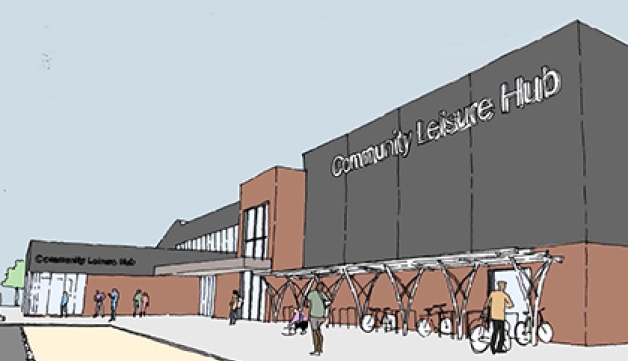
Community Leisure Hub

An illustration of a Community Leisure Hub - a large building with bike racks outside it Aiming to encourage well-designed facilities that meet the needs of sport and physical activity and consider 'Active Design' and the 'Active Environment' principles. Facilities
Leisure Local

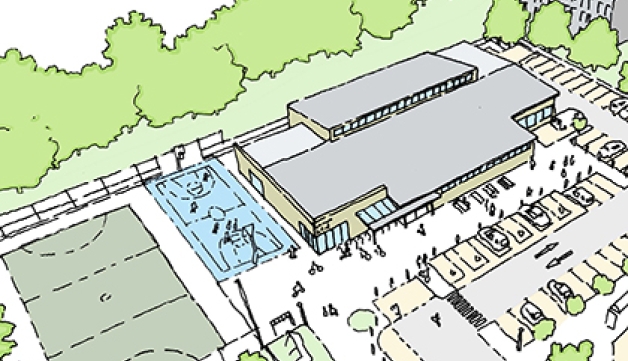
An illustrated scene of a local leisure centre, with a netball court, basketball court, parking spaces and planting outside. A concept aiming to encourage well-designed facilities that meet the needs of sport and physical activity and are a pleasure to use. Facilities
Raising the bar with The Active Standard

Our sector is the nation’s engine room of physical activity as we support health and wellbeing by welcoming people from all communities – whatever their age, background or ability – on their journey to a more active lifestyle.

Customer-facing and facility-based environments work hard to ensure that users, staff and buildings are operating to the right standards.

These continued efforts enable customers to feel safe and confident in getting active in these spaces and to build wider trust that the sector is taking safety seriously.

And this is key, because in an increasingly complex regulatory environment, compliance standards are vital and operators across the country are being given a new opportunity to strive for excellence with the launch of a new certification from ukactive called The Active Standard, also known as TAS.
 

Our sector is the nation’s engine room of physical activity as we support health and wellbeing by welcoming people in all communities on their journey to a more active lifestyle.

The certification has been developed over four years in partnership with Sport England, The Chartered Institute for the Management of Sport and Physical Activity (CIMSPA), Right Directions (which delivers Quest – the quality scheme by which our sector is measured), and EuropeActive and The Royal Netherlands Standardisation Institute (NEN), which together deliver the European FITcert scheme.

TAS is a baseline certification available to all ukactive members that operate sport, fitness and leisure facilities in the UK.

Co-developed with the industry, it has been designed to provide value for facility operators across the public, private and independent sectors, no matter how small or large.

How can TAS help get more people active?

The certification has been designed to unite operators in their pursuit of operational excellence and to help them demonstrate quality and compliance with the UK law.

As a baseline certification, TAS can be achieved by demonstrating that an operator is meeting the requirements for areas such as health and safety laws and regulation, professional standards, safeguarding measures and data protection.

The recognition is achieved through a 40-question process conducted by an independent assessment body.

By making it accessible and achievable to operators of any size, this recognisable quality mark will help to instill trust and confidence for more consumers, as well as supporting wider partners such as healthcare professionals and the NHS to feel confident referring patients to our sector’s facilities.

This will be crucial to aid us in our shared mission to reduce health inequalities across England.

Importantly, this baseline certification also encourages operators to continue their improvement journey by introducing new pathways to Quest certification and the FITcert scheme.

How are standards evolving?

In 2020, the physical activity sector – like many other customer-facing sectors – was experiencing the impact of the Covid-19 pandemic, with facilities around the world being forced to close throughout long periods of lockdown.

The importance of demonstrating the sector’s safety procedures was paramount during this time.

In fact, it was this ability to prove the high standards of the sector that led many gyms and leisure centres to opening earlier than other sectors and services following the second national lockdown.

As time progressed, the sector’s commitment to standards continued and the industry was well aware of the role health and safety commitments could ultimately have on reputation and on being able to welcome even more people through the door.

Since then, TAS has been meticulously tested and piloted with a broad range of operators, to ensure it is a certification all ukactive member operators can achieve, with a clear pathway for those that decide to further progress their journey to excellence through the likes of Quest and FitCert, without duplication.

Research by Sport England shows that the sport and physical activity sector in the UK already generates £107.2 billion in social value each year.

We also know from their most recent Children’s Active Lives survey, that participation in gyms and leisure facilities has more than doubled in the past five years, with 908,000 more young people taking part compared to 2017-18.

By recognising this growing demand and the expectations of the next generation, we have the opportunity to use a unified standard to showcase just how safe, supportive and inclusive our sector’s facilities really are.

Doing so will enhance the sector’s reputation, help even more people to feel confident in getting active and ultimately boost the long-term health, happiness and prosperity of the nation.
 

Find out more

The Active Standard

Supporting England stars' grassroots journeys

Like millions of people around the country, I’ve been keenly following England men’s bumpy progress at Euro 2024, and now we're all looking forward to another semi-final!

Whenever I’m watching the Three Lions or the Lionesses – or any football match – I can’t help but feel proud of our continued investment into football at Sport England.

Our goal is to make sport and physical activity a normal part of life for everyone in England, regardless of who you are.

Football is our national game and is a really important activity for us, as it is accessible and plays a big role in keeping the nation active.

Not only does it stir our emotions and help to get people talking (just think of that overhead kick v Slovakia!) but it plays a big part in the delivery of our 10-year strategy, Uniting the Movement

Our Active Lives surveys tell us that nearly four million adults participated in football last year and nearly three million children and young people currently play once a week or more.

So whether it's through turning out for your local team in one of the thousands of brilliant grassroots clubs up and down the country, playing with mates in a local five-a-side centre, or a kickabout in the park, football provides reach into communities and audiences that are important to us.

"Whether it's through turning out for your local team in one of the thousands of brilliant grassroots clubs up and down the country, playing with mates in a local five-a-side centre, or a kickabout in the park, football provides reach into communities and audiences that are important to us."

Our partners are key to delivering long-term change by transforming lives and communities through sport and physical activity, and we are investing over £6 million a year in long-term partnerships with the FA and EFL in the Community (formerly the EFL Trust). 

This includes supporting the FA’s work to make the football coaching workforce more representative of its community and in driving positive change for disabled people.

Our partnership with EFL in the Community will support their network of Professional Club Community Organisations working in areas of greatest need to play their part in tackling inactivity levels and the associated inequalities.

We also work in partnership with the Football Foundation, the Premier League, the FA and the government’s charity, helping support and influence their significant collective investment to help communities improve their local football and multi-sport facilities.  

The Football Foundation also deliver our £15m lottery-funded Active Through Football programme in 25 places, making a positive impact in people’s lives through recreational football and wider activity informed by community engagement. 

The grassroots journeys of more than half of the current England squad in Germany – including stars like Harry Kane, Jude Bellingham and Trent Alexander-Arnold – have been supported by Football Foundation investment in things like new and refurbished pitches, new stands and spectator toilets.

It’s hugely rewarding to see some of the players who once benefitted from improvements to their junior clubs going on to shine on the international stage. 

But it’s even more important for us that our investment leads to more and more people from all backgrounds being able to access football in their communities – and reaping the many benefits of that.

We’ll continue to do our bit for the game. For now, here’s to an England win on Wednesday night and another step towards bringing the Euros home!

Celebrating four years of crowdfunding

In the last few years we are hearing more and more about crowdfunding. A concept that basically refers to people and/or organisations coming together to raise money in order to fund a project.

When it comes to crowdfunding in sport, we could say that this is a collaboration that, at its core, has a shared vision -  to encourage healthier lifestyles and stronger communities by making match-funding available to help the sport and physical activity sector.

This summer we celebrated the fourth anniversary of our partnership with Crowdfunder UK, and what a wonderful collaboration this has been!

Combining the expertise of this great organisation – one of the most renowned crowdfunding platforms in the country – and our commitment to investing in grassroots sports initiatives, we have created a joint endeavour that continues to redefine the landscape of sports funding.

This is how it works.

Organisations can apply for up to £10,000 in match funding to contribute to their live campaigns.

All clubs need to do is apply via the Crowdfunder UK platform, and by raising a portion of their total across a certain number of supporters, our pledge will automatically be dropped on to a live campaign.

Our main driver for the initiative was to help change the behaviour and thinking within VCSE (voluntary, community and social enterprise) organisations our sector.

Advocating self-help and empowering people to achieve success from running a campaign is key and the additional resource that we provide to achieve this, paramount.

 A common misconception is that the more deprived areas struggle to raise funds from their local communities.

However, areas with an IMD (Index of Multiple Deprivation) 1 recieve an amplification of £1.46 for every £1 of Sport England investment.

This illustrates that with regards to crowdfunding, more deprived areas may not be at a disadvantage as is commonly thought.

We have two campaigns that are examples of this partnership: Active Together - a programme to help sport and physical activity organisations move forward with priority projects and running costs that they might be struggling with; and Places and Spaces - a programme for community sport and physical activity groups looking to create, enhance or redevelop their sports facilities for the benefit of the community as part of the Birmingham 2022 Commonwealth Games legacy.

Sustainable funding

One of the most remarkable feedback items we have consistently received from project leads benefitting from this model, refers to the wider impact the crowdfunding experience has had on their organisations.

Aside from the financial backing, thanks to the pool of support and tools on offer, organisations have reported many benefits, including:

  • better connection to the local community
  • improved digital skills 
  • activated wider sponsorship on top of their campaigns
  • increased number of new members
  • a growing sense of togetherness throughout the organisation.
     

When it comes to crowdfunding in sport, we could say that this is a collaboration that, at its core, has a shared vision - to encourage healthier lifestyles and stronger communities.

Therefore, as a team, we really can’t highlight enough the full impact the fund has the potential to have on an organisation and its stakeholders.

A huge element of this was the customer experience on offer throughout the campaign and the application process.

Alongside Crowdfunder UK we have consistently championed diversity, aiming to break down barriers that hinder access to activity for underrepresented groups, something that lies at the core of our long-term strategy, Uniting the Movement, and that guides everybody’s efforts at Sport England.  

A win-win proposition 

Sport England's decision to partner with Crowdfunder UK provis proving to be a win-win proposition for all parties involved, based on the consistently high amplification figures derived from the application of this model.

Moreover, this approach to funding emphasises the value of community involvement in bringing sports projects to life.

This is because individuals, local businesses and organisations have a unique opportunity to become active stakeholders in initiatives that matter to them, investing in their communities and contributing to the nation's collective health and wellbeing.

How can you help…

We are one of a growing number of sports bodies venturing into Crowdfunding, and we are trying to further signpost its benefits to our partners.

So if you are having conversations, please do share the latest infographic and details for the webinars.

We also have some fantastic, free support tools to help you on your crowdfunding journey.

These include short courses online, monthly webinars (including an interview with past campaign owners), one-to-one support with a Crowdfunder Sport coach as well as a 24/7 help centre.   

There's also a handy guide that includes all of these details and the Crowdfunder coaches will be available to talk you through some of the most frequently asked questions.  

It's in our nature

Crowdfunding in sports makes lots of sense for a lot of people. We are, in the end, social animals and sport and physical activity are intrinsically team efforts.

Because in sport, even if you compete solo, you always have a crew behind you, guiding you and making sure you perform to the best of your ability.

And even if you prefer to be active by yourself, chances are you’re still benefitting from other’s efforts like exercising on a renovated local park.

Working together for the common good is not only human nature. It may truly highlight what’s best within us, as we’re stronger together, and together we can achieve more.
 

Birmingham 2022 – one year on

One year ago, all eyes were on Birmingham.

The city kicked off a spectacular 10 days of sport and culture with an opening ceremony at the newly refurbished Alexander Stadium in Perry Barr.

Sport England invested £35 million into the Birmingham 2022 Commonwealth Games as part of our commitment in Uniting the Movement – our 10-year strategy – to tackle inactivity inequalities. 

Now, as we look back at this momentous occasion, we reflect on the progress we have made in delivering on our ambition with a list that, while may not be exhaustive, will help to highlight a series of areas and examples of how our funding is being used to create new opportunities for people to be more active.

More than infrastructure

Substantial funds were allocated to enhance facilities, talent, volunteering and grassroots initiatives, and through them Sport England has played a pivotal role in laying the groundwork for a more active and healthier region and nation.

Our investment of £2.5m has supported the development of a brand-new state-of-the-art aquatics centre which was designed and built to meet the needs of the residents in and around Sandwell, whilst providing an iconic regional asset.

A group of children and women pose with a sign to celebrate the anniversary from the Birmingham Commonwealth Games 2022.

And there are more projects and activities we’ve invested in:

  • a play zone in West Smethwick Park that will have a floodlit 2G artificial surface suitable for football and cricket activity
  • an urban-bike park at Sandwell Valley Country Park, through our Places to Ride programme, that will provide green, blue, red and black graded mountain bike trails, and the Hilltop Golf Course
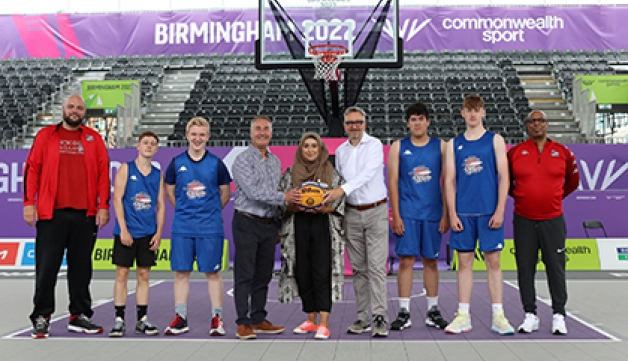
  • the improvement of several outdoor basketball courts across Birmingham, along with Birmingham City Council and Basketball England, to help develop the 3x3 offer to local clubs and communities
  • a three-court beach volleyball facility at Birmingham Moseley Rugby Club utilising a third of sand from the Games
  • the conversion of two of the Games media vans into mobile share shacks to enable a library of items, available to borrow for free, to different communities in Birmingham
  • two new facilities close to the Alexander Stadium: a new floodlit multi-use Games area at Holford Drive Community Sport Hub and, in partnership with the Places to Ride programme, a new modular clubhouse at Birmingham BMX Club.

Supporting everyone in the community

From the outset, our investment into the legacy of the Games had to mean something.

We wanted to connect with those communities that are normally detached from major events.

So, we took the lead from the original bid to host an event that highlighted the major inequalities and deprivation within the city and the wider region, but also acknowledged a keen identity and sense of place for ‘Brummies', within the Black Country, Coventry and indeed into the wider region.
 

From the outset, our investment into the legacy of the Games had to mean something.

It was this sense of place and the importance of working at that level, evidenced in our local delivery pilots, that drove the creation of our substantive community-focussed programme - the Commonwealth Active Communities (CACs).

The CACs are four place-based programmes, made up of a consortia of organisations in Birmingham, Coventry and Solihull, and a collective approach by the four Black Country authorities of Dudley, Wolverhampton, Walsall and Sandwell.

Each place identified its strategic and local needs and developed an approach to tackle inactivity and inequalities via physical activity, through the principles of co-production, collaboration, distributive leadership and a commitment to learning and sharing outcomes.

Across the four places, activity focussed on young people, active environments (including streets, parks and canals), inclusivity and disability, walking and cycling, social prescribing, care homes and mental health.

These elements are now the focal point for other services and organisations for us to connect with, and the programmes and tools developed have added to our learning and informing our future place-based work.

Regarding the nurture of grassroots sports participation on the back of the Games, we focused on the above-mentioned CAC principles and invested £6.5m into the 22 Games national governing bodies of sport.

The aim? To use the Games to amplify opportunities for underrepresented communities to get active and to enjoy the benefits of sport and physical activity.

Some examples of these efforts include:

  • British Wrestling - they used their allocated funding to support the appointment of two locally trusted women as legacy leads to head female activation sessions to highlight the barriers women often face in sport, and to further support clubs and groups to challenge these, providing more opportunities for women and girls from culturally diverse backgrounds to be active.
     
  • England Athletics - they have developed their Funetics scheme, delivered through engaging with locally trusted organisations and services to better connect with local communities, like with the share shacks I mentioned earlier. Through this connection, the group have provided equipment bags, resource cards and training for community members to use in parks and festivals to engage with families.

With the backing of government, we also distributed around 16,000 items of sporting kit used in the Games, which benefitted 290 community organisations.

This giveaway helped foster a sense of diversity, equality, ownership and involvement and it provided opportunities for people of all abilities from a diverse range of communities.

Beyond the Games

Looking past the immediate benefits of the £870m boost to the UK economy, our investment in Birmingham 2022 has made an impressive impact through initial evaluation.

As we celebrate the one-year-one milestone, it is important to recognise that the journey is far from over.

The impact of the Games and our investment continues to evolve, with ongoing efforts to engage communities, develop talent and promote physical activity nationwide.

Our commitment to fostering a healthier and more active nation remains, serving as an inspiration for future major events and further place-based working.

We want to celebrate but also acknowledge the dedication, hard work, and collaboration that has gone into creating lasting change.

As we move forward, the profound impact of our investment will continue to inspire and shape the future of sports participation, community engagement and overall wellbeing in Birmingham and beyond.
 

Driving health and wellbeing through movement

Last week, I chaired a roundtable of leaders and experts at the House of Lords exploring how the NHS can better utilise movement and exercise to meet its current challenges.

The occasion was hosted by Baroness Amanda Sater, a committed advocate for young people’s participation in sport.

It was a rich and wide-ranging discussion with contributions from NHS England, MPs and peers from both sides of the bench, primary care and public health specialists, health charities and movement, sport and exercise organisations.

The importance of our personal experiences

I kicked off the conversation with the reflection that each person’s experience of movement, health and wellbeing is different.

Our experiences are impacted by the community we live in and how we engage with professional services, and they also depend on a wide-ranging, skilled and well-equipped workforce.

A group of experts gather at the house of lords to discuss health and wellbeing at a meeting in the House of Lords, in London

When my son (who is now an 11-year-old fanatical football player) was born, the care I received in my local hospital included routine care, emergency intervention and six days of recovery on the ward.

My extended recovery included all the follow up you'd expect but it was enhanced by daily walking my buggy in our local park - a green space five minutes from home.

Later on, I joined a regular ballet class in a close-by church hall, which helped me with physical and mental recovery.

So, in my case, the healing process was helped through a mix of personal, community and professional engagement. Every part of this process had a distinctive role in my recovery and I wouldn’t remove any of it.

During last week’s discussion, I was struck by the fact that the opening remarks, including contributions from Lord Nick Markham (Lords Minister for Health and Social Care) and Kim Leadbeater MP (Chair of the Sport All-Party Parliamentary Group), touched on personal reflections on the role and impact of movement, sport and physical activity on our own lives.

Our experiences are impacted by the community we live in and how we engage with professional services, and they also depend on a wide-ranging, skilled and well-equipped workforce.

This reminded me that active people are the best advocates for getting active.

There was a strong echo of this point as we discussed how supporting the NHS workforce to get active themselves could be a significant way to unlock a movement to encourage patients to increase their activity levels.

Opportunities for change

Our national partnerships lead, Suzy Gardner, presented what we refer to as the three key opportunities for change – working with the NHS, changing attitudes to risk and making the most of physical activity to improve mental health.

In response to these, the group discussed:

  • The need to work together more, to speak as one voice with a clear message.
  • How GPs are reimagining primary care services.
  • The need for training and development for health practitioners.
  • The significant benefits and some of the limitations of physical activity for individual and community health.
  • The opportunity to work locally and hyper-locally to create health and wellbeing services that blend primary care, community connection and opportunities to move more.
  • The need for full participation of children and young people in driving change with us.

The premise of our discussion was that, given the strength of evidence, physical activity can be better utilised as a tool to help deliver key health outcomes and priorities, helping to reduce the challenges the health system is currently facing.

It was only a few weeks ago that we were celebrating the 75th anniversary of the NHS, and the  transformation and changes needed to enable it to weather the extreme strains it's under.

The UK Chief Medical Officers were most eloquent when they compared physical activity with “a miracle cure” because of all the illnesses it can help prevent and treat.

This is a reference we’ve used in the past in our work and it appeals to the core of our long-term strategy, Uniting the Movement.

We know that, even in small amounts, moving our bodies is beneficial at all stages of life, particularly for the most inactive individuals where the greatest health gains can be made.

We also know that individuals and communities want support, with one in four saying that they would get active if told to do so by their doctor or nurse.

And this is just the tip of a growing evidence base!

Social prescribing and sound advice from health professionals are key to shifting people’s habits but significant structural barriers remain.

Overcoming these requires all of us to be brave in designing services that cut across traditional institutional boundaries and keep people at their heart.

Working together 

At Sport England, we want to accelerate and amplify the work we have done with partners in this space.

Our resolve to build a coalition of allies that can help us advocate for the value and role of physical activity, to improve the population's health and to help reduce health inequalities is stronger than ever.

But this is not work we can do alone – we need trusting, long-term partnerships.

Our key priority moving forward is to work closely with partners and places to continue to understand the key policy changes required that can enable the right conditions for physical activity to integrate, particularly through local integrated care partnerships and boards.

It was clear in the room that we’re starting to build momentum for change and we finished the round table by committing to take action together.

We are really excited by the opportunities that lie ahead and will continue to evolve our approach and our coalition of partners to strengthen the connections between sport, physical activity, health and wellbeing.

Further reading

Our blogs on health

A commitment to sustainability in sport

“[Climate change] is the defining issue of our age and the central challenge of our century” – António Guterres, Secretary-General of the United Nations.

In 2022, two global conferences (COP27 on climate change and COP15 on biodiversity loss) provided profound moments of reflection for world leaders.

Discussions around the knock-on effects of political unrest, increasing living costs, the reintroduction of coal-fired energy suppliers, and declines in wildlife populations sparked further powerful reminders for immediate action.

A man and a woman practice surf on a lake


2022 also boasted a host of major sporting events, from the Beijing Winter Olympics to the FIFA Men’s World Cup.

The UK celebrated many sporting successes, including the Lionesses Euros win, and the most inclusive Rugby League World cup with concurrent tournaments for men, women, and wheelchair participants.

Local action against global issues

From elite athletes to recreational participants, we rely on nutritious food, clean air and, for many sports, natural playing surfaces (water, snow or grass) and spaces to be able to take part in the activities we love.

We also rely on natural rainfall to irrigate crops and we discharge our waste into the environment in the ‘hope’ that it will go away – processes that we often take for granted.

We must all be more aware that sport doesn’t exist independently of the ‘real world’. Instead, our sector is impacted greatly by the social, political, and environmental issues that occur alongside it, and, collectively, we can play a big role in helping to tackle climate change.

This may seem like a global and somewhat insurmountable issue but taking local action can amplify results and start crucial conversations.

This is exactly why my organisation – BASIS – came together with Sport England’s Club Matters team, Community Leisure UK, and Active Partnerships to create the Becoming more environmentally sustainable guide.

How can you help?

As you seek to make a difference in 2023, this is a great resource to help you get started.

The hints and tips within the guide start with a commitment to change by writing a policy or pledge that your members/volunteers/board are fully committed to in the day-to-day running of your organisation.

We must all be more aware that sport doesn’t exist independently of the ‘real world’. Instead, our sector is impacted greatly by the social, political, and environmental issues that occur alongside it, and, collectively, we can play a big role in helping to tackle climate change.

It’s important to understand your current impacts, set targets and share your progress with your community to boost morale and inspire others to be proactive.

You can do this by:

  • building your community into your decision-making processes
  • regularly monitoring your process
  • communicating with your people and partners to show what you’re doing.

Explore the ways you can maximise the efficiency of your facilities, should you use them.

If you hire facilities, you can ask the operator what they are already doing and how you can contribute to their agenda, and if you own your facilities, there are many ways to reduce your energy consumption and other impacts, such as:

  • Installing energy meters.
  • Switching lights and electrical equipment off.
  • Using LED bulbs.
  • Exploring different energy tariffs/providers.
  • Recycling greywater or rainwater.

You can also ask the facilities’ manager what they’re doing to support biodiversity and see if your community can help.

Equally, if you have your own facilities, make the most of your natural environment and support wildlife and nature by leaving grass to grow longer in unused areas, planting wildflowers, or reducing the pesticides or fertilisers you use.

Take time to consider the waste you create and how you can reduce it. Encourage people to repair, recycle or re-use things, consider going paperless where possible and starting a kit and equipment donation scheme.

Consider reducing the single-use plastics you use by providing water-refill stations at your venue and encouraging participants to bring reusable bottles. You can also review at the things you sell and buy and look for sustainable alternatives.

The guide suggests further conscientious ways to make a difference, such as the food and drink offering or transport solutions – explore more here

Your contribution matters

It may be tempting to think that your individual actions can’t make a difference. Perhaps true if it was only one person, but if everybody acted, it would add up.

It may seem challenging at a time when so many other issues are making it hard for your organisation to survive financially, but a broader scan of the horizon makes it clear how many of these issues are inter-linked.

It’s really important for us to make a promise and take positive action against climate change. This is a fight we have to win and we’re all on the same team, let’s work together to make a difference

After the Games have gone

As the Games came to a close last night, we celebrated performances of sporting endeavour and revelled in the cultural diversity of Birmingham and the Commonwealth, celebrating all that is good about coming together for a festival of fun, hope, ambition and wellbeing.

But it would be remiss of me not to recognise the hundreds/thousands of hours that have gone in to making Birmingham 2022 the biggest and best Commonwealth Games there have been, and from a starting position shorter than any other host has had to deliver in.

The buzz in Birmingham was palpable. I went to see the Queen’s Baton Relay make its way through Small Heath Park in the build-up to the Games and witnessed the pride and joy of coaches, volunteers and community leaders celebrating being part of something together, of families and friends cheering them on.

After two years of Covid-19 restrictions, to see so many people uniting and celebrating was truly inspirational.

At Sport England we’ve invested into Team England and enjoyed the passion and commitment being exhibited on the sporting field of play.

A member of the public uses the trails at Cannock Chase Forest - mountain bike venue of the Birmingham 2022 Commonwealth Games

Importantly, we also supported more than 1,000 young people and volunteers to give an immersive experience of what being part of a major multi-sport international event feels like.

Team England Futures helped prepare the performers of the future for Team England and Team GB – bringing forward more young people and support staff that reflect the diversity of our population.

The value and importance of the Games to Sport England extends far beyond the field of play though, and into the heart of communities across Birmingham, the West Midlands and other areas of the country.

Our investment runs through to December 2023, so as the Games themselves played out over the last 11 days, much of the work on legacy started to build up a head of steam.

Whether that be for the communities benefitting from our Birmingham 2022 Small Grants programme, one of the many initiatives emerging from our Commonwealth Active Communities programmes or the activation through a number of national governing bodies in reaching further and deeper to support those furthest way and least active presently.

We’ve already seen the benefit of our programmes through our recent visit to Impact Fitness in Tyseley – a community wrestling and boxing club using the inspiration of a home games to inspire more young people to get involved in their sport, and more women and girls to become coaches.

This is just one of a number of groups we’ve supported through our Places and Spaces programme and investment – in this instance into British Wrestling, who are focussing their energies on growing participation, coaching and volunteering through women and girls from culturally diverse backgrounds.
 

After two years of Covid-19 restrictions, to see so many people uniting and celebrating was truly inspirational.

There’s a fundamental ambition through all of our legacy planning that I wanted to hone-in on here.

That is to focus resource on where it’s most needed and can have the biggest impact.

That means an unrelating commitment to ensuring the funding reaches deeper and wider than it has in the past.

All of our resource is through the lens of tackling inequalities, supporting those that have the most to gain but often the hardest journey to find sporting opportunities that are affordable, accessible and responsive to where people find themselves.

We won’t always get this right and we are on a journey rather than arriving at the end at this point and have much to learn.

Record breaking

Team England's tally of 176 medals - including 57 gold - is their best ever haul from a home Games.

But we’re keen to challenge ourselves, and the partners we’re working through, to continually ask if we’re listening deeply to what communities are saying? Are we co-creating with and not doing to? Are we recognising and building on the assets in place, particularly the passion, lived experience and knowledge to know what is best?

We’ve seen some of the NGBs we’re working with, seeking to collaborate with local partners and stakeholders and with a passion to do things differently to create new sustainable opportunities and make existing opportunities more accessible.

Ultimately if we do what we’ve always done, we’ll get what we’ve always got.

The Games is a catalyst to do things differently and embed a new way of supporting people to access the benefits of an active lifestyle, but in a way that works for them on their terms as opposed to being offered short-term, top-down approaches that don’t have the ownership to be sustained.

We’ve learnt this from the last four years of our place-based working across the organisation and now have an opportunity to embed that learning through our approach to legacy. 

Our investment over the next 18 months should create the foundations for how we want to work locally and with partners in Birmingham and the West Midlands in the future.

There are lots of partners and stakeholders that have fabulous energy, commitment, knowledge and influence, and we want to work with you to realise the benefits that sport and physical activity can have.

If we can harness the collective ambition through a shared sense of purpose and with an unrelenting commitment to making a difference, we can deliver on our Uniting the Movement ambition to get more people to move more and all the benefits that brings.
 

Find our more about our investment into these Commonwealth Game.

Birmingham 2022

100 days to go

With the year already flying by, it might be a surprise to many that as of today it’s officially 100 days until the opening ceremony of the Birmingham 2022 Commonwealth Games.

With it already being an extraordinarily short turnaround for Birmingham and the West Midlands – after the decision to remove hosting responsibilities from Durban, South Africa – Birmingham has only had a four-and-a-half-year cycle to prepare for the sporting event, which will take place within the city and across the West Midlands from 28 July-8 August.

The Commonwealth Games has always been known as the ‘friendly games’ so in what has been, and continues to be, a difficult couple of years for many this is an opportunity to come together as a nation, to celebrate and to cheer on the incredible sporting talent from across the Commonwealth.

However, for us at Sport England, as like other previous major sporting events, it’s an opportunity to use sport and physical activity to transform lives and communities, making it accessible and available for everyone – no matter their background.

A legacy that helps to both develop the sporting talent of the future and to achieve the ambitions and commitment in our 10-year strategy – Uniting the Movement – to tackle inequalities, level up access and use sport and physical activity to help create more resilient, inclusive and connected communities is our driving ambition. 

That’s why our £35m legacy investment into the games is so exciting.

Para swimmer Ellie Simmonds holds up foam numbers spelling out 100 at Sandwell Aquatics Centre, marking 100 days to go until the start of the Birmingham 2022 Commonwealth Games

Back in November we officially launched our Commonwealth Active Communities programme – a place-based £3.1m investment into Birmingham, Solihull, Coventry and the Black Country.

This programme picks up on local challenges and aims to bring partners together to find creative solutions to support people to get more active.

We’ve also invested £2.5m directly into the Sandwell Aquatics Centre to support much-needed improvements in sporting facilities for the community post-Games.

Alongside this investment we’re also supporting a number of local facility improvements/upgrades – including Wyndley Leisure Centre which, during the Games, will be an official training venue for hockey, triathlon, and para-triathlon, new facilities in Cannock Chase Forest to make cycling even more accessible and a new multi-use games area at Holford Drive in Birmingham, where work will start early this autumn.

Our most recent announcement last week, committed £600,000 to six West Midlands Active Partnerships. With National Lottery funding available to community organisations working to support individuals – particularly inactive people from underrepresented groups – find ways to be active.

We also announced an expansion to our Places and Spaces fund – moving it from a West Midlands focus to a national offer. This investment will put communities at the heart of local action, supporting people to move more on a daily basis, where they live. 

There’s no one-size fits all approach so, if we want this to be a lasting and meaningful legacy, we must ensure we cater our approach to address and meet local needs.
 

It’s an opportunity to use sport and physical activity to transform lives and communities, making it accessible and available for everyone – no matter their background.

One initiative in particular encompasses this approach. Our National Governing Body Participation, Innovation and Digital programme has really challenged both ourselves and stakeholders to think differently.

That's why we’re talking, but more importantly listening, to communities, grassroots organisations, local sports clubs, local volunteers and other partners to understand their priorities, what works and where investment is most needed.

More specifically, in terms of volunteering, we’re working with the six Active Partnerships across the West Midlands to develop local youth social action placements for young people who might not normally volunteer at a major event, to enable them to support their community and peers into sport and activity. 

We’re also investing in the next generation of talent to help develop coaches and athletes of the future – with a particular focus on talent from backgrounds that are historically under-represented, so the sport sector and our national teams better reflect modern British culture.

With a strong focus on young people, we’re extending our investment into the School Games this year to see even more children and young people get active.

This investment was officially kicked off in February with a live assembly in Liverpool, and this programme will help towards engaging with and encouraging more children to get involved in the School Games, offering a wider range of physical activity and providing extra resources for schools, alongside supporting the School Games National Finals to take place in September 2022.

Before that though, the Queen’s baton relay will land in England in June as part of the Queen’s Platinum Jubilee celebrations – working its way around the country to arrive at the Alexandra Stadium on 28 July as part of the opening ceremony.

So, with 100 days to go and our legacy work in full swing, the Commonwealth Games bring with them the unique opportunity to both celebrate the now and build for the future.

We hope you’ll join us in looking forward to a great summer and, wherever you are, think about how you could maximise the opportunity the Games bring in your community this year.
 

Moving Communities

A lane swimming session in a public swimming pool Our Moving Communities service measures physical activity levels and other key performance metrics across delivery programmes and facilities in local places and the wider social value that creates. Facilities Local authorities
How This Girl Can is developing to support the fitness and leisure sector

One of the first pieces of This Girl Can research I saw back in 2014 was women talking about the ‘dreadmill’, and viewing gym sessions as punishment for not having the right sort of body or diet.

When we launched the This Girl Can campaign back in 2015, liberating women from the fear of judgement that stops them from getting active was our bold mission statement.

When more women feel they can get active without worrying what others think, then more will be able to enjoy the benefits it brings and we can tackle the stubborn gender activity gap, too.

However, in 2021, This Girl Can recognises that while we still need to influence how woman are thinking and feeling in relation to being active, we also need to look at the more systemic and practical things that make a difference in helping more women turn the intention of getting active, into action.

The environments within fitness and leisure facilities are important for sustaining women’s activity levels; prior to the pandemic, 21% of women were regular participants in fitness classes, while the number taking part in weights sessions was also seeing an increase.

A woman lead an exercise class, using small dumbbells during a punching exercise.

This is why I’m so pleased we’ve been working with ukactive to this week launch sector-leading guidance that will help gyms and leisure centres take the practical steps that will help more women and girls feel able to turn up, join in and keep coming back – as we know there is demand, based on pre-pandemic behaviours.

The more we can all do to understand the emotions and expectations that women are bringing when they walk through a fitness or leisure facility’s doors, sit in the car park summoning the nerve to go in or scurry past without crossing the threshold, the better we are able to build businesses that meet their needs.

The new guidance, with checklists and tips underpinned by fresh insights, will support the sector to do just this.

We need women’s experience of getting active to match the inclusive and welcoming standards that our collective This Girl Can campaigning calls for.

This means that if someone cautiously tries a new fitness class, or comes back to the gym after a long gap (and let’s face it, we’re all having that experience after the last 18 months), they’re met with the support they need to feel empowered to keep coming back.
 

The environments within fitness and leisure facilities are important for sustaining women’s activity levels.

Crucially this guidance is based on what women have told us – through extensive research and focus groups with both gym-users and non-gym-users – they are looking for in fitness and leisure facilities.

Women make up 51% of the population; that is a lot of exciting untapped growth potential for a sector that was hit hard by the pandemic.

So this new guidance goes further than we’ve ever gone before with our This Girl Can insight, showing organisations in the sector what these findings mean for them and providing practical steps to implement the required changes.

This includes directing the sector towards other This Girl Can initiatives that have been developed to get women active, such as the This Girl Can fitness classes developed in partnership with EMD UK - which will be widely available early next year (sign up here to find out more), or the This Girl Can image library.

We as Sport England have always known we couldn’t empower women solely on our own – so we’ve always taken a collaborative approach.

The impact of This Girl Can so far (four million more active women) is down to a wide range of partners and organisations that are committed to making change happen.

So what’s exciting about this launch is that leading operators contributed to the development of the guidance and many more are already welcoming the opportunity to use it.

Let’s continue to work together on our joint mission to help women everywhere get active and stay active.
 

How to improve your services for women and girls: as told by the 51%.

Download the guidance

Millions will be celebrating the return of group activity indoors

Today is a hugely significant day as, for the first time in five months, leisure providers across England will be in a position to fully reopen the doors to their facilities.

This will not only positively impact the millions of people who have been deprived of their indoor group exercise and activity to get #FitTogether, but also all of those that rely on these facilities to provide essential health and wellbeing services.

Those facilities also provide one-to-one support, friendship, camaraderie and, most importantly, a sense of belonging where people can connect with one another, once again, in a safe and secure environment. 

Women take part in a spinning class

Throughout the pandemic, when lockdowns lifted the data on the low prevalence of coronavirus (Covid-19) rates within our facilities demonstrated just how committed the sector is in its adherence to the government guidelines and to keeping customers and staff safe.

Those returning to these facilities for the first time today can expect nothing less, with protocols in place to continue to protect staff and customers during group exercise delivery.

Today really is a great step forward in the road towards a recovery from the impacts of the pandemic for facilities and their users.

Impact on activity levels

This pandemic has had a significant impact on the activity levels of everyone, however, women in particular have suffered, with 40% doing less activity than usual by the end of the first lockdown (Sport England, Active Lives 2021) – a figure that no doubt will have been exacerbated following the winter lockdown.

Prior to the pandemic, women made up 54% of gym and leisure centre members in the UK and more than 70% of group exercise class attendees were women, with indoor cycling, aerobics and yoga placing in the top three most popular group workout activities (This Mum Moves, 2021).

We’re hopeful that the return of group exercise will enable more women to get active once again and will mark the start on closing the gender gap in physical activity participation that has widened as a result of coronavirus. 

What does the future hold?

Like everyone, we are jubilant that this day has finally come, but it would be remiss for us to not address just how hard the leisure sector has been, and continues to be, impacted by the pandemic.

Without further support it is likely many of our facilities will once again have to close their doors, potentially to never reopen, which would be a huge blow to the provision of leisure activities, services and sports to the diverse communities these facilities serve.

So, while we know there is still a long way to go in terms of recovery for the fitness and leisure sector, today we should all allow ourselves a moment of celebration for those facilities, instructors and most importantly the participants that can finally return to their favourite exercise classes and enjoy the social aspect of being physically active, as well as the mental and physical benefits.

Our #PlanetaryPromise to help the environment

This week the National Lottery launched a special campaign to encourage all of us to make a #PlanetaryPromise to do our bit for the environment. 

As an organisation, we’ve been making a positive contribution to the environment for many years by creating and protecting the spaces and places where people are active, making them available for everyone to enjoy and supporting their environmental sustainability.

We want to make the choice to be active easier and more appealing for everyone because when we move, we’re stronger – and our communities and environment are stronger too.  

Two women enjoy a walk on a nice, wide path

Earlier this year, we launched our new 10-year strategy to transform lives and communities through sport and physical activity. Uniting the Movement focuses on five key big issues, including active environments.  

This means collaborating with our partners to influence how people live and travel, and promote the sustainable planning and design of new communities and sport and leisure facilities.  

Our #PlanetaryPromise is to continue making sport and physical activity an easy choice for everyone and we’ll use our expertise, guidance, tools and support to make this happen. 

Recent research, that was commissioned by us, has found that:  

  • if the whole of England walked as much as London, 1.3 million more people would achieve a daily walk 
  • if the whole of England cycled as much as Cambridge, 10% of all transport trips would be cycled. 

During the past year, walking and cycling have been popular choices as many people were required to stay local during the pandemic.  

To help our nation continue these activities, the sport and leisure sector must support those who develop and manage local environments.  

Our #PlanetaryPromise is to continue making sport and physical activity an easy choice for everyone and we’ll use our expertise, guidance, tools and support to make this happen.

The 10 principles of Active Design we developed with Public Health England to promote healthy design can be used to encourage active lifestyles and maximise the potential of local green spaces.  

If our communities are more walkable and facilities are in easy reach of each other, we can help people to improve their health and reduce their carbon footprint through better design and by using the built and natural environment around us. 

The sport and leisure sector can also rise to the challenges of climate change in the design and management of sports, recreation, and leisure facilities.  

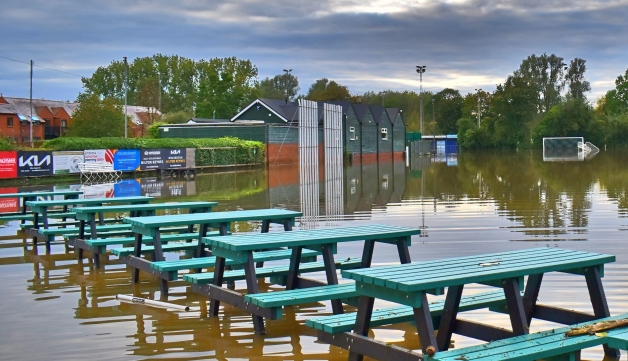
Sustainability helps to drive down running costs and protect against extreme weather and flooding that regularly affect sports across the country, stopping play each season.   

We’ll be updating the resources available on our website that can help sport and leisure organisations tackle climate change, drive industry innovation and do their bit for our health, communities and environment.  

We know there’s already a keen interest in environmental sustainability across our sector and a willingness to promote change to help meet our nation’s net-zero targets.  

As part of the National Lottery family, the #PlanetaryPromise we make today can make it as easy and as beneficial as possible to be active in our communities in the next 10 years and beyond.  

An important week, but the job's not done

Two weeks on from the return of many outdoor sports and physical activities, this week marks another significant time for our sector.

Leisure centres, gyms, pools and other indoor facilities can all begin welcoming people through their doors once again, but with certain restrictions still in place.

We know that getting to this point has only been possible thanks to the dedication of everyone in the sector, from leisure providers to volunteers, who’ve all worked hard to implement the guidelines set out in the government’s roadmap to reopening.

A man cleans the side of an indoor swimming pool

Our research is telling us that 58% of people miss the types of activity they were able to do before the outbreak, with 43% saying the closure of facilities has reduced their activity levels.

We also know that gyms and local leisure centres provide a vital role in enabling under-represented groups, such as women and people from Black, Asian or minority ethnic backgrounds, to get active – so this week is very much to be welcomed.

And we also know that many people are conscious about their impact on the coronavirus (Covid-19) transmission rate and that some currently feel safer exercising at home.

That’s why we’ve been working with providers, sharing our insight into how they can encourage people back to their facilities, by highlighting the safety measures they’ve put in place.

These facilities often act as vital community hubs and we know their social value is modelled to be around £2 billion a year – all of which is reason to welcome their reopening.

And while this is indeed a week to mark, we must also acknowledge that while facilities can reopen, for many it’s not financially viable.

Getting to this point has only been possible thanks to the dedication of everyone in the sector

As part of our role in administering the National Leisure Recovery Fund (NLRF) – a £100 million investment from the Exchequer into local authority leisure facilities – we’ve seen that it’ll help more than 1,100 local leisure facilities reopen.

A total of 266 local authorities received support from the fund and we hoped it would be a lifeline to society's least active members, many of whom rely on local leisure facilities as a preferred environment to be active.

It’s done that, but we know the sector is still struggling.

Analysis of the data gathered by the NLRF application process predicts a significant funding gap between March 2020 and an anticipated return to ‘business as usual’ in December 2021.

That’s why we’ll continue to work closely with the government to ensure the sector receives the support it needs to reopen safely and rebuild.

The NLRF is also forecast to support nearly 11m visits a month to local authority leisure facilities, so we know that if this funding gap results in the closure of facilities it will have an impact on our ability to make progress against the five big issues in our Uniting the Movement strategy that we believe will help the nation get active.

As part of making the case for continued support, we'll publish reports from our Moving Communities tool that allows local authorities, leisure providers and policymakers to understand the usage of local leisure facilities and their contribution to our nation's recovery.

This tool is the result of a £500,000 investment from us to support the NLRF and another example of our determination to help the sector recover and reinvent.

So, while we welcome this further reopening as another step on the way towards a better future, our work with, and support for, the sector will not end here.

Sport England has invested more than £270m of government and National Lottery money to support the sport and physical activity sector through the coronavirus crisis. You can read more about how the money has been spent, and how we've worked with the government to administer two Exchequer-funded packages, on our funding and flexibility page.

Fulwood Lawn Tennis Club

The next step in the easing of coronavirus (Covid-19) restrictions will kick in on Monday 29 March. As part of our build up, we've spoken to a number of clubs and organisations about their experiences during lockdown and what they've learnt over the last year that'll help them to reopen. 

Here, we talk to Jane Blackwell of Fulwood Lawn Tennis Club in Lancashire. 

Members of Fulwood Lawn Tennis Club pose whilst being socially distanced last year

Sustainability

A harvest mouse peeks out of a hole in a tennis ball placed on the end of a stick among wildflowers. Using the Every Move strategy and action plan, we want to lead, inspire and support the sector to become environmentally sustainable, enabling greater opportunity for all people to participate in sport and physical activity, now and in the future. Facilities Planning Sustainability
How we're helping clubs through coronavirus

I’d like to start this blog by saying thank you.

Thank you to all the clubs and organisations that are currently connecting communities, keeping people active and looking after everyone around them during this difficult time.

It would have been very easy to start this blog with a negative, as we know how tough the current situation is and how great the coronavirus challenge will be for clubs in the days and weeks ahead.

But that wouldn’t do justice to the fantastic and exceptional work that so many people are doing at sport and physical activity clubs and organisations all over the country.

It feels wrong to pick just one example, but our Club Matters team have produced this video about Brighton Table Tennis Club, which we believe perfectly illustrates the impact clubs are having on their communities.


What this video really embodies is that the people who make up a club or organisation can really make the difference. By reaching out to members, staying connected to your committees and your organisers, you can continue to be the focal point for so many even when it is impossible to meet in person.

We’d love you to get in touch with your own stories and examples of how you’re keeping your club going so please email us at [email protected] with what you’ve been up to.

Sports clubs and organisations are very important to us. We know they provide a great way for people to be physically active and stay socially connected. We know they positively contribute towards the mental wellbeing of their communities. We know they create our next generation of talented athletes, and that they provide millions of opportunities every week for volunteering and coaching.

Sadly, we also know the coronavirus pandemic has made things very difficult for England’s 72,000 sports clubs, their 4.6 million volunteers and 11 million members.


Many of you have been in touch and we know how worried you are. 

Questions such as ‘when will be able to start playing again?’, ‘how many of our members will come back?’ and ‘how will we manage financially?’ have been common.

We don’t have the answers to all those questions right now, but we are doing all we can to help you through it as much as possible.

Last week we announced our Community Emergency Fund, which we’d encourage clubs in financial difficulties to look very closely at, and Club Matters has also produced some practical advice for getting through the next few weeks and months.

Understanding financial support and business rates

We know clubs are structured in lots of different ways, which means that getting to the bottom of what support is available can be difficult.

We’ve gathered lots of the information available to help you decide what the best option is for you.

Business continuity, financial planning and securing your premises

These might not sound like the most interesting tasks, but right now they will help you plan for the short and medium-term impact of coronavirus.

Operating your club virtually and keeping in touch with people

Staying connected with your committee and making decisions doesn’t need to stop. There’s lots of ways that you can connect via video so that committee meetings, subgroups and even AGMs can still take place.

You can find some quick tips about working online here, including the ways you can maximise social media.


We can’t predict the future right now, but we know the impact sports clubs and organisations have will be more important than ever in the weeks to come.

Essex Design Guide: Building activity into new development

The 10 Principles of Active Design have been included in the latest review of the Essex Design Guide.

The Essex Design Guide (EDG) was first published in 1973, this seminal work led the way in the planning and development sectors for urban design guidance.

The EDG has helped to shape and influence the design and layout of new development in Essex over the past 40 years to help create places of quality and identity which respond to their Essex context.

The EDG has received significant praise throughout its history for pioneering local design. Richard Simmons, Chief Executive of CABE described the guide as “an icon for our times” and “has also come to symbolise the vision, leadership and commitment to quality of place that all local authorities should show”.

The guide was reviewed and updated in 1997, 2005 and more recently in 2018. The 2018 EDG has retained the pioneering aspirations of the original while focusing firmly on the future.

This includes embracing the 10 Principles of Active Design.

Blackbridge Athletics Track

Blackbridge Athletics Track was saved after a solution was found to complex land ownership issues by a brand new organisation being established to take over the facility’s management.

This story demonstrates how dedicated management by passionate people can draw in investment, grow usage and create a new offer for ‘all ability’ sportspeople with wheelchair racing and other Paralympic disciplines.

What was the problem?

Blackbridge Athletics Track, built and owned by Gloucester City Council (GCC), and used by two different athletics clubs – as well as schools and individuals – was in a poor state of management and disrepair. Floods in 2007 had worsened the situation, and parts of the facility were closed for health and safety reasons.

There were large holes in the track and equipment was in a poor state of repair. Gloucester City Council made the decision to close the track and invest in new athletics facilities on a different site as part of a major sports complex. These plans fell through in 2011 however, when they could not raise enough partnership funding for the project.

Meanwhile, a coach at one of the athletics clubs using the track decided to launch an appeal to raise money towards the planned new track. When the big plans were abandoned, there were donations of £35,000 already pledged or made, and a decision had to be made as to what to do with the money.

A meeting was arranged with a city councillor with responsibility for sports and leisure, to discuss the future for athletics in the city. What came from that meeting was a plan for rescuing Blackbridge Track.

What was the solution?

The Council had funds available from flood insurance to reinvest in sports facilities. However, there was no money for the ongoing running or management of the track. However, if the athletics clubs could take on management of the site, the Council would be willing to make some much needed repairs before handing it over. The final piece of the funding jigsaw would be the Sport England Inspired Facilities fund.

Club members began work on a business plan for running the facility, whilst GCC put in a funding application to Sport England, with the emphasis on making the site safe and secure with facilities fit for all levels of training from schools to elite sportspeople. They were awarded £100,000 in late 2011. One of the terms of the funding was for GCC to have a lease in place for at least seven years with the potential of asset transfer at some point in the future.

The emphasis was on making the site safe and secure with facilities fit for all levels of training from schools to elite sportspeople

They were awarded £100,000 in late 2011 and one of the terms of the funding was for GCC to have a lease in place for at least seven years, with the potential of asset transfer at some point in the future.

There were two more hurdles to overcome in the transfer plans. At the time, two athletics clubs were using the track facilities and the adjoining club house. It was not a fair solution for the track to be handed to just one of the clubs, nor did the council favour a competitive solution.

The emphasis was on making the site safe and secure with facilities fit for all levels of training, from schools to elite sportspeople

So the team involved in negotiations decided to establish a new charitable company to take on management of the track from the Council. Gloucester Athletics Track Management Ltd. (GATM) was incorporated in 2011 and registered as a charity in 2012. There were a mix of trustees, with about half coming from the athletics clubs.

£60,000

was raised by GATM to fund equipment

The final hurdle was the land ownership situation. Blackbridge Athletics Track was built and managed by Gloucester City Council but the land on which it sits was owned by the trustees of Gloucester United Schools. The trustees were not keen to alter the existing lease with the city council or allow a sub-lease, but Sport England funding was dependent on some degree of transfer.

The compromise solution was a five-year management agreement for GATM along with a peppercorn license to occupy. Whilst this appears in legal terms to lack security, GATM are confident that the intention of the council is for GATM to be the long term manager of the site for as long as they are able, and that in the future they will be offered a long lease.

An interesting element is the financial agreement between GATM and GCC. GATM is responsible for collecting all income and maintaining the facility. Any surplus generated must be used for ‘the accumulation of a sinking fund to meet the cost of any future renewal or replacement of the running track’.

What's the business model?

This is a lean and mean business model with the primary aim of keeping the athletics facilities accessible and affordable. It's totally based on volunteer staffing. Trustees and other volunteers are very hands on, taking on everything from bookings and collecting fees to carrying out minor repairs, stewarding events and purchasing equipment. The biggest costs are equipment replacement, utilities and insurance, and £10,000 has been put into a sinking fund in the first three years of operation.

Yearly income averages around £20,000 and this is made up of club hire, fees for occasional use and hire for events. Clubs pay a booking fee for regular use and club members can also use the facilities on a pay as you go basis. Trusted users can access the site themselves at times when it is not open for clubs. There is a degree of trust in terms of payment for use on a ‘pay-as-you-go’ basis.

In addition, GATM has raised more than £60,000 in donations towards equipment such as race wheelchairs, hurdles etc. They have received a lot of favourable press coverage and support from their local MP and others, and this has helped hugely with fundraising – including introductions to business sponsors such as EDF. Legal support has been provided pro-bono, too. The website is managed by volunteers and sponsored by a local sports shop and one of the trustees as a PR specialist.

Trustees and other volunteers are very hands on, taking on everything from bookings and collecting fees to carrying out minor repairs, stewarding events and purchasing equipment

They have massive support from their local MP, many if not all city and county councillors, the Lord Lieutenant and through her, the Princess Royal. Local industry has supported them financially, as well as a host of other local and national charities

GATM has more plans to help them generate enough income to maintain and invest in the site. Adjoining the track but on a separate piece of land owned by the county council is the clubhouse of the Gloucester Athletics Club which is urgently in need of refurbishment. Working with the city and county councils, GATM hope to lease the land and develop and improve the clubhouse using a Section 106 contribution to improve the changing facilities, the gym, the bar and social area. This will enable more income to be generated for both the club and the track upkeep.

What was the result?

As a result of the strong partnership between GATM and GCC, a derelict and unsafe athletics facility has been brought back into use. The track itself has been resurfaced and widened to eight lanes. There is floodlighting, a new throwing cage and new long jump pit. The facility is in regular use by schools, athletics clubs and individuals. The diversity of the club has also greatly improved with 120 children training regularly, although there is still more work to be done to get children from the local area, which is one of the more deprived neighbourhoods in Gloucester, using the facilities.

One of the proudest achievements is the increase in facilities for all-ability athletics. A number of racing trikes and race runners have been purchased and are already in use. There are partnerships in place with a local special school, with the Leonard Cheshire charity and Active Gloucestershire. This is an area of athletics which is set to grow in Gloucester.

Learn more

For more information, visit the Blackbridge Athletics Track website.

Flitwick Leisure Centre

Flitwick Leisure Centre provides a key strategic facility for Central Bedfordshire promoting community health and wellbeing in the local communities.

The facility includes a range of innovative sports and leisure features including swimming pools, a station health and fitness suite which includes a gym and separate spinning and fitness studios.

In addition, there is a four-court sports hall, two squash courts, a climbing wall and new artificial 5-a-side pitches.

Active Campus: Loughborough University’s new student village

Loughborough University has invested almost £50 million in developing a new student village, to build a landscape that includes a suite of courtyards which offer a range of activities encompassing exercise, relaxation and social interaction.

Throughout the site, facilities are provided that offer outstanding recreation and fitness opportunities specifically designed to support learning, health and wellbeing in an exceptional environment.

Alconbury Weald: delivering active design in new communities

In October 2014, outline planning permission was granted for development of the 575 hectares former RAF/USAF airfield to provide 8,000 new jobs and 5,000 new homes.

The project aimed to create both places to live and work, within a layout encouraging walking and cycling.

The scale of Alconbury Weald also means that a number of exciting sustainable opportunities are being explored, including renewable energy projects.

Our Parks: bringing activity to the community

Our Parks runs its exercise classes in parks across several London boroughs and works to improve the health and wellbeing of local communities.

It uses a phone app and website to allow users to book a variety of classes remotely and help connect people who may not normally sign up for exercise sessions.

Using social media to create a sense of community also keeps users engaged while creating a self-supporting network. The classes use the existing network of local parks and open spaces close to where people live and work to increase access and practicality.

The National Forest: connectivity through walking and cycling

Over 25 years, the National Forest has planted more than 8.5 million trees, creating an integrated green infrastructure network of cycling and walking routes by creating new woodland spaces.

Spanning parts of Staffordshire, Derbyshire and Leicestershire, the National Forest extends over 200 square miles and provides local communities with easy access to recreational opportunities on their doorstep and implements Active Design principles.

Collaborative approach sees athletes benefit

Athletes accessing English Institute of Sport (EIS) services are benefitting from new equipment at High Performance Centres throughout the country thanks to a collaborative approach between Commonwealth Games England, Sport England and the EIS. Facilities
Forest Hills Pools

Forest Hill Pools opened in 1885, but in 2006 the London Borough of Lewisham was forced to close the pools because of health and safety concerns.

The council demolished and rebuilt the pool halls while keeping the original Victorian frontage intact.  

The new community facility has separate 25 metre swimming pools and a health and fitness suite, which was carefully integrated within the conserved Victorian Pool Superintendent’s building.  

Phoenix Sport and Learning Centre


The Phoenix Sport and Learning Centre has been developed as an integral part of the new Phoenix Academy in Telford. 

The project helps its 900 students and the wider community to benefit from state-of-the-art educational and sports facilities.  

The indoor sports and leisure facilities include a 50-station health and fitness suite, a dance studio, an eight badminton court-sized multi-sport hall and a secondary hall.  

East Manchester Leisure Centre

The East Manchester Leisure Centre lies within the new Beswick Leisure Community Hub and consists of a sixth form college, the Institute of Sports Science and Medicine, retail units and significant enhancement to the public space.  

The new leisure facility represents a major development of the sport and recreational provision in the city.

It has an eight-lane 35-metre swimming pool that can be divided with a submersible boom into a 25-metre main pool, and a separate learner/training pool.

It also has a 70-station computerised fitness suite, as well as a dance studio. 

Ellesmere Port Sports Village

Ellesmere Port Sports Village is Cheshire West and Chester Council’s prestigious leading regeneration project, providing new sports and leisure facilities on a former school site. 

It includes an eight-lane swimming pool and a range of other sports, leisure and community facilities for both the local and wider communities.  

Ellesmere Port Sports Village is Cheshire West and Chester Council’s prestigious leading regeneration project, providing new sports and leisure facilities on a former school site. 

It includes an eight-lane swimming pool and a range of other sports, leisure and community facilities for both the local and wider communities.  

York Sports Village

York Sport Village is located on the university campus extension and provides first-class sports facilities for both the students and the wider community, attracting considerable commercial revenues.  

In the first year of operation, the sports facilities have been well-used, and the initial financial targets were exceeded.

The building is prominently located and can be easily seen from the surrounding roads, with the aim of encouraging more people to play sport. 

University of Birmingham Sport and Fitness Club

The University’s new Sport and Fitness Club provides top-class facilities, including the city’s first 50 metre pool, a station fitness suite, a sports performance centre for injury, treatment and health assessments, an applied performance lab and a performance gym.  

Built on a former brownfield site within the Edgbaston Campus, the development brings the University’s sports facilities together in a more prominent and accessible location, catering for the students and staff as well as the wider local and regional communities.

The flexibility of the facility also provides the opportunity to host sporting events, such as the 2022 Commonwealth Games. 

Perdiswell Leisure Centre

Perdiswell Leisure Centre is helping to encourage more people living in the City of Worcester to be more active, more often.

The refurbishment and extension of the leisure centre, which was originally built in the early 1980s, saw an eight-lane competition pool, eight-court sport hall, 120-station gymnasium and three studios and classroom facilities created – all with accessibility to all at its heart.

Oak Park Active Living Centre

Designed to meet the health and leisure needs of the local community, Oak Park Active Living Centre offers a wide range of facilities to encourage people to actively play sport.

Funded by Sport England and Walsall Council, Oak Park Active Living Centre’s design evolved from our suite of affordable model concepts.

These were used as a template to meet the specific needs of the area, optimise revenue and deliver a long-term, financially sustainable leisure estate.

Bloxwich Active Living Centre

Bloxwich Active Living Centre in Walsall is an example of how a quality public sector leisure centre can be built at an affordable cost using our affordable model concepts.

Completed in June 2016, the centre was specifically designed to meet the health and leisure needs of the local community.

Funded by Sport England and Walsall Council, the centre provides a wide range of facilities to encourage people to actively take part in sport and physical activity.

The centre’s facility mix and scale reflects the desire to optimise revenue to deliver a financially sustainable leisure estate.

Workington Leisure Centre

Allerdale Borough Council prioritised the development of a new and improved leisure centre for Workington, to replace the existing centre at Moorclose that was inefficient and costly to operate.

The new centre is an innovative sports centre and a tourist attraction for the north of Cumbria.

A number of flood risk mitigation measures are also included due to the site’s proximity to a stream and the nearby River Derwent.

The leisure centre includes swimming pools, a sports hall, a large health and fitness gym, artificial football pitches, a children’s play area and more.

North Yorkshire Selby Leisure Centre

Selby Leisure Centre is on the site of the former Abbey Leisure Centre, which suffered major damage in a fire.

Selby District Council and the operators Wigan Leisure and Culture Trust decided to demolish and rebuild the centre.

The new leisure centre is within a building that was developed to meet local needs, achieve a sound business model and to plug the gaps in the market.

The facility has been designed to have an eye-catching street frontage and includes a range of facilities, from swimming pools and gyms to a health and fitness suite and a multi-purpose activity hall.

Mount Kelly 50m Olympic Legacy Pool

The 50-metre eight-lane swimming pool at the Mount Kelly Foundation is part of the Olympic legacy programme that helps the college to continue developing the careers of international and Olympic swimmers.

Mount Kelly has helped to develop the swimming careers of more than 60 international swimmers, of which 19 competed at the Olympic and Commonwealth Games, winning six Olympic and nine Commonwealth medals.

Queen’s Park Sports Centre

The Queen’s Park Sports Centre provides Chesterfield Borough Council with a modern sports and leisure facility that better meets the needs of the community.

The project was funded jointly by Chesterfield Borough Council, Chesterfield College, Sport England and England Squash.

It was designed to minimise the impact of the new centre on the existing wildlife habitats, the visual amenity of the Grade II Listed Queen’s Park and neighbouring residents.

The centre includes an eight lane 25 metre swimming pool certified by the Amateur Swimming Association, a learner pool with movable floor, an 80-station gym, an eight-court sports hall, two activity studios, two squash courts, consultation and other community facilities.

Portway Lifestyle Centre

Portway Lifestyle Centre is a partnership between Sandwell Council, Sandwell Leisure Trust, Department of Health, NHS England and Sport England, supported through Sustainable Facilities Lottery Funding.

The centre brings social care, health and leisure services together under one roof, combining an NHS family practice with a range of health, social care and sports facilities.

It aims to provide easy and inclusive access for all the community and provide a ‘whole life approach’ to health and social care delivery.

It includes a wide range of facilities that are designed to encourage disabled people to take part in physical activity and leisure services.

Orford Jubilee Park

Officially opened by The Queen in May 2012, Orford Jubilee Park is an example of a sustainable community sports hub. 

It represents the culmination of a 15-year project to develop a flagship community, leisure, health and education centre for Warrington, with the facility’s 25-year lifecycle costs being met through the Community Investment Fund.

Situated on a former landfill site next to a Victorian park, Orford Jubilee Park was developed through a partnership involving over 20 national, regional and local funding partners from the public, private and voluntary sectors.

As a result of the project, local people getting involved in wellbeing and leisure activities has significantly increased.

Westway development trust

In the late 1960s the Westway A40 elevated flyover, providing a fast route from White City into Central London, was driven through the heart of North Kensington. Around 600 houses were demolished and more than 1,000 local people moved away. By 1970, a decade of community action networks had grown up in North Kensington fighting for better housing and open spaces.

The following year, the trust’s original incarnation – the North Kensington Amenity Trust – was set up in partnership with the local authority. It had two goals: to use the mile-long strip of land under the motorway to compensate the community for damage and destruction caused by the road, and to ensure that local people would be actively involved in determining its use.

Long-term benefits

Over the years the trust has successfully combined the roles of charity, developer, social enterprise and landlord. Eighty per cent of the land has been developed for community facilities and 20% developed commercially, providing a long-term income stream.

As well as managing the commercial portfolio and delivering community projects, education and the arts, the trust also provides a wide range of sport and fitness opportunities to the community of Kensington and Chelsea through the trust’s flagship facilities – the Westway Sports Centre, (354,000 user visits in 2009/10), and the Portobello Green Fitness Club, (95,000 user visits in 2009/10).

Portobello Green pioneered GP-referral fitness programmes in the late 90s, while Westway operates a Performance Tennis Centre, one of the country's leading climbing and bouldering centres and football pitches, basketball and netball courts, cricket nets and the only publicly available handball fives court in London. The trust's ethos is about all members of the community enjoying sport in a fantastic environment on a 'pay and play' basis.

The trust learnt very quickly that well-used facilities can become very tatty, very quickly

John O'Brien

Sport and fitness director, Westway Development Trust

Although the specific circumstances surrounding the origins of the trust are naturally unique, a history of pragmatic financial management and a policy of re-investment in facilities is a transferable principle for the sustainability of any asset transfer of a community sports facility. Scheduled refurbishment works to the playing surfaces of pitches and large sections of the climbing wall are vital elements of meeting the demands of the trusts' customers.

As John O'Brien, sport and fitness director at the trust, explains: "The trust learnt very quickly that well-used facilities can become very tatty, very quickly. We used the published industry standards for the life-span of materials but found that going and seeing similar operations elsewhere in the country gave us a much better idea of typical wear and tear.

"From that benchmark we've built up historic cost models with suitable inflation measures for sub-elements, which are under periodic review in response to fluctuations in price."

Facilities management

The trust has also developed a pragmatic, but realistic, approach to its facilities management. After large scale contractor arrangements did not bring the promised economies of their scale, the trust now uses the services of a smaller local provider combined with a policy of training duty managers in day-to-day preventative maintenance and minor repair tasks.

"Our new contractor is smaller, but locally based and more responsive," says John. "The relationship is more of a partnership. They give us health and safety credibility and, combined with using committed staff as our eyes and ears on the ground, many issues can be tackled relatively cheaply before they become critical."

155,000

Kensington and Chelsea is the fourth most densely populated borough in London

Other contractor and supplier arrangements are also under constant review to maximise their efficiency and effectiveness. Cleaning is currently outsourced, (with a condition that the supplier pays the 'living wage' of £10.55), and a longstanding catering franchise has proven better value than in-house efforts.

A specialist climbing kit retailer rents a unit from the trust, which provides a consistent income stream and provides customers with a more specialised service than the trust itself could provide. And, as a result of a recent partnership with a new enterprise, customers can now enjoy the experience of 'endless pools', which use a flow of water to swim against.

Innovative partnerships

Although the trust has won national awards for its approach and is often cited as an example for others to replicate, with mainstream fitness club competition the trust has to continually look at forging innovative partnerships and providing distinctive programmes.

"We need to take another big step to stay ahead", says John. "Being known for GP referrals isn't enough. We're now planning a more holistic wellbeing offer that will positively affect the health of a critical mass of the local population. This will be attractive to the NHS as well as trusts and foundations whose priorities also include youth and education."

This ambition will also entail a big investment in upskilling the trust's staff, so that more of them will have a broader knowledge of the health benefits of exercise.

The continuous development of staff is seen as a critical success fact for the trust. Enthusiastic staff who have sympathy for the area and the community they serve bring an extra level of commitment to their roles.

Long-serving coaches have built deep networks into the community

John O'Brien

Sport and fitness director, Westway Development Trust

"Their friendliness rubs off on customers, particularly young people", says John. "Long-serving coaches have built deep networks into the community and when the kids keep coming back, their parents start to get familiar with the environment and the staff, and want to get engaged too."

In an effort to revitalise itself, the trust has also taken on five apprenticeships, with an ambition to bring this up to 10.

Beyond sport, staff are also encouraged to build relationships with key people and networks in the local authority and NHS Kensington and Chelsea, including the local education authority, environmental services, children and families and adult social services.

"You don't know where that new funding opportunity is going to come from next sometimes, so you need to keep knocking on a lot of doors and making yourself known", says John.

"We benefited from some last-minute funding from a local Olympic legacy fund. If we weren’t known and trusted, I suspect we would have missed out on what was a good opportunity for us."

Despite its status as a royal borough and its glamorous image, Kensington and Chelsea, with a population of around 155,000, is the fourth most densely populated borough in the UK where extremes of wealth and poverty co-exist.

For more than 50 years the trust has been meeting the changing demands and expectations of its cosmopolitan, multi-ethnic and multi-faith community. Through its re-investment in physical assets and continuous improvements in programming and maintaining highly skilled and motivated staff, the trust provides a good model of how to run a community sports facility for the long term.

Critical success factors

  • Scheduled maintenance and re-investment in facilities is essential for health and safety reasons, but also maintains their value as an asset to the organisation.
  • Benchmark against similar operations to understand patterns of usage and wear and tear, rather than relying on industry and supplier data.
  • Keep supplier and franchise contracts under constant review to ensure value for money and customer expectations are met.
  • Health and safety is everyone's job - staff can play a vital role in spotting things before they become critical and expensive to tackle.
  • Invest in staff skills and areas of interest, encouraging them to build key relationships with partners beyond their job role.

Learn more

For more information, visit the Westway Development Trust's website.

Nottingham City Gymnastics Club

This is the story of a sports club that managed a win-win situation - saving the council money by managing a building, while ensuring it continued to provide physical activity for the local community.

The Sixways Community Centre, in the heart of the Broxtowe Estate, is home to Nottingham City Gymnastics Club - a club focusing on providing children of all abilities, aged 4-15, the opportunity to have fun when doing gymnastics.

The club has successfully engaged large numbers of local young people, as well as being a draw for those from more affluent parts of the city.

What was the problem?

Nottingham City Gymnastics Club (NCGC) was founded in 2009 and used a number of venues around the city, including schools and leisure centres. Over the next five years the club expanded its classes and grew to around 200 members training in four venues – three schools and a leisure centre.

Without dedicated space they were spending increased amounts of time setting up and putting away heavy equipment and they were limited in the number of sessions they could run. As a result they began searching for a space which they could grow into and develop the club, thereby providing more opportunities for young people, and adults, to try out gymnastics.

The club searched for their own facility for around 18 months, initially looking for an industrial unit, but had change-of-use planning applications rejected on two sites.

For Nottingham City Council there was a different problem. The Sixways centre in Denton Green, Broxtowe, was managed on behalf of the council by the Broxtowe Partnership Trust, but the trust dissolved at the end of March 2013 and the centre closed.

The council were keen to see it reopened and, in April 2013, began advertising the centre for asset transfer, however, this process was unsuccessful, possibly because it was done through a very formal contracting process which may have put off some community groups. The Centre was converted to a badminton court, but in 2014 was only in use for one hour a week and otherwise was closed to the community.

1

The number of hours a week The Sixways Centre was getting used for in 2014.

What was the solution?

Looking for help and support, NCGC emailed their local councillor, to explain their vision and to ask if they knew of any facilities or spaces around the area. In November 2014 they were pointed in the direction of the city council’s communities team, and the following day Sixways Community Centre – a mile away from their main venue – was identified.

Negotiations were led by the two club founders. After viewing the centre they met with the deputy leader of the council, who was impressed enough to offer staff support and draft heads of terms for an asset transfer.

From this point the rate of progress was extremely quick. With hindsight the group may have preferred a more formal approach with clear agreements, but recognise that the project might have become bogged down in bureaucracy and lost momentum. They did, however, have to submit a business plan as part of the formal process.

The council were positive about their clear vision, business-like approach, risk analysis, commitment and obvious benefits to the local and wider community, which reflected many of the council’s aims, but felt the club lacked experience in facility management.

NCGC committed to undertaking training and, over 12 months one of the directors was supported to complete the training needed to take on this role, e.g. fire requirements, food hygiene, legionella, etc. This reduced the council’s main concern and they agreed to retain this responsibility for the first year until NCGC were ready to take it on.

Ultimately, the club got what it asked for - a long lease, permission to redesign the space and the facility handed over in sound working order

In addition, the club was not incorporated, so the two club leaders formed a Community Interest Company, limited by shares, as the legal vehicle to take on the lease. This legal form is not charitable but does ensure community benefit is core to the business and also ‘locks in’ the asset so that there is no private benefit available to directors from the value of the lease.

The centre needed work to make it fit for purpose. The council agreed to complete outstanding maintenance pre-transfer at no cost to the club.

The club raised £25,000 to transform the building into a dedicated gymnastics facility, with secure doors, and permanent mats and other equipment. They redesigned the space to meet their needs with a reception/waiting/viewing area for parents and siblings, and a layout that allows users to change, warm up, do activities and leave the gym area all within a secure space.

The £25,000 was made up of a £20,000 loan and £5,000 in fundraising. They did not seek capital funding from the council or other funders as this would have slowed the process too much.

The club managed the building project even though they didn’t yet have full security on the building, but felt it was a reasonable risk to take. The two leaders/directors managed most of the work themselves but volunteers and parents were vital and got involved in painting, cleaning, fundraising, and lots more.

£25,000

The amount raised by NCGC

In all, it took six months for negotiations and then three months to opening, which was in April 2015. Building work started in June 2015 and they started running sessions from July 2015. The club took a risk in investing in the premises, but due to the commitment and reassurance from the council, they felt it was a risk was worth taking.

Ultimately, the club got what they asked for – a long lease, permission to redesign the space, and the facility handed over in sound working order before the full repair lease began. Insurance and indemnity were bought through their British Gymnastics membership, which provided significant savings.

The final lease is a 30-year peppercorn, full repairing lease for the whole building and allows subletting.

What is the business model?

The unique selling point of NCGC is that they don’t focus on competition. They are all about participation, fun and high-quality coaching. Their aim is to ‘create an environment where gymnasts of all ages, abilities, ethnicities and backgrounds can come together and enjoy gymnastics in a safe, effective and child friendly environment’.

This has helped the club to grow steadily to a point where more than 400 members pay a monthly membership fee of between £13.50 and £45 for young people (working out at less than £3 per hour for most participants). Monthly fees for adults are £17 per month for a weekly session. Fees are usually paid via standing order over 12 months, based on classes running 40 weeks of the year. All members require insurance at £17 annually, which is paid when joining.

400

members pay a monthly membership fee

A paid membership of just 250 would make the club sustainable. Over and above this are ‘pay-as-you-go’ pre-school sessions and home-schooling sessions to make use of daytime capacity, holiday clubs, parties and branded club tops. The city council also gave two years of funding for some free places for local children from the estate.

The club use an online management system called Class4Kids to manage waiting lists, enquiries, fees and other processes. It attracts around 30 weekly enquiries and is a source of new members, as well as word of mouth with minimal marketing.

There are paid coaches, young leaders and volunteers. There are no other paid staff.

Financially they are doing well and are ahead of schedule in repaying their loan, but they are now responsible for all costs and utilities. All coaches and young leaders are paid and staffing costs are approximately £450 per month, including all associated costs including PAYE and tax. Other main costs include utilities, insurance, and equipment replacement. Rate relief helps to bring down some of the monthly costs.

What was the result?

The city council is saving revenue and maintenance costs and has brought a community centre back into use.

The club has control of their space, security of tenure and the opportunity to continue growing the business in a sustainable manner. Club membership has doubled.

The centre is very well used and footfall is now over 650 per week. They are continually looking for ways to use spare capacity, such as a home-school session. More young people and adults are active and enjoying sport. And they are particularly successful with teenagers, a difficult group to engage in sport.

For the future, the centre will provide more opportunities, with possible dance classes for parents whilst waiting for children and running themed children’s parties. There is also the possibility of sub- letting some space to related organisations. They are aiming for 1,000 users per week.

The Club has been successful in attracting local people, raising aspirations and helping to overcome negative perceptions about the area.

Through Facebook, the parent’s network and the reception area, they engage parents very effectively. They attend local community events and will be working with other sports groups to further increase participation. They have quickly built up trust and the community feel their views are being taken forward.

A number of users have taken up gymnastic coaching courses, with some parents also starting to volunteer and gain skills and confidence.

Top tips

  • Be positive, talk to people who have done it, learn, know your risks and manage them
  • The online class management system saves hours of time - the facility couldn't be run using old, paper methods
  • Social media is a vital tool for marketing and engagement but face-to-face engagement is also crucial. NCGC ran over 30 free taster sessions throughout one summer, giving local people a chance to try before signing up. Every new joiner has the opportunity to try two sessions before they enrol. As a result of feedback they have introduced new affordable sessions which will appeal to local people
  • British Gymnastics provided helpful information and support. Always contact your sport governing body to see how they can help.

Find out more

Visit the Nottingham City Gymnastics Club website.

Manvers Waterfront Boat Club

The initial spark for building Manvers came from the Yorkshire region of Canoe England, which had been looking for a venue to develop.

Chris Hawkesworth, who leads facility developments for Canoe England, saw an article in the Yorkshire Post newspaper about a former colliery site being redeveloped, with the creation of a lake. He saw an opportunity to create a new model of multi-sport boat club.

The desire was to build a resource centre for the region. There was a belief in the potential to develop a multi-sport approach that combined different paddle/watersports, and some taster events, but there had been no specific local market research.

There was no other local option for swimming and activities have been added as knowledge of the audience has grown – and the organisation has responded to demand.

A boy playing canoe polo

In 2014, it successfully bid for funding to create a new boat and equipment store and also made improvements to the boat house.

It's now a highly sustainable building, with heat source and solar energy, and has recruited large numbers of volunteers. It also developed partnerships with organisations such as Deane Valley College, which co-funds staff posts.

The club now has an annual membership fee of £60, which allows members to take part in any or all of nine sports on offer – from paddling, open water swimming and triathlon, to angling, cycling and running. This ‘one club’ philosophy means people can find their way into different activities far more easily, with members joining to take part in one activity and going on to try other sports.

Manvers also stage community events, such as the Spooky Paddle, and the lake has high numbers of casual/non-member use. The club makes a surplus of around £30,000 a year and the Trust has a diverse income basis, with no one stream accounting for more than 20% of revenue.

To find out more about the project, please click the link below. 

Waterfront Sports and Education Academy

The first steps towards becoming a community club were taken when a few youngsters noticed people coming and going from the building carrying gym kit and boxing gloves.

The six friends started to teach classes, and after just two years, a club with more than 300 members had been formed in Leicester. 

A coach at Waterfront puts some youngsters through their paces

The three people behind the development of Waterfront were Michael Lewis (then chair), Michael Burgess (then centre manager) and Mahesh Patel (treasurer). In 2003 they formed their first five-year plan, all were in agreement that close ties with the local community would be key to the club’s survival.

Between them, the trio knew that they had a good enough skill-set to develop a strong programme of activities. They all had experience in youth work and boxing coaching. They were also confident that they could recruit other people from the local community who could teach or coach other activities that would be of interest to local people. 

Waterfront’s Inspired Facilities grant from us was to make repairs and improvements to a building which they felt would, in the state it was then in, put off new audiences they were hoping to attract to the club. The critical moment for them was the 2012 Olympics; they saw a surge in interest and enthusiasm from local girls and young women who had been inspired by women’s performances at the games:  

“The Olympics was huge, absolutely massive. Until that point it was difficult getting girls in to the centre. It was the boxing and the Taekwondo particularly that meant we had up to 50 girls and young women wanting to attend sessions. We needed to start changing the facility, better showers, better toilets,” said Michael Lewis.

To find out more about the project, please click the link below. 

Campus Pool Skate Park

Campus started with its two directors, Andre Seidel and Tim Nokes, providing portable skate ramps at a Saturday youth club they ran for Bristol Council. They could see there was a need for some alternative youth work and positive results from trial sessions run at a Pupil Referral Unit showed what skateboarding could achieve. 

As well as serving to support their youth work, Andre and Tim knew there was also a strong business case for increasing the availability of skateboarding facilities in their area. Bristol’s one existing skatepark at the time operated predominantly as a nightclub, and was failing to meet local demand. 

A young man enjoying the skate park

In 2011, Campus ran its first stand-alone skatepark out of a rented art-space in Bristol. They soon found that the building, which they described as a ‘squat-like’ warehouse, wasn’t suited to its purpose.

Andre and Tim first enquired about the disused swimming pool in 2012 after seeing it being advertised on the council's website. At the same time a local councillor, Richard Eddy, was gathering a 10,000-strong petition to stop the community from losing use of the site and to mobilise local people to redevelop it into something else.

The Campus directors undertook an extensive two-year community consultation. It was largely thanks to this, support from the local authority and Councillor Eddy’s advice and backing, that Campus’ community asset transfer and planning application were successful.

Campus Pool opened in July 2015, having used £80,000 from Big Issue Invest to convert the building. Subsequently, funding from us made it possible to add a community café. This has "drastically improved the business" and income from the cafe now exceeds that from the skatepark and shop.

To find out more about the project, please click the link below. 

Planning for growth: Central Bedfordshire and the Facilities Planning Model

The Facilities Planning Model

The FPM is a spatial modelling tool that can help to assess the strategic provision of community sports facilities. The FPM is a computer model developed and used on license from Edinburgh University. The FPM covers the major community sports facilities of sports halls, swimming pools and artificial grass pitches. It has in the past been used for indoor bowls centres.

The FPM has been developed as a means of:

  • Assessing the needs and requirements for different types of community sports facilities on a local, regional or national scale;
  • Helping local authorities determine an adequate level of sports facility provision to meet local needs;
  • Testing ‘what if’ scenario’s to see the potential impact changes to the supply of provision and changes in demand may have on meeting needs for sports facilities in an area – this can include testing the impact of opening, relocating and closing facilities and of population changes (e.g. from new development); 
  • Helping to provide an evidence base to underpin strategies, plans and policies.

Outside view of Dunstable Leisure Centre

Securing investment

This 2018 use of the FPM followed on from CBC using the FPM in 2013 to help develop an evidence base to under pin its 2014 Leisure Facilities Strategy.

The development of this strategy led us, through our Strategic Facilities Fund, to contribute £2m towards the construction of the new Flitwick Leisure Centre and a further £1m to the redevelopment of Dunstable Leisure Centre. The evidence base provided by the FPM played a key part in helping to secure this investment and in CBCs decision to commit over £36m of capital funding to these two projects.

Growth in Central Bedfordshire

Central Bedfordshire is a unitary authority created from the merger of Mid Bedfordshire and South Bedfordshire District Councils on 1 April 2009. In 2017 the total population was 280,000 and is projected to increase to 322,600 by 2028 (the period modelled by FPM) which represents a 15% increase.

The projected population growth comes from CBC’s allocated housing delivery requirement of an additional 20,000 homes by 2035. CBC’s Local Plan (2018-2035) addresses both the locations of the growth and the supporting infrastructure required to serve the existing and new communities.

Understanding the needs

The extensive housing and population growth will generate significant needs for sport and recreational provision.

To help plan for this growth and inform the Local Plan, CBC wanted to understand the extent and nature of these needs and how they could be met (i.e. what scale of provision would be required and where should it be located).

This information would then enable CBC to:

  • establish an evidence base of facility requirements to help decide where facilities should be located and whether it would be better to provide new facilities, or modernise existing ones;
  • integrate the evidence base into the Local Plan, leisure policy and master planning for new developments; and
  • use the evidence base to help secure developer contributions for the demand created by the new developments.

CBC used the FPM to help provide this information and evidence base for swimming pools and sports halls which was integrated with other facilities research, to create their Leisure Facilities Strategy.

A map of central Bedfordshire

The challenges

There were several challenges which the FPM helped CBC to overcome, including:

  • Determining the options for change - Central Bedfordshire already had an extensive supply of swimming pools and sports halls, so the first challenge was to determine if the existing facilities could meet the needs generated by growth. If they couldn’t, what additional provision would be required? Would it be more effective to modernise/replace the existing facilities, or provide new facilities to meet the needs?
  • Understanding the best locations for any new facilities - If new facilities were required would it better to locate them within existing towns, or as part of new settlements or a combination of both?
  • Knowing what neighbouring local authorities were planning and how planning for new school sports facilities be integrated with community needs Any planned changes to facility provision in neighbouring areas and within the education sector had to be factored in to understand their impact on meeting the needs of population growth in Central Bedfordshire (e.g. any plans for new/enhanced provision, removing community use or closing existing facilities).
  • Identifying what the future needs are and where they are located – The scale, location and timescale for delivery of the new housing developments and the needs they would each generate all had to be included.

A staged approach

As its starting point the FPM uses information from Sport England’s Active Places PowerOpen in a new window tool for details of the supply of provision. These details for swimming pools and sports halls were checked by CBC and all the known projected changes to the supply in Central Bedfordshire, surrounding local authorities and the educational sector were identified and added to the FPM supply side information.

To help Central Bedfordshire Council overcome the identified challenges a three staged approach was taken to using the Facilities Planning Model and a series of different sequential facility options were modelled.

The stages were:

  • A 2018 baseline assessment of current provision

    The first stage established an understanding of the current supply, demand and access to swimming pools and sports halls in 2018 within Central Bedfordshire.

    This established a baseline picture of provision helping CBC to understand what things looked like now, and where any current areas of unmet demand or over supply are located. Understanding the current picture is an essential stage before applying and assessing the impact of changes in both population and facilities.

    Read less about A 2018 baseline assessment of current provision
  • A 2028 assessment

    The second stage considered the impact of population growth and focussed on the location and scale of the planned new developments.

    Crucially, understanding the scale of the new developments, their locations and the phasing of their delivery. This allowed the FPM to build up the picture of changing demand across Central Bedfordshire.

    Read less about A 2028 assessment
  • Options for change

    The third stage looked at testing options for facility changes to meet the demand created in the 2028 assessment.

    This included assumptions about:

    • changing the existing supply of facilities, modernising or replacing them at the same location;
    • assessing the options for providing new facilities within the new developments.

    This options analysis enabled CBC to carry out a “test it and try it” approach so that findings could be reviewed and then options refined accordingly to help build up a picture of what change was required. Six different options were assessed for both swimming pools and sports halls. The FPM is set up for this iterative process allowing additional ‘model runs’ to be easily added, and scenarios tested.

    Read less about Options for change
A map of central Bedfordshire

Results

  • Outcomes

    The key outcomes for CBC from using the FPM were:

    • A strategic assessment of the future need for swimming pools and sports halls using the most comprehensive data available;
    • An evidence-base from which to develop the new CBC Leisure Facilities Strategy;
    • An evidence-base that informs and helps to justify Local Plan policy;
    • The evidence can be applied in site allocations documents and master planning, ensuring new facilities to meet the needs from the planned growth are integrated into development plans at the appropriate location and scale;
    • An evidence-base that supports securing developer contributions;
    • By specifying the location and population of new housing it was possible to establish how much demand the new developments would generate. This is compared to the existing supply to establish if the existing facilities can accommodate the new demand. Often studies only identify the new demand without taking account of the existing supply . This is only half the story and has resulted in challenges to the evidence-base and protracted discussions with developers. The FPM brings together supply and demand and identifies the net new demand generated by the developments;
    • Results which could be considered at a sub-area level within the authority;
    • Whilst the findings were Central Bedfordshire-wide, the FPM allows for results to be looked at by sub-area providing the basis for INDIVIDUAL feasibility studies by identifying the right location, scale and the catchment area for facilities. While sub-area analysis is often used with larger authorities the approach may not be appropriate for small study areas;
    • Answers to “what if” questions;
    • By building up the sequential picture of change it became clear when the right balance was reached. Some options would have resulted in over provision and could be discounted – based on evidence. The FPM can also temper and challenge aspirations for new facilities;
    • Knowledge that for some options modernisation and expansion of existing pools and sports halls at their current locations would be the better approach to meet the needs arising from new developments;
    • Knowledge of the impact of changes to the age structure of the population;
    • By 2028 there will be fewer residents in the age bands with the highest participation in swimming and hall-based sports. The increased needs from population and housing growth will be partially offset by the ageing of the resident population and its reduced demand;
    • The evidence to challenge calls for new provision where it may not be needed to best meet the communities’ needs;
    • The FPM helps to explore the interaction of a range of complex factors to provide measured results. It is often assumed population growth automatically means the need for more (new) facilities. The work challenged that assumption and provided evidence for the right scale of facilities, in the best locations, to meet the demand up to 2028 and beyond.
    Read less about Outcomes
  • Using the FPM findings

    CBC is using the findings of the FPM as a key evidence-base for strategic planning. The FPM findings have fed into:

    • The development of a new Leisure Facilities Strategy, to be completed in early 2020;
    • Securing developer contributions to part fund new or modernise existing facilities;
    • Up to the end of December 2018 the previous 2013 FPM work and existing facilities strategy helped CBC secure £2.35m in developer contributions;
    • The master planning of new developments and ensuring the requirements for new and/or enhance provision are integrated into the earliest stages of this work;
    • The development of Local Plan policy to protect facilities required in the future and provide new facilities;
    • Securing investment for new facilities or modernisation of existing facilities;
    • Working with neighbouring local authorities to ensure there is the right balance in the supply and access to sports facilities serving all areas.
    Read less about Using the FPM findings

For a full description of Sport England’s facilities planning model click here.

You've viewed of items.