Skip to content

Taxonomy term

Content type

Supporting athletes to speak up for sustainability

Climate change is no longer a future challenge for sport. It's already affecting where, when and how we play.

Flooded pitches, damaged facilities, rising operating costs and periods of extreme heat are disrupting sport from grassroots participation through to elite competition, and athletes across the Commonwealth are seeing these impacts first-hand.

That gives them a powerful voice, not as climate experts, but as trusted figures who can help people understand what environmental change means for the sports and places they care about.

Because whether it's protecting local playing fields, improving air and water quality or ensuring facilities remain accessible and resilient, sustainability is ultimately about protecting the future of sport itself.

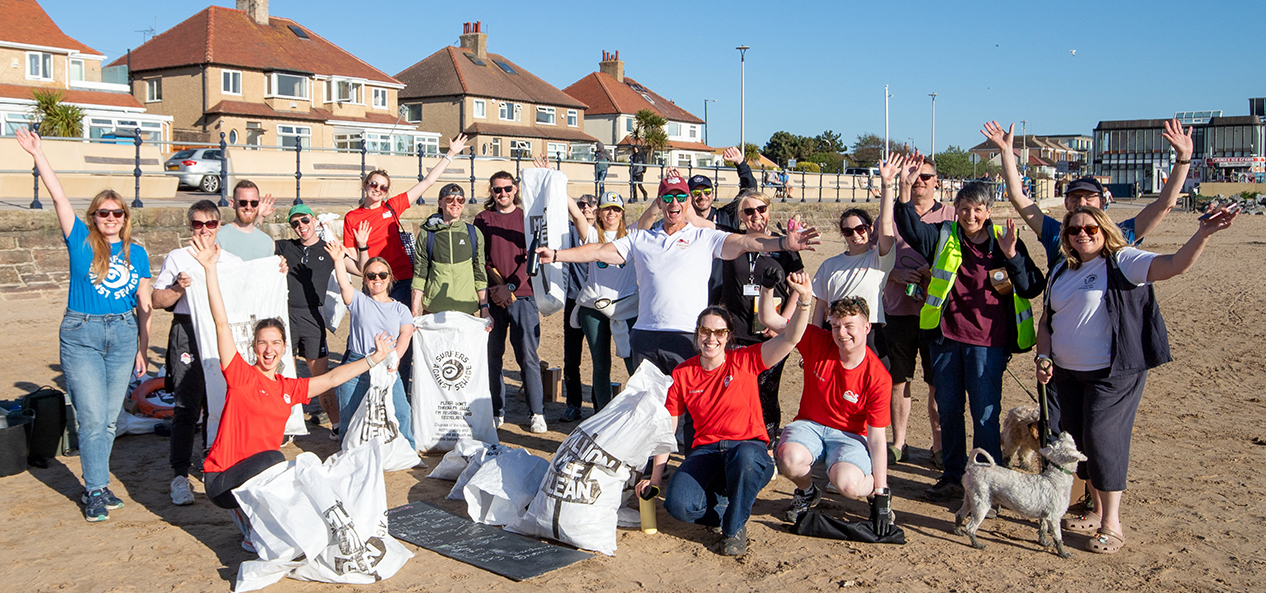
Paralympic champion Ellie Simmonds poses with a large group of smiling volunteers on a sandy beach on a sunny day, holding litter-picking bags and raising their hands. Several filled rubbish sacks are placed in the foreground, with a promenade, houses and a clear blue sky in the background.

Athletes and Team England already leading the way

Many athletes are now using their platforms to champion environmental action.

Paralympic champion Ellie Simmonds has spoken passionately about protecting waterways and blue spaces.

During Team England's King's Baton Relay in May, she joined volunteers, community organisations and environmental groups at West Kirby Beach to remove litter and raise awareness of plastic pollution as part of the Commonwealth Clean Oceans Plastics Campaign.

Elsewhere, Team England middle-distance runner Innes FitzGerald has emerged as one of the most prominent young voices for sustainability in sport.

Her commitment to lower-carbon travel where possible, and her willingness to speak openly about the relationship between climate change and sport, demonstrate how athletes can lead through both their values and their actions.

Alongside individual athletes, Team England's sustainability commitments are encouraging competitors to think more deeply about issues such as sustainable travel, kit reuse, resource efficiency and greener events.

Flooded pitches, damaged facilities, rising operating costs and periods of extreme heat are disrupting sport from grassroots participation through to elite competition, and athletes across the Commonwealth are seeing these impacts first-hand.

What's stopping more athletes from speaking out?

For many athletes the biggest barrier is confidence, as some worry they do not know enough about sustainability or fear criticism if they say the wrong thing.

Others are concerned about being accused of hypocrisy because sport inevitably involves travel and the use of resources.

But athletes do not need all the answers. Their role is not to become climate experts.

Their value lies in sharing their experiences of how environmental change is affecting their sport, their communities and the places they care about.

How we're helping

Together with Team England and the British Association for Sustainable Sport, we've developed a practical sustainability toolkit (available in the 'Sustainable future' heading).

Its aim is to help athletes feel confident speaking about the issues that matter to them and their sport.

Rather than turning athletes into climate experts, the toolkit encourages them to start with their own experiences, connect sustainability to performance, wellbeing and fairness, and to share positive stories about change happening in their communities.

The document reinforces a simple but powerful message – athletes can lead without being experts and sustainability is about progress, not perfection.

By providing practical talking points and guidance on navigating challenging conversations, the toolkit is helping athletes use their voices to inspire action and protect the places where we play, train and compete.

What else is needed?

Athletes cannot drive change alone. To unlock their full potential as sustainability advocates, the wider sport sector must play its part.

That means governing bodies, clubs, event organisers and sponsors that build environments where athletes feel supported and empowered to speak up.

It also means highlighting and supporting practical solutions and communities that are already taking action.

One example is Whalley Range Cricket Club in inner-city Manchester, which has adapted its facilities to become more resilient to flooding.

When athletes can connect their personal stories to examples like these, sustainability becomes tangible, positive and relevant.

That is often the first step towards inspiring others to act.

The opportunity for sport

By giving athletes the confidence, knowledge and support to speak up, we can unlock one of sport's most influential forces for change and demonstrate that sustainability is part of a stronger future for sport.

Because protecting the environment is not separate from protecting sport. It is the same mission and athletes can help lead that movement and inspire collective action, simply by sharing their story.

Too hot to move?

As England continues to experience a period of sustained heat, the latest evidence suggests that spells of extended hot weather are becoming an increasingly important difficulty when trying to be active.

Following the June heatwave, our Activity Check-in has shown that 71% of adults said they had experienced extreme heat during the previous 12 months.

Among those who had to endure extreme heat, 73% said they had done less sport and physical activity as a result.

Our study also says that the proportion saying the weather in the previous seven days was not suitable for being active increased almost fivefold, from 5% in August 2025 to 24.5% in June 2026.

Cost, time and confidence have long been recognised as obstacles to being active. These findings suggest that prolonged periods of hot weather are becoming another.

Not that hot weather is anything new. But the frequency of occurrence and the new highs reached are challenging resilience, and can turn opportunities for taking part in sport and physical activity from merely uncomfortable to unattainable for many individuals and communities.

Extreme weather is often framed in long-term and global terms, but it is undoubtedly already shaping when and how people take part in sport and physical activity today.

A hotter climate is already here

The past two years have shown how quickly weather patterns are changing.

June 2025 was England's warmest June on record, with two heatwaves during the month and temperatures across parts of eastern and south-eastern England around 3°C above the long-term average.

That record was surpassed in just one year as June 2026 then became England's new warmest June on record with a mean temperature of 17.1°C and temperatures reaching 37.7°C during the heatwave towards the end of the month.

For the sport and physical activity sector this is no longer simply an environmental challenge. Heat is becoming a participation issue.

Previous research has already shown that climate change risks widening existing inequalities in sport and physical activity.

These latest findings build on that picture, suggesting that prolonged periods of hot weather are already affecting people's ability and willingness to be active.

What did we find?

We compared findings from two Activity Check-in surveys: one from August 2025, shortly after the June 2025 heatwaves; and one from June 2026, carried out immediately following that month's heatwave.

The proportion reporting exposure to extreme heat during the previous 12 months almost doubled, increasing from 37% in August 2025 to 71% in June 2026.

Among those who had experienced heatwaves, 73.2% said they had done less sport and physical activity because of them, compared with 63.1% in August 2025.

When asked about barriers to activity, there was also a marked increase in the number saying the weather was not suitable for being active during the previous seven days.

While both surveys followed record-breaking periods of hot weather, the latest findings suggest the June 2026 heatwave had an even greater impact on participation.

As England continues to experience a period of sustained heat, the latest evidence suggests that spells of extended hot weather are becoming an increasingly important difficulty to being active.

Why does heat affect participation?

There is still more to learn about exactly how prolonged heat affects participation in England, but there are several likely factors.

For some, particularly older adults and those living with long-term health conditions, exercising in high temperatures can become physically more demanding and may raise concerns about health and safety.

This means these groups, along with disabled people, may experience the greatest challenges during prolonged periods of heat - showing how the impact of extreme weather is unlikely to be felt equally.

Heat can also reduce opportunities to be active.

Outdoor spaces may become uncomfortable or unsafe to use, organised activities may be adapted or cancelled, and travel disruption can make it more difficult to reach facilities.

Even where opportunities remain available, motivation can change.

When daily life already feels harder because of heat, being active may feel less appealing or less manageable.

What does this mean for grassroots sport?

Let’s face it – the climate crisis is already affecting how sport is delivered.

Grassroots sport relies heavily on outdoor facilities, volunteers and community organisations.

Many clubs are already managing the impacts of flooding during winter only to face hard, dry pitches and prolonged periods of hot weather during the summer months.

Climate impacts already cost grassroots sport circa £320 million annually in repairs and lost income.

These effects are not distributed evenly, with more deprived communities often more exposed to climate hazards and with fewer resources to respond.

This reflects a broader picture emerging from our Horizon Scanning work: climate change is increasingly shaping when and where people engage in sport and physical activity.

More frequent extreme weather, alongside changing travel patterns and sustainability goals, is expected to influence participation over the coming years.

These findings suggest those longer-term trends are already beginning to play out.

The sector has adapted to changing patterns of participation before and high heat may become another long-term trend that influences how people choose to be active.

Understanding those changes early gives the sector the opportunity to adapt before they become embedded.

With action now, sport can become more resilient, inclusive and sustainable.

Building the evidence

Our data allows us to understand how people's experiences change as events unfold, rather than relying on reflection months later.

Capturing people's experiences immediately after periods of extreme heat has helped us to better understand who is most affected, how behaviours change and where adaptation may be needed.

If you'd like to explore the findings in more detail, our Activity Check-in interactive dashboard includes data on activity levels, motivation, attitudes and barriers to participation, alongside climate-related questions, for both adults and children and young people.

Looking ahead

Heatwaves are becoming a more familiar feature of life in England.

Climate change is no longer happening somewhere else or is an issue for the future. It is shaping experiences and behaviours today.

For the sport and physical activity sector, the challenge is understanding what this means for participation, who is most affected and how we respond.

By continuing to build our understanding of how weather influences participation, we can help the sector adapt to support everyone to be active safely, confidently and consistently in the years ahead.

If you'd like to share your experiences or explore the findings in more detail, we'd love to hear from you.

Find out more

Our Activity Check-in

The changing-climate threat

I can’t wait for the Commonwealth Games, which this year will be held in Glasgow at the end of July, and to the much-needed uplifting news and excitement they’ll bring us.

The games are an opportunity for athletes from across the Commonwealth to compete at the highest level and for people everywhere to enjoy the spectacle, which will extend over 11 days of sport and festivities.

But among all the excitement we can't forget that for some of the athletes, actually getting to the point of competing has been tough and the effects on their training by climate change means it’s only getting tougher.

The dangers of acute weather conditions 

For instance, on the Maldives, sea-level rise is a real problem with saltwater encroaching on facilities and extreme weather stopping play, whereas in India it’s simply too hot to train in the summer, so its athletes must live and train elsewhere if they want to compete.

For those still unsure about the impact of climate change on sport, it’s worth attending a screening of the National Emergency Briefing and having a look at The Well-Adapted UK report, as both documents warn us about the importance of preparing for new temperatures, extreme rainfall and the changing of the seasons.

Sport and physical activity are threatened by a changing climate, not just at elite level but at grassroots level too.

As winters become wetter we are seeing pitches and courts flooded with increasing frequency, leaving them unusable for any training, competition or enjoyment.

Conflict elsewhere is another factor affecting our sector, as it’s leading to wildly fluctuating energy prices that threaten the clubs and sports organisations’ ability to keep the lights and heat on in the facilities, something that particularly affects swimming pools.

And as we approach the summer we'll see how extreme heat is increasingly going to be a key threat, particularly for disabled people, the elderly or those with a long-term health condition.

Plus for those living in densely-populated areas, the lack of shading will deter people from taking exercise as it’s hard for many to be active when the heat makes you ill.

Sport and physical activity are threatened by a changing climate, not just at elite level but at grassroots level too.

Given that during the Covid pandemic physical activity was one of the few legitimate reasons we were allowed to leave our homes – along with essential shopping, medical needs and travel to work for key workers - it is clear how important exercise is to individuals and to any nation.

That realisation has become an accelerator for action and it’s encouraging that we are starting to work on measures to reduce our impact on the environment, to stop climate change getting any worse, and – just as importantly – to plan for the future.

Here at Sport England we are developing a report, which should be available by late summer, looking at the hazards caused to sport and physical activity by a changing climate.

But while there’s still work that needs to be done, it’s reassuring that people are considering climate change and that we’re are already taking action. 

This is only a first step because we know we need to understand how this will vary across the country, how it’ll affect different activities and – perhaps more importantly – how different people and communities will behave in more extreme weather conditions. 

The King's Baton Relay

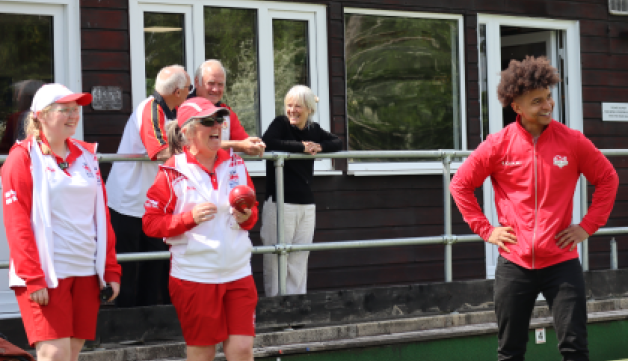
I could see this when I visited Malmesbury Bowls Club earlier this month as part of the King’s Baton Relay, which sees delegates of the 74 competing nations and territories travel across their home lands before finishing at the host city of the Commonwealth Games, Glasgow. 

I was there with Sally-Ann Lewis-Wall, representing Team England in para-bowls at the Games, and with TV presenter Radzi Chinyanganya, to hear about the importance of sport at both elite and grassroots level being more sustainable and preparing for the future.

It was great seeing the work done, supported by our Movement Fund, to install an artificial green and then restore it when it was damaged by severe flooding last year.

The bowls club are working with others in the area to take a wider look at the flooding issue.

They have identified tree-planting and other nature-based solutions upstream to slow the flow of water to the town to enable play to continue, meaning that the members of the club will be able to keep enjoying the exercise and the good company. 

It is with thousands of these small actions across England and the Commonwealth that we can ensure we’ll all be able to keep enjoying sport and activity now and into the future.

Every little win against climate change counts and I, for one, will be watching the Games closely and listening out for other inspirational projects.

The future of inclusive sport

From the bloodandthunder drama of para ice hockey (I challenge anyone to watch a match and not feel exhausted) to the debut of mixed doubles curling, the Milano Cortina 2026 Paralympics Winter Games delivered far more than sporting excellence.

We’ve witnessed what human potential looks like when barriers are removed and inclusion is real, but climate change is shifting and rebuilding those barriers – making them higher, harder and, for some, insurmountable.

This is because climate change exacerbates inequality, threatening the hard-won gains made by disability activists over decades and, while progress has been huge, the extreme change in our weather and its effects on Earth are a stark reminder of how fragile that advancement is.

We even saw the impact of climate change at the Games, with some athletes voicing concerns that the March schedule for the event is now too late in the year and that competition conditions were being impacted by warm 'spring-like' weather.

The lesser known dangers of climate change 

Evidence submitted to Parliament is unequivocal: disabled people are more negatively affected by the health and social impacts of climate change than the general population – not primarily because of their impairments – but because systems already fail to meet their basic needs.

People living with disabilities – who are already twice as likely to be inactive according to our research, but who gain the most for their wellbeing from being able to take part in sport and physical activity – are disproportionately affected by rising heat, greater flooding risk and disruptions to accessible transport.

Sport England’s mission is to enable more people take part in sport and activity, but extreme weather is already making that harder.

From washed-out pitches to heatwaves that make outdoor sport unsafe, extreme weather has already prevented three in five adults in England from being active.

Climate research consistently shows why this happens and it’s simple and disheartening – disabled people are routinely excluded from climate adaptation planning.

Globally, 80% of national climate strategies fail to reference disability, leaving huge gaps in preparedness and emergency support.

And wherever disabled people are mentioned at all, they are often labelled as ‘inherently vulnerable’ – a misconception that shifts responsibility away from systems that fail to include them.
 

We’ve witnessed what human potential looks like when barriers are removed and inclusion is real, but climate change is shifting and rebuilding those barriers – making them higher, harder and, for some, insurmountable.

When torrential and constant rain hits it’s harder to manoeuvre a wheelchair outside. When a ramp floods, when accessible transport is disrupted, when a facility closes ‘for a few days’, some people lose far more than a chance to exercise. They lose independence, community and joy.

If we want to protect the magic of sport and movement – plus the hard-won progress of inclusion in sport for people with disabilities – we must protect the planet that makes sport possible.

That is why Sport England’s mission to help people get active now include helping the planet stay stable.

In May 2024, we launched Every Move, our first environmental sustainability strategy, to help the 150,000 sports clubs and 98,000 facilities across England sitting on the frontline of climate impacts.

We backed this with more than £45 million of National Lottery funding and already more than 570 interventions are underway, including solar panels on roofs, energy efficient systems in leisure centres or redesigned outdoor spaces to cope with flooding.

These changes cut carbon and also keep facilities open, safe and accessible for the communities who depend on them most.

On top of these, all of our partners must have sustainability action plans in place by March 2027 as a funding condition.

This isn’t a box-ticking exercise, but about futureproofing the places and spaces that people rely on to stay active, healthy and connected as communities, including our swimming pools, village halls, football pitches or athletics tracks, to name a few.

Community action agains climate change 

It’s great to see how sport is willing to innovate to face the disrupting weather conditions.

Football and all-weather pitches are working with us to explore transitions away from rubber infill and to increase recycling capacity, with the ambition to be the first in the world to have a fully sustainable system by 2035.

Elsewhere, leisure centres are switching to more efficient systems and community clubs are testing and implementing changes.

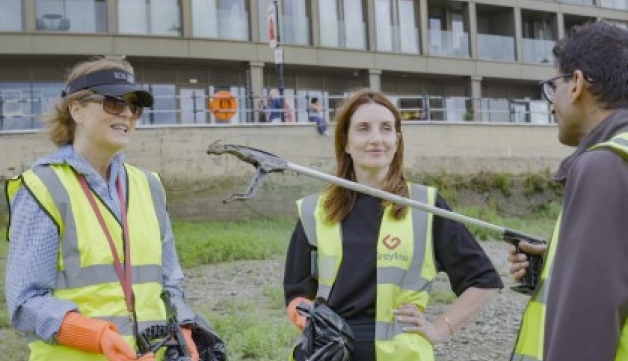
Be it the guys at Whalley Range Cricket & Lawn Tennis Club, who are planting trees on the outskirts of playing fields to better soak up excess water, or the river clean-ups hosted by Fulham Reach Boat Club – an organisation doing great work through Row to Rhythm, a project for individuals with visual impairments.

Actions like these collectively truly add up to major impact.

Going back to international competitions, the challenges facing the Winter Paralympics, and winter sport more widely, should not drive despair. They should galvanise us instead, because sport has always been about rising to the moment and responding to the now.

And right now, the moment demands that we confront climate change not just as an environmental issue, but as a justice matter – one that threatens to undo decades of progress in making sport accessible, inclusive and transformative.

If we want a future where Paralympians can still inspire the world from real snow and real ice, and where disabled people everywhere can access the benefits of movement, we must act together and we must do so right now.
 

Garon Park

Two people hold aloft onions in a community allotment. Learn more about Garon Park, a thriving community hub in Southend-on-Sea that tackles health inequalities while boosting biodiversity. Sustainability

The Green Runners

The Green Runners logo Learn more about The Green Runners, a community of environmentally conscious runners who have developed a clear approach to reducing carbon emissions within the running community. Sustainability

Active Devon

Active Devon logo, featuring an abstract icon of a person moving. Find out about Active Devon's simple approach to carbon footprinting, which has led the Active Partnership to become advocates for environmental stewardship and low-carbon lifestyles. Sustainability
Communities on the edge

Coastal communities are some of the most beautiful places in England and many of the country’s wealthiest spots are on the coast.

But it is also true in England that a disproportionate number of the places suffering the most deprivation, worst physical and mental health outcomes and lowest healthy life expectancy are on the coast too.

All this may read contradictory, but coastal communities haven’t ended up in this position by accident.

Many were once thriving seaside economies, built on tourism and seasonal work, but as those patterns changed, they left behind communities with deep roots but with fewer opportunities than those in urban and rural communities.

This deteriorating state of coastal living standards is driven by deprivation and the complex and challenging issues around housing, transport and employment, which together lead to disproportionate lower levels of physical activity.

As Sport England highlight with their sustainability strategy, Every Move, adding to these challenges is that those facing the greatest inequalities are often the least active and the most affected by climate change.

Plus, coastal communities are facing significant climate effects through coastal erosion, flooding and the fact that industries on the coast are the ones producing the majority of the UK’s carbon emissions.

So how can we turn the tide on physical inactivity on the coast?

Can you define ‘coast’?

It is amazing that whilst we are an island, there is no agreed government definition for the term ‘coast’, unlike clear definitions for urban and rural areas.

This leads to the coast often being lost in talks around deprivation as the debate revolves around those in urban and rural areas.

The deteriorating state of coastal living standards is driven by deprivation and the complex and challenging issues around housing, transport and employment, which together lead to disproportionate lower levels of physical activity.

The Coastal Navigators Network, which tackles health inequalities on the coast, has identified that whilst coastal communities are often small individual places, when considered together, they are as large and significant as a national population group (19%) and the near equivalent of the entire North West and North East regions combined.

So with this in mind, what inequalities do people living in coastal areas face in terms of access to sport and physical activity?

The most obvious one is that for coastal communities half their catchment area is in the sea!

Away games are often long car journeys to the far away urban areas for at least half of their season and let's not forget about those extra carbon emissions!

However, it is the opposite for their urban colleagues, who consider their fixture in the season on the coast as going to the seaside for the day!

Sport and physical activity has come late to the policy work across England about improving opportunities for coastal communities, but is now beginning to build the partnerships with organisations like the Coastal Communities Alliance, OneCoast, the Coastal Navigators Network, and the Coastal Cultural Network.

In fact, in February 2026, the APPG Coastal Communities have scheduled a briefing session on the Culture, Creative & Sport Sector in coastal communities. (Please note that while no final information is available yet, the Coastal Community Alliance is currently organising this with the APPG, so check their sites and socials for more information.)

Where is the good work happening?

Five years on from its launch, Active Withernsea is making a real difference in creating physical activity opportunities and lifestyles and transforming its local community.

Local data by Sport England-funded Active Withernsea highlights that while in 2018, 44% of people in Withernsea were inactive (that is doing under 30 minutes of exercise a week), this number has gone down to 15 % of residents being inactive in 2024.

Further, the percentage of residents who are now active increased from 44% to 62% over this time period.

Happiness and satisfaction with life have also improved and anxiety amongst Withernsea residents has decreased, while activity for those with a disability has seen the biggest increase.

A Physical Activity and Community Engagement (PACE) network has been established to lead physical activity projects going forward and ensure that the work continues with more than 100 residents, groups and partners now directing the next steps to continue to deliver physical activity for the people of Withernsea.

What Active Withernsea has shown is that when national policy makers do focus on coastal communities, significant change can help increase physical activity levels. 

What is also clear is that Sport England place-based funding has begun to turn the tide for coastal communities and that, together, we will keep working to improve the lives of those living by the sea.

Find out more

Active Humber

We need your help with ARI8

We've recently published our Sport England Areas of Research Interest (ARIs) that set out the key topic areas where we feel more evidence is needed to help us achieve our mission of tackling inequalities so everyone can enjoy the benefits of sport and physical activity.

One of these ARIs refers to the impacts of the changing climate on people, places and sport and physical activity, that's the one called ARI8.

We know that with greater knowledge of the implications of climate change for the sector we will be able to better develop evidence-based policy, practice and strategies for the future.

Help build our evidence base to inform policy and practice

For this reason we are now also looking to collate existing insight and evidence on how climate change impacts participation in sport and physical activity at grassroots level. Specifically, the impact on:

  • participants
  • those providing sport and physical activity opportunities (i.e. the workforce)
  • the places and spaces where people are active.

We are particularly keen on understanding how people may change their behaviours and how providers are adapting their activity offers in response to the changing climate.

We know that with greater knowledge of the implications of climate change for the sector we will be able to better develop evidence-based policy, practice and strategies for the future.

So if you have insight and evidence that can help fill this gap, please get in touch and share it with us by Friday 3 October.

We aim to produce a summary of the existing insight and evidence, as well as identifying where there are research gaps. This knowledge will help to guide policy, practice and future research.

What we’d love to hear about

To help us in understanding ARI8, we invite you to share any evidence and insight you have that addresses the following:

  • How climate change (e.g. more frequent and intense weather events) affects attitudes, behaviours and participation in sport and physical activity, for both the workforce and its participants.
  • How climate change is impacting facilities, infrastructure and the availability of opportunities to be active.
  • How the impacts of climate change and the ability to adapt vary across different audiences (including under-represented groups and those with higher health risks), places, sports and activities.
  • How the impacts of climate change on sport and physical activity are likely to evolve over the next five to 10+ years, and how the sector can adapt to these challenges, drawing on lessons from other countries and sectors.
  • Additional considerations and emerging areas of research that could enhance our understanding of the relationship between climate change, sport and physical activity.

What types of information are we looking for?

We’re looking for any research produced by our partners, researchers/academics, wider organisations or community groups.

Submitted insight should meet all of the following criteria:

  • It must address any of the five research questions outlined above.
  • Be predominantly focussed on grassroots (rather than elite) level sport and physical activity.
  • Be written in English or expressed visually.

How to share your evidence and insight 

Please share any evidence via the ARI contact form

As a reminder, the specific ARI relating to this is ARI8: Understanding the impacts of a changing climate on people, places and sport and physical activity.

By sharing evidence with us, you’ll become part of our ARI network as you'll have helped to build the evidence base and you’ll also be able to select, through the form, whether you’d like to hear about opportunities to connect with others on this area of interest.

You've viewed of items.