Skip to content

Supporting athletes to speak up for sustainability

As the Glasgow 2026 Commonwealth Games get under way, our head of environmental sustainability reflects on why those competing could be some of sport's most influential advocates for the environment.

27th July 2026

by Andrew Coley-Maud
Head of environmental sustainability, Sport England

Climate change is no longer a future challenge for sport. It's already affecting where, when and how we play.

Flooded pitches, damaged facilities, rising operating costs and periods of extreme heat are disrupting sport from grassroots participation through to elite competition, and athletes across the Commonwealth are seeing these impacts first-hand.

That gives them a powerful voice, not as climate experts, but as trusted figures who can help people understand what environmental change means for the sports and places they care about.

Because whether it's protecting local playing fields, improving air and water quality or ensuring facilities remain accessible and resilient, sustainability is ultimately about protecting the future of sport itself.

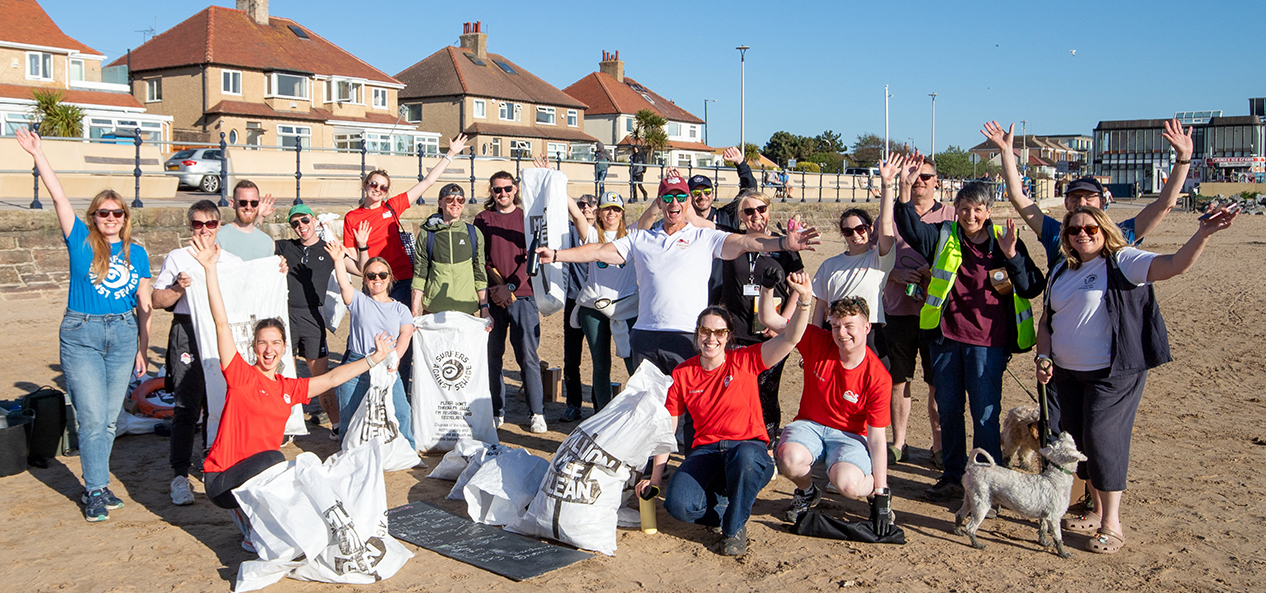
Paralympic champion Ellie Simmonds poses with a large group of smiling volunteers on a sandy beach on a sunny day, holding litter-picking bags and raising their hands. Several filled rubbish sacks are placed in the foreground, with a promenade, houses and a clear blue sky in the background.

Athletes and Team England already leading the way

Many athletes are now using their platforms to champion environmental action.

Paralympic champion Ellie Simmonds has spoken passionately about protecting waterways and blue spaces.

During Team England's King's Baton Relay in May, she joined volunteers, community organisations and environmental groups at West Kirby Beach to remove litter and raise awareness of plastic pollution as part of the Commonwealth Clean Oceans Plastics Campaign.

Elsewhere, Team England middle-distance runner Innes FitzGerald has emerged as one of the most prominent young voices for sustainability in sport.

Her commitment to lower-carbon travel where possible, and her willingness to speak openly about the relationship between climate change and sport, demonstrate how athletes can lead through both their values and their actions.

Alongside individual athletes, Team England's sustainability commitments are encouraging competitors to think more deeply about issues such as sustainable travel, kit reuse, resource efficiency and greener events.

Flooded pitches, damaged facilities, rising operating costs and periods of extreme heat are disrupting sport from grassroots participation through to elite competition, and athletes across the Commonwealth are seeing these impacts first-hand.

What's stopping more athletes from speaking out?

For many athletes the biggest barrier is confidence, as some worry they do not know enough about sustainability or fear criticism if they say the wrong thing.

Others are concerned about being accused of hypocrisy because sport inevitably involves travel and the use of resources.

But athletes do not need all the answers. Their role is not to become climate experts.

Their value lies in sharing their experiences of how environmental change is affecting their sport, their communities and the places they care about.

How we're helping

Together with Team England and the British Association for Sustainable Sport, we've developed a practical sustainability toolkit (available in the 'Sustainable future' heading).

Its aim is to help athletes feel confident speaking about the issues that matter to them and their sport.

Rather than turning athletes into climate experts, the toolkit encourages them to start with their own experiences, connect sustainability to performance, wellbeing and fairness, and to share positive stories about change happening in their communities.

The document reinforces a simple but powerful message – athletes can lead without being experts and sustainability is about progress, not perfection.

By providing practical talking points and guidance on navigating challenging conversations, the toolkit is helping athletes use their voices to inspire action and protect the places where we play, train and compete.

What else is needed?

Athletes cannot drive change alone. To unlock their full potential as sustainability advocates, the wider sport sector must play its part.

That means governing bodies, clubs, event organisers and sponsors that build environments where athletes feel supported and empowered to speak up.

It also means highlighting and supporting practical solutions and communities that are already taking action.

One example is Whalley Range Cricket Club in inner-city Manchester, which has adapted its facilities to become more resilient to flooding.

When athletes can connect their personal stories to examples like these, sustainability becomes tangible, positive and relevant.

That is often the first step towards inspiring others to act.

The opportunity for sport

By giving athletes the confidence, knowledge and support to speak up, we can unlock one of sport's most influential forces for change and demonstrate that sustainability is part of a stronger future for sport.

Because protecting the environment is not separate from protecting sport. It is the same mission and athletes can help lead that movement and inspire collective action, simply by sharing their story.


Sign up to our newsletter

You can find out exactly how we'll look after your personal data, but rest assured we'll only use it to make sure you receive our newsletter, to understand how you interact with our newsletter, and to provide administrative information about our newsletter.