Skip to content

Taxonomy term

Content type

Moving Together

Health care professionals and those in physical activity alike recognise the considerable benefits of movement as medicine.

For too long, people who stand to gain the most from increasing their physical activity have been faced with systemic barriers that serve to undermine their confidence and autonomy.

These barriers are not rooted in evidence, so addressing them requires a collaborative, system-wide response shaped by the voices and lived experiences of those with long-term health conditions.

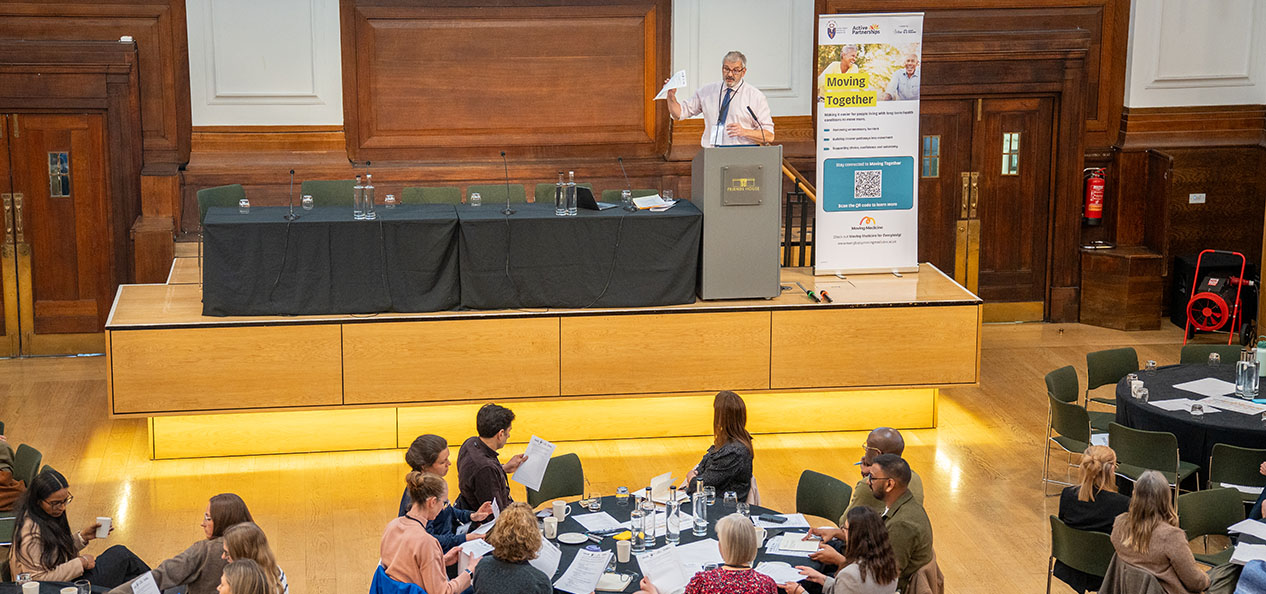
A man gives a presentation from a lectern to an audience seating around round tables in an indoors venue where there's also a Moving Together banner.

That’s exactly why Moving Together was created: a cross-sector initiative focusing on integrating physical activity into health and care, by creating frictionless pathways between health and physical activity, and by removing barriers associated with risk.

Launched in 2025, it is co-led by the Active Partnerships National Organisation and the Faculty of Sport and Exercise Medicine UK, and it's been supported and funded by Sport England through the National Lottery

Our ambition is to establish frictionless physical activity pathways to create an integrated system that offers proportionate support, enabling people living with long-term health conditions to develop the skills and confidence to build activity into their lives in ways that work for them. 

The importance of tackling this across sectors 

To achieve this aim, we are working across multiple sectors so that we can:

  • build and develop local areas where people can be active, while considering and meeting the individual needs of each community
  • define national evidence-based standards while learning from pilot models
  • establish and demonstrate a joined-up approach through health, activity practitioners and physical activity sector with brief advice, leading seamlessly to autonomous next steps
  • have impact in areas of health inequality.

Moving from medical clearance to cross-sector guidance

One of the barriers for people with long-term health conditions is risk aversion, but we are tackling this challenge head-on through research and evidence-based assessments that everyone involved can trust.

We want to drive change from mandated medical clearance to patient-centred medical guidance, as and when required, and we want to ensure this policy change is reflected in future physical activity pathway development. 

We’re already one year into this important programme and now we are embarking on our next phase. 

Our ambition is to establish frictionless physical activity pathways to create an integrated system that offers proportionate support, enabling people living with long-term health conditions to develop the skills and confidence to build activity into their lives in ways that work for them. 

A national roundtable conversation

On 14 May, we hosted an inaugural Moving Together National Roundtable in London, gathering more than 100 representatives from healthcare, physical activity, policy, academic, community and lived-experience organisations.

The event marked an important milestone in the Moving Together programme: it provided an opportunity to share progress, to test emerging thinking and to gather cross-sector perspectives on implementation in everyday practice.

Collectively we agreed priority actions across health and physical activity systems, and considered what the next phase of the programme should be.

Key themes we heard

The strongest message emerging from the event was that stakeholders are increasingly moving beyond asking whether physical activity should form part of long-term condition pathways, and are now focused on how implementation can happen consistently, safely and at scale. 

One key insight from the day was that the conversation has shifted from why physical activity matters to how implementation happens in practice.

From it, four key themes emerged: 

  • Workforce confidence – supporting professionals to have confident conversations about physical activity, risk and behaviour change. 
  • Practical implementation – ensuring resources, tools and support mechanisms exist to enable adoption in real-world settings. 
  • System alignment – strengthening connections between healthcare, physical activity providers, community organisations and policy partners.
  • Consistent messaging – ensuring individuals receive clear, evidence-based and empowering messages regardless of where they enter the system.

The discussions highlighted a strong appetite for change, alongside recognition that implementation support will be critical. 

It was also clear that we don't need more evidence that physical activity works and that we now need support to implement it consistently.

What’s next?

The passion and expertise in the room at the roundtable has fuelled our thinking about what’s next.

We know we won’t improve the pathways to help people with long-term conditions to move more without all of us driving behavioural change together, so we’re hosting a 45-minute webinar 'Maintaining Momentum: A Moving Together Update' on Thursday 9 July to keep going with our collaborative approach.

This webinar marks the next step in the Moving Together journey, sharing how feedback from a wide array of stakeholders is already shaping the programme's implementation priorities and future direction. 

I’m excited to be joining my fellow co-leads to share the latest update on how we intend to drive meaningful change, and we hope that people from both the health, care and physical activity sectors will join us to learn more about how they can support this important programme of work.

One team. One power. One dream

To some, 'devolution' might sound like a dry constitutional tweak – another layer of governance, another reshuffling of power. 

In reality, it’s actually far more human and ultimately, it’s all about people.  

For us in Greater Manchester, devolution has always been about who gets to shape the conditions of everyday life and about enabling those closest to the challenges to also have the power to solve them.

This is what drives us to go further and deeper on our devolution journey.

Facing reality

Back in 2009, the Manchester Independent Economic Review set out two stark truths.

Firstly that if the city-region acted as one joined-up place, it had the potential to help re-balance the UK economy; and secondly, that poor health in the area was holding people back from participating in that growth.  

In some of our neighbourhoods, healthy life expectancy still differs by more than a decade and access to employment, housing, green space and opportunity remains uneven.

These problems are one and the same because health and wealth inequalities are deeply intertwined, and physical inactivity is at the heart of it, yet this isn’t a result of personal choice but a product of environment, policy, culture and design work.  

Movement and physical activity have often been engineered out of daily life, especially in communities facing the greatest disadvantage.

By 2015, when the first Greater Manchester Moving strategy – Blueprint for Change  was developed, the data was clear.

Where inequality was top level, inactivity was also the highest; and the costs – financial, social and human – were enormous.

A true change of tactics against inactivity

The price of inactivity was at least £27 million a year and far higher if you took into account the cost of long-term conditions, mental health, social isolation and the impact of exclusion.  

The response couldn’t be another short-term campaign or an isolated programme. The people of Greater Manchester deserved better.

We needed to reshape the whole system – from transport to planning, from health to education and from workplaces to public spaces.  

This meant a shift from blaming individuals for being inactive and unhealthy (indeed 55% of people in our city-region wanted to be more active), to redesigning the conditions that were shaping their behaviour.

Movement and physical activity have often been engineered out of daily life, especially in communities facing the greatest disadvantage.

Devolution in Greater Manchester, along with the support of key partners like Sport England, has made that kind of systemic change possible.

This approach has made it possible to have power over health, transport, housing and skills for the people and places they affect but, more importantly, it has enabled us to work differently. 

The way we work now is rooted in collaboration across ten boroughs, public services, communities and sectors. We are one team! 

In Greater Manchester, prior to devolution, we already had the foundations and had laid the groundwork for this approach as we have a history of cooperation that stretches back generations. 

Devolution accelerated that instinct and drive as it gave us the space and opportunity to align strategies, pool resources and focus on our shared mission of building a thriving city-region where everyone can live a good and active life. This is making a difference.

Evidence suggests that life expectancy has improved faster than expected since devolution, particularly in more deprived areas.  

Employment, school readiness and public health outcomes have all shown signs of progress.  

In terms of physical activity, Greater Manchester reduced inactivity at nearly three times the national rate before the pandemic and has since recovered more quickly.

The latest data shows that in Greater Manchester, 62.1% of adults are now considered active. This is the highest rate ever recorded and there is further progress too, with inactivity falling to 26.9%, down from 28.3%.

Data shows that activity levels for children and young people in Greater Manchester are also the highest they’ve been since the survey began in 2017 and, currently, 50.1% of those aged 5-16 are active for at least 60 minutes a day.

But inequalities remain, particularly for people living in more deprived areas, lower socio-economic groups and for some ethnic communities.

So, while this is encouraging progress, a continued focus is needed to enable active lives for all and to keep the MIER report front of mind.

Moving forward as one

These changes are the result of systems that are maturing, where there is better alignment between local and regional strategies, stronger partnerships, and growing trust across sectors.  

They also reflect a deep cultural change in leadership that drives everything we do.

Here, leadership is more than job titles and institutions – it’s relational, distributed and rooted in a shared purpose. 

Leadership seen in community groups is as important as that of boardrooms because, for us, it is about convening, listening and connecting. 

We are united by the same goal of helping people see how movement links to the issues they care about, from jobs and growth to mental health and climate.

Devolution supports us in this work, but it doesn’t guarantee it. Local power alone isn’t enough and mindsets, behaviours and relationships matter just as much.  

The instinct to collaborate doesn’t come from governance structures alone – it comes from people and that’s the real lesson here.

Whether a place has formal devolved powers or not, the fundamentals still apply and it all starts with a shared vision.  

We use a central community voice, work collaboratively across boundaries and build trust by aligning efforts around outcomes that matter.

Our journey in Greater Manchester’s is far from finished (we are only five years into our 10-year Active Lives for All strategy), but we are an example of what is possible when a place brings together its people, purpose and power. 

To my mind, devolution isn’t about redrawing maps. It’s about redesigning systems so that everyone – regardless of where they live – has a fair chance at a good life.

Dancing against dementia

I co-founded Dementia Disco back in 2019 along with my brother Nick and our friend Phil as we all shared the heartbreak of watching family members live with this terrible condition. 

Mine and Nick’s dad was diagnosed with Alzheimer’s at just 66 and while local support groups used music, they often played songs from the 1940s and 50s that meant very little to a man born in 1950 and who grew up loving the 60s and 70s.

Meanwhile, Phil watched her independent, piano-playing gran quickly fade due to vascular dementia, realising that losing someone to this condition means losing them twice.

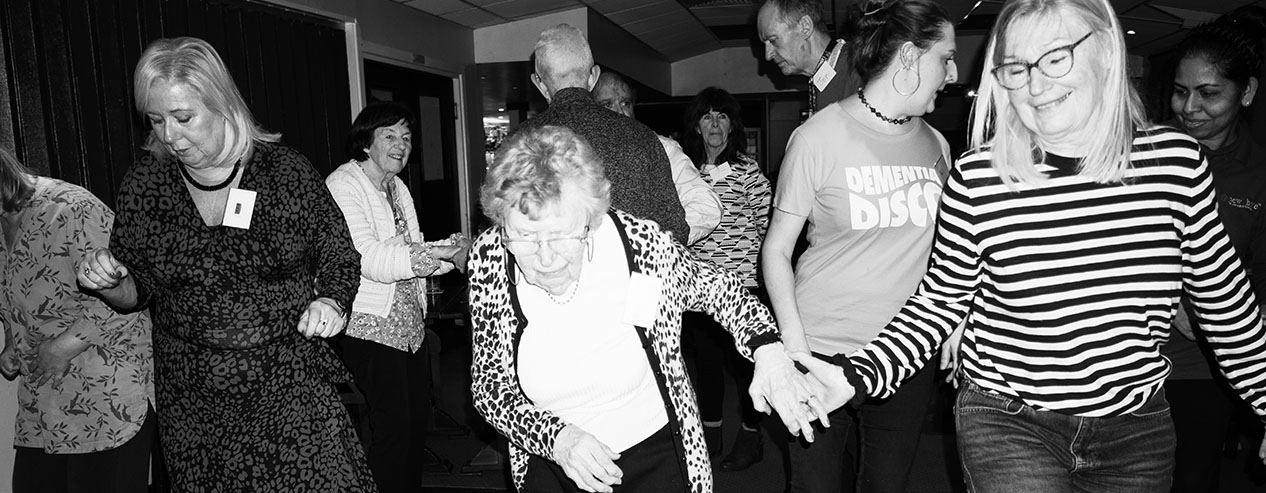
Men and women of different ages smile as they dance indoors.

Reaching beyond with music

Determined to create a space where people could connect with the memories of who their loved ones truly are, we launched Dementia Disco. 

Our project filled a vital community gap by hosting free weekend discos playing iconic music that resonated with younger people living with dementia, but also allowing multiple generations to dance together, while giving carers a well-deserved rest. 

We now have eight monthly discos nationwide, reaching as far as London in the South to Northumberland in the North, and with five more in the pipeline. 

We also bring our discos into care homes across the North West and are branching out in Northumberland. 

There's a moment at our Dementia Disco sessions that never fails to send shivers down your spine.

It happens when a familiar song starts to play and, suddenly, the room transforms.

We have watched music and dancing unlock communication where words have failed, and to restore lost confidence and dramatically lift the moods of people living with dementia, their carers and their families.  

Music has an extraordinary power because it bypasses the cognitive barriers of dementia and taps straight into emotion and memory.

However, while our regular community discos bring immense joy, we quickly noticed a bittersweet challenge – the profound benefits were limited to the days we met. But what about the rest of the week? 

Our project filled a vital community gap by hosting free weekend discos playing iconic music that resonated with younger people living with dementia, but also allowing multiple generations to dance together and giving carers a well-deserved rest. 

We wanted to give our community, of over 400 disco-goers, access to daily engagement while providing care homes with accessible, repeatable physical activity resources.  

This purpose lead us to asking ourselves a key question: how do we take that magical, weekly disco energy and turn it into a simple, life-changing daily habit?  

The hidden danger: tackling falls 

The answer became urgent when we looked at one of the most serious health risks facing people with dementia: falls.

Falls are the leading cause of emergency hospital admissions for older people, costing the NHS £2.3 billion annually, and they drastically accelerate the loss of independence.

Because of a fear of falling, many people with dementia become less active, but this only makes them weaker and more vulnerable.  

We wanted to break this cycle by embedding clinically-proven strength and balance exercises into joyful, familiar dance routines.  

Where science meets boogie

Thanks to the support from the Sport England Movement Fund, that dream is now a reality and we have teamed up with the brilliant Ailsa McPhee and her project, The Daily Dance, to co-create 240 brand-new dance videos over the next 12 months.  

The opportunity here is massive, because we’re not just making dance videos – we are transforming clinical therapy into a daily celebration.  

To ensure the highest physical impact, we have partnered with KOKU Health Ltd, a University of Manchester spinout.

Endorsed by Prof Emma Stanmore and Dr Jaheeda Gangannagaripalli, our routines seamlessly integrate the university's award-winning, evidence-based falls-prevention exercises, as decades of research prove these movements can reduce falls by up to 42%.

This all comes to life with Ailsa as she beautifully weaves these targeted balance and strength movements into high-energy, themed choreography sets to well-known songs.

Participants get the medical benefits of a specialised falls-prevention programme, but to them, it just feels like having a brilliant boogie.  

Turn on Dementia Disco TV 

This week is Dementia Action Week and while it's key to celebrate, we want to make daily physical activity achievable for everyone and everywhere, so all our 240 videos are being hosted directly on our brand-new digital hub, Dementia Disco TV.

Whether it’s a short warm-up before breakfast at home, a midday mood-booster with a family member, or a group session in a care home, these routines are free, evergreen, and designed to be easily woven into any daily schedule. 

Over the next year, we will be exploring different dance styles, seasonal themes (from summer holidays to Christmas), and fun costumes to keep our dancers inspired and connected all year round.  

We are incredibly grateful to Sport England and the National Lottery players for making this project possible, because combining emotional engagement with robust health science, we’re not just helping people stay active – we are giving them the confidence, strength and joy to live their lives to the fullest, one dance step at a time.  

Health drives wealth: gyms, pools and leisure centres play a big part

January is a difficult month for many of us. It’s dark, cold, wet and the glow of the festive season feels a long time ago.

But it’s also a moment when millions of people make a conscious decision to reset – to move more and invest in their health.

That’s why January matters so much for gyms, swimming pools and leisure centres. It’s consistently their busiest month of the year and not just because of New Year’s resolutions.

But beyond the first month of the year, there is a growing understanding that physical activity is preventative medicine and that a healthy population drives a healthy economy.

The places we move are of critical importance.

Earlier this week, alongside ukactive, I visited three very different facilities in one day – across both the public and private sector.

What struck me was how similar the stories were.

Operators talked about strong footfall, rising memberships and people coming through the doors for more than just exercise.

They’re coming for health, of course – but also for confidence, connection, and support.

This feels vitally important in a time that is characterised by increasing isolation, screens and polarised views.

Spaces open to everybody

Another feature which stood out was the remarkable diversity of the people there – from teenagers arriving in their uniforms after school, to the group of retirees who had originally been referred by the next door hospital and now were coming four days a week (and spending as much time over lunch as in the class).

It was also fantastic to see the level of innovation and use of technology to bring health and leisure closer together – with sophisticated health checks, devising personalised programmes for each individual, linking to 'e-gyms' and other virtual support.

This is the preventative health agenda in action. It’s getting active from the ground up and it sits at the heart of our ambition at Sport England, working with our partners to help millions more people become active.

January brings this ambition to life, but the real story is what’s happening year-round.

The scale and growth of the gym and leisure sector are significant.

The UK Health & Fitness Market Report 2025 shows a record 11.5 million people are now members of a health or fitness club – up 6.1% on the previous year – with 616 million facility visits recorded, an increase of 8.2%.

These are not short-term spikes. Participation has been growing over consecutive years, supported by a unique infrastructure of public, private, large, medium and independent operators working across the country.
 

Beyond the first month of the year, there is a growing understanding that physical activity is preventative medicine, and that a healthy population drives a healthy economy.

Sport England’s Active Lives Adults survey 2023-24 reinforces this picture.

Fitness activities and swimming continue to be major drivers of physical activity behind walking, with 904,000 more adults taking part compared to the previous year.

Demand is being driven by what people value most.

Polling from ukactive shows that 77% of members join a gym or leisure facility primarily to improve their mental health and wellbeing.

People also cite better sleep, increased confidence, managing health conditions and making new friends. This is about quality of life, not just physical fitness.

We’re also seeing important shifts in who is taking part. Female participation continues to grow, particularly through group exercise and classes.

Projects like Safer Spaces to Move, delivered with This Girl Can, are helping to remove barriers and make facilities more welcoming and safer for women.

Key community assets

Our latest Moving Communities report shows participation in public leisure has increased for every age group over 45, while gym activity is rising among under-16s, over-65s and people living in the most deprived communities.

Since 2017, the number of children and young people taking part in gym and fitness activity has increased by more than 12%.

Standards matter too. Facilities are improving every year, driven by initiatives such as The Active Standard, Quest and FitCert, ensuring that quality, safety and inclusion keep pace with growing demand.

All of this sits squarely within the Government’s priorities for economic growth and improving the NHS through the 10-year plan.

Health drives wealth and the social value created by being active is immense.

The sector contributes £122.9 billion in social value each year, including £15.9 billion in healthcare savings and £106.9 billion in wellbeing value – the equivalent of £2,600 per active adult – and more than double that for people with long-term health conditions or disabilities.

We gain £6 billion in productivity, thanks to a healthier workforce that takes fewer sick days.

The sector creates £5.7 billion in revenue and supports hundreds of thousands of jobs, many for young people at the start of their working lives.

These are extraordinary numbers.

January is important. But the real opportunity lies beyond it.

Gyms and leisure centres are not just places we go at the start of the year; they – and the people that work in them – are essential community assets, powering healthier lives, stronger communities and a more resilient economy all year round.
 

Find out more

ukactive

A positive force in many ways

On 26 November the Chancellor will deliver a much-anticipated budget.

In her pre-budget video message, the Chancellor has described the pressure on the NHS and the challenge of increasing growth, but among all the uncertainty, one thing is clear – finding the right package of measures will not be easy.

Against this backdrop, it feels timely to be publishing an update to our social value of sport and physical activity work. 

The new and expanded information shows what a positive force community sport and physical activity are.

A great cure with many benefits

The health and wellbeing benefits of sport and physical activity are well rehearsed and the UK Chief Medical Officers have previously described physical activity as the closest thing to a “miracle cure”, but based on the information we’ve published today, even that high praise seems to sell its value short.

Here are a few of the headlines from our latest data:

  • Sport and physical activity are good for the nation’s wellbeing and health. In 2023/24, the wellbeing value of sport and physical activity was estimated at £107 billion, and it prevented over 3.3 million cases of non-communicable diseases or chronic health conditions ranging from depression to heart disease. 
  • A more active nation means a more productive workforce. In 2023/24, £5.8bn of productivity losses due to morbidity were avoided due to sport and physical activity. 
  • A more active nation saves the health care system money. In 2023/24, sport and physical activity saved £8bn in direct healthcare costs through disease prevention and reduced use of health services. 
  • Community sport and physical activity is a net contributor to the public finances. In 2023, our sector generated tax revenue of £14bn for central government, compared with £2bn of public sector funding. This means community sport and physical made a net fiscal contribution of £12bn.

Furthermore, we know that sport and physical activity is a significant part of the economy. In fact, the Department for Culture Media and Sport’s 2024 Sport Satellite Account for the UK show that the direct contribution of sport and physical activity the English economy was £47 billion of gross value added and supports one million jobs.

So, from a public policy perspective, what’s not to like?!
 

Physical activity has been described as the closest thing to a “miracle cure”, but based on the information we’ve published today, even that high praise seems to its value short.

The value of sport and physical activity is significant and wide-ranging but with the right support it could be even greater.

The information published today also includes our estimate of the social cost of inequality in sport and physical activity, that is the amount of social value we miss out on because some groups of people are less likely to be active than others.  

We estimate this to be £19.6bn a year.

Tackling inequality in sport and physical activity, and realising this value, is at the core of our long-term strategy, Uniting the Movement, so I’d like to end by paraphrasing the Chancellor: “I commend the value of sport and physical activity to the House.”

The power of our communities

Sport changed my life. I have vivid childhood memories of being driven all over North Yorkshire by my mum and dad.

We spent our Saturdays going from one brilliant and unique cricket ground to another, and I can still hear those echoes of leather on willow when I see them today.

Those weekends set off a lifelong love affair with cricket and the county I’m proud to call home, and even more proud to represent every day as a Mayor of York and North Yorkshire.

Everyone should have the same opportunities to get moving that I did, and that is why I am proud to launch the £2.75 million Movement, Activity and Sport fund.

Bringing the joy of movement to everybody

This is the first of the funds to be launched under my Moving Forward campaign and we are working closely with partners to make sure this investment targets support for those who need it most.

Beyond the health benefits, there aren’t many better ways provided by sport and physical activity to meet new people and build strong relationships in our local communities.

However, this is particularly key in our rural and coastal areas, where there are some pockets of real deprivation.

Too often families cannot get over the hurdle of costly cricket bats, football kits or transport to games, which means that those who would benefit the most aren’t able to get involved.

But by funding activities for those who might otherwise turn to anti-social behaviour, we can change lives and make our towns and villages a better place to live.
 

This is the first of the funds to be launched under my Moving Forward campaign and we are working closely with partners to make sure this investment targets support for those who need it most.

Our research tells us that over 30% of adults are classed as physically inactive, meaning they do less than 30 minutes of exercise a week, and that over 60% are overweight or obese, increasing the risk of long-term health conditions.

But this reality can be turned, and early intervention and prevention can make a big difference.

We can help that by making positive choices like introducing physical activity in our day to day, by considering more walking, wheeling and cycling for our working commute or to meet up with friends.

We are moving in the right direction, but there’s still so much more work to do!

After years of being ignored or minimised, women’s sport is getting the recognition it deserves with success after success for our national rugby and football teams, but girls still don’t get the same opportunity to get moving when compared to boys.

Moving forward together 

I have seen that first hand, because while my son had the pick of so many football clubs, we struggled to find one for our daughter. How can that be happening in 2025?

This plays out with so many families across the region and the UK every year, and it’s a big reason why girls are more likely to stop playing sport when they become teenagers. But we can also change that.

By enhancing skills development and training in the sector, alongside offering more inclusive activities, we will also tackle the barriers that people with disabilities face.

Disabled people are almost twice as likely to be physically inactive, but by working together with our partners we can start to improve those numbers and change lives.

My Moving Forward campaign is about backing people across our region to build the healthy and thriving communities they deserve. 

I believe in the power of our communities, the people and local organisations that keep them going.  

Our work is made so much easier thanks to the support of our strategic partners, including North Yorkshire Sport and the Place Universal Offer from Sport England and I’m truly excited about these, because together we can achieve so much more!

The best part of my job is seeing the huge impact that hard-working groups have on their neighbourhoods.

They know what they need, and we will work with them every step of the way as we continue Moving Forward together.
 

Our hidden health clubs

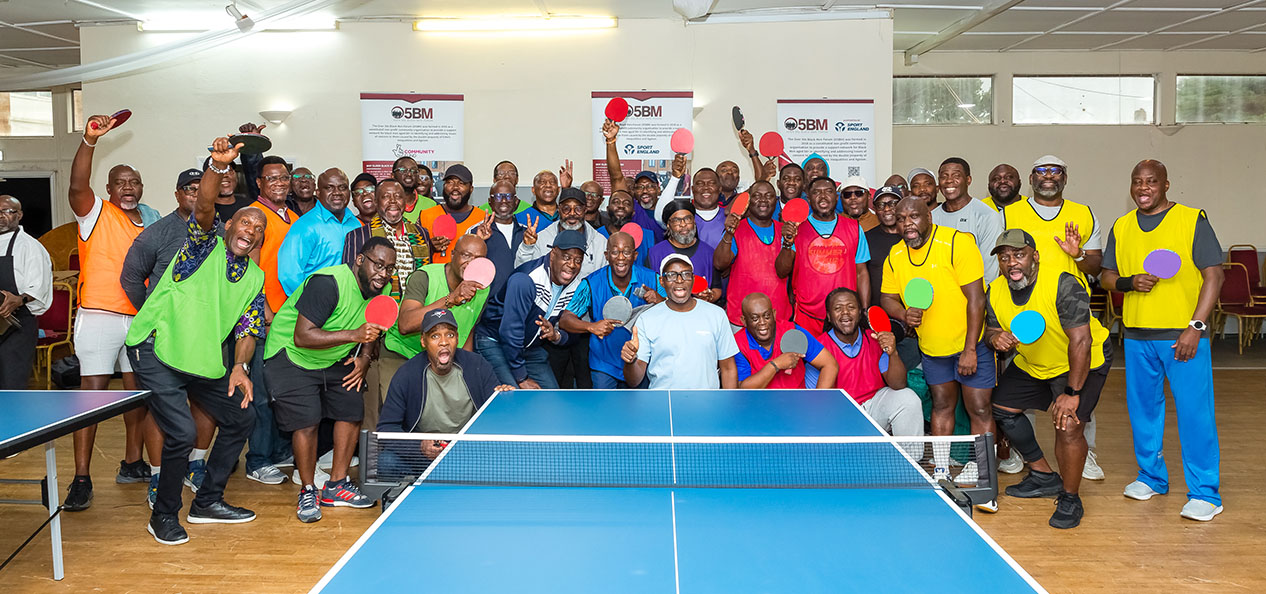
When most people picture senior Black men, they don’t immediately see us smashing forehand drives, diving for edge-of-the-table shots or celebrating doubles-wins with a triumphant chest bump (yes, it happens!).

But step inside an Over 50s Black Men Forum Table Tennis Centre and you’ll quickly realise that the sport is not just a pastime – it is medicine. It is therapy. And it is comedy.

A ping-pong ball, we often say, can travel faster than a GP appointment letter, making these centres our hidden health clubs.

But behind the rallies and the laughter, there is serious work underway.

A group of Black men pose during an Over 50s Black Men Forum Table Tennis session on an indoors centre.

Our hubs are what we call 'free health clubs in disguise' and alongside the games, we often run blood pressure checks, mental health workshops and health awareness sessions.

It is a Trojan horse approach: come for the table tennis, stay for the health education.

More than sport – a building-community exercise

Men who were once isolated are now part of a supportive network and those at risk of hypertension or diabetes are keeping active, informed and monitored.

The unexpected side effects? Friendships, resilience and a lot of good-natured bragging rights.

Some say that even when they hadn’t played table tennis in years the welcoming atmosphere makes it easy to return and that now they're used to the game, they can’t imagine their Tuesday evenings without it.

Others shared that while having lived in Luton for 15 years, never before had they made meaningful connections locally and that the group is a “real treasure, especially because of its focus on health and wellbeing”.
 

When most people picture senior Black men, they don’t immediately see us smashing forehand drives, diving for edge-of-the-table shots or celebrating doubles wins with a triumphant chest bump (yes, it happens!)

A man that had survived a stroke mentioned that, as well as camaraderie and encouragement, table tennis had helped him physically by helping him improve hand-eye coordination, building his confidence and combating post-stroke fatigue.

These voices remind us that this forum is more than sport. It is hope, dignity, recovery and community.

Rewriting the narrative

Black History Month is here and the importance of rewriting health inequality narratives becomes even clearer.

Too often older Black men are described as "hard to reach”, but our response is simple: “we are not hard to reach; we are not being seen”.

The reality is stark – Black men in the UK shoulder a disproportionate burden of chronic disease.

Rates of hypertension, cardiovascular disease (CVD) and type 2 diabetes remain consistently higher than those of their White counterparts.

And we can’t forget that Black men are also more at risk of prostate cancer, so it's always a good idea to use Prostate Cancer UK’s risk-checker.

These inequalities are deeply rooted and cannot be resolved overnight, yet the work of the Over 50s Black Men Forum shows what is possible when solutions are shaped by, and for, the community.

By creating culturally-relevant, community-led, spaces we have not only encouraged men to take part in sport, but also to engage in their own health and wellbeing.

They arrive for the table tennis, but they return with their friends and, together, they build something far greater than the game itself: a hidden health club where camaraderie, wellness and dignity thrive.

Our first regional competition

This September, we hosted the UK’s first Older Black Men Community Table Tennis Competition, bringing nearly 70 men together from Essex and Bedfordshire. The atmosphere was electric!

Chelmsford proudly lifted the singles trophy, while Luton triumphed in the doubles. There were cheers, groans and more than one disputed line call.

Even Westminster took notice and Sarah Owen, MP for Luton North, celebrated her local players with a shout-out in Parliament.

Table Tennis England joined us in the hall, the Mayor of Luton presented trophies and the Sport England logo stood proudly across the venue.

It was more than a competition; it was a statement that older Black men belong in the story of sport, health and community.

Serving the future

We are proud of what has been built so far, with seven hubs running and more on the way. But this is just the beginning.

Our vision is to embed these centres nationwide, creating a network where sport and health go hand-in-hand for older Black men.

And the best part? The model is replicable!

What works in Luton can work in Leeds and what works in Southend can work in Sheffield, because at its core, this is not just about table tennis.

It is about dignity, community and the belief that everyone deserves the chance to live longer, healthier and happier lives.
 

Running, representation and resilience

Movement has always been more than exercise for me.

My first motivation was staying healthy and trying to stave off hereditary diseases like hypertension and diabetes that run in my family (and, so far, I'm happy to say it has worked!).

But movement quickly became my outlet, my reminder that I am alive, capable and able to set goals.

The power of movement

When I lace up my trainers and step outside, I am not only moving my body. I am moving through history, community and identity, and I am claiming me. I do this for me.

This year the theme for Black History Month is ‘Standing Firm in Power and Pride’, highlighting the resilience and contributions of the Black community, and I am reminded that movement has long been a form of resistance, survival and celebration for Black people.

From dance to sport, movement has always been our way of claiming space, telling stories and showing strength and, for me, running is my chosen form of movement. It gives me freedom, resilience, and connection – three qualities that shape how I live and lead.

Growing up, I saw elite athletes who looked like me on TV, but I did not see everyday women like me running.

Running was not something I thought belonged to me as an adult (child me, yes, because children always run), but the first time I tried it outside as an adult, something shifted – it was not about speed or medals, it was about finding a rhythm that was mine.

Over the years, running has carried me through joy and pain.

It has helped me navigate life’s challenges, from grief and motherhood to menopause and leadership, and it has also changed how I see myself, not as the fastest or the best, but as someone who shows up, puts one foot in front of the other and keeps going.

This year the theme for Black History Month is ‘Standing Firm in Power and Pride’, highlighting the resilience and contributions of the Black community, and I am reminded that movement has long been a form of resistance, survival and celebration for Black people.

Running has also shown me how much representation matters.

There have been times I felt invisible at races or out of place in running communities, but when I began sharing my story and weaving my Jamaican heritage into my running, I discovered others felt the same and that, by stepping forward, I could help them feel seen.

Showing the real deal

That is why I am proud to be part of the advisory board for This Girl Can.

For the Phase Six of the campaign, we have focused on showing women as they truly are: sweaty, busy, imperfect and joyful.

Not polished versions of women exercising effortlessly, but showing real women making time for movement in the midst of their busy lives.

Being on the advisory board has given me the chance to share my perspective, especially around the barriers that Black women face in sport.

From worries about hair care, to feeling unsafe in certain spaces, to simply not seeing ourselves represented, these are real issues that stop many of us from moving freely.

Phase Six is about breaking those barriers down and telling a wider story of who belongs in movement.

This new stage of the campaign is also about making sure that when women see the campaign, they see someone who looks like them, lives like them and feels like them. Because when you can see yourself, you start to believe you belong.

From local to national

In 2019, I founded Black Girls Do Run UK.

What began as a small idea, creating space for a handful of Black women to run together, has grown into a nationwide community, because we are more than a running group. We are a family!

We celebrate milestones, we share struggles and, more than anything, we create spaces where Black women can move without judgement or stereotype.

Alongside leading the community, I hold both the Leadership in Running Fitness and Coaching in Running Fitness qualifications.

These have allowed me to support runners of all abilities, from beginners to those chasing big milestones, and to bring structured, safe and inclusive coaching into our spaces.

For us, running is not about chasing times, and all about creating a memory bank, not metrics.

It is about laughing mid-race, stopping for photos and supporting each other at the back of the pack. It is about belonging.

Together in strength

Black Girls Do Run UK exists because representation matters.

Too often, Black women are absent from the imagery of running, but by showing up in our kit at races and online, we are rewriting that narrative. We are saying we are here, we run and we belong!

For me, movement is freedom. It is the freedom to be myself, to take up space and to live well in my body and during Black History Month, that freedom feels especially powerful.

We honour the struggles of those before us, celebrate the present and move with hope for those who will come after because movement connects past, present and future.

It reminds us that while the barriers are real, so is our resilience, and it proves that when women move, communities move and change becomes possible.

So this Black History Month, I celebrate movement in all its forms: the steps, the strides, the miles and the memories. Movement has shaped me, and I will keep moving, for myself, for my community, and for the generations yet to come.

Routes to roots

At the heart of everything we do is fostering better integration and reducing isolation for culturally-diverse communities across the city of Exeter and beyond.

From our days during the pandemic delivering much-needed food parcels to South Asian and other culturally-diverse groups in our communities, our volunteer drivers became acutely aware of how many individuals felt socially isolated and inactive.

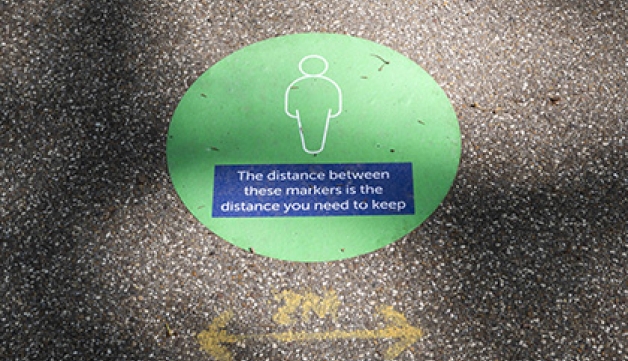
During these times, we worked with volunteers from several culturally-diverse communities – such as the Devon Bengali Association and the Exeter Hindu Cultural Centre – to arrange socially-distanced walks, giving many residents their only human contact and physical activity for months.

And those walks were just the beginning.

Fast-forward to today and many of our cultural events also include an element of physical activity within them.

With support from Live and Move, the Sport England Place Partnership in Exeter and Cranbrook, we have been able to run other activities, including zumba, women’s only yoga, badminton, volleyball and cricket.

Activities like these are very attractive to those from South Asian communities particularly.

From our days during the pandemic delivering much-needed food parcels to South Asian and other culturally-diverse groups in our communities, our volunteer drivers became acutely aware of how many individuals felt socially isolated and inactive.

Word-of-mouth spreads during Friday prayers at the Mosque and via our drop-in service, which supports residents with completing forms and accessing mainstream services, among other things.

And this approach is working.

The latest Live and Move local active lives survey data shows that levels of inactivity amongst culturally-diverse communities in Exeter have now almost decreased to pre-Covid levels.

Rates of inactivity

The success of this programme has enabled us to successfully apply for three years of funding from The National Lottery Community Fund to run our Better Connections project, enabling us to further support groups and individuals from South Asian and other communities.

With this funding, we are able to do so much more!

Our South Indian communities run an annual sports day, as does our Filipino community, plus the Devon Bengali Association put together a badminton tournament and a cricket tournament.

All these physical activities have become focal to our residents whether it’s fun games for children or a more competitive sports match, the aim is to ensure that everybody has fun and is a little bit active.

What’s vital and the reason it works is that we listen to our residents from a variety of ethnicities –  we learn what is important to them and what they were missing at the time and we try and plug the gap.

We’ve learned so much by engaging with different communities in this way.

We know that not all South Asian communities are the same. Each has their own cultural identity and it’s important that any organisation understands and appreciates these.

Culture, religion and food are important to many of the people that we work with. We focus events on these elements and slot physical activity in as appropriate.

Word-of-mouth is by far the most effective communication method.

Friday prayers at the mosque or our drop-in services and the women’s-only yoga sessions, all proved to be helpful ways of communication.

Sustainability comes about because of communities taking a certain amount of ownership over an activity. For instance, the yoga group quickly became ‘their’ yoga group, and as a result, participants have ensured its sustainability.

I’m proud that, through our activities, we are improving health and wellbeing, building cross-cultural understanding and strengthening community relationships in Exeter and across Devon.

I hope other places across England feel they can do the same.

Find out more

Inclusive Exeter

Unlocking the power of movement in the NHS

Imagine a world where physical activity behaviours are as routinely discussed within your NHS consultations as smoking, or 'prescribed' as routinely as medications.

One where your healthcare professional (HCP) helps connect you into ways of being active that work for you.

That’s the aim of the work we are doing with our health and physical activity partners, through our Uniting the Movement strategy, to strengthen the connections between sport and physical activity, and health and wellbeing.  

Through cross-sector collaboration we’re enabling the conditions for systemic change, the spread and scale of effective interventions and a coherent joined-up movement for change.

Working together for people's wellbeing

The NHS is one of the most trusted sources of physical activity advice for people with long-term health conditions and for disabled people who, according to our latest Active Lives Adult survey, are almost twice as likely to be inactive than those without health conditions or disability.

Modelling undertaken by our health team, using Active Lives data and the social value of sport and physical activity data, concluded that supporting the one in four people who say they would be more active if advised to do so by HCPs would mean 2.9 million fewer inactive adults and 550,000 fewer less-active children and young people in England, saving up to £0.9 billion from the healthcare system.

Through cross-sector collaboration we’re enabling the conditions for systemic change, the spread and scale of effective interventions and a coherent joined-up movement for change.

That is why we are so excited about the recent launch of NHS England’s four ways forward, which aim to empower and support NHS leaders, managers and HCPs to unlock the protective power of physical activity to improve patient care and deliver NHS priorities. 

Supporting the four ways forward 

Sport England, alongside the Office for Health Improvement and Disparities (OHID) and NHS Horizons, have supported NHS England in developing these as a route to going further and faster in integrating physical activity within and alongside routine NHS care.

This approach is built upon strong evidence and significant progress to date, blending local and national-led action to spread good practice across England.

Lots of our work with partners is already supporting the delivery of these four ways:

Empowering health and care professionals

  • We’ve supported training and education with the Physical Activity Clinical Champion Programme being accessed by over 56,000 HCPs; with 54,600 modules on physical activity completed on the British Medical Journal e-learning platform; with initiatives like This Mum Moves, which has trained 900 health and physical activity ambassadors who’ve then cascaded the training to colleagues and partners; and with the award-winning Moving Medicine platform, which has enabled over 308,000 HCPs to confidently discuss physical activity with patients.
  • Our work with partners has also facilitated change with The Active Hospital toolkit that has been developed to help NHS Hospital Trusts to integrate physical activity into secondary care pathways, and the We Are Undefeatable campaign that has been successfully changing the narrative on being active with long-term health conditions.

Integrating physical activity into clinical pathways

Supporting the NHS workforce to gain the benefits of physical activity

  • According to the latest data, 462 GP practices have received the Royal College of GPs Active Practice Charter accreditation in recognition of utilising physical activity to support staff and patient health and wellbeing.
  • Many sport and physical activity partners provide discounted membership rates to NHS colleagues, e.g. local authority leisure offers.

Supporting innovation and evaluation with partners 

This is achieved through collaboration between health and physical activity partners to influence the provision, access to and use of local assets and facilities.

  • The Sport for Confidence Prevention and Enablement model evaluation report concluded that the positive impact of their innovative approach to embedding physical activity into a whole-system approach to adult health and social care could deliver £58.72 of social value per pound invested.
  • Active Dorset are working with their integrated care system and public health partners to build physical activity into the county’s approach to integrated population health-data management.

Looking ahead

With physical activity’s brilliant infrastructure and a new NHS policy context, the publication of the NHS four ways forward enables us to accelerate cross-sector collaboration and spread good practice – particularly through place-based action between our sector (including active partnerships, local authorities, leisure providers and community sport) and integrated care boards, acute trusts, integrated neighbourhood teams, primary care networks and GP practices.

We have a prime opportunity to get this right – amplifying impact on the health and wealth of the nation and focusing support on those that would benefit the most.

Doing so will create an NHS fit for the future, empower communities and ensure physical activity is a must-have for all of us and for future generations.

What’s good for the nation and even better for you?

The answer to the riddle in the title is easy – sport and physical activity.

At Sport England we’re always talking about the benefits of being active, but for nerds like me, the past few months have provided a particular treasure trove of data about the social and economic value of sport and physical activity.

And then on 1 October 2024, DCMS published a new Sport Satellite Account for the UK.

The positive ripple effect of being active

This revealed that during 2021, the combined economic impact of sport (direct and supply chain – including the production of sports equipment and apparel, the construction and maintenance of sports facilities or their marketing services) was equivalent to £83.1 billion, or 4.1% of the UK’s productivity (gross value added).

The document also showed that every £1 invested in sport generates £1.55 as gross value added in the economy.

A few weeks later we published the results of our new research on the social value of community sport and physical activity, revealing that in 2022/23 the social value of sport and physical activity in England was £107.2b.

This value consists of the individual wellbeing benefits of sport and physical activity (both participation and volunteering) and the wider health benefits of a more active population.

However, the report also highlighted the £15.6b of social value that we are missing out on due to inequality in sport and physical activity, and how the value of being physically active is greater for some of those who are least likely to be active, like adults with a disability or living with a long-term health condition.

The past few months have provided a particular treasure trove of data about the social and economic value of sport and physical activity.

The conclusion from all this information is clear – tackling inequality is a challenge that we must address with all our energy and resources.

And it doesn't stop there.

In the past couple of weeks, we’ve also been able to provide two further reports about how the social value of adult participation in sport and physical activity is distributed between local areas, and an overall return on investment figure for the social and economic value of community sport and physical activity in England.

Local values range from £72 million in the small local authority area of Rutland, in the East Midlands, up to £1.6b in the large metropolitan area of Birmingham.

We’ve also found out that for every £1 spent on community sport and physical activity, £4.20 of social and economic value is created.

What these numbers really mean for people

But with clever economists producing all these impressive population-level figures, it’s easy to lose sight of the underlying truths they’re based on.

So here are just a few for you to think about:

  • People who are physically active are more satisfied with their lives than those who are inactive.
  • According to the brilliant guys at the State of life site and their Where’s WELLBY? poster, the individual wellbeing benefit of being physically active is nearly as high as that of being in a marriage or civil partnership. 
  • People who volunteer to support sport are more satisfied with their lives than those who don’t.
  • In 2022, more than three million cases of disease (ranging from coronary heart disease to dementia) were prevented by physical activity.
  • Being physically active reduces someone’s risk of developing Type 2 Diabetes by more than 25% and the risk of hip fractures amongst people aged 65 or over, by more than 50%.

So sure, sport and physical activity is good for our economy and society but, more importantly, it’s good for you!

And how often can you do something that’s both in the public and your own self-interest?

Unfortunately not very often, so do the right thing and get active – it’s good for the nation but it’s even better for you.

Tools to close our sector’s work gap

When looking at creating inclusive opportunities for disabled people in our sector a lot of focus falls on participation, but fairness for this group of people applies to its workforce too.

For years our Annual Disability and Activity Survey has shown disabled people as underrepresented in our sector’s workforce. 

Understanding what needs to change 

The 2023-24 edition revealed that disabled people are half as likely to see ‘people like me’ working in sport and physical activity compared to their non-disabled peers, and that only 9% of disabled people agreed they have the opportunity to become a coach or take on a role in delivering sport or physical activity compared to 24% of non-disabled people.

Off the back of these concerning figures, we commissioned a research project to explore the barriers and enablers for disabled people to work in our sector.

The final report has now been published on our website and is fascinating reading for anyone working in sport and physical activity.

Initial findings showed that there are limited sources of data and that most of the insights were very high level, identifying barriers such as negative attitudes towards disabled people. 

However, the evidence to help understand these in more detail was limited and while national disability employment statistics delved into specific impairments, these were not broken down to reflect the reality in our sector.

When looking at creating inclusive opportunities for disabled people in our sector a lot of focus falls on participation, but fairness for this group of people applies to its workforce too.

Some research considered other marginalised groups in the sport and physical activity workforce, but did not take an intersectional perspective and treated each identity in isolation.

Coverage of enablers and barriers to disabled people’s participation in the sport workforce was limited, tending to offer a wider commentary reflecting statistics, rather than personal perspectives of disabled people. Only a handful of sources provided some insights, which helped us structure the primary research design and interview questions.

Two of these were Aspire’s EmployAbility Guides and ukactive’s Everyone Can initiative.

Based on initial findings we decided to carry out in-depth interviews to understand the barriers and enablers experienced by disabled people in the professional world, and to develop recommendations that would make a real difference.

Interviewees shared personal stories with examples of both good and bad practices, including a personal trainer who had to hear that the reasonable adjustments put in place to help them do their job were perceived as ‘unfair’ by a colleague.

The need for further change

Accessible application processes, upfront information about roles or inclusive approaches to interviews (for example, choice of video or in-person) made a real difference and gave many the opportunity to consider a role.

To truly understand the reality of employment for disabled people in sport and physical activity, the report should be viewed as a whole and organisations should take a person-centred approach to ensure people can apply and remain as part of our sector’s workforce.

We published three key headline recommendations:

  • Adopt a ‘flexible by default’ approach to job roles. Normalise adaptations and consider flexibility beyond whether the employee could choose their hours to include how adjustments could be made across the wider team. For example could the disabled employee do certain tasks while a non-disabled colleague picks up others?

  • Provide advice and guidance for employing disabled people. There is a clear need for an effective source of advice and guidance for employers to turn good intentions into action and organisations should aim to create a culture that values - and is informed by - diverse voices and experiences.

  • Proactively identify and remove barriers that exist at all stages of the 'work journey'.
    In our research we tried to break down this path into different stages to explore barriers and enablers at each point, but it became clear that many challenges recurred throughout. Employers need to provide clear information about their available role using diverse and suitable communication platforms. They need to learn continually and listen to their disabled staff continually. A good way to achieve this is employing disabled consultants to identify and remove barriers through an inclusive culture.

Organisations who were seen to be committed to inclusion appealed to participants, but the main conclusion to take from the report is clear: there is still a lot of work to be done in creating equal opportunities for all and there’s an urgent need for the sport and physical activity sector to address recruitment and retention strategies.

We hope that in highlighting real-life experiences we can shine a light on both the good, the bad and on the way forward.

There is undoubtedly a desire in the sector to ensure disabled people do not have to overcome barriers to enter the workforce and we firmly believe that this piece of research could be a key tool to unlocking those opportunities.

You've viewed of items.