Skip to content

Taxonomy term

Content type

Now is the time

This week is National Inclusion Week, an initiative started by our friends at Inclusive Employers to celebrate inclusion and to make changes that build workplaces where everyone can thrive.

This year the theme is 'Now is the time', but what does this mean exactly?

Basically, that there’s no moment like the present to take action and to make those practical steps in your organisations that embed inclusion and create a sense of belonging.

This really is one of my favourite weeks of the year!

‘Being inclusive’ is one of the guiding values for the work we do at Sport England and it highlights a collective commitment to Equality, Diversity and Inclusion (EDI) in sport and physical activity.

But we don't approach our commitment to EDI alone, because Moving to Inclusion is an initiative by all the home nations sports councils.

Its purpose is to provide resources and support for physical activity and sport organisations moving towards a more diverse, inclusive and socially responsible sector.

These commitments include an opportunity for self-reflection and continual improvement, which is key in our compromise to keep progressing and living by the values we want to promote.

A bit of history

The Moving to inclusion Framework was created to replace the former ‘Equality Standard - A Framework for Sport’ following a review and consultation with the sport and physical activity sector back in 2021, and it was later soft-launched in Autumn 2023.
 

This week is National Inclusion Week, an initiative started by our friends at Inclusive Employers to celebrate inclusion and to make changes that build workplaces where everyone can thrive.

The Framework guides organisations on developing inclusive practice through self-reflection and continuous improvement using the Moving to Inclusion Diagnostic Toolkit.

Through this self-reflection tool, our aim is simple: to embed equality, diversity and inclusion through incorporating action planning, implementation and review into an organisation’s everyday work.

It is important to note that the diagnostic tool is not mandatory to complete, or part of any performance management for partner-organisations' funding conditions in England. 

Benefits for everybody

In any case, and whichever way you choose to start your inclusivity journey, we believe there are benefits to joining our Moving to Inclusion community:

  • This framework enables your organisation to break down the areas around inclusion to make it more manageable and realistically achievable to embed change.
  • The process is broken down into five pillars: Culture, Leadership, Experience, Relationship and Communication.
  • The self-diagnostic tool within the Moving to Inclusion Framework will help you assess where your organisation is now on its EDI journey and consider where you might need to focus effort and make further improvements.
  • The Framework provides practical suggestions and resources to help you drive continuous improvement in your organisation. The reason for this is that a greater focus on EDI will benefit the whole business, including staff satisfaction and retention, reputation, diversity of workforce and thought, growth in participation and membership, innovation, better resilience and increased business opportunities.
  • Partners who are funded by Sport England may be able to access mentor support upon completing their diagnostic.  
  • As Moving to Inclusion evolves, it will create a learning culture and community to be part of.

Any organisation (either inside the sport sector or outside) can undertake the self-reflection process and benefit from the online resources that support it.

To get an idea of the impact it is currently having, check out this infographic for April 2024-March 2025.

Leading change on EDI in our sector

Sport England (and UK Sport) have introduced Diversity and Inclusion Action Plans (DIAPs) as a mandatory requirement of the Code for Sports Governance.

DIAPs set out the ambitions and practical steps that organisations in the sport and physical activity sector will take to achieve greater diversity and create inclusive cultures.  

The plans are applicable to Tier 3 organisations, with the aim to improve representation and inclusion on boards, in senior leadership teams and throughout the wider organisation. 

To date, Sport England and UK Sport have signed off 116 DIAPs that are now with partners to deliver on the actions within their plans and to improve diversity within their organisations and beyond.  

Organisations funded by Sport England will find that Moving to Inclusion provides additional, complementary and enduring support for their DIAP processes.

The themed pillars within Moving to Inclusion will help those organisations refresh their DIAPs and they may choose to incorporate the actions arising from their self-assessment within their own plans.

This National Inclusion Week (and every other week in the calendar, if you ask me) we all have a role to play in changing our behaviour, championing inclusive practices and challenging discrimination.

Collectively, we can create the conditions that support a kind, welcoming and nurturing environment for everyone to lead healthier and happier lives and we hope Moving to Inclusion can help you in that journey.
 

Together to Inspire

It’s only been a few weeks since I completed my first year as CEO of BAFA and I’ve been reflecting on the journey we’ve taken.

It’s been over 12 months of learning, growth and of laying foundations for the future of American football in the UK and this week I’m proud to share Together to Inspire – our new three-year strategy to inspire the next generation of British American football players, coaches, officials and volunteers by bringing the Britball (British American Football) community together alongside its partners and supporters.

Since securing our initial investment by Sport England we’ve made strong strides as a national governing body.

One of our first priorities was to reset the National Flag Football League under BAFA’s direct management, while reconnecting with clubs and players and also fostering a more inclusive, development-focused culture.

The support from the investment has allowed for some immediate short-term participation growth, but we now have a big opportunity in this space to grow the sport as we build towards the Olympic and Paralympic Games in Los Angeles in 2028.

We’ve also invested in our digital infrastructure – recognising that sound systems and processes are critical for long-term sustainability.

Platforms like JustGo are being enhanced to capture better data, helping us understand who’s playing and how to support them.

And in the meantime, our team continues to balance the efforts of our incredible volunteers with the consistency brought by skilled staff and contractors that then align into our chair and board members.

It hasn’t always been easy, but we think all these efforts are vital to our future.

Leading for now and what’s next

A key lesson this year was balancing ‘the urgent and important’ with the long-term priorities.

There’s always something pressing – a complaint to attend to, another scheduling to fix or a new opportunity for growth to be pursued.

But for me it’s been key to be able to step back away from the day-to-day business and connect with members across the game to ask them about the kind of sport we want to build.

That’s what our new long-term strategy aims to answer.

The support from the investment has allowed for some immediate short-term participation growth, but we now have a big opportunity in this space to grow the sport as we build towards the Olympic and Paralympic Games in Los Angeles in 2028.

With Together to Inspire we’re not just solving today’s problems – we’re building tomorrow’s potential.

And we’re doing so in continuing our alignment with Sport England’s long-term strategy, Uniting the Movement, by creating a sport that’s inclusive, connected and sustainable.

Whether it’s supporting clubs, widening access or growing the workforce, we’re proud to be part of that mission and the work we have delivered in year one.

Listening, learning and leading with community

The biggest insights in our strategy have come from conversations.

Hearing from coaches, volunteers, officials and players has shaped our understanding of what’s needed, but this is an ongoing activity.

Through National Flag League resets, youth competitions and GB performance camps, we’re creating more spaces for meaningful dialogue – not just consultation, but connection with our community.

U19 regional 11v11 pilot

In 2024, we piloted a regional 11v11 league for under-19 players – removing barriers while offering meaningful development.

It reached 400 players across 12 camps and six fixtures, and it led to 80 additional GB trial invites.

The result? A boost of 16% in under-19 registrations!

The pilot also developed new coaches, several of whom now contribute to GB performance teams.

This model reflects the Uniting the Movement’s focus on youth engagement and inclusive talent pathways.

Strengthening safeguarding

This year, we implemented MyConcern – a secure case management platform powered by First Advantage.

It streamlines case-tracking and integrates DBS checks via JustGo to streamline the process and make it easy and secure for the user.

We’re also working with CPSU and NSPCC to ensure our policies reflect best practice, by furthering a safe and trusted environment for all.

Looking ahead

There’s a lot to be excited about, including:

  • reimagining our participation pyramid around accessibility and values
  • building a flag-performance system for LA28 and beyond – backed by uksport
  • strengthening clubs, empowering volunteers and investing in coaches and officials.

The Los Angeles 2028 Olympic and Paralympic Games present a huge opportunity for us, not just for visibility, but for exciting partnerships with the likes of the NFL UK and BUCS that’ll aid long-term growth together.

We look at these games as the beginning, rather than the end.

Looking back, I’m proud of how far we’ve come – and even more excited about what’s next.

We’ll keep working with our clubs, volunteers and partners to build a thriving future for contact and flag football in the UK.

Together to Inspire is more than a strategy – it’s a goal to work with our partners to create a sport that is values-driven, to make a difference for our clubs, workforce and athletes.

Find out more

Together to Inspire

Levelling the playing field

It’s undeniable that the Lionesses’ recent triumphs and the professionalisation of the women’s game, the strong performance of the men’s team and the fact that the number of girls watching and playing football has doubled in recent years, has made the country proud.

We know that the scale of grassroots football in England means that the sport is well positioned to influence people and communities in tackling inequalities in sport and physical activity.

So because of all of these reasons, we thought that our case study with The Football Association (FA) would be a great way to close our series of blogs.

The FA is the National Governing Body for one of the country’s most popular sports and receives significant funding through Sport England’s system partner investment.

We know that the scale of grassroots football in England means that the sport is well positioned to influence people and communities in tackling inequalities in sport and physical activity.

This funding, while a small proportion of The FA’s overall turnover, drives initiatives aimed at tackling inequalities and increasing participation among under-represented groups.

What we've learnt from football 

There are different learnings we’ve achieved from these initiatives that are also contributing to Sport England's long-term strategy – Uniting the Movement

Efforts should be made to keep girls in the sport 

Recognising the common challenge of drop-off in girls’ sports participation during teenage years, The FA developed ‘Squad’– a programme that’s designed to be a fun, non-competitive initiative for girls aged 12-14.

This model, which could be replicated across other sports, prioritises enjoyment and social connection, and aims to retain girls in football while building their confidence and leadership skills.

In addition, they have developed a new talent ID programme called Discover My Talent, shifting the way they find and support talented footballers.

The FA’s learnings from this programme highlight that moving away from a traditional approach, focused on existing clubs and academies, enables them to identify potential "anywhere, anytime."

This approach aims to identify talented players across the country, within diverse groups and at any kind of football events and sessions to broadening opportunities across different communities, resulting in more diverse talent pathways for women and girls.

The FA reports that they are seeing positive results, with increased diversity in the top talent programmes.

Increasing opportunities for disabled players 

The FA is committed to growing para- and disability football and to closing the disability gap, partly through initiatives like ‘Comets’ – a recreational program for disabled children aged 5-11 that provides fun and accessible entry opportunities to the sport.

While aiming to expand Comets and the provision of disability football, The FA acknowledges challenges such as workforce training, confidence levels of local coaches to support disabled people and logistical barriers to attending sessions – like the time and financial costs of travel – for para-athletes.

In response, The FA are providing disability training and toolkits for clubs, called Journey to Inclusion, with the aim of proactively addressing these challenges.

The FA have identified potential for cross-sector collaboration and knowledge sharing with other system partners to continue to address these difficulties, as well as using football as a hook to engage disabled people and connect them with other sports.

Investing in the workforce to reflect the communities served

As many system partners have told us, local champions have an important role for creating local change.

Recognising the need for a diverse workforce to help diversify participation, The FA is actively working to increase the number of Black and Asian coaches in grassroots football.

And by targeting specific localities and offering more coaching opportunities, The FA aims to create a coaching landscape that reflects the communities it serves.

The role of local partnerships for building a stronger ecosystem

The FA is increasingly working locally, tailoring programmes to the unique needs of different communities.

Their experience is that partnerships with community groups and schools are key to reaching under-represented groups.

Ensuring safeguarding standards when partnering with non-accredited organisations is recognised as a challenge, so they are actively supporting community organisations in developing their safeguarding processes through training and qualifications.

Looking at what's to come

The new Learning Synthesis report based on the year two evaluation report will be published soon with more insights from the ongoing evaluation.

It will also include the collective contributions that partners are making to changing the sport and physical activity system.

We hope this series of blogs have been useful and if you have any comments or questions, we'd love to hear from you, so please get in touch.

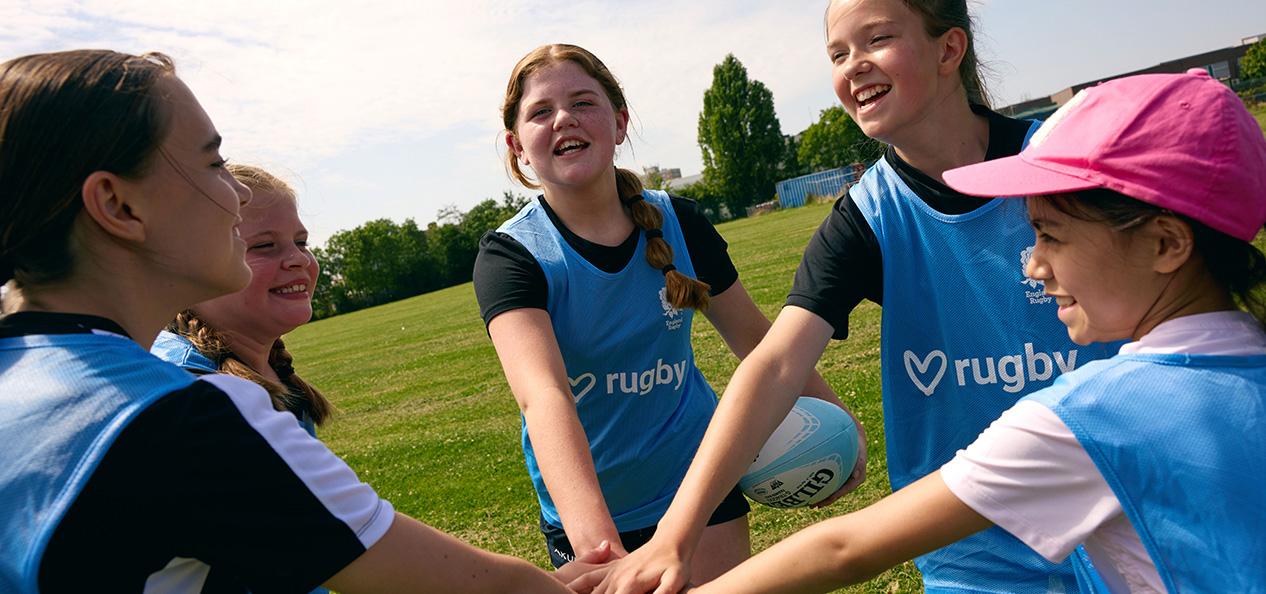
Working together to protect the youngest in our sector

Keeping Your Child Safe in Sport Week is a campaign by the NSPCC Child Protection in Sport Unit (CPSU) that runs from 7 to 11 October 2024, highlighting the key role local communities can play in safeguarding children and young people when taking part in sport and physical activity.

The CPSU is one of Sport England's key safeguarding partners and we’re really proud of this collaboration.

Listening - the first step towards change

We all know that sport and physical activity are great ways for children and young people to learn new skills, support their wellbeing, reach their potential and make friends, but do you really know how important you are when it comes to keeping children and young people safe while being active?

I am talking about volunteers, spectators, helpers, family members, friends and carers – we all need to make sure children have a great time and feel safe when playing a sport.

Many of us are familiar with historic cases of abuse and learning from these is vital to inform practice.

Valuable insight has been gained from Sport England's recent partnership with the National Working Group (NWG) on the Voices in Sport project, which has developed a series of resources in collaboration with survivors and people with lived experience of abuse highlighting the real, lifelong impact of these incidents on their lives.

There is a common theme when you listen to survivors and those with lived experience of abuse and harm: the missed opportunities for intervention and the devastating lifelong consequences brought to each of them.
 

The NSPCC Child Protection in Sport Unit is one of Sport England's key Safeguarding Partners and we’re really proud of this collaboration.

Some of the testimonies include expressions like: “The signs were there” or “If only someone had listened, believed and responded.”

So now we must do everything we can to prevent future harm, and it is vital that we all know what signs to look out for and how to support creating a culture where  if you have even a slight concern  you feel you can speak up, ask questions and/or raise concerns.

Sadly, abuse in sport is not something that just happened in the past, because children and young people are still suffering the impact of having been harmed.

Joint efforts to change the future

The NPCC CPSU Case Data Tool Report – based on trends established from anonymised yearly data collected from 39 participating national governing bodies regarding cases that have reached a threshold (cases involving a statutory service, like children's services or police) – identified that between the period between October 2022 and October 2023, 91% of reported incidents occurred less than two years prior to the disclosure.

The good news is that there are many things we can do to reduce the risk of harm to young people and this is exactly the aim of Sport England in its partnership with funded bodies in the sector like the NSPCC CPSU and the NWG.

Recent investments of £14.83m of National Lottery funding into the network of Sports Welfare Officers are providing additional local support to this role within clubs, signposting organisations to the right advice and guidance, and raising awareness of campaigns such as Keeping Your Child Safe in Sport throughout the year.

Play Their Way is also a good example where, through collaboration, the sector has created a campaign for child-led coaching, giving the youngest a voice.

It can’t be emphasised enough how much we need to support sport to develop a culture at grassroots level where talking about the welfare of children is the norm. 

Sadly, many people walk away from a club or activity when something is not quite right.

That may be inappropriate behaviour from a coach, a volunteer or a parent, a concern, a doubt, a feeling of uneasiness or realising behavioural changes in a child.

Children and young people’s wellbeing is fundamental to their enjoyment of being active and the CPSU has done a phenomenal job in putting together a great array of ways to get involved including a resources library, short courses and animations to name a few.

I invite you to look at these materials, so we can all learn to play our role to keep children safe in our sector.
 

Power hockey – a triumph for all

I’ve always loved power hockey and played it since I was eight. 

Power hockey is the powered-wheelchair version of field hockey, which started at Liverpool's Greenbank Sports Academy in 2000.

This is the only contact sport for electric wheelchair users and in March 2021 a governing body - GB Power Hockey Association (CIO) - was born.

A disabled sport by disabled people 

It’s the best sport ever as it makes me feel like I have no disability and I can focus on just enjoying it, so imagine my delight when in 2001 I was offered to become a trustee by Gerry Kinsella, chairman of the charity and creator of the sport.

This opportunity meant I could help develop the sport nationwide, something which is key to my current role as media secretary at the charity.

I also helped organise and run power hockey’s inaugural tournament, held in May this year, at the sport’s home of Greenbank Sports Academy.

It was an action-packed day with teams from around the country competing in front of hundreds of spectators.

A group of young men and boys on wheelchair play Power Hockey indoors.

The occasion became an excellent showcase of how amazing power hockey is and it also signified the official launch of the sport, with numerous teams competing for the first time in the sport’s history.

The tournament helped in raising awareness of power hockey and we hope it’ll become a much larger national league sport with more people playing it.

The boost for the sport was such that we started four new power hockey teams through it.

The aim of the GB Power Hockey Association is to predominantly have disabled people running the charity. Currently, over 50% of our trustees are disabled, including me.

In fact, it was the disabled trustees – Gerry Kinsella, Ellie Curran and Mark Palmer – who helped to organise and run the inaugural tournament.

We also produced the Rulebook of Power Hockey and its Classification System, and Ellie and I collaborated with two physiotherapists to design the Classification System of the sport.

Disabled people need to lead in the development of disability sports, as we are the ones who are going to be playing it, plus we understand first-hand what is like to live with disability and know how important sport is for us.

Sports are a distraction from an individual's disability and an escape from the inaccessible world.

They also play an essential role in our physical and mental health as they can help the cardiovascular system, keep the brain active and provide a sense of freedom.
 

The aim of the GB Power Hockey Association is to predominantly have disabled people running the charity.

I think it is safe to say that without the role of disabled people within power hockey, the sport wouldn’t exist and I’m proud of having helped laid the foundations for this exciting and up-and-coming sport to prosper and immensely improve disabled people’s lives.

How does Sport England support our work?

Funding from Sport England has enabled the Greenbank Project, working in partnership with the GB Power Hockey Association, to promote and develop this great new sport.

The funding has aided the creation of four new hubs in England - in Chester-Le-Street, Gloucester, Middlesbrough and Burton Upon Trent - and the further development of the Liverpool hub.

The hubs - which will train teams to compete in different leagues and championships - each have eight power hockey chairs stored, ready for players to use in power hockey and power football weekly sessions.

The funding has also paid for the role of the Greenbank Power Hockey business development manager to support the development of the hubs.

The officer has introduced the games of power hockey, and sometimes power football, to the hubs by organising test sessions in each venue before the hubs start.

This figure has also developed the local partnership, which is crucial to the hubs' success and is supporting the volunteer force to run these centres.

The funding has also enabled the development of the chair themselves.

They count with a shooting mechanism that can propel the hockey ball out of the chair using two electromagnets and the players can tackle each other safely due to front bumpers, more commonly used to protect walls from forklift trucks.

The chairs are made by Powersport Engineering, a community interest company, which took over making the chairs from Greenbank in 2020.

The project has enabled the social enterprise to flourish and develop through the turbulent Covid period and has also enabled disabled people to return to playing sports after the pandemic.

Power hockey and power football players were isolated for a prolonged period during the pandemic due to their vulnerability, but the hubs enabled the players to come out and start playing sports again in a safe environment.

Sport England has also supported the sport by providing a case officer who helped shape and link the project with other key organisations.

Together, we’ve made power hockey a sport with the necessary infrastructure and workforce to thrive and one, more importantly, with a truly exciting future to look forward to.

This is something for all lovers of sport, not just the disabled community, to celebrate.
 

Finding your place in the water

Around midnight on Saturday, 24 April 2021, 20-year-old Folajimi ‘Jimi’ Olubunmi-Adewole was walking home from work. He was crossing London Bridge with his best friend, Bernard Kosia, when they heard a woman crying for help.

The cries were coming from below. The woman had fallen into the River Thames.

Jimi was adamant about what should happen next. He told Bernard to stay on land because he didn’t know how to swim. As for Jimi, he decided to jump in to try and save her.

A black woman wearing a swimming cap looks ahead while in the water of an indoors swimming pool.

A post-mortem examination later found that Jimi had died as a result of drowning.

Jimi’s life was tragically lost. A life lost far too soon. A loss that makes our work at the Black Swimming Association (BSA) more vital than ever.

The BSA was born in 2020 to act as a bridge between the aquatic sector and disenfranchised and marginalised groups, including those of Black British heritage.

According to Sport England’s Active Lives Survey from that year, prior to the Covid-19 pandemic, 95% of Black adults and 80% of Black children did not participate in swimming activities regularly, compared to 89% of White British adults and 71% of White British children.

At the BSA, we work to ensure that African, Caribbean and Asian communities across the country have equitable access to vital water safety and drowning prevention education.

This includes understanding what to do in an emergency, as well as the potentially life-saving benefits of being able to swim.

Moreover, while the general public is largely aware of the benefits of engaging with aquatic activities (such as rowing, sailing and canoeing), the reality is that not everybody has access to them.

And that’s just the tip of the iceberg.

The BSA was born in 2020 to act as a bridge between the aquatic sector and disenfranchised and marginalised groups, including those of Black British heritage.

The BSA is the commissioning body of the pioneering research project #OurSwimStory, which investigated the attitudes towards, and the experiences of, water safety and aquatic activity among communities of African, Caribbean and Asian heritage in the UK.

This research was conducted in partnership with AKD Solutions (an organisational change consultancy) and provided a series of insightful and eye-opening findings, such as 48% of survey respondents weren’t aware of how to stay safe in water, 44% said they had a fear of water, and 33% of Black survey respondents indicated that hair was a barrier to engaging in aquatic activity, making hair the most commonly selected barrier within this group.

In addition, the cost of aquatic activity was highlighted as a barrier to engagement, and with the current cost of living crisis (and the associated reduction in disposable income) this barrier is expected to have an increasing impact on participation.

Moreover, some of the participants didn’t perceive swimming and aquatic activity as being for them, rather they associated aquatic activity with white and middle-class populations.

But, there is a positive.

Based on the barriers identified within the #OurSwimStory research, eleven recommendations were formulated, with the aim of increasing water safety awareness and aquatic participation.

These recommendations were reviewed by a panel of Equality, Diversity and Inclusion professionals, and include the following:

  • Use a replicable inclusivity framework to understand local communities.
  • Increase access to water-safety knowledge and skills sessions for ethnically diverse communities.
  • Recruit and train an ethnically diverse workforce.

We hope that the aquatic sector (including governing bodies, leisure operators and policy makers) will collaborate with the BSA in order to implement these recommendations and encourage more people to find their place in the water on their own terms.

Our goal is for everybody to be able to enjoy being in, on and around the water, and to do so in a way that’s safe and fun.

We aim to build trust within disenfranchised communities and improve access to the endless benefits and opportunities that the ever-changing aquatic sector has to offer.

We do this through providing life-saving education.

People tend to know that you should call 999 in an emergency. However, it’s less commonly known that if you see someone in trouble in the water you should ask for the coastguard if you’re by the sea or the fire brigade if you’re inland.

Bernard Kosia said that his best friend, Jimi, was a confident swimmer.

However, there is evidence that around half of those who die from accidental drowning are deemed to be swimmers, revealing that being able to swim is not sufficient to be safe in, on and around the water.

Moreover, 60% of accidental drownings happen inland - in places like rivers, reservoirs, lakes and quarries - and of those who drown, more than 80% are men.

In addition, recent evidence from the National Child Mortality Database reveals that the risk of drowning is higher among children and young people living in England’s most deprived neighbourhoods, as well as among children and young people of Black or Black British heritage.

As a young Black man from south-east London, we don’t know what kind of water safety education Jimi was exposed to, but what we do know is that education can save lives.

This work goes beyond Black History Month. It’s our every day.

We work for everybody to enjoy the water, to thrive and to reap the benefits.

We work to improve access to employment opportunities within the aquatic sector.

But mostly, we work so that tragic deaths, like Jimi’s, don’t happen again.

Anyone can drown. No one should.

Find out more

#OurSwimStory

Why targets matter in the fight for race equality

The sports sector is open and in agreement to the principle that we need to be more inclusive, especially with underrepresented groups such as ethnically diverse communities. 

A contentious topic, however, is the one around setting targets to support those inclusive goals.

The argument against targets is that they can be a 'check-box exercise' and that recruitment is happening simply to fill a quota, so the concern is that boxing off ethnicities can be counterproductive and seen as tokenistic or artificial.

However, our view at Sporting Equals is that being target-driven starts a movement in the right direction.

Targets help accelerate workforce diversity that will naturally flourish once a seed is planted so, for us, setting targets is essential to driving change.

We also need to be clear on the difference between 'targets' and 'quota', because targets are set for an organisation to work towards, rather than just agreeing on a fixed number of people from a certain group to be recruited.

So how do we do this?

For the Race Representation Index (RRI) we use the census data as the baseline for setting representation targets.
 

Targets help accelerate workforce diversity that will naturally flourish once a seed is planted so, for us, setting targets is essential to driving change.

The RRI looks at workforce data for national governing bodies (NGBs) and key leadership groups: the board, the senior management team, the professional coaches, the paid players and the officials.

What we do, by looking at these key leadership positions, is create a top-down approach for diversity.

The NGBs that have diverse leadership will be more aware of the lived experiences of ethnically diverse people and how to open talent pathways to be more inclusive.

The RRI was conceived by the Sports Monitoring Advisory Panel (SMAP), a group of black athletes, coaches, retired sports people and administrators that regularly hold the sports sector to account over their Black Lives Matter-inspired pledges.

SMAP was indeed born out of the Black Lives Matter movement and gathered momentum during the pandemic to ensure sport becomes progressively more inclusive, rather than making tokenistic gestures and promises. 

The current SMAP is made up of Densign White, who chairs the panel, Darcy Bourne, Maggie Alphonsi, Devon Malcolm, Ama Agbeze, Kadeen Cox, Chris Ramsey, Alexandra Rickham, Fiona May and Rodney Hinds, plus Kevin Hylton and myself acting as special advisors to the panel. 

Setting these targets and meeting, or exceeding, them will not only bring in lived experiences to contribute to decision-making, but it will also establish role models and improve visibility of ethnically diverse people in sport.

Seeing people who look like you in leadership positions will only increase the perception that the sport is there for you to play, too.

The RRI and target-setting also allows sport to chart their progress, by telling a story of how the sport has improved and moved on to be more inclusive.

For organisations, it allows transparency and works to win the trust of the public - a collective who are often used to ambiguous targets where anything and everything that is 'diverse' is grouped together.

And it’s precisely that lack of precision that ultimately leads to a lack of diversity.

Sports should look to be reflective of the national population as much as possible, not the sporting population.

And in that sense, the county and regional formal sport set up should reflect the local population.

Because being reflective of the status quo will only perpetuate it and most sports are not yet inclusive enough. But target-setting will help grow it.

So a sport may be predominantly white but by bringing in people who are ethnically diverse, the ripple effect will occur over time.

A great example of using targets is Basketball England, the only NGB to earn an overall A Grade on the RRI so far.

Basketball England took brave, demanding action to achieve this and to be a more inclusive sport for Black and other ethnically diverse communities.

Key steps taken by Basketball England included:

  • reviewing policies with an external partner
  • developing an equality, diversity and inclusion (EDI) committee
  • employing an EDI manager
  • improving the reporting process for racial discrimination
  • adopting an openly anti-racist posture
  • promoting anti-racist resources
  • quintupling the integrity team so capacity was not an issue.

This resulted in the staff growing from 12% to 25% ethnically diverse in three years, while the board held at 30%. It also resulted in the sport being 34% ethnically diverse.

These actions prove that use of data, setting targets and challenging yourself to meet them will develop a more inclusive and diverse sport.
 

Find out more

Sporting Equals

The importance of safeguarding

Being active is not just good for our physical health. It has the power to do so much more!

It can, for example, reduce anxiety or stress and improve our confidence or self-esteem.

But when being active it’s important for us to feel safe and confident that our welfare is paramount. That’s why club welfare officers exist.

Club welfare officers are roles undertaken across clubs in England by incredible volunteers who make a vital contribution to community sport.

They are responsible for managing welfare issues and putting safeguards in place in their clubs.

They need to work carefully in a potentially sensitive area, so it’s no surprise that hands don’t always shoot up to take on the role.

But we’re planning to change that and we’ll know we’ve been successful when, as one national governing body of sport (NGB) pointed out, ‘it won’t be the last role filled at a club’s annual general meeting’.

The Whyte Review into British Gymnastics, published in July 2022, spoke to the safeguarding responsibility delegated to volunteers at a regional/local level.
 

When being active it’s important for us to feel safe and confident that our welfare is paramount. That’s why club welfare officers exist.

Consequently, Sport England published its policy response with UK Sport in January 2023, which included a proposal to fund a new, professional network of sport welfare officers across England.

A proposal grounded in our strategy, Uniting the Movement.

In June 2023, the plan became a reality when our board approved a new investment of £14.83 million from October 2023 until March 2027.

This support will create a network of up to 59 sport welfare officers, based in and employed by the network of 42 Active Partnerships who will promote good practices and safe sport.

But the investment itself is not the story of this blog.

The story is what took place between February and June of this year, and continues now, in order to get to that investment.

Since February I’ve created, led and continue to lead a project group of 28 colleagues from across the sport sector to co-design the sport welfare officers project.

I’m thankful to have the expertise of nine NGBs, six Active Partnerships, the Active Partnerships National Team, the Ann Craft Trust, the NSPCC’s Child Protection in Sport Unit and five Sport England teams.

In case you’re wondering, we all get on great. The teams challenge but support each other and are driven by what’s best for the project.

I’m also especially thankful to have had expertise of the club welfare officers from three NGBs: Badminton England, British Triathlon and Table Tennis England.

They volunteered their time on sunny summer evenings (when they could have been at their clubs rather than at their computers) and I was grateful when they green-lit the project.

While club welfare officers work in their local clubs, the sport welfare officers will mentor and support club welfare officers of their respective Active Partnerships across their county (or sub-region).

They will bring club welfare officers from different sports together to share good practices, prioritise visits to local clubs or events and work closely with other sport welfare officers, NGBs and wider organisations.

They will also connect people working on welfare and safeguarding, both inside and outside sport, but they will not, however, manage cases.

That’ll remain the responsibility of NGBs.

To do this, the sport welfare officers will have relationship building and communication skills, and professional welfare experience.

They will receive support locally from their active partnerships and, centrally, from the Active Partnerships National Team.

They will contribute to a culture of good practice, with safer club environments for those taking part in sport.

In turn, those safer spaces will lead to inclusive, improved experiences for children and adults, and narrowed inequalities in sport.

At Sport England we are ready to step forward and create this change.

It won’t guarantee that club welfare officer roles aren’t the last ones filled in clubs across England, but what matters most is these incredible volunteers will be better supported and connected thanks to the sport welfare officers project, and we'll all be better for it.
 

You've viewed of items.