Skip to content

Taxonomy term

Content type

One year of Leading the Movement

Today, Leading the Movement turns one!

Over the past 12 months the programme has become a thriving community of people committed to tackling inequalities in sport and physical activity by supporting leaders at every level to take action and drive change.

Leading the Movement is built on a simple belief – that leadership isn’t defined by anyone’s job title or seniority, but by people stepping up, working together and creating opportunities to make a difference.

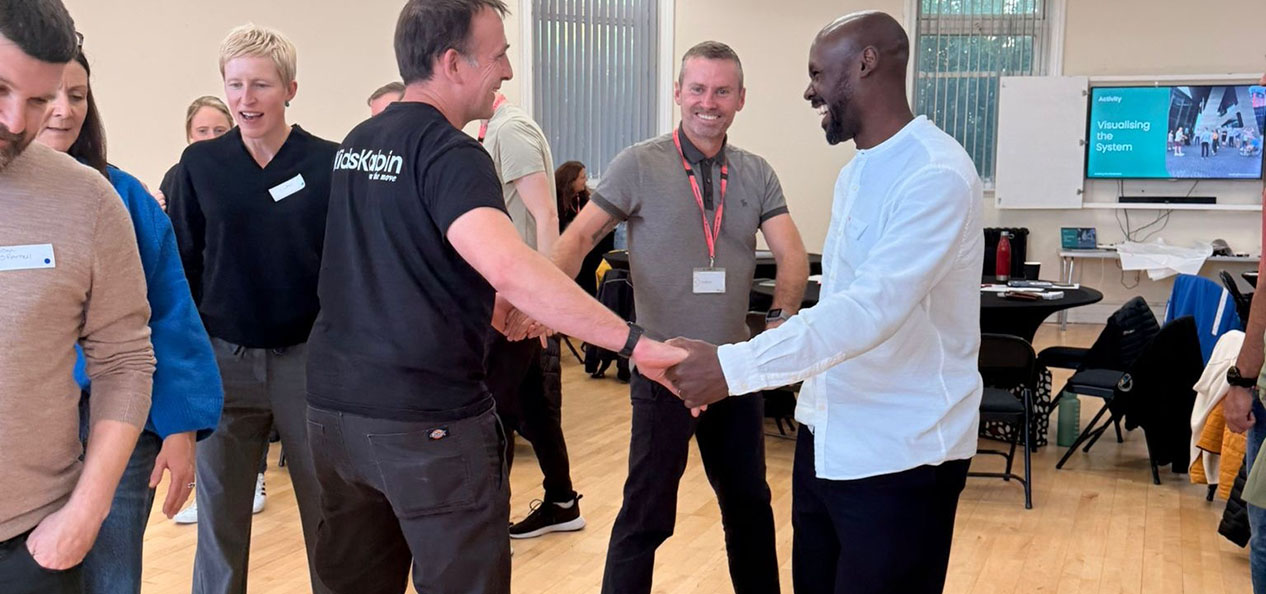
Three men smile and hold each other's hands as they go in circles in a room with a Leading the Movement presentation showing on a screen in the background.

Funded by the National Lottery through to 2029, the programme brings together previous leadership training and includes coaching and mentoring, place-based support, events and webinars.

It's an evolving offer to help meet leaders wherever they are in their journey.

The past 12 months in numbers 

The past year has flown by, but it's also seen us achieve some important milestones and we want to recognise all the people, organisations and partners who've driven this forward.

Some key achievements include:

But the real impact goes beyond the numbers – it’s how leaders across the sector are starting to build confidence, expand their networks and develop the skills needed to tackle complex challenges.
 

The programme is built on a simple belief – that leadership isn’t defined by anyone’s job title or seniority, but by people stepping up, working together and creating opportunities to make a difference.

Strengthening leadership where it matters most

We know strong local leadership is critical to addressing inequalities and physical inactivity.

Through the Place-based Leadership component of Leading the Movement, we’re working to support leaders with the skills, confidence and system-level insight to drive change in their communities.

Facilitated by a range of expert practitioners, these in-person, two-day workshops bring together local leaders from across the public, voluntary and private sectors, creating space to step back, connect and think about ways to work differently across systems.

Some of the results we’re starting to see from these sessions include:

  • participants consistently reporting stronger systems leadership and a better understanding of how change happens across complex environments
  • greater confidence to lead, influence and challenge the inequalities that drive inactivity
  • improved collaboration with stronger relationships and less silo working to support more active communities
  • real challenges with participants and organisations applying new approaches in their day-to-day work.

But just as important as these results is how this learning happens, because these aren’t just programmes where people sit and listen – they’re active and practical sessions designed to get people thinking, moving and engaging with each other.

Whether that’s through real-world scenarios, group problem-solving or time spent out in the place, the focus is on learning by doing.

That energy and openness creates space for honest conversations, new perspectives and stronger connections – all of which are key when tackling something as complex as physical inactivity.

Built by leaders, for leaders

A key principle of Leading the Movement is collaboration, with leaders helping to shape every part of the offer.

From co-designing and mentoring, to sharing stories and insights, this collective input is helping to create support that’s practical, relevant and grounded in the realities of the sector.

This is because, ultimately, Leading the Movement isn’t something we want to deliver to leaders – it’s something we create with them.

Looking ahead

Over the next year of Leading the Movement, our focus is on continuing to support and grow leadership across the sector by:

  • further diversifying our network of leaders
  • enabliong more peer-to-peer spaces for leaders to learn and grow alongside one another
  • hosting further informative events and discussions
  • creating and promoting more trusted resources to support leaders tackling inequalities
  • continuing to learn and improve, by listening to, and acting on, feedback and guidance from sector leaders, partners and the Co-Design Group.

Join the movement

If you’ve been part of Leading the Movement this year – thank you!

If not, there’s never been a better time to get involved and remember, whether you’re leading a team, a project, or simply bringing people together to make change happen, you’re a leader.

So if you’re interested, a great first step is exploring our offer, attending one of our webinars, joining the Leadership Community, or just dropping us a message to have a chat.

If you’re working to reduce inequalities in sport and physical activity, or supporting those who do, you’re already part of this movement, and we’d love to work with you as we grow and support the leaders driving change, now and for the future.
 

Find out more

Leading the Movement

One team. One power. One dream

To some, 'devolution' might sound like a dry constitutional tweak – another layer of governance, another reshuffling of power. 

In reality, it’s actually far more human and ultimately, it’s all about people.  

For us in Greater Manchester, devolution has always been about who gets to shape the conditions of everyday life and about enabling those closest to the challenges to also have the power to solve them.

This is what drives us to go further and deeper on our devolution journey.

Facing reality

Back in 2009, the Manchester Independent Economic Review set out two stark truths.

Firstly that if the city-region acted as one joined-up place, it had the potential to help re-balance the UK economy; and secondly, that poor health in the area was holding people back from participating in that growth.  

In some of our neighbourhoods, healthy life expectancy still differs by more than a decade and access to employment, housing, green space and opportunity remains uneven.

These problems are one and the same because health and wealth inequalities are deeply intertwined, and physical inactivity is at the heart of it, yet this isn’t a result of personal choice but a product of environment, policy, culture and design work.  

Movement and physical activity have often been engineered out of daily life, especially in communities facing the greatest disadvantage.

By 2015, when the first Greater Manchester Moving strategy – Blueprint for Change  was developed, the data was clear.

Where inequality was top level, inactivity was also the highest; and the costs – financial, social and human – were enormous.

A true change of tactics against inactivity

The price of inactivity was at least £27 million a year and far higher if you took into account the cost of long-term conditions, mental health, social isolation and the impact of exclusion.  

The response couldn’t be another short-term campaign or an isolated programme. The people of Greater Manchester deserved better.

We needed to reshape the whole system – from transport to planning, from health to education and from workplaces to public spaces.  

This meant a shift from blaming individuals for being inactive and unhealthy (indeed 55% of people in our city-region wanted to be more active), to redesigning the conditions that were shaping their behaviour.

Movement and physical activity have often been engineered out of daily life, especially in communities facing the greatest disadvantage.

Devolution in Greater Manchester, along with the support of key partners like Sport England, has made that kind of systemic change possible.

This approach has made it possible to have power over health, transport, housing and skills for the people and places they affect but, more importantly, it has enabled us to work differently. 

The way we work now is rooted in collaboration across ten boroughs, public services, communities and sectors. We are one team! 

In Greater Manchester, prior to devolution, we already had the foundations and had laid the groundwork for this approach as we have a history of cooperation that stretches back generations. 

Devolution accelerated that instinct and drive as it gave us the space and opportunity to align strategies, pool resources and focus on our shared mission of building a thriving city-region where everyone can live a good and active life. This is making a difference.

Evidence suggests that life expectancy has improved faster than expected since devolution, particularly in more deprived areas.  

Employment, school readiness and public health outcomes have all shown signs of progress.  

In terms of physical activity, Greater Manchester reduced inactivity at nearly three times the national rate before the pandemic and has since recovered more quickly.

The latest data shows that in Greater Manchester, 62.1% of adults are now considered active. This is the highest rate ever recorded and there is further progress too, with inactivity falling to 26.9%, down from 28.3%.

Data shows that activity levels for children and young people in Greater Manchester are also the highest they’ve been since the survey began in 2017 and, currently, 50.1% of those aged 5-16 are active for at least 60 minutes a day.

But inequalities remain, particularly for people living in more deprived areas, lower socio-economic groups and for some ethnic communities.

So, while this is encouraging progress, a continued focus is needed to enable active lives for all and to keep the MIER report front of mind.

Moving forward as one

These changes are the result of systems that are maturing, where there is better alignment between local and regional strategies, stronger partnerships, and growing trust across sectors.  

They also reflect a deep cultural change in leadership that drives everything we do.

Here, leadership is more than job titles and institutions – it’s relational, distributed and rooted in a shared purpose. 

Leadership seen in community groups is as important as that of boardrooms because, for us, it is about convening, listening and connecting. 

We are united by the same goal of helping people see how movement links to the issues they care about, from jobs and growth to mental health and climate.

Devolution supports us in this work, but it doesn’t guarantee it. Local power alone isn’t enough and mindsets, behaviours and relationships matter just as much.  

The instinct to collaborate doesn’t come from governance structures alone – it comes from people and that’s the real lesson here.

Whether a place has formal devolved powers or not, the fundamentals still apply and it all starts with a shared vision.  

We use a central community voice, work collaboratively across boundaries and build trust by aligning efforts around outcomes that matter.

Our journey in Greater Manchester’s is far from finished (we are only five years into our 10-year Active Lives for All strategy), but we are an example of what is possible when a place brings together its people, purpose and power. 

To my mind, devolution isn’t about redrawing maps. It’s about redesigning systems so that everyone – regardless of where they live – has a fair chance at a good life.

Preventing crime from the ring

Boxing is my religion. Like all spiritual journeys it began with a moment of divine inspiration and my baptism was conducted whilst watching Muhammed Ali defeat George Foreman in “The Rumble In The Jungle”.

I grew up in boxing gyms with the sport giving me purpose, discipline and titles – including representing my country on numerous occasions.

These days it offers me the chance to inspire the next generation of boxers and to help anyone who walks through the gym door, to believe in themselves and choose a positive path in life. 

When people ask me why boxing matters so much to me, my answer is simple: it changes and saves lives.

A safe space for all

Of course, it also improves health and builds confidence, but boxing keeps people – especially young people – away from anti-social behaviour and crime, something that I can personally verify as a former Youth Justice Manager. 

With the number of proven offences committed by children seeing an increase of 4%change has never been so important and there are many ways boxing helps fight crime.

Firstly, boxing gives young people structure and boundaries.

Many of the children and young people who walk through the doors of a boxing gym – like mine in Oldham, Greater Manchester – come from difficult backgrounds and have challenging lives. 

Having little or no access to opportunities and therefore a lack of agency in the world, may result in challenging behaviours. But not dealing with these pressures means they risk spilling out onto the streets and that’s where crime starts. 

Not because young people are 'bad', but because they have nowhere positive to pour their energy into. But boxing gyms can change that, as these spaces are built on discipline, respect, routine and team spirit.

Boxing gyms offer me the chance to inspire the next generation of boxers and anyone who walks through the gym door, to believe in themselves and choose a positive path in life.

You don’t just turn up to your gym whenever you feel like it. Instead, you’re expected to train on time, plus you have to listen to your coach, and you learn that effort leads to results and that shortcuts rarely work.

These lessons transfer directly into everyday life and children who understand discipline in a boxing gym are far less likely to make reckless decisions outside it.

Boxing also teaches emotional control, becasue contrary to what some may think, this sport helps a young person understand how to control their emotions, particularly aggression, and how to think and act under pressure.

I’ve seen it first hand – children who once lashed out can calm themselves because boxing gave them an outlet for their emotions and that allows them to thrive.

The many lessons of boxing

Boxing is a good metaphor for life and can help to develop those personal and social skills that people need, contributing to tackling deep seated worklessness and low aspirations.

The sport also fosters the development of positive character, self-esteem, self-discipline, courage, perseverance and resilience.

Instead of throwing punches on the street, they hit the pads, the bags and their coach or opponent inside the ring, but always with respect to the sport’s rules, under supervision and with a reason.

Boxing also teaches respect — for yourself and for others. You shake hands, you follow rules and you learn that real strength comes from self-control, not intimidation. These values reduce crime at its roots.

Another factor that's key is the sense of belonging among those practising the sport. A boxing gym offers identity and loyalty because, at a gym, you’re part of a team.

You train together, look out for each other and you wear the gym name with pride. That sense of identity can pull someone away from a path that leads to anti-social behaviour and crime.

I’ve seen boxing change lives in Oldham and Greater Manchester, where young people that were heading toward trouble now have focus and a reason to stay on the straight and narrow, and I’ve also seen young people who had no confidence, find self-belief.

Not all these children will become a champion boxer and that's okay.

Building better lives through sport

The real victories happen when a young person chooses to stay in school, can find a job or simply chooses not to commit a crime because they don’t want to let their gym or coach down.

At our newly refurbished Greater Manchester Boxing and Development Hub, we’ve been lucky enough to benefit from Sport England funding. 

To my mind, our investors aren’t just putting money into a boxing club and community gym. They’re investing in crime prevention and harm minimisation.

It costs less to fund a gym than it does to deal with the consequences of crime and anti-social behaviour policing, court cases, prison and reform  as recent estimates place the total economic and social cost of serious youth violence at £11 billion between 2009 and 2020.

For me, boxing is more than titles and trophies, it’s about giving people a chance.

Every time a young person chooses to walk into a gym and away from 'the road', I believe that’s crime prevention in action and that’s why boxing will always matter. 

As one of the 10 boroughs of Greater Manchester, Oldham forms part of Sport England’s Place Partnership with Greater Manchester Moving and other local bodies to implement Sport England's Uniting the Movement strategy for getting people active.

I’m proud of what boxing can do to change lives.

In the words of the iconic social activist, pacifist and politician, Nelson Mandela: “Sport can awaken hope where there was previously only despair.

Every day, I get to see the truth in these great words in action.
 

What kids really need

He wasn’t lazy. He was bright, funny and desperate to be out in the world. But his local park felt unsafe, the youth club had closed and the nearest sport sessions cost more than his family could spare.

By the time he came to my paediatric clinic, what looked like a 'health problem' – low mood, poor sleep, weight gain – was really a place problem.

Why local spaces are key

We often talk about children’s health as if it starts in the hospital or the GP surgery, but as I explored in my recent BBC Radio 4 series, Three Ages of Child, the real foundations of health are laid much earlier and elsewhere: in homes, schools, streets and parks – places where children feel they belong in their own areas.

Sport England’s latest place work and research puts into numbers what many of us see every day – like the fact that over half a million children, one in ten 12-17-year-olds, say they don’t feel they belong in their community.

This means that almost one in five don’t feel proud of where they live, often because there’s nowhere for young people to go to, and because of the worries about crime and antisocial behaviour.

Take a step back and look at how this paints a stark picture of children growing up in places that feel unsafe, unwelcoming and not really 'for them', so it’s no surprise that in those conditions activity levels are low and health problems multiply.

The same research also points to part of the answer.
 

We often talk about children’s health as if it starts in the hospital or the GP surgery, but the real foundations of health are laid much earlier and elsewhere: in homes, schools, streets and parks – places where children feel they belong in their own areas.

When asked what gives them a sense of community – beyond friends and family – the top answer from young people was sports clubs and activity groups.

Anyone who has ever watched a child beam with pride after football training or a dance class knows why: a club is not just about exercise; it’s about belonging.

It offers a safe place to go with people who know your name and that offers the chance to be part of a team.

Dangers of the postcode lottery

But access to those opportunities is deeply unequal.

In England’s most deprived places, over a third of people are inactive, compared to around a fifth in the least deprived areas – a postcode lottery for physical activity that deepens health inequalities.

As a paediatrician, I see every day that a child’s postcode can be a stronger predictor of their health than their genetic code.

When local streets feel unsafe, there’s nowhere affordable to go and young people don’t feel they belong, it shows up in their bodies and in their minds.

If we care about the future of public health, we have to turn our thinking on its head, because health isn’t built in hospitals. It’s built in communities.

Exercise and sport are a kind of miracle cure – for health, wealth and happiness – but only if everyone can actually take part.

According to research by Sport England, every pound spent on community sport and activity brings multiple pounds back in benefits to health, wellbeing and the wider economy.

That’s why I welcome efforts to work in a genuinely place-based way – including Sport England’s commitment to invest in the areas facing the greatest challenges.

But beyond the work of any single organisation, the principle stays: you can’t fix place-based problems with purely top-down solutions.

Making children proud

For me, this is what it looks like to move from treating symptoms to changing systems.

You can’t lecture a child into feeling proud of their area or prescribe their way out of a broken play park.

But you can bring together the people who know that place best – including children and young people themselves – and invest in the spaces, clubs and connections that allow them to move, play and belong.

That means co-production, not just consultation: listening to what families say they need, backing trusted local organisations, designing activities that reflect different cultures, bodies and lives and being in it for the long haul.

Our children are telling us they want to feel proud of where they live and that they want to be part of something bigger.

Working locally, listening deeply and backing places over the long term is how we start to make that real – street by street, pitch by pitch, park by park.
 

Find out more

Place Partnerships

Making physical activity fun for all

At Get Doncaster Moving (GDM) we have a mission: to support the youngest in our society and their families to be as active as possible, because the benefits of moving are something that will accompany them for the rest of their lives.

It is with that mission in mind that across Doncaster, partners within our network are working together to create the conditions to help children, young people and their families build healthier, more active lives.

Through a place-based approach, the network is enabling innovative programmes, unlocking new partnerships and supporting communities to develop sustainable activity habits.

This is something we’ve undertaken as a long-term mission.

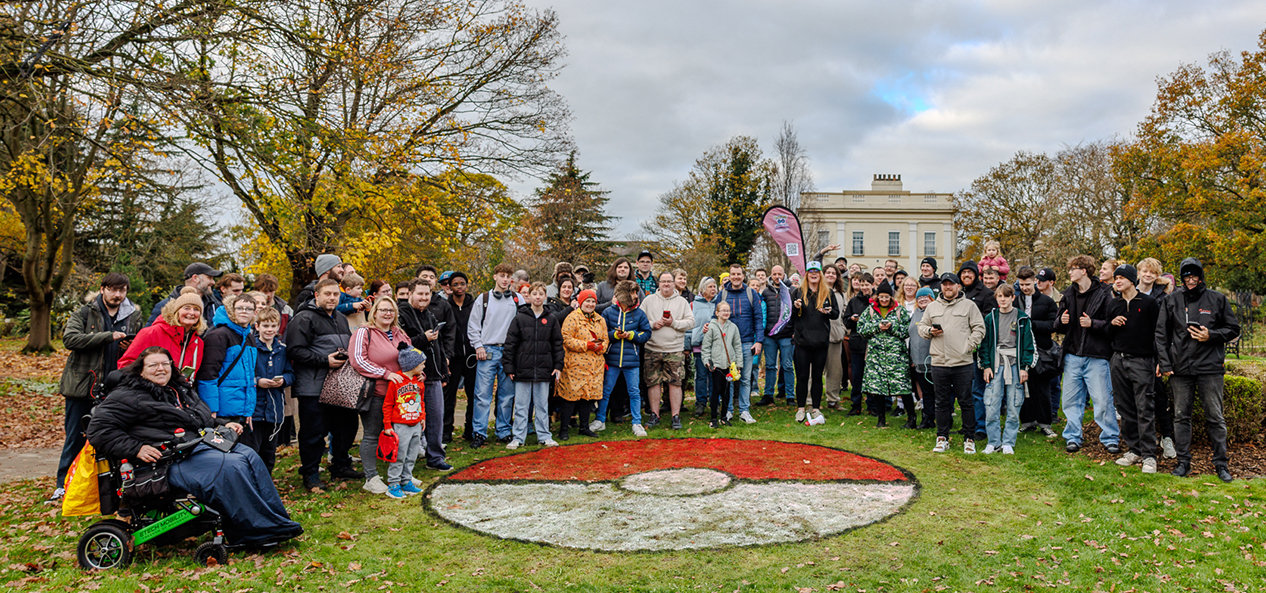
A group of poeple pose around a Pokemon ball that's been painted on park's floor.


Thinking outside the pitch

Reflecting on the past year, there are some stand out examples of how innovative partnerships have been the key driver behind GDM’s work to support children and young people – and their families – to move more.

Firstly, we’ve been developing new outdoor experiences to help children and families connect with local parks in different ways.

For example, GDM’s partnership with Enigma.Rooms introduced interactive digital trail games in parks across the city that engaged new and younger audiences through fun problem-solving and exploration.

The initiative was a success and contributed to Hexthorpe Park receiving the national ‘Green Space Innovation Award’ in 2025.

Then in November, and thanks to the efforts of the local Pokémon community, Doncaster was selected to host a Pokémon GO: Community Celebration event (the first place in Europe be chosen!), attracting thousands of local players and visitors.

The trails across two major parks showcased Doncaster’s green spaces while promoting movement through play.

Through a place-based approach, the network is enabling innovative programmes, unlocking new partnerships and supporting communities to develop sustainable activity habits.

GDM is continuing its work with local Pokémon Go group ‘Raiding Doncaster and beyond’ to grow this welcoming, inter-generational walking and gaming community, and encouraging new players to engage in this family-friendly activity, and to move more – particularly within Doncaster’s parks and green spaces.  

Trying something new

In sport, the ‘Free Park Tennis’ initiative started a couple of years ago in a local park to expand opportunities for children and families.

Resident volunteers have been trained as Free Park Tennis Activators to deliver free, weekly sessions to the community in two Doncaster parks, which led to one park being awarded ‘Park Venue of the Year’ by Yorkshire Tennis.

Our most recent park venue to host Free Park Tennis sessions, Haslam Park, which started in May this year, has already seen 369 attendances, with four local volunteers upskilled to deliver the weekly sessions.

This has been a fantastic opportunity for people to come along and 'have a go' at tennis in a relaxed and social setting, and it has been very popular with both children and families.

Doncaster’s place-based model played a key role in connecting partners and enabling the Active Start initiative, a programme designed for staff working with children aged 2–5.

Active Start is led by Yorkshire Sport Foundation, working in partnership with, and funded by, the South Yorkshire Integrated Care Board's Children and Young People’s Alliance. Their latest Impact Report: Giving children an Active Start is full of learnings and data.

This information is key to the training and resources they provide to early years professionals to help embed movement and active play throughout everyday learning.

This approach not only supports physical development but also communication efforts, social skills and school readiness, giving children the strongest start in life.

Doncaster’s Public Health and Early Years teams have trained as tutors, offering one-on-one support, continuing professional development opportunities and resources to nurseries, schools, childminders and all 12 family hubs, which are places for families to go within their communities to access groups and support.

Many settings have already taken part in centralised training and are now better equipped to encourage movement in class and at home.

But this is not all, because work will continue into the 2025/26 academic year as the programme develops further across South Yorkshire.          

Looking ahead, shifting the dial on children’s engagement in activity will require continued place-based collaboration.

Sustained shared learning, creativity and innovation – alongside a connected, empowered GDM network – will help Doncaster’s young people to move more, play more and thrive.

Find out more and connect with us

Building on what we’re learning

In February I wrote a blog sharing our first Learning Synthesis Report, which gave a snapshot of how Sport England's System Partner investment is helping organisations across the country tackle inequalities and transform how people access sport and physical activity.

That initial report, produced by Ipsos, NPC and Sheffield Hallam University, highlighted different aspects within the sector and Sport England:

  • There is an ongoing shift from transactional relationships to more open, trusting partnerships with a more diverse range of stakeholders.
  • Identifying and engaging local champions can accelerate system change as these often hold the keys to unlocking new opportunities and relationships.
  • There are ongoing challenges where qualitative data is not valued as it is difficult to track and evaluate over time.
  • It is challenging to embed evaluation and learning into our work, and barriers like language, staff turnover, strategic planning and the complexity of demonstrating impact are very real.

Why this matters

As we reach the half-way point of our long-term strategy, Uniting the Movement, it’s vital that we reflect honestly on what’s working, where progress is happening and what barriers still stand in our way.

That’s why we’re sharing this second round of learning, which is based on extensive interviews, workshops and feedback from more than 130 system partners.

How this new report builds on the first

The original synthesis captured the foundations: diverse partners, new ways of working and the initial cultural shift towards greater collaboration and shared purpose.

This new report, which you can download below, shows how those ideas are taking root and where more focus is needed.

It also provides a clearer picture of how different organisations are playing unique roles – as connectors, deliverers, influencers or governance improvers – all contributing to system change.

As we reach the halfway point of our long-term strategy, Uniting the Movement, it’s vital that we reflect honestly on what’s working, where progress is happening and what barriers still stand in our way.

What are we learning?

There are different lessons that have come up from our research:

  • A diverse portfolio of partners playing different roles: No single organisation can change the system alone. System Partners are taking on roles such as improving governance and Equality, Diversity and Inclusion (EDI), influencing policy and local decisions, delivering programmes to underrepresented communities and connecting local networks – all working together to drive system-wide change.
  • Capacity remains a key challenge: many System Partners, especially smaller organisations, are telling us that their staff and volunteers' capacity is stretched. This can limit their ability to collaborate, deliver on compliance requirements and influence wider system change. Building stronger partnerships and investing in people is helping tackle this but it will need ongoing focus.
  • Delivery funding pressures are real: even with Sport England’s investment, partners face funding constraints that limit their ability to deliver activities in communities. Rising costs, limited local authority budgets and competing priorities mean that generating strong evidence and insights to influence other funders is becoming increasingly important.
  • Culture change takes time: shifting mindsets and ways of working to fully realise the vision of Uniting the Movement isn’t quick. System Partners are seeing the benefits of having time and space to innovate and build the right skills but changes in politics and performance expectations can slow their progress. That’s why ongoing support for organisations to recruit, develop and embed new ways of working is vital.
  • Consistency and coordination matter: partners report that inconsistent ways of working across Sport England teams can lead to duplication, extra workload and missed opportunities for collaboration. Clearer, more joined-up processes will help everyone work better together and make the most of Sport England investments.

Looking ahead and building on our learnings

The report contains recommendations for Sport England and questions for System Partners (overall and with different roles influencing, delivery, connector).

Sport England should commit to improving consistency, supporting partners in their distinct roles and keeping the focus on long-term, systemic change.

Over three years into our five-year, more than £600million investment in System Partners, we’re seeing the difference this collective effort can make across the system.

And here’s what we’ll do next:

  • Keep listening and adapting by using insight from the evaluation to refine how we support, fund and connect partners.
  • Back system enablers by investing in people and organisations that help others collaborate, learn and grow.
  • Improve how we convene by making our events, communications and shared spaces more purposeful and coordinated.
  • Act on feedback by being open about where we can do better and using your insights to improve our role.
  • Stay focused on system-wide impact by keeping the long-term view in mind as we plan for the next funding cycle and beyond.

Some considerations for partners are:

  • We ask all partners to continue sharing evidence of impact especially where it aligns with Uniting the Movement through their evaluation and reporting. This will be vital as our ability to demonstrate the value of working in this way and having compelling evidence and insight to support our shared mission and vision continues to be key.
  • Encourage partner-led collaboration  we ask all partners to create new, and continue existing, collaboration and to deepen the way they work with others, creating shared spaces and goals on the things that matter most and sharing their learnings around with other partners.

Why this matters to us all

Together, these insights reinforce the belief that transforming access to sport and physical activity isn’t just about delivery – it’s about culture, partnerships and everyone playing their part in the system.

We hope this report prompts reflection, sparks ideas and encourages all of us to keep challenging ourselves to do better for the communities we serve.

If you’d like to read more or share your thoughts, please get in touch.

We’d love to hear from you.
 

Find out more

Current evaluations

A welcome new approach to school sport

The Prime Minister has announced a bold new vision for school sport, introducing plans for new School Sport Partnerships and an Enrichment Framework.

The announcement also sets a clear commitment for equal access and the protection of two hours of high-quality physical education for every child each week, along with the introduction of new ‘sport profiles’ that outline each school’s sport and enrichment provision.

We welcome this announcement as the latest Active Lives Children and Young People Survey Report highlights persistent and significant challenges in how children and young people engage with sport and physical activity, reinforcing the urgent need for more inclusive, youth-led and enjoyable movement experiences:

  • Fewer than half of children meet the Chief Medical Officer’s Physical Activity Guidelines.
  • Only 49% of children strongly agree that they enjoy being active.
  • Government guidelines recommend that children and young people achieve 30 minutes of physical activity during the school day, and 30 minutes outside of school. However, our research indicates that only 45% of children meet this target during school hours and just 56% meet it outside of school, with participation levels varying significantly across different demographic groups.
  • For some young people, school is their only opportunity to experience the benefits and enjoyment that sport and physical activity can bring in these formative years.

The announcement sets out a clear strategic vision that will benefit generations to come.

We welcome this announcement as the latest Active Lives Children and Young People Survey Report highlights persistent and significant challenges in how children and young people engage with sport and physical activity.

Given the strong link between physical activity and improved whole-school outcomes – from embedding essential life skills to broadening horizons and helping young people build a positive, lifelong relationship with movement – we support plans for this more concerted effort around the school sport agenda.

The announcement builds on the work the government is already doing with partners including the Youth Sport Trust and ourselves to boost participation, having already invested £100m to upgrade sports facilities back in March this year.

We strongly believe that this new approach to school sport should build on the existing strengths, assets, and resources of the current school sport system.

We look forward to working with government to bring this new approach to life, sharing the insights from the recent School Games Organisers Network Review (whose Objective A report will be published towards the end of the month), shaped by the contributions and time of many colleagues across the school sport landscape.

You've viewed of items.