Skip to content

Taxonomy term

Content type

Breaking barriers for deaf sport

Growing up as the only deaf person in my family, sport became my escape from the loneliness and isolation I often felt at home and at school, because constantly second-guessing conversations and struggling to keep up takes a toll.

But sport gave me freedom and a way to let go of all that frustration.

It all started with swimming. In the water I found my own bubble of silence. No worrying about misheard words or asking people to repeat themselves – just me, the lane and a sense of independence.

That feeling is something every child should have, but for many deaf children the chance to experience it simply isn’t there.

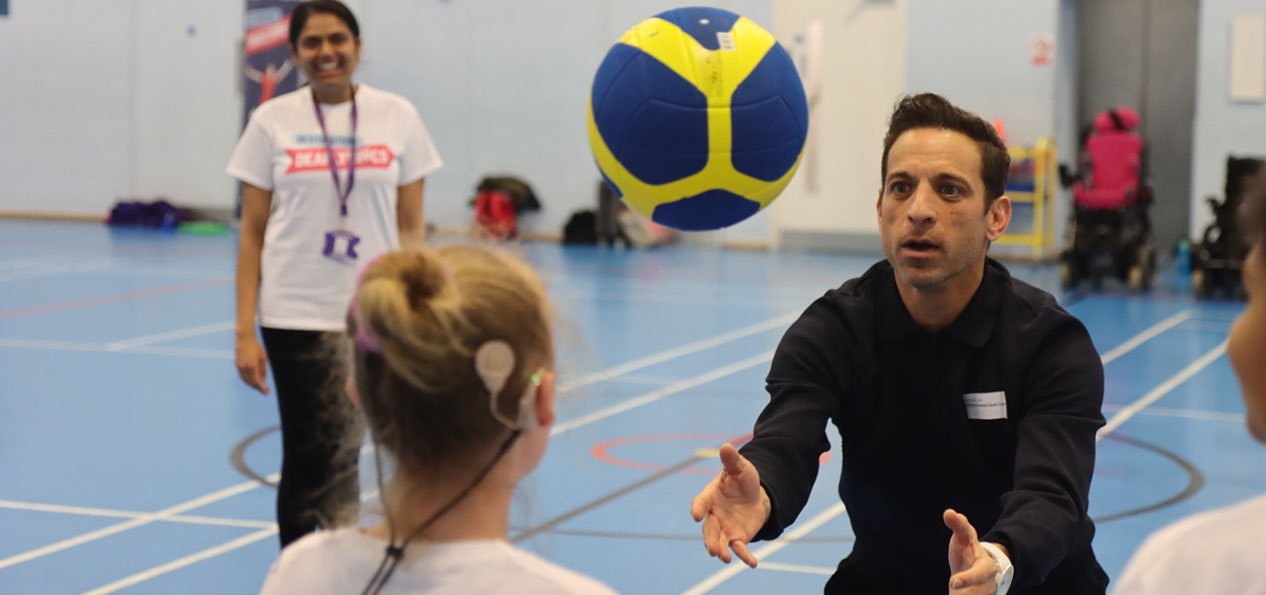
A girl wearing a hearing device passes a ball with a coach on an indoors court under the supervision a woman holding a folder.

The reality we don’t talk about enough

Deafness is often called 'the forgotten disability' and it’s easy to see why.

According to data by the National Deaf Children’s Society there are more than 18 million deaf and hard of hearing people in the UK, including 54,000 children, yet the challenges they face go far beyond communication.

Social isolation is common and that often leads to mental health struggles and inactivity.

The results of Sport England’s Active Lives Surveys painted a stark picture:

  • 51% of deaf adults are inactive, compared to 20% of non-disabled adults
  • 38% of inactive deaf adults don’t take part in sport at all, compared to 10% of inactive non-disabled adults
  • among less active children, 36% of deaf children do no activity at all, compared to 27% of non-disabled children.

These numbers support why tackling inequalities isn’t just a nice idea – it’s essential – and it’s exactly what Sport England’s strategy is all about.

There are more than 18 million deaf and hard of hearing people in the UK, including 54,000 children, yet the challenges they face go far beyond communication.

Destination Deaflympics: turning inspiration into action

In 2025, we launched Destination Deaflympics, a programme for 8-16-year-olds inspired by the Tokyo 2025 Deaflympics.

For us it’s all about giving young people the chance to try fun, inclusive activities and closing the gap between deaf children and their hearing peers.

So far we’ve reached 3,500 deaf and hard of hearing children across 175 settings and, along the way, we’ve learned a lot about the barriers they face, like the lack of accessible community provision or coaches who don't know how to deliver inclusive sessions.

That’s why we’re working with partners like the British Association of Teachers of Deaf Children and Young People to make sure deaf children get their recommended 60 minutes of activity every day.

This work has seen great success in the education sector with teachers sharing that by taking part in Destination Deaflympics, they are also seeing benefits in the classroom with students being more focused and ready to learn.

Role models who make a difference

The Deaflympics celebrated its 100th anniversary in 2024 and the Tokyo Games was an event like no other.

The GB team brought home 12 medals, finishing 12th out of 80 nations, but its impact went way beyond the results.

These athletes are key role models who showed what’s possible and inspired the next generation of Deaf sport men and women.

Before the Games, one of our swimmers spent a day with deaf schoolchildren in Greater Manchester sparking excitement and ambition that will last a lifetime.

Why this matters for Sport England’s vision

Everything we’re doing supports Sport England's long-term strategy, Uniting the Movement. We're talking about things like:

  • tackling inequalities by addressing the participation gap in sport for deaf people
  • creating inclusive environments through coach education and community partnerships
  • improving mental wellbeing by using sport to combat isolation
  • building role models who inspire young people to dream big.

Sport should be for everyone and that’s why, by breaking down barriers and creating opportunities, we’re not just changing lives – we’re helping deliver Sport England’s vision of a fair, inclusive and active nation.

Find out more

UK Deaf Sport

The changing-climate threat

I can’t wait for the Commonwealth Games, which this year will be held in Glasgow at the end of July, and to the much-needed uplifting news and excitement they’ll bring us.

The games are an opportunity for athletes from across the Commonwealth to compete at the highest level and for people everywhere to enjoy the spectacle, which will extend over 11 days of sport and festivities.

But among all the excitement we can't forget that for some of the athletes, actually getting to the point of competing has been tough and the effects on their training by climate change means it’s only getting tougher.

The dangers of acute weather conditions 

For instance, on the Maldives, sea-level rise is a real problem with saltwater encroaching on facilities and extreme weather stopping play, whereas in India it’s simply too hot to train in the summer, so its athletes must live and train elsewhere if they want to compete.

For those still unsure about the impact of climate change on sport, it’s worth attending a screening of the National Emergency Briefing and having a look at The Well-Adapted UK report, as both documents warn us about the importance of preparing for new temperatures, extreme rainfall and the changing of the seasons.

Sport and physical activity are threatened by a changing climate, not just at elite level but at grassroots level too.

As winters become wetter we are seeing pitches and courts flooded with increasing frequency, leaving them unusable for any training, competition or enjoyment.

Conflict elsewhere is another factor affecting our sector, as it’s leading to wildly fluctuating energy prices that threaten the clubs and sports organisations’ ability to keep the lights and heat on in the facilities, something that particularly affects swimming pools.

And as we approach the summer we'll see how extreme heat is increasingly going to be a key threat, particularly for disabled people, the elderly or those with a long-term health condition.

Plus for those living in densely-populated areas, the lack of shading will deter people from taking exercise as it’s hard for many to be active when the heat makes you ill.

Sport and physical activity are threatened by a changing climate, not just at elite level but at grassroots level too.

Given that during the Covid pandemic physical activity was one of the few legitimate reasons we were allowed to leave our homes – along with essential shopping, medical needs and travel to work for key workers - it is clear how important exercise is to individuals and to any nation.

That realisation has become an accelerator for action and it’s encouraging that we are starting to work on measures to reduce our impact on the environment, to stop climate change getting any worse, and – just as importantly – to plan for the future.

Here at Sport England we are developing a report, which should be available by late summer, looking at the hazards caused to sport and physical activity by a changing climate.

But while there’s still work that needs to be done, it’s reassuring that people are considering climate change and that we’re are already taking action. 

This is only a first step because we know we need to understand how this will vary across the country, how it’ll affect different activities and – perhaps more importantly – how different people and communities will behave in more extreme weather conditions. 

The King's Baton Relay

I could see this when I visited Malmesbury Bowls Club earlier this month as part of the King’s Baton Relay, which sees delegates of the 74 competing nations and territories travel across their home lands before finishing at the host city of the Commonwealth Games, Glasgow. 

I was there with Sally-Ann Lewis-Wall, representing Team England in para-bowls at the Games, and with TV presenter Radzi Chinyanganya, to hear about the importance of sport at both elite and grassroots level being more sustainable and preparing for the future.

It was great seeing the work done, supported by our Movement Fund, to install an artificial green and then restore it when it was damaged by severe flooding last year.

The bowls club are working with others in the area to take a wider look at the flooding issue.

They have identified tree-planting and other nature-based solutions upstream to slow the flow of water to the town to enable play to continue, meaning that the members of the club will be able to keep enjoying the exercise and the good company. 

It is with thousands of these small actions across England and the Commonwealth that we can ensure we’ll all be able to keep enjoying sport and activity now and into the future.

Every little win against climate change counts and I, for one, will be watching the Games closely and listening out for other inspirational projects.

Dancing against dementia

I co-founded Dementia Disco back in 2019 along with my brother Nick and our friend Phil as we all shared the heartbreak of watching family members live with this terrible condition. 

Mine and Nick’s dad was diagnosed with Alzheimer’s at just 66 and while local support groups used music, they often played songs from the 1940s and 50s that meant very little to a man born in 1950 and who grew up loving the 60s and 70s.

Meanwhile, Phil watched her independent, piano-playing gran quickly fade due to vascular dementia, realising that losing someone to this condition means losing them twice.

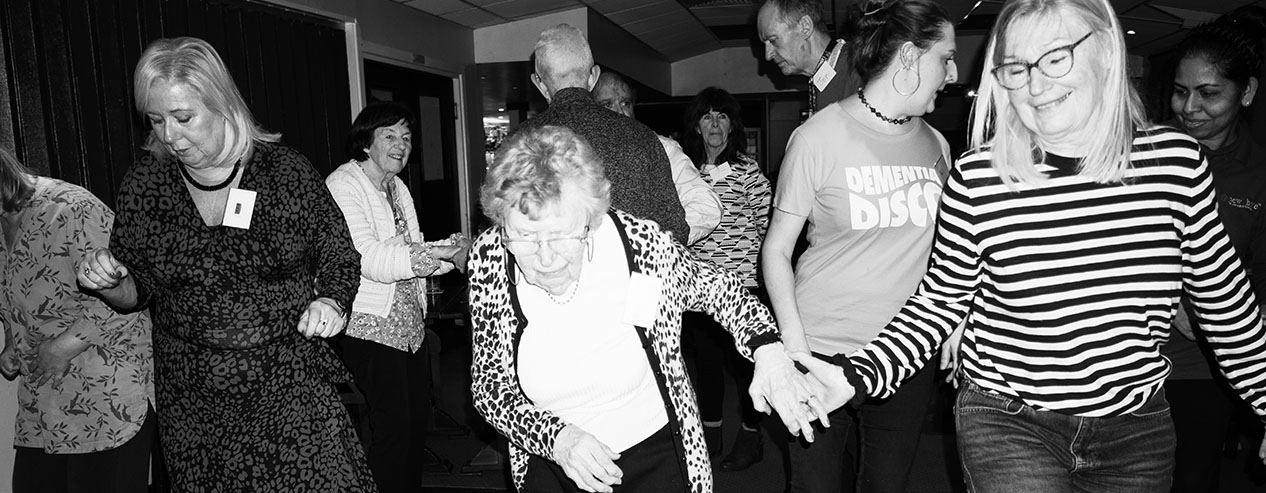
Men and women of different ages smile as they dance indoors.

Reaching beyond with music

Determined to create a space where people could connect with the memories of who their loved ones truly are, we launched Dementia Disco. 

Our project filled a vital community gap by hosting free weekend discos playing iconic music that resonated with younger people living with dementia, but also allowing multiple generations to dance together, while giving carers a well-deserved rest. 

We now have eight monthly discos nationwide, reaching as far as London in the South to Northumberland in the North, and with five more in the pipeline. 

We also bring our discos into care homes across the North West and are branching out in Northumberland. 

There's a moment at our Dementia Disco sessions that never fails to send shivers down your spine.

It happens when a familiar song starts to play and, suddenly, the room transforms.

We have watched music and dancing unlock communication where words have failed, and to restore lost confidence and dramatically lift the moods of people living with dementia, their carers and their families.  

Music has an extraordinary power because it bypasses the cognitive barriers of dementia and taps straight into emotion and memory.

However, while our regular community discos bring immense joy, we quickly noticed a bittersweet challenge – the profound benefits were limited to the days we met. But what about the rest of the week? 

Our project filled a vital community gap by hosting free weekend discos playing iconic music that resonated with younger people living with dementia, but also allowing multiple generations to dance together and giving carers a well-deserved rest. 

We wanted to give our community, of over 400 disco-goers, access to daily engagement while providing care homes with accessible, repeatable physical activity resources.  

This purpose lead us to asking ourselves a key question: how do we take that magical, weekly disco energy and turn it into a simple, life-changing daily habit?  

The hidden danger: tackling falls 

The answer became urgent when we looked at one of the most serious health risks facing people with dementia: falls.

Falls are the leading cause of emergency hospital admissions for older people, costing the NHS £2.3 billion annually, and they drastically accelerate the loss of independence.

Because of a fear of falling, many people with dementia become less active, but this only makes them weaker and more vulnerable.  

We wanted to break this cycle by embedding clinically-proven strength and balance exercises into joyful, familiar dance routines.  

Where science meets boogie

Thanks to the support from the Sport England Movement Fund, that dream is now a reality and we have teamed up with the brilliant Ailsa McPhee and her project, The Daily Dance, to co-create 240 brand-new dance videos over the next 12 months.  

The opportunity here is massive, because we’re not just making dance videos – we are transforming clinical therapy into a daily celebration.  

To ensure the highest physical impact, we have partnered with KOKU Health Ltd, a University of Manchester spinout.

Endorsed by Prof Emma Stanmore and Dr Jaheeda Gangannagaripalli, our routines seamlessly integrate the university's award-winning, evidence-based falls-prevention exercises, as decades of research prove these movements can reduce falls by up to 42%.

This all comes to life with Ailsa as she beautifully weaves these targeted balance and strength movements into high-energy, themed choreography sets to well-known songs.

Participants get the medical benefits of a specialised falls-prevention programme, but to them, it just feels like having a brilliant boogie.  

Turn on Dementia Disco TV 

This week is Dementia Action Week and while it's key to celebrate, we want to make daily physical activity achievable for everyone and everywhere, so all our 240 videos are being hosted directly on our brand-new digital hub, Dementia Disco TV.

Whether it’s a short warm-up before breakfast at home, a midday mood-booster with a family member, or a group session in a care home, these routines are free, evergreen, and designed to be easily woven into any daily schedule. 

Over the next year, we will be exploring different dance styles, seasonal themes (from summer holidays to Christmas), and fun costumes to keep our dancers inspired and connected all year round.  

We are incredibly grateful to Sport England and the National Lottery players for making this project possible, because combining emotional engagement with robust health science, we’re not just helping people stay active – we are giving them the confidence, strength and joy to live their lives to the fullest, one dance step at a time.  

More than a walk

If you’ve ever wondered whether a simple walk can really make a difference to someone’s life, the answer from our Somerset Health Walks community is a huge ‘yes’.

Over the past year, we’ve been gathering feedback from over 3,000 of our individual walkers and over 180 volunteers to better understand the impact that our Health Walks programme is having across Somerset.

But while the statistics are important, it’s the personal stories and comments that really bring everything to life – and honestly, they’ve been some incredibly moving tales to read.

One thing that shines through again and again is how welcoming and inclusive our walks feel.

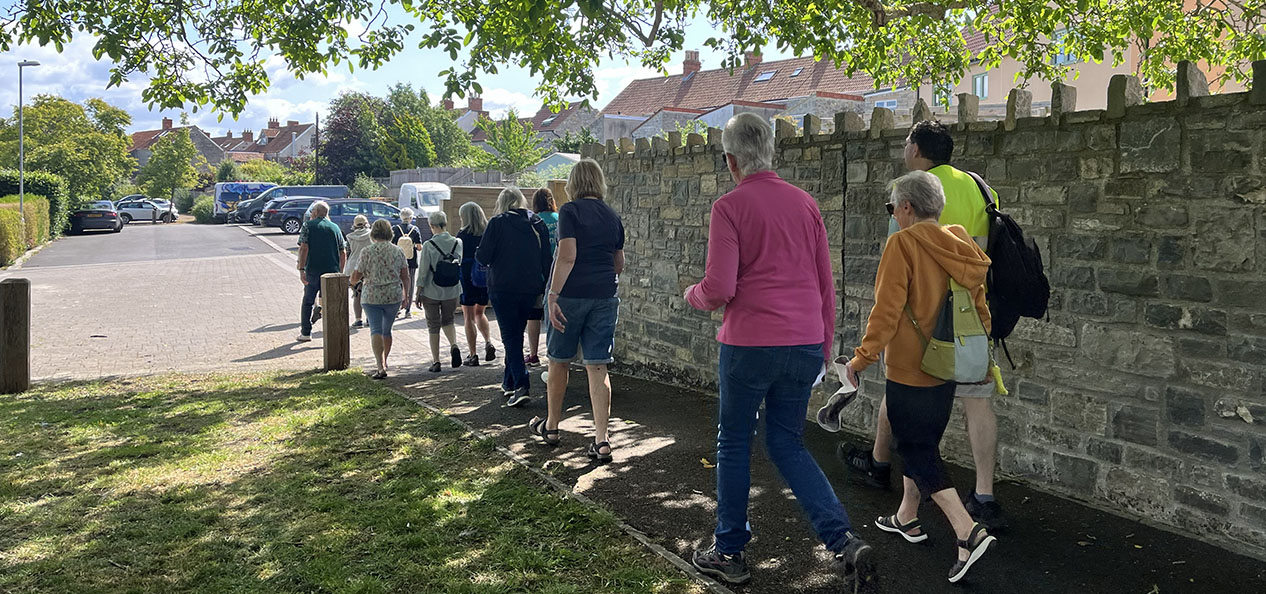
A group of people walk in smalls groups on the street on a sunny day.

The power of walking together

People consistently describe the groups as friendly, supportive and completely non-judgemental – something we’re really proud of.

For many, joining a walking group can feel daunting at first.

Some are managing long-term health conditions, some haven’t exercised in years and others simply feel nervous about turning up alone.

But walkers told us they value the fact there’s “absolutely no pressure to participate”, that “nobody gets left behind” and that this culture of kindness matters as, for many walkers, these weekly meetings have become an important part of their life.

Why? Because these strolls aren’t just about steps or fitness levels – they’re about motivation, connection and about creating healthy habits that last. 

Many walkers told us the groups help them feel part of a community, especially those who live alone or are new to an area and that sense of belonging is incredibly powerful.

This is because what starts as a walk often evolves into grabbing an after-walk coffee, with chats that make those encounters become friendships that then turn into support networks. People arrive as strangers and quickly become familiar faces to one another.

Of course, there are physical benefits too – and they’re significant.

Good for body and mind

Among walkers with long-term health conditions, many reported improvements in overall fitness, mood, mobility and wellbeing after taking part regularly.

We also saw encouraging signs that people are becoming more active overall, including doing more balance and strength activities.

But again, it’s the way people describe those changes that really matters.

They say things like: "The whole experience makes me feel healthier and happier", "[walking] keeps us fit, mentally and physically!" or "I feel so much happier when I have been on my health walk."

These comments perfectly sum up why programmes like this are so important.

These strolls aren’t just about steps or fitness levels – they’re about motivation, connection and about creating healthy habits that last. 

Another lovely theme that emerged was people reconnecting with their local area.

Walkers told us they’d discovered footpaths, countryside routes and places they never knew existed.

Enjoying our local spaces

Others spoke about the joy of being outdoors in all seasons – being out in fresh air, nature, muddy boots and all – plus the recent study by Current Psychology confirms that walking in natural environments significantly improves mental wellbeing.

As always, we’ve also listened carefully to suggestions and feedback, and over the past year we’ve introduced more walks in different locations, added clearer meeting point information and improved details on our website to make walks easier to access.

Walking is a favourite activity for many people and why wouldn’t it be here in our beautiful county?

It’s important to us that Somerset Health Walks continues to grow and evolve with the needs of our community. That’s what working in Place is all about.

The investment from Sport England is important, but working in this way has only been made possible by our incredible volunteers and walk leaders.

The warmth, professionalism and care they bring every single week is what makes these walks so special.

And, of course, the walkers themselves. They are what make this community what it is and why we carry on working together in this way. See you on the next walk!

Find out more

Somerset Health Walks

You've viewed of items.