Skip to content

Taxonomy term

Content type

Together in action

Mental Health Awareness Week (MHAW) is here and this year we’re focusing on taking action to protect and improve our mental health.

But to make a meaningful change we need other people, as actions taken with others have a bigger impact on our mental health and are more sustainable.

That’s why we’re delighted to be partnering with Sport England for a third year, continuing our shared commitment to championing movement, community and having fun as a powerful boost for mental wellbeing.

The link between movement and wellbeing

Our partnership with Sport England has helped us reach organisations and grassroots sports groups across England, bringing them into MHAW and shining a light on the vital role they play in supporting mental health.

As part of the campaign, local clubs, community groups and physical activity organisations have been able to showcase the work they do and how sport and movement helps people feel connected, supported and mentally well, as well as inspire people to take part and feel the benefits of being active. 

This year the theme of MHAW is ‘Action’ and we’re encouraging people to move in order to support good mental health for themselves, for someone else and for the community. 

Every person can do something about prioritising and managing their mental health – the key is moving from auto-pilot to recognising what is not working and to developing a plan accordingly. 

We’re delighted to be partnering with Sport England for a third year, continuing our shared commitment to championing movement, community and having fun as a powerful boost for mental wellbeing.

Ultimately, action can look different for everyone – for me, it is running. This is an activity that gets me in nature, helps me process emotions and to build my self-esteem.

For you, however, it might be reaching out to a friend, making time for a walk, joining a local activity, or creating spaces where people feel welcome, included and able to talk about how they’re really feeling.

Through our partnership with Sport England, we highlight how participating in physical activity, particularly with others, can be a powerful and practical action that people can take for their mental wellbeing and not just during MHAW, but all year round.

Connecting through physical activity 

Local sports clubs, physical activity providers and community organisations are often trusted spaces, rooted in relationships and shared experiences.

That also makes them uniquely placed to notice when someone is struggling, able to offer connection and help by providing opportunities for people to build routine, confidence and a sense of belonging.

We know that many people face barriers to being active.

These could be related to cost, disability, long-term health conditions, caring responsibilities or even experiences of exclusion and stigma.

But Sport England and its partner organisations are committed to inclusion and supporting people to overcome any challenges they face. 

This could be by offering flexible, free or inexpensive sessions, non-competitive options, welcoming environments and a focus on enjoyment rather than performance.

When movement is framed as something supportive and human, rather than something to be achieved or perfected, more people can take part and benefit.

The evidence is clear that being physically active can support mental health, helping to reduce feelings of stress and anxiety, and to improve mood and sleep.

But what we hear from communities again and again is that it’s the combination of movement and connection that really matters.

Showing up together, being greeted by name, or sharing progress or challenges are small gestures that can turn into powerful remedies against loneliness and isolation.

MHAW is also an opportunity for organisations to take action internally.

Coaches, volunteers and session leaders often play an informal but important role in people’s lives, so supporting them with training, resources and confidence to have conversations about mental health can help build safer and more compassionate spaces.

But encouraging rest, balance and wellbeing within organisations is just as important as supporting participants.

Supporting long-term positive change

This year, we’re asking people to think about how action can be sustained beyond a single week.

Taking action for our mental health isn’t about doing everything at once – it’s about making realistic changes that fit into everyday life.

That might mean protecting time to move regularly, checking in on someone who hasn’t been around for a while, or advocating for inclusive opportunities in your local area, because small actions taken consistently, can create meaningful change.

As we celebrate MHAW, we’re inviting sports and physical activity organisations to get involved, share what they’re doing and be proud of the role they play.

By amplifying these stories, we can the help more people see that support for mental health exists in many different places, including those they already trust and enjoy.

For individuals there’s no expectation to push harder or do more, because taking action might simply mean doing something gentle, sociable or familiar, so choose whatever helps you feel a little steadier, calmer or more connected.

Looking ahead, we’re proud of what this partnership with Sport England has achieved so far, and we’re motivated by what’s still possible.

Mental health challenges remain widespread and many people continue to navigate pressure, uncertainty and inequality.

By working across sectors and communities, we can help ensure that action on mental health is practical, inclusive and rooted in everyday life.

Together, we’ll continue to champion movement as one of many actions that can help protect and improve mental health, because when we move together, support one another and take action collectively, we can build healthier and more connected communities for all.

Preventing crime from the ring

Boxing is my religion. Like all spiritual journeys it began with a moment of divine inspiration and my baptism was conducted whilst watching Muhammed Ali defeat George Foreman in “The Rumble In The Jungle”.

I grew up in boxing gyms with the sport giving me purpose, discipline and titles – including representing my country on numerous occasions.

These days it offers me the chance to inspire the next generation of boxers and to help anyone who walks through the gym door, to believe in themselves and choose a positive path in life. 

When people ask me why boxing matters so much to me, my answer is simple: it changes and saves lives.

A safe space for all

Of course, it also improves health and builds confidence, but boxing keeps people – especially young people – away from anti-social behaviour and crime, something that I can personally verify as a former Youth Justice Manager. 

With the number of proven offences committed by children seeing an increase of 4%change has never been so important and there are many ways boxing helps fight crime.

Firstly, boxing gives young people structure and boundaries.

Many of the children and young people who walk through the doors of a boxing gym – like mine in Oldham, Greater Manchester – come from difficult backgrounds and have challenging lives. 

Having little or no access to opportunities and therefore a lack of agency in the world, may result in challenging behaviours. But not dealing with these pressures means they risk spilling out onto the streets and that’s where crime starts. 

Not because young people are 'bad', but because they have nowhere positive to pour their energy into. But boxing gyms can change that, as these spaces are built on discipline, respect, routine and team spirit.

Boxing gyms offer me the chance to inspire the next generation of boxers and anyone who walks through the gym door, to believe in themselves and choose a positive path in life.

You don’t just turn up to your gym whenever you feel like it. Instead, you’re expected to train on time, plus you have to listen to your coach, and you learn that effort leads to results and that shortcuts rarely work.

These lessons transfer directly into everyday life and children who understand discipline in a boxing gym are far less likely to make reckless decisions outside it.

Boxing also teaches emotional control, becasue contrary to what some may think, this sport helps a young person understand how to control their emotions, particularly aggression, and how to think and act under pressure.

I’ve seen it first hand – children who once lashed out can calm themselves because boxing gave them an outlet for their emotions and that allows them to thrive.

The many lessons of boxing

Boxing is a good metaphor for life and can help to develop those personal and social skills that people need, contributing to tackling deep seated worklessness and low aspirations.

The sport also fosters the development of positive character, self-esteem, self-discipline, courage, perseverance and resilience.

Instead of throwing punches on the street, they hit the pads, the bags and their coach or opponent inside the ring, but always with respect to the sport’s rules, under supervision and with a reason.

Boxing also teaches respect — for yourself and for others. You shake hands, you follow rules and you learn that real strength comes from self-control, not intimidation. These values reduce crime at its roots.

Another factor that's key is the sense of belonging among those practising the sport. A boxing gym offers identity and loyalty because, at a gym, you’re part of a team.

You train together, look out for each other and you wear the gym name with pride. That sense of identity can pull someone away from a path that leads to anti-social behaviour and crime.

I’ve seen boxing change lives in Oldham and Greater Manchester, where young people that were heading toward trouble now have focus and a reason to stay on the straight and narrow, and I’ve also seen young people who had no confidence, find self-belief.

Not all these children will become a champion boxer and that's okay.

Building better lives through sport

The real victories happen when a young person chooses to stay in school, can find a job or simply chooses not to commit a crime because they don’t want to let their gym or coach down.

At our newly refurbished Greater Manchester Boxing and Development Hub, we’ve been lucky enough to benefit from Sport England funding. 

To my mind, our investors aren’t just putting money into a boxing club and community gym. They’re investing in crime prevention and harm minimisation.

It costs less to fund a gym than it does to deal with the consequences of crime and anti-social behaviour policing, court cases, prison and reform  as recent estimates place the total economic and social cost of serious youth violence at £11 billion between 2009 and 2020.

For me, boxing is more than titles and trophies, it’s about giving people a chance.

Every time a young person chooses to walk into a gym and away from 'the road', I believe that’s crime prevention in action and that’s why boxing will always matter. 

As one of the 10 boroughs of Greater Manchester, Oldham forms part of Sport England’s Place Partnership with Greater Manchester Moving and other local bodies to implement Sport England's Uniting the Movement strategy for getting people active.

I’m proud of what boxing can do to change lives.

In the words of the iconic social activist, pacifist and politician, Nelson Mandela: “Sport can awaken hope where there was previously only despair.

Every day, I get to see the truth in these great words in action.
 

Health drives wealth: gyms, pools and leisure centres play a big part

January is a difficult month for many of us. It’s dark, cold, wet and the glow of the festive season feels a long time ago.

But it’s also a moment when millions of people make a conscious decision to reset – to move more and invest in their health.

That’s why January matters so much for gyms, swimming pools and leisure centres. It’s consistently their busiest month of the year and not just because of New Year’s resolutions.

But beyond the first month of the year, there is a growing understanding that physical activity is preventative medicine and that a healthy population drives a healthy economy.

The places we move are of critical importance.

Earlier this week, alongside ukactive, I visited three very different facilities in one day – across both the public and private sector.

What struck me was how similar the stories were.

Operators talked about strong footfall, rising memberships and people coming through the doors for more than just exercise.

They’re coming for health, of course – but also for confidence, connection, and support.

This feels vitally important in a time that is characterised by increasing isolation, screens and polarised views.

Spaces open to everybody

Another feature which stood out was the remarkable diversity of the people there – from teenagers arriving in their uniforms after school, to the group of retirees who had originally been referred by the next door hospital and now were coming four days a week (and spending as much time over lunch as in the class).

It was also fantastic to see the level of innovation and use of technology to bring health and leisure closer together – with sophisticated health checks, devising personalised programmes for each individual, linking to 'e-gyms' and other virtual support.

This is the preventative health agenda in action. It’s getting active from the ground up and it sits at the heart of our ambition at Sport England, working with our partners to help millions more people become active.

January brings this ambition to life, but the real story is what’s happening year-round.

The scale and growth of the gym and leisure sector are significant.

The UK Health & Fitness Market Report 2025 shows a record 11.5 million people are now members of a health or fitness club – up 6.1% on the previous year – with 616 million facility visits recorded, an increase of 8.2%.

These are not short-term spikes. Participation has been growing over consecutive years, supported by a unique infrastructure of public, private, large, medium and independent operators working across the country.
 

Beyond the first month of the year, there is a growing understanding that physical activity is preventative medicine, and that a healthy population drives a healthy economy.

Sport England’s Active Lives Adults survey 2023-24 reinforces this picture.

Fitness activities and swimming continue to be major drivers of physical activity behind walking, with 904,000 more adults taking part compared to the previous year.

Demand is being driven by what people value most.

Polling from ukactive shows that 77% of members join a gym or leisure facility primarily to improve their mental health and wellbeing.

People also cite better sleep, increased confidence, managing health conditions and making new friends. This is about quality of life, not just physical fitness.

We’re also seeing important shifts in who is taking part. Female participation continues to grow, particularly through group exercise and classes.

Projects like Safer Spaces to Move, delivered with This Girl Can, are helping to remove barriers and make facilities more welcoming and safer for women.

Key community assets

Our latest Moving Communities report shows participation in public leisure has increased for every age group over 45, while gym activity is rising among under-16s, over-65s and people living in the most deprived communities.

Since 2017, the number of children and young people taking part in gym and fitness activity has increased by more than 12%.

Standards matter too. Facilities are improving every year, driven by initiatives such as The Active Standard, Quest and FitCert, ensuring that quality, safety and inclusion keep pace with growing demand.

All of this sits squarely within the Government’s priorities for economic growth and improving the NHS through the 10-year plan.

Health drives wealth and the social value created by being active is immense.

The sector contributes £122.9 billion in social value each year, including £15.9 billion in healthcare savings and £106.9 billion in wellbeing value – the equivalent of £2,600 per active adult – and more than double that for people with long-term health conditions or disabilities.

We gain £6 billion in productivity, thanks to a healthier workforce that takes fewer sick days.

The sector creates £5.7 billion in revenue and supports hundreds of thousands of jobs, many for young people at the start of their working lives.

These are extraordinary numbers.

January is important. But the real opportunity lies beyond it.

Gyms and leisure centres are not just places we go at the start of the year; they – and the people that work in them – are essential community assets, powering healthier lives, stronger communities and a more resilient economy all year round.
 

Find out more

ukactive

Opening the river

At Fulham Reach Boat Club (FRBC), we believe rivers should belong to everyone and this year we took an exciting step forward with the launch of our new accessible rowing programme on the Thames.

What began as a small pilot called Row the Rhythm for blind and visually impaired participants and supported by Love Rowing funding, has quickly grown into a powerful learning journey for our coaches, volunteers, partners and those travelling from across London to try rowing, many of them for the first time.

This is the story of how we’re opening up rowing, what we’ve learned along the way and where we hope to go next – a journey that starts before reaching the water, because one of the most meaningful parts of the programme wasn’t actually on the river, it was the journey from Hammersmith Station.

A blind girl and a blind man touch a boat during a rowing training session in the street.

We chose to meet participants at the station to guide them safely to our Boathouse, but it became far more than a practical step.

That short journey created space for honest conversation about the barriers disabled people face, about how few accessible sporting opportunities exist and about the courage it takes to try something new when the world isn’t designed with you in mind.

These walks helped build trust before a single stroke was taken and set the tone for the kind of programme we wanted to deliver – human, patient and centred on the individual.

Slowing down to go far

Rowing coaches are used to getting people onto the water quickly, but accessible rowing requires a different pace, which brought in our biggest challenge: slowing everyone down.

For safety and confidence, the first session had to take place entirely on land.

What began as a small pilot for blind and visually impaired participants has quickly grown into a powerful learning journey for our coaches, volunteers, partners and the people who travelled from across London to try rowing, many of them for the first time.

Participants learned about the layout of the site, boat handling, water safety and how rowing feels and works before ever stepping into a boat.

At first, some were disappointed not to get onto the Thames straight away, but by session two or three  the benefits were clear as starting slowly meant that once on the water, participants felt calm, informed and ready.

Their progress was extraordinary!

A growing community of rowers with complex needs

What surprised us the most was how working in this space naturally attracted more people with complex and varied needs, far beyond our original plans.

People travelled long distances across London, and in some cases far beyond, simply because accessible rowing doesn’t exist elsewhere. That willingness to travel underlined the scale of unmet demand.

Our local partners at Action on Disability and sight loss charity, VICTA helped us understand the huge range of disabilities and access needs in our community.

That is why we chose to start by focusing on just one area of need – visual impairment and blindness – building specialist expertise before widening out.

And the appetite is growing.

What we learned: coach the person

Across the programme, one principle kept resurfacing: empathy and understanding go a long way. See beyond the disability. Coach for the individual, not for the sport.

We learned to ask different questions, to describe space differently, to adjust our language, to use one voice in busy environments and to understand what independence looks like for each person.

We also learned that accessible rowing isn’t just about equipment – it’s about culture, about slowing down, about listening and about co-creating the experience.

Building a sustainable accessible rowing pathway

We’re proud of what Row the Rhythm achieved, but this is only the beginning.

Our long-term goal is to build a permanent, specialist accessible pathway at FRBC and to fully integrate disabled rowers into our wider club community.

To make this sustainable we're:

  • recruiting a disability advisory group to inform our programmes
  • improving the accessibility of our site, including new crew room layouts and an accessible ramp to the foreshore
  • co-creating future sessions with participants, ensuring their voices shape the programme
  • working with VICTA, Love Rowing, Action on Disability and other local partners to reach people who've never had the chance to try rowing
  • raising funds to support free-to-access programmes as well as offering self-funded opportunities.

Our vision is a sport where disabled people can learn, progress and row independently and where adaptive rowing blends seamlessly into our mainstream offer.

Looking ahead

This first year has shown us two powerful truths: there is a huge untapped demand for accessible rowing and that when you remove barriers, people thrive.

Participants told us the experience was “life-changing”, “freeing” and something they've never thought that they'd be able to do.

And for us, the learning has been just as transformative and rewarding.

We now know that accessible rowing is not a niche add-on – it is essential to creating a sport that truly belongs to everyone.

The river has room for all of us and at Fulham Reach Boat Club, we’re committed to making sure everyone who wants to row can find their place on the water.

Making physical activity fun for all

At Get Doncaster Moving (GDM) we have a mission: to support the youngest in our society and their families to be as active as possible, because the benefits of moving are something that will accompany them for the rest of their lives.

It is with that mission in mind that across Doncaster, partners within our network are working together to create the conditions to help children, young people and their families build healthier, more active lives.

Through a place-based approach, the network is enabling innovative programmes, unlocking new partnerships and supporting communities to develop sustainable activity habits.

This is something we’ve undertaken as a long-term mission.

A group of poeple pose around a Pokemon ball that's been painted on park's floor.


Thinking outside the pitch

Reflecting on the past year, there are some stand out examples of how innovative partnerships have been the key driver behind GDM’s work to support children and young people – and their families – to move more.

Firstly, we’ve been developing new outdoor experiences to help children and families connect with local parks in different ways.

For example, GDM’s partnership with Enigma.Rooms introduced interactive digital trail games in parks across the city that engaged new and younger audiences through fun problem-solving and exploration.

The initiative was a success and contributed to Hexthorpe Park receiving the national ‘Green Space Innovation Award’ in 2025.

Then in November, and thanks to the efforts of the local Pokémon community, Doncaster was selected to host a Pokémon GO: Community Celebration event (the first place in Europe be chosen!), attracting thousands of local players and visitors.

The trails across two major parks showcased Doncaster’s green spaces while promoting movement through play.

Through a place-based approach, the network is enabling innovative programmes, unlocking new partnerships and supporting communities to develop sustainable activity habits.

GDM is continuing its work with local Pokémon Go group ‘Raiding Doncaster and beyond’ to grow this welcoming, inter-generational walking and gaming community, and encouraging new players to engage in this family-friendly activity, and to move more – particularly within Doncaster’s parks and green spaces.  

Trying something new

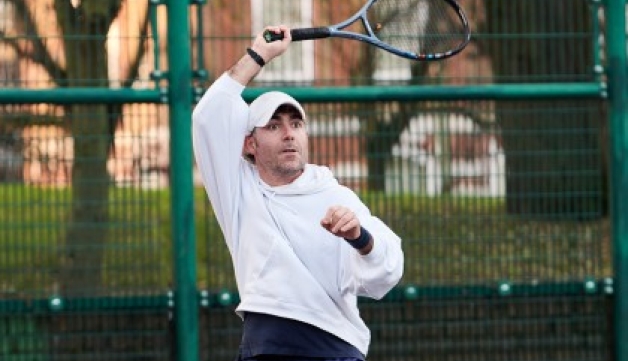
In sport, the ‘Free Park Tennis’ initiative started a couple of years ago in a local park to expand opportunities for children and families.

Resident volunteers have been trained as Free Park Tennis Activators to deliver free, weekly sessions to the community in two Doncaster parks, which led to one park being awarded ‘Park Venue of the Year’ by Yorkshire Tennis.

Our most recent park venue to host Free Park Tennis sessions, Haslam Park, which started in May this year, has already seen 369 attendances, with four local volunteers upskilled to deliver the weekly sessions.

This has been a fantastic opportunity for people to come along and 'have a go' at tennis in a relaxed and social setting, and it has been very popular with both children and families.

Doncaster’s place-based model played a key role in connecting partners and enabling the Active Start initiative, a programme designed for staff working with children aged 2–5.

Active Start is led by Yorkshire Sport Foundation, working in partnership with, and funded by, the South Yorkshire Integrated Care Board's Children and Young People’s Alliance. Their latest Impact Report: Giving children an Active Start is full of learnings and data.

This information is key to the training and resources they provide to early years professionals to help embed movement and active play throughout everyday learning.

This approach not only supports physical development but also communication efforts, social skills and school readiness, giving children the strongest start in life.

Doncaster’s Public Health and Early Years teams have trained as tutors, offering one-on-one support, continuing professional development opportunities and resources to nurseries, schools, childminders and all 12 family hubs, which are places for families to go within their communities to access groups and support.

Many settings have already taken part in centralised training and are now better equipped to encourage movement in class and at home.

But this is not all, because work will continue into the 2025/26 academic year as the programme develops further across South Yorkshire.          

Looking ahead, shifting the dial on children’s engagement in activity will require continued place-based collaboration.

Sustained shared learning, creativity and innovation – alongside a connected, empowered GDM network – will help Doncaster’s young people to move more, play more and thrive.

Find out more and connect with us

In the picture

The concentrated focus of Black History Month provides an opportunity to gain new perspectives through events, articles and media programming that might otherwise be overlooked.

At its best, this month should stir our curiosity and resolve as we look back at the achievements and struggles of Black people, helping us gain a fuller understanding of Black histories to strengthen our grasp of the present.

This celebration (and the round-the-clock efforts by many through the year) should move us to action, reminding us that we don't have to accept the erasure of some people and communities as normal.

A group of dancers hold fans as part of their routine during a session on an indoors gym.

One of the best ways we can use this month is to harness new understandings to permanently build more inclusive platforms for Black achievement and wellbeing, so if you’ve missed our series of articles this month, please do look back.

These guest blogs are all great stories that highlight examples of community leadership that push back against the status quo of erasure.

It’s vital that we recognise and celebrate this work, which truly models more local and equitable practice, shaped by communities themselves.

But what about the models in the digital world?

Black History Month should move us to action, reminding us that we don't have to accept the erasure of some people and communities as normal.

As the usage of virtual spaces increases in all areas of our lives (including work, leisure or physical activity), it’s important to push for equity online too.

But with the backdrop of ongoing online abuse and discrimination, which inhibit participation in sport and physical activity, we’re rightly focused on the importance of creating safe virtual spaces too.

However, safety is only one side of the equation because we’ve also been asking ourselves how we can use technology to improve representation.

An example of this is We Like the Way You Move, the latest phase of our award-winning campaign, This Girl Can.

Technology for good

This phase has included a push for greater visibility of Black women – as well as other underrepresented groups of women – in imagery that promotes participation by sport and physical activity organisations.

This is how it’s worked: with the help of AI, we analysed publicly-available photos that came from parks, gyms, sports clubs, community centres, swimming pools and other leisure facilities across England and sourced via Google Maps, and confirmed that – alongside other minoritised groups of women – those who look like me have been virtually erased.

I’m excited that we’ve found a way to use the power of AI to drive better representation in our sector, because at a point when we’re all figuring out how to be more purposeful in how we use technology, finding insights that we can act on in real-time to contribute to change feels like a tangible win.

This push for greater visibility marks a positive shift that has come with our strategy’s focus on tackling inequalities as we’re working on reshaping our existing efforts to collaborate with different audiences and leaders through initiatives like TRARIIS.

Having celebrated the 10th anniversary of This Girl Can earlier this year, We Like the Way You Move has also used some powerful new imagery of women who have conventionally been excluded from the picture of sport and physical activity.

These are pictures full of joy and love for movement and, at times, I’d say you can almost hear the music they’re moving to.

These images are also a great reminder that women are creating their own platforms in communities, leading change and putting their unique stamp on activities and spaces.

We hope that they will help shift mindsets and that other organisations will follow suit.

On a personal note, it’s wonderful to see references to Caribbean culture, dance and movement in the mix.

It really does make a difference to my motivation and sense of belonging when I can see parts of my identity reflected back to me.

And I’m confident that the breadth of images and ways of moving captured in the campaign will have a similar impact on lots of other women that should have always been in the picture.

The power of our communities

Sport changed my life. I have vivid childhood memories of being driven all over North Yorkshire by my mum and dad.

We spent our Saturdays going from one brilliant and unique cricket ground to another, and I can still hear those echoes of leather on willow when I see them today.

Those weekends set off a lifelong love affair with cricket and the county I’m proud to call home, and even more proud to represent every day as a Mayor of York and North Yorkshire.

Everyone should have the same opportunities to get moving that I did, and that is why I am proud to launch the £2.75 million Movement, Activity and Sport fund.

Bringing the joy of movement to everybody

This is the first of the funds to be launched under my Moving Forward campaign and we are working closely with partners to make sure this investment targets support for those who need it most.

Beyond the health benefits, there aren’t many better ways provided by sport and physical activity to meet new people and build strong relationships in our local communities.

However, this is particularly key in our rural and coastal areas, where there are some pockets of real deprivation.

Too often families cannot get over the hurdle of costly cricket bats, football kits or transport to games, which means that those who would benefit the most aren’t able to get involved.

But by funding activities for those who might otherwise turn to anti-social behaviour, we can change lives and make our towns and villages a better place to live.
 

This is the first of the funds to be launched under my Moving Forward campaign and we are working closely with partners to make sure this investment targets support for those who need it most.

Our research tells us that over 30% of adults are classed as physically inactive, meaning they do less than 30 minutes of exercise a week, and that over 60% are overweight or obese, increasing the risk of long-term health conditions.

But this reality can be turned, and early intervention and prevention can make a big difference.

We can help that by making positive choices like introducing physical activity in our day to day, by considering more walking, wheeling and cycling for our working commute or to meet up with friends.

We are moving in the right direction, but there’s still so much more work to do!

After years of being ignored or minimised, women’s sport is getting the recognition it deserves with success after success for our national rugby and football teams, but girls still don’t get the same opportunity to get moving when compared to boys.

Moving forward together 

I have seen that first hand, because while my son had the pick of so many football clubs, we struggled to find one for our daughter. How can that be happening in 2025?

This plays out with so many families across the region and the UK every year, and it’s a big reason why girls are more likely to stop playing sport when they become teenagers. But we can also change that.

By enhancing skills development and training in the sector, alongside offering more inclusive activities, we will also tackle the barriers that people with disabilities face.

Disabled people are almost twice as likely to be physically inactive, but by working together with our partners we can start to improve those numbers and change lives.

My Moving Forward campaign is about backing people across our region to build the healthy and thriving communities they deserve. 

I believe in the power of our communities, the people and local organisations that keep them going.  

Our work is made so much easier thanks to the support of our strategic partners, including North Yorkshire Sport and the Place Universal Offer from Sport England and I’m truly excited about these, because together we can achieve so much more!

The best part of my job is seeing the huge impact that hard-working groups have on their neighbourhoods.

They know what they need, and we will work with them every step of the way as we continue Moving Forward together.
 

Why parents and carers matter

Safe and positive experiences for children and young people are one of the five big issues at the heart of Sport England’s long-term strategy, Uniting the Movement.

Sport England has supported the NSPCC’s Child Protection in Sport Unit since 2001 and continues to invest in keeping sport safe for children.

Early experiences with sport have the power to make or break a person’s lifelong relationship with physical activity, which can affect physical, mental and social health at every stage of their life: from childhood; to teenage years; to adulthood.  

Simply put, a negative experience could turn a child away from sport, causing them to disengage and miss out on the extraordinary benefits of an active life – from being able to concentrate better at school; to having fun with their friends; to reduced anxiety; to the sheer joy of moving.

Our social value research found that active children and young people generate a wellbeing value (the monetary value that can be placed on happiness, health and life satisfaction) of £4,100 a year (for an active adult, it’s £2,500).

This shows that active children gain more from movement than active adults.

It’s also so important for their development and happiness, and with childhood obesity rising and less than half of children meeting the Chief Medical Officers’ guidelines for physical activity, getting children active is more important than ever – and parents and carers have a vital role to play here.
 

Simply put, a negative experience could turn a child away from sport, causing them to disengage and miss out on the extraordinary benefits of an active life.

We are supporting the KYCSIS campaign by asking all those who work in the sector to call on parents and carers they interact with, to think about how to support children in sport and to have open conversations about what kind of encouragement helps young people thrive.

Why those in charge matter so much

There are different reasons why parents and carers are key in their life’s kids when it comes to sport:

  • Parents and carers shape how children feel about sport. Their behaviour, language and the support they offer can determine whether sport is a positive space for their child. 
  • They know what their child needs and what kind of support they respond to. Support looks different for every child. Some want loud cheering, while others may prefer quiet encouragement.
  • Parents and carers are best placed to know what their child needs. They can then share this with coaches and leaders.

Positive support from parents and carers helps children reach their goals. So whether that is winning, a personal best, being a good teammate or simply enjoying being active, positive support from parents and carers can build a positive relationship with sport and physical activity.

The TALK steps 

There are four simple steps every parent and carer can follow to ensure their kids enjoy sport in a secure and enjoyable way – it’s what we call the TALK steps and we’d love it if you could share these with those in your network.

  • Talk to the child; listen to the child: parents and carers should ask why their child plays and how they want to be supported. Parents can use their answers to guide how they show up at training and competitions.
  • Always show respect: we encourage parents to be good role models of sports values by supporting the whole team and treating coaches and officials with respect, even when they disagree.
  • Let’s speak out: if adults are shouting insults, criticising, focusing on weight, confronting officials aggressively or pushing children into competitions that are too advanced for them, parents and carers should raise it with the club’s welfare officer or match-day official.
  • Keep sport fun: we encourage parents and carers to praise effort and progress as well as results. Offering constructive encouragement when things go wrong can help children learn from setbacks.

What about if my child is in a competitive environment?

For many parents and carers, it’s brand-new territory when turning up at their child’s first sporting event – but they must be equipped and not afraid to ask about anything they feel unfamiliar with.

Here are five questions every parent/carer should ask before signing their child up to a competition:

  • What is the primary purpose of this competition for children at this age or level?
  • How are children supervised and safeguarded during the event?
  • What expectations will be placed on my child and what support is available if they find it stressful?
  • How are selection and team decisions made and communicated to participants and families?
  • Who is the designated welfare officer and how do I raise a concern on the day if needed?

Asking these types of questions before agreeing to children taking part makes it easier for parents to recognise when something is not right.

Spotting concerns and taking action

Parents and carers know what their child needs to be their best and should be empowered to challenge or call out behaviour that could harm their child’s wellbeing.

Adults shouting from the sidelines, personal criticism of children, pressure about weight or repeated, aggressive challenges to officials are all red flags.

Parents should report concerns the club’s welfare officer or the relevant match official immediately.

If you remain worried about anything that may cause harm, contact the NSPCC Helpline on 0808 800 5000 or email [email protected].

We all have a joint commitment to ensure children and young people feel safe when taking part in sport so let’s make sure, we support parents and carers to make this happen!
 

You've viewed of items.