Skip to content

Digital inclusion and physical activity

We've worked with Good Things Foundation to understand the connection between digital inclusion and participation in sport and physical activity.

Millions of people experience barriers when it comes to leading an active lifestyle, and there are also millions who face exclusion when accessing and using digital technology.

The digital inclusion movement and our own Uniting the Movement strategy are looking to address these barriers, but what about the people who experience both? 

A young girl with a dog on a leash, an old lady, a middle-age man and one-legged young man on a wheelchair are centred over a purple background with the silhouettes of a city and the Sport England logo on the top-left. Around them we see a laptop screen, the YouTube logo, a wifi signal and a bell all inside red circles that are crossed with a line. In white copy under the people we read: "Sections of the population who are digitally excluded are very similar to those with the lowest activity levels".

In order to learn more about the relationship between digital inclusion and participation in physical activity, we have worked with Good Things Foundation.

Following initial desktop research in March 2025, we conducted in-depth research between October 2025 and January 2026 with people with lived experience of facing digital barriers to being active, and with organisations working across the digital inclusion and sport/physical activity sectors.

This has deepened our understanding and provides tangible action we can take as a sector.

Insights and recommendations from user research

Our objective was to understand how digital shapes people’s access to and experience of sport and physical activity, and identifies good practice for reducing digital barriers to being active.

The research builds on existing understanding of the overlap between the groups who face inequalities in being active and the groups who face inequalities in being online (Sport England and Good Things Foundation, 2025).

Main findings

Digital barriers limiting participation in sport and physical activity:

WiFi signal icon

Access

  • Financial barriers to wifi/mobile data connection to get online
  • No access to suitable digital device
Icon of a lightbulb with a cog inside it

Skills and confidence

  • Difficulty searching for and accessing information online
  • Challenge of using different digital apps and tools
Shield icon

Trust and safety

  • Worries about booking and paying online
  • Lack of trust in reliability of of online information
Arrow icon

User experience

  • Language and/or accessibility barriers
  • Lack of key information and support

What works

  • Providing digital skills and access support in trusted, local spaces
  • Fostering social connections to build confidence for digital and physical activity
  • Understanding needs and preferences of your audience around digital
  • Accessible, inclusive digital platforms, with non-digital support where needed
  • Partnerships enabling signposting to support for digital and physical activity

Recommendations for reducing barriers

What else does the report include?

  • Four user journeys from individuals – their stories illustrate the lived reality of digital barriers to sport and physical activity, and highlight particular challenges faced by older people, disabled people, people with long-term health conditions and people on low income
  • Case studies from organisations supporting digital access around opportunities to be active
  • Recommendations
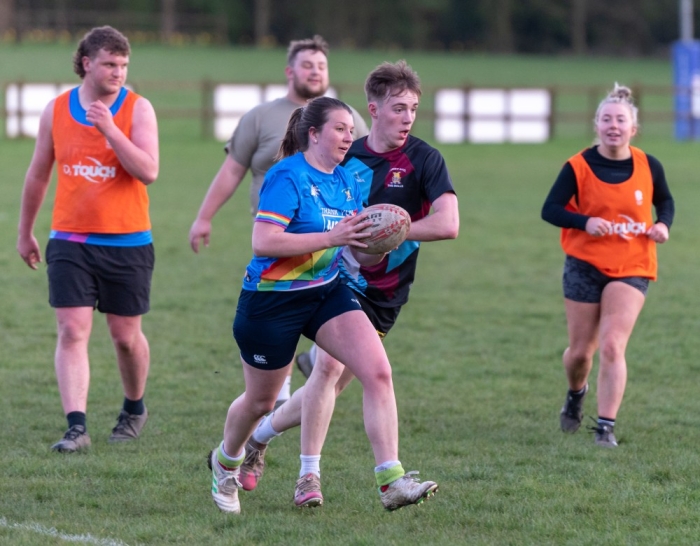
A rugby player is pursued by an opponent as she runs with the ball during a mixed-sex game, with other players looking on in the background.

Sign up to our newsletter

You can find out exactly how we'll look after your personal data, but rest assured we'll only use it to make sure you receive our newsletter, to understand how you interact with our newsletter, and to provide administrative information about our newsletter.